

This guide explains core ideas clearly and sets realistic expectations. The aim is educational and wellness-focused, not a substitute for medical care. Readers in the United States often explore this approach to support relaxation and stress relief alongside conventional health plans.
Key terms are simple here: the biofield refers to a field that surrounds and permeates the body and includes measurable electromagnetic signals from organs and tissues. A practitioner runs a session that many describe as calming and supportive.
In this ultimate guide you will find clear sections on the field itself, how sessions usually work, common modalities, possible benefits, what research says, and tips to choose a safe practitioner. The tone stays balanced: personal reports matter, and the quality of evidence varies by method.
Key Takeaways
- Read this for an informational overview that supports wellness, not medical advice.
- Many people use sessions for stress support and better rest.
- Terms like biofield, practitioner, and session are defined up front.
- Expect a mix of personal reports and varying research quality.
- The guide helps you find modalities and safety tips for choosing a practitioner.
What Is the Human Biofield and How Do Energy Fields Relate to Health?
Across cultures, a subtle presence around and inside the body serves as a shared language for resilience and balance.
Basics of the field
The biofield describes a subtle presence that surrounds and permeates the body. Some sources link this idea to measurable electromagnetic activity from organs and tissues.
Language practitioners use
Practitioners often describe an energy field by its strength, coherence, or tone. These terms help explain how the field may support or reflect overall health.
Imbalance, blockage, and flow in systems thinking
Common belief holds that reduced flow or blockages can relate to stress patterns and discomfort. Balanced flow tends to be associated with resilience and better system function.
Life force energy appears across many traditions as a shared concept for vitality. Modern wellness uses these ideas in mind-body practices, relaxation training, and integrative care while noting differing viewpoints.

| Aspect | Common Description | Relation to Health |
|---|---|---|
| Presence | Subtle field around and through the body | Frames whole-body balance |
| Measurement | Electromagnetic signals noted in research | May reflect physiological processes |
| Flow | Strength, coherence, tone | Linked to stress, comfort, resilience |
For a practical overview of approaches that draw on these ideas, see this guide to energy healing.
What is biofield energy healing and how does it work?
Sessions often look simple: a quiet space, a trained practitioner, and an intention to support relaxation and resilience.
Biofield therapy refers to a noninvasive approach people use to support calm and restore a sense of balance. Practitioners describe using focused attention, clear intention, and gentle technique to influence a client’s felt state during a session.

Assessment methods practitioners use
Most assessments are sensory and conversational rather than diagnostic. A practitioner may hover hands near the body, scan slowly, or note sensations like warmth, tingling, or changes in breath.
Clients often point out tight areas or emotional hotspots. These reports guide the session and help track changes in comfort.
Hands-on versus hands-off approaches
Hands-on work uses light touch; hands-off uses near-body gestures. Both are usually done with the client fully clothed and can feel like deep relaxation or guided rest.
What treatment means here
Treatment in this context means a session aimed at well-being, not a medical procedure or diagnosis. Modalities may use maps such as chakras, meridians, or auric layers; clients often resonate with one framework more than another.
“Ask your practitioner about training, session structure, and how they track outcomes like comfort, stress, or sleep.”
For a practical overview and to explore different approaches, see this energy healing guide.
Cultural Roots of Biofield Therapies in the Present Day
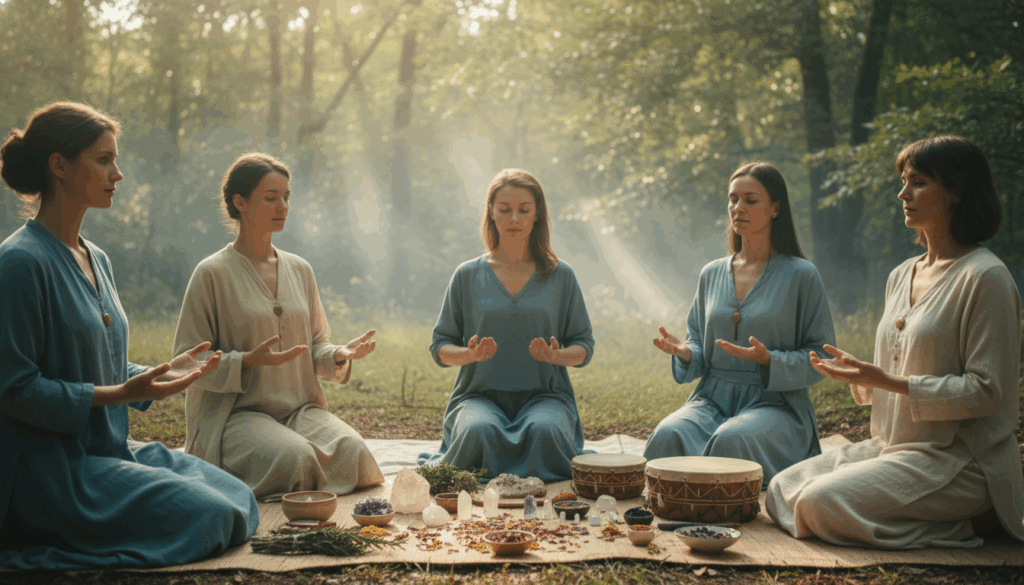
Many modern practices trace their roots to ancient systems that treat the person as an interconnected mind, body, and spirit. These frameworks shape how people and health professionals talk about balance and support today.
Traditional frameworks
Qi in Traditional Chinese Medicine and prana in Ayurveda name subtle currents that link breath, movement, and health. Indigenous concepts such as mana emphasize relational care and community context.
Paths into modern practice
Reiki developed in Japan as a hands-on method for relaxation and support. Therapeutic Touch emerged in Western clinical settings and adapted older ideas into a new clinical practice used in some hospitals and wellness centers.
“Respectful use of cultural knowledge builds trust and keeps practice honest.”
| Tradition | Core idea | Modern use |
|---|---|---|
| TCM (qi) | Flow, balance | Acupuncture, qigong, supportive sessions |
| Ayurveda (prana) | Breath and vitality | Yoga, pranayama, lifestyle guidance |
| Indigenous (mana) | Relational strength | Community-based care, culturally informed practice |
Cultural sensitivity in care
Ask permission, explain the session, and avoid appropriating sacred rituals. In US healthcare settings, integrative clinics often invite trained practitioners to work alongside clinicians.
Many mental health and health professionals explore these approaches as complementary care. For a practical overview of related approaches, see this guide to scalar practices.
Popular Biofield Therapy Modalities You’ll Hear About in the US
Across U.S. settings, a few recognized modalities appear most frequently on menus for relaxation and supportive care.
Reiki
Reiki uses gentle hand placement on or above the body to promote deep relaxation and comfort. Many people report reduced stress and better rest after a session. Practitioners frame the session as supportive rather than a medical treatment.
Therapeutic Touch and Healing Touch
These structured methods use focused intention, hand movements, and techniques to clear and balance the field. Sessions often include assessment, gentle gestures, and follow-up discussion.
Qigong
Qigong combines simple movement, breath, and meditation. It’s a self-practice that people use daily to cultivate qi and manage stress without equipment.

Pranic Healing, Biofield Tuning, Craniosacral Therapy
Pranic sessions aim to clear congestion and replenish vitality; some practitioners offer remote options. Biofield tuning uses tuning forks near the body to address patterns and support self-regulation.
Craniosacral therapy involves light touch around the head and spine to ease tension and support the nervous system.
“These noninvasive approaches are commonly used for stress relief and as supportive care, sometimes alongside cancer care, not as a primary medical treatment.”
How a Typical Biofield Energy Healing Session Works
A typical session follows a clear rhythm so clients know what to expect and feel safe.
Consultation and intention-setting for mind, body, and spirit
First, the practitioner asks about goals like stress support, sleep, or emotional grounding. This brief chat sets boundaries and clarifies comfort levels.
Environment and session flow: assessment, balancing, and integration time
Sessions happen in a calm room with soft lighting and minimal distractions to help the nervous system downshift.
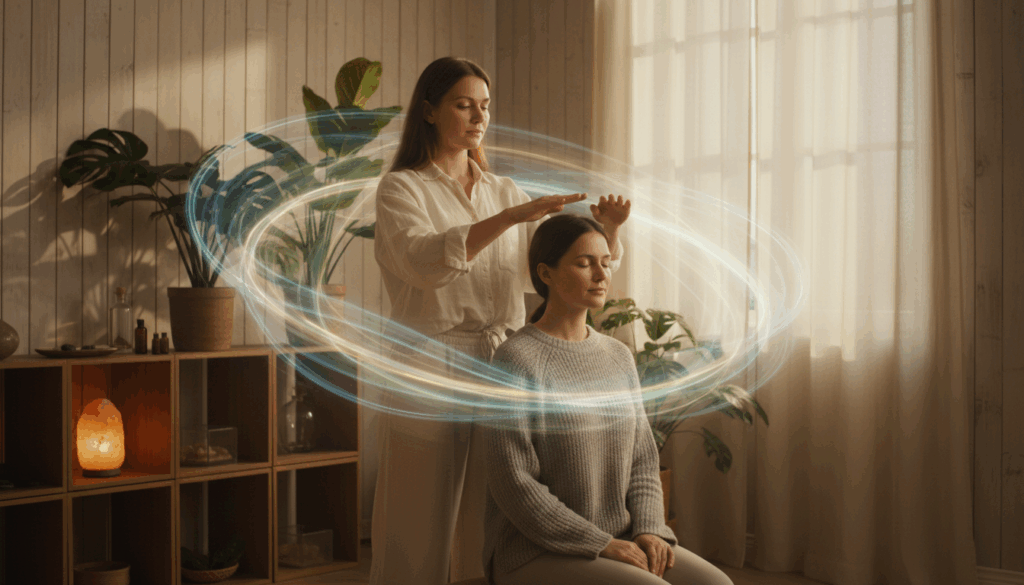
After a short assessment, the practitioner performs a balancing phase. That period may use near-body gestures or light touch. A final integration period lets the client rest and notice changes.
In-person vs. remote sessions and what to expect afterward
In-person sessions use a table or chair; remote options ask you to make a quiet, safe space at home.
Afterward, common reactions include deep relaxation, sleepiness, or gentle emotional release. Hydration, journaling, and light activity help integration.
“Track stress, sleep, mood, and comfort over weeks to spot real change.”
| Step | Typical length | Client role |
|---|---|---|
| Consultation / intention | 5–15 minutes | Share goals, set boundaries |
| Assessment | 5–10 minutes | Sense sensations, report spots of tension |
| Balancing session | 20–40 minutes | Rest, breathe, receive |
| Integration & feedback | 5–15 minutes | Discuss effects, plan follow-up |
Benefits of Biofield Energy Healing for Wellness and Stress Reduction
A short session may help people feel more grounded and better able to cope with daily pressure.
Stress reduction and the relaxation response
Many clients report slower breathing, a calmer mood, and easier transition to sleep after a session. These shifts reflect a classic relaxation response that can lower perceived stress and improve recovery.
Emotional regulation and self-awareness
People often feel less reactive and more grounded. That makes it easier to notice feelings without becoming overwhelmed.
In practice, this can mean pausing before reacting or using a simple breathing tool when tension appears.
Mind–body integration and daily habits
Self-awareness helps people detect tension patterns early. Many use that insight to add calming routines such as short movement, breathwork, or mindful breaks.
These practices complement therapy and support long-term stress management.
Supportive care goals
Sessions aim to improve comfort, coping, and quality of life rather than to cure conditions. Individual effects vary and depend partly on the client’s ability to feel safe and relax.
“Track sleep, stress scores, pain interference, and mood stability to notice real change over time.”

| Reported Benefit | Typical Effect | Wellness Metric |
|---|---|---|
| Stress reduction | Calmer breathing, quicker relaxation | Perceived Stress Scale, sleep quality |
| Emotional regulation | Less reactivity, greater grounding | Mood stability, anxiety scores |
| Self-awareness | Earlier detection of tension | Stress diary, coping response logs |
| Mind–body integration | Better use of calming routines | Daily routine adherence, functional measures |
Conditions People Seek Biofield Therapies For as Complementary Support
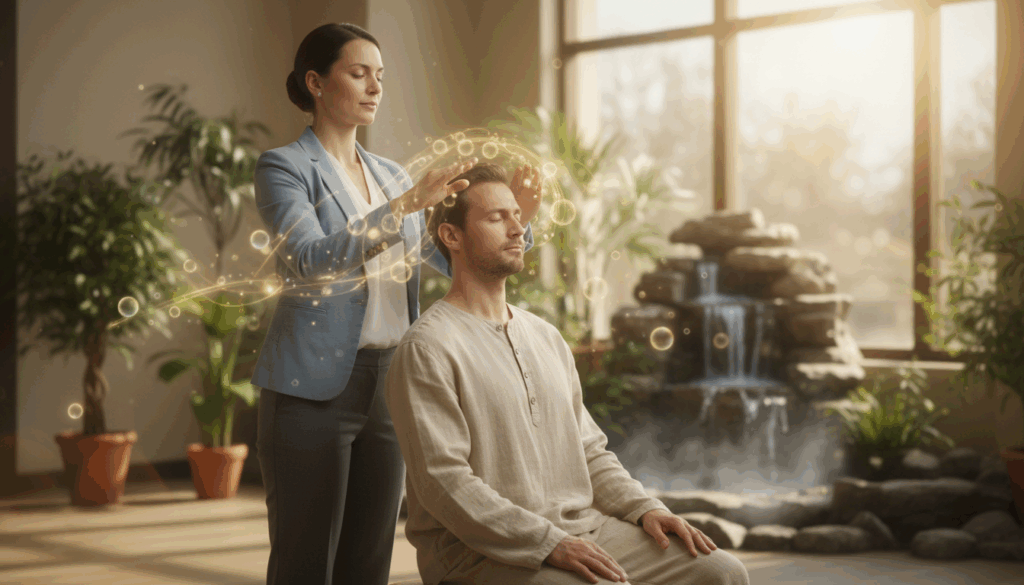
When chronic pain or treatment side effects limit life, clients often seek gentle, soothing options. Many look for noninvasive care that helps them rest, cope, and keep daily function.
Pain management and long-term conditions
Why people try supportive practice: to lower tension, ease discomfort, and access relaxation tools that pair with medical plans. These approaches may help people tolerate activity better and improve sleep.
Cancer care as complementary support
In oncology settings, the focus is quality of life. Sessions aim to ease nausea, reduce stress, and help with symptom relief alongside standard treatment — never as a replacement for oncology care.
Anxiety, trauma, and coordinated mental health care
Clients with anxiety or trauma do best when work is coordinated with mental health professionals. Communicate goals clearly — for example, calmer mood or better sleep — so outcomes stay specific and measurable.
“Loop in your healthcare team for new or worsening symptoms, medication changes, or complex conditions.”
| Condition | Common Goal | When to inform providers |
|---|---|---|
| Chronic pain | Reduce tension, improve function | New pain patterns or medication changes |
| Cancer-related symptoms | Quality of life, nausea coping, stress relief | Before adding complementary sessions during treatment |
| Anxiety/trauma | Emotional regulation, calmer sleep | If symptoms worsen or during therapy plan changes |
For practical steps on session structure and safety, see a short guide on how sessions are performed.
What Research and Evidence Say About Biofield Therapy
Researchers often measure pain, anxiety, blood flow, and skin temperature to test subtle interventions. Controlled trials blend subjective ratings with objective instruments to build reliable evidence.

Common outcomes in trials
Good studies track pain scores, anxiety scales, and physiological markers. Devices such as laser speckle flowgraphy (LSFG) and infrared thermography (IRT) add objective data on circulation and surface temperature.
A clear case study: Johrei
Johrei began with Mokichi Okada (Japan, 1935) as a hands-off practice. A single-blind, randomized, placebo-controlled trial by Kenji Yamamoto compared 199 qualified practitioners with 144 untrained volunteers.
The trial used a temperature‑controlled room (23 ± 1°C; 52 ± 1% humidity). Practitioners sat 50–100 cm behind recipients to limit bias. Outcomes showed increased blood flow and higher surface temperature when qualified practitioners delivered 10‑minute sessions. Participants prone to lower body temperature showed larger changes, including axillary temperature gains.
Lab vs. human studies and methodological limits
In vitro work found changes in cell viability and endothelial migration. These lab results generate hypotheses but do not prove clinical benefit in people.
“Lab findings suggest possible mechanisms, yet clinical trials must link those signals to real‑world outcomes.”
Challenges include blinding difficulties, placebo and relationship effects, mixed training standards, and small sample sizes. These factors cause variable study quality and uneven evidence about efficacy.
| Study Type | Typical Measure | Strength |
|---|---|---|
| Randomized controlled | Pain scores, LSFG, IRT | High internal validity when well blinded |
| In vitro | Cell viability, migration assays | Generates mechanisms, not clinical proof |
| Observational | Participant reports, sleep logs | Useful for real‑world effects but lower control |
Where research is heading: larger, better‑controlled trials with consistent training and objective markers. In practice, efficacy may mean reliable symptom support and improved quality of life rather than cure.
Biofield Energy Healing in Healthcare and Mental Health Practice
Integrative teams often include trained practitioners who provide short sessions alongside psychotherapy. Mental health professionals may explore this complementary approach because clients ask for tools that boost relaxation, regulation, and body awareness.

Why clinicians add somatic support
Therapists use gentle methods to help a client settle and engage more fully in therapy. That extra support can lower arousal and improve the client’s ability to use talk therapy skills.
Ethics, consent, and clear scope
Informed consent must explain goals, limits, and alternatives. Keep records and state role boundaries so clients know this is complementary, not a medical treatment.
Training and trusted programs
Reputable pathways matter in a field with uneven rules. Examples include the International Association of Reiki Professionals, Healing Touch Program, Learn | Pranic Healing, and BCST training. Verify credentials and fit before referral.
“Collaboration and clear referral paths protect client safety, especially for trauma or complex needs.”
| Area | Why it matters | Practical step |
|---|---|---|
| Scope | Prevents role confusion | Written consent and limits |
| Training | Ensures safe technique | Check program credentials |
| Collaboration | Keeps care integrated | Share plans with treating team |
For clinicians curious about training paths and certification, see a concise guide on how to become a practitioner.
How to Choose a Qualified Practitioner and Use Biofield Therapy Safely
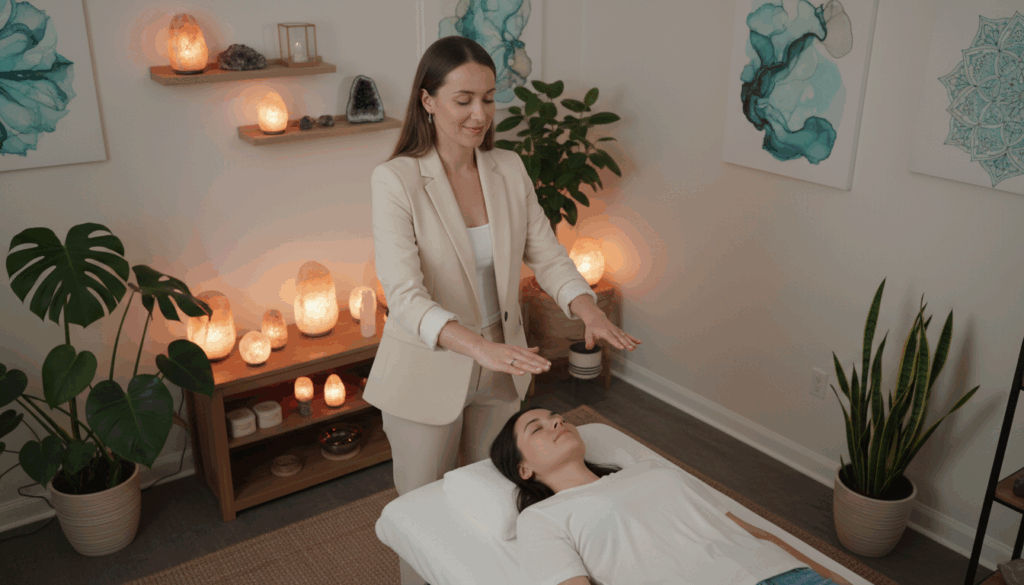
Choosing a qualified practitioner helps you get safe, consistent support that fits your health plan.
Credentials and experience: Training and standards vary, so look for clear certification, years in practice, and a named modality. Ask about supervised hours and continuing education. This helps you judge professionalism despite the field’s uneven regulation.
Why vetting matters: Due lack of uniform rules means someone’s card title may not reflect deep training. That lack of standardization makes questions and references essential.
Practical screening questions
- Which modality are you trained in and where did you train?
- How do you handle consent and touch during a session?
- What outcomes do you track and how do you measure progress?
- Do you coordinate with my healthcare providers when appropriate?
Safety and short-term effects
Some people feel tired, lightheaded, or emotionally tender after a session. Drink water, rest if needed, and note how your body responds.
Talk to a doctor for new or persistent symptoms, pregnancy concerns, serious mental health issues, or when you’re in active medical treatment. Complementary work should never delay urgent care or needed treatment.
“Choose a practitioner who communicates clearly, respects boundaries, and keeps care aligned with your overall health plan.”
| Check | Why it matters | Action |
|---|---|---|
| Training & certification | Shows formal learning | Request certificates and references |
| Years in practice | Signals clinical experience | Ask about client types and outcomes |
| Session structure | Sets expectations and consent | Get a written outline before booking |
| Coordination with healthcare | Keeps care integrated | Confirm willingness to share notes with providers |
For practical steps on preparing for a session and communicating with a practitioner, see a short guide on session support tips.
Conclusion
This closing note pulls the main points into a short, usable guide. Biofield energy healing refers to noninvasive, complementary practices that aim to support balance, relaxation, and overall wellness.
You now know basic field ideas, typical session flow, common U.S. modalities, and the key difference between supportive care and medical treatment. Practical steps include vetting training, asking about session structure, and planning coordination with clinicians.
Reported benefits include stress relief, calmer mood, improved coping, and better sleep for some people. Research shows measurable signals in controlled studies, though mechanisms and results vary. Over 1.6 million Americans seek these services yearly, and an NCCIH survey found 55% of 31,000 participants noted overall health improvements with complementary approaches.
If you’re curious, start with a reputable modality, state clear goals, and treat sessions as one part of a broader wellness plan. Learn more about what is energy healing before booking.
FAQ
What does biofield energy healing aim to do for wellness?
This approach aims to support balance across mind, body, and spirit by working with subtle fields believed to surround the body. Sessions focus on relaxation, reducing stress, and improving comfort as a complement to conventional care rather than replacing medical treatment.
What is the human biofield and how do energy fields relate to health?
The term describes a subtle field that surrounds and permeates living systems in many healing traditions. Practitioners believe disruptions or blocked flow in that field can relate to physical symptoms, emotional distress, or slowed recovery, and that restoring flow supports overall regulation and resilience.
How do imbalance, blockage, and flow get described in practice?
Practitioners often talk about reduced vitality, local tension, or disturbed patterns in the field. Techniques aim to clear or rebalance those areas so the nervous and circulatory systems can shift toward relaxation and improved function.
How do different traditions describe life force concepts?
Traditions use varied labels: qi in Traditional Chinese Medicine, prana in Ayurveda, and life force in many indigenous systems. Modern practitioners integrate these ideas with a focus on breath, movement, intention, and attention to support well-being.
How does a typical session work?
Sessions usually start with a short consultation and intention-setting. The practitioner assesses the field through observation and palpation, then uses hands-on or hands-off techniques, sound tools, or guided breathing. Sessions end with time to integrate and often brief self-care suggestions.
What’s the difference between hands-on and hands-off approaches?
Hands-on methods involve light touch near the head, shoulders, or torso, while hands-off approaches use gestures placed a few inches from the body. Both aim to influence the field; choice depends on client comfort and practitioner training.
Which popular modalities are used in the United States?
Common practices include Reiki, Therapeutic Touch, Healing Touch, qigong, pranic approaches, biofield tuning (tuning forks), and craniosacral therapy. Each has distinct techniques but shares an emphasis on supporting balance and relaxation.
What benefits do people report after sessions?
Many clients report reduced stress, deeper relaxation, improved sleep, emotional clarity, and greater self-awareness. In healthcare settings, people use these therapies to improve comfort and coping alongside medical treatments.
For which conditions do people seek these therapies?
People commonly seek support for chronic pain, anxiety, stress-related disorders, cancer-care symptom relief, and trauma recovery. Practitioners emphasize using these as complementary supports within an overall care plan.
What does research say about outcomes and evidence?
Studies measure outcomes like pain, anxiety, blood flow, and physiological markers. Results vary: some randomized trials and controlled studies report modest benefits, while methodological challenges and placebo effects complicate interpretation. Quality of evidence ranges from preliminary to moderate depending on the condition.
Are there notable research limitations to keep in mind?
Yes. Challenges include small sample sizes, variable practitioner technique, difficulty blinding participants, and heterogeneous outcome measures. These issues make it hard to draw firm conclusions about efficacy for specific medical conditions.
How do mental health professionals use these approaches?
Some clinicians incorporate them as adjunctive tools to support relaxation, emotional regulation, and body awareness. Ethical practice emphasizes informed consent, clear boundaries, and coordination with evidence-based treatments.
How can I choose a qualified practitioner?
Look for transparent training, references from health professionals, clear scope of practice, and membership in reputable organizations such as the International Association of Reiki Professionals or Healing Touch Program alumni. Ask about experience with your condition and how they coordinate with medical teams.
Are there safety concerns or side effects?
Most people tolerate sessions well; short-term feelings of lightheadedness, emotional release, or fatigue can occur. Avoid substituting these therapies for urgent medical care, and discuss any planned sessions with your physician if you have unstable medical conditions.
Can sessions be offered remotely and will they work?
Many practitioners provide remote or distance sessions using intention, breath work, and guided relaxation. Some clients report benefits similar to in-person care; responses vary and depend on individual preference and practitioner skill.
How should these therapies be integrated with conventional treatment?
Use them as complementary supports—inform your medical team, continue prescribed therapies, and prioritize evidence-based care for serious conditions. A coordinated plan reduces risk of delays in needed treatment.
What training pathways exist for practitioners?
Training ranges from short workshops to multi-level certification programs in Reiki, Healing Touch, or Therapeutic Touch. Look for programs that include supervised practice, ethics, and referral protocols when working with medical or mental health issues.
Are there standards or credentials I should seek?
Regulation varies by state and modality. Prioritize practitioners who list clear credentials, follow professional codes, maintain liability coverage, and collaborate with healthcare providers when appropriate.
What should I expect after a session?
Many people feel relaxed, emotionally lighter, or more grounded. Practitioners often recommend rest, hydration, gentle movement, and reflection. Effects may be immediate or unfold over days.
How do I evaluate whether a modality suits me?
Consider your goals—pain relief, stress reduction, emotional support—and try a single session with a clear intention. Ask about client outcomes, safety measures, and how progress will be monitored over time.
Is insurance likely to cover these sessions?
Coverage is limited. Some integrative clinics include them in program packages, and certain employers or wellness plans may reimburse portionally. Check with your insurer and ask providers for itemized receipts or codes for potential reimbursement.
Where is research heading and how can I stay informed?
Research focuses on larger controlled trials, standardized protocols, and physiological measures that clarify mechanisms and outcomes. Follow journals such as Journal of Alternative and Complementary Medicine and reputable academic centers that study integrative approaches.