

This short guide translates a vague wellness phrase into clear nervous-system language readers can use today.
Recovery here means helping the autonomic system shift toward safety and rest after long stress or trauma. As regulation improves, people often notice a calmer mind, better sleep, and fewer physical tensions.
Reports usually fall into two categories: mental changes such as clearer focus, and body-to-mind sensations such as warmth or gentle tingling. These are signs the body is moving out of survival mode and toward repair.
Expect ups and downs. Progress often comes in steps, not a straight line, and setbacks do not mean failure. This article will help you recognize realistic signs, learn common dysregulation signals, and find practical, safe ways to support recovery.
Key Takeaways
- Healing is regulation: think safety cues and steady recovery rather than mystical fixes.
- Common signs include calmer thoughts, improved sleep, and less muscle tension.
- Both mental shifts and gentle body sensations can mark progress.
- Expect non-linear progress; occasional setbacks are normal.
- This guide aims to explain signs and offer practical, body-based support.
Healing energy and the brain: a nervous system view of what’s happening
Your nervous system is the body’s control center. It helps the brain and organs talk to each other so you can respond to threats or rest. When balance returns, people often notice changes that feel physical and mental.

Survival mode vs rest-and-digest
The autonomic nervous system has two main branches: sympathetic (fight-or-flight) and parasympathetic (rest-and-digest). Survival mode means more sympathetic activity — faster heartbeat, tight chest, shallow breath.
In contrast, the parasympathetic branch supports digestion, repair, and calm. Shifts between these states can create sensations such as warmth, fluttering, or sudden relaxation as the system rebalances.
How long-term stress and trauma keep the system stuck
Chronic stress, trauma exposure, ongoing anxiety, sleep loss, chronic pain, and heavy stimulant use can keep the system on high alert. Over time, the brain may label neutral cues as threats, raising baseline tension.
“Dysregulation is often protection turned persistent; it signals the system has been working hard to keep you safe.”
Common high-alert signs include a tight chest or stomach, hypervigilance, poor sleep, and digestive upset. Conventional medicine often treats symptoms, while somatic approaches aim to reset patterns at the root.
| System Branch | Typical Signs | Helpful Signals |
|---|---|---|
| Sympathetic | Racing heart, tight muscles, sleep disruption | Grounding, paced breathing, predictable routines |
| Parasympathetic | Slower pulse, relaxed digestion, deeper rest | Gentle movement, social connection, restful sleep |
| Dysregulated | Fluctuating anxiety, shutdown, chronic tension | Repeated safety cues, therapy, balanced lifestyle |
Regulation takes time. The brain relearns safety through repeated, small signals: steady breath, rest, and trusted connection. For practical methods and guided approaches to nervous system regulation techniques, see guided practice resources.
What does healing energy in brain feel like in real life?
Small daily changes often signal the nervous system is finding firmer ground after long stress. These shifts are usually subtle and build over time, not overnight.

A calmer mind
Racing thoughts slow and attention steadies. It becomes easier to focus on one task without spiraling into worry.
Clarity returns in short bursts at first, then lasts longer as the baseline quiets down.
Body-to-mind sensations
People describe warmth or lightness around the scalp or behind the eyes. Some feel gentle tingling or a soft “whoosh” as tight muscles release.
These are normal signs that stress physiology is shifting, not mysterious events.
Emotional shifts
There is more peace and less irritability. Moments that once triggered sharp reactions feel smaller, and presence in conversations improves.
Energy changes
Fatigue lifts slowly. Motivation returns in small steps and energy crashes become less frequent over time.
Brief waves of tiredness or emotional release are common when the body unwinds old activation patterns.
“Recovery is a journey of small gains; a steadier baseline matters more than constant highs.”
Track sleep, mood, digestion, and focus week-to-week to notice patterns. For guided methods to support this process, see practical sending techniques.
| Area | Typical early sign | How to track |
|---|---|---|
| Mind | Fewer racing thoughts, clearer focus | Simple attention checklists or short journaling |
| Sensations | Warmth, tingling, release after tension | Note timing after rest or breathing practices |
| Emotions | More peace, less irritability | Weekly mood ratings or brief mood logs |
| Energy | Gradual lift, fewer crashes | Energy diary and sleep quality notes |
Signs your nervous system is healing (and how it can feel day to day)
You may notice clearer mornings and faster calming after a stressful moment when the system begins to rebalance.
Improved sleep: You sleep deeper or longer and wake more refreshed. Nights feel less wired and falling asleep becomes easier.
Increased resilience
Stressors still bother you, but recovery is quicker. After a tense email or traffic, the body returns to baseline faster.
Physical relaxation
Shoulders drop, the jaw unclenches, and headaches happen less often. Chest and stomach tightness ease as tension reduces.

Better digestion
As rest-and-digest work returns, appetite steadies and gut discomfort lessens. Meals sit easier and bloating or frequent upset may fade.
Empowerment and boundaries
You feel more confident about the recovery process and more capable of handling triggers without spiraling.
Letting go of toxic patterns becomes a practical skill: clearer limits with people, work, and screens lower constant threat signals and create space for care.
“Increased capacity to recover quickly after stress is often the clearest proof the system is working toward balance.”
| Area | Typical sign | Daily action |
|---|---|---|
| Sleep | Deeper rest, waking refreshed | Consistent bedtime, wind-down routine |
| Resilience | Faster return to calm after stress | Short breath checks, pause before replying |
| Body | Less tension, fewer headaches | Gentle stretching, quick breaks from screens |
| Digestion | Steadier appetite, less discomfort | Slow meals, regular hydration |
| Boundaries | Clearer limits and self-care | Set screen/no-work times, say no when needed |
Challenges will still show up, but faster recovery and steady small wins signal a healthier nervous system. For related resources on regulation practice, see chakra balancing.
When it’s not healing yet: common symptoms of a dysregulated nervous system
When recovery stalls, everyday sensations and behavior often point to ongoing dysregulation. Naming these signs can reduce blame and guide safer steps forward.

Physical signs to notice
Common symptoms include palpitations, insomnia, chronic fatigue, brain fog, persistent pain, and digestive issues. These are real signals the system is overactive or stuck.
Emotional and behavioral markers
Emotional shifts may show as overwhelm, irritability, sudden anxiety or shutdown, and low motivation. Behaviorally, people report difficulty relaxing, constant busyness, avoidance, emotional eating, or reliance on caffeine or alcohol.
Why progress often feels non-linear
Recovery rarely follows a straight path. Good hours usually build over time rather than arriving all at once. Setbacks are common after poor sleep, illness, conflict, or overload.
“A flare-up is often a signal to slow down, not proof you ruined progress.”
| Area | Typical sign | Why it happens | Practical step |
|---|---|---|---|
| Heart & breath | Palpitations, shallow breathing | High alert state | Paced breathing, rest |
| Sleep & energy | Insomnia, chronic fatigue | Persistent arousal | Regular bedtime, reduce stimulants |
| Mind | Brain fog, low focus | Overload and poor recovery | Short focus sessions, breaks |
| Pain & digestion | Headaches, stomach upset | Tension and gut dysregulation | Gentle movement, medical check |
If symptoms are new, severe, or persistent, consult a clinician to rule out medical causes. Nervous system regulation is a skill; with the right support and practice, it can improve over time.
Ways to support brain and nervous system healing over time
A steady routine of gentle supports helps the nervous system move toward balance over weeks and months.
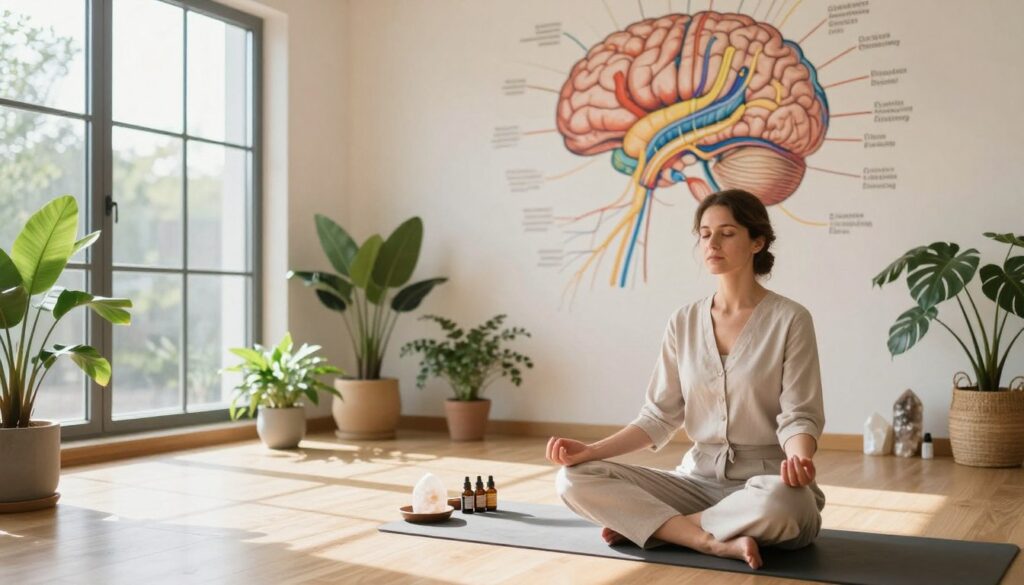
Breathwork as a quick safety signal
Try: inhale 4, hold 4, exhale 6, pause 2. Repeat for three to five cycles to calm the body fast.
Meditation and shorter mindfulness practice
Do brief daily sits or try Yoga Nidra for deep rest. These practices train steady attention and reduce reactivity over time.
Grounding for anxiety spikes (5-4-3-2-1)
Look: name 5 things you see. Touch: name 4 things you can touch. Hear: name 3 sounds. Smell: name 2 scents. Move: name 1 slow breath. This anchors attention to the present moment.
Movement, somatic tools, sleep, and nutrition
Choose gentle movement—walking, yoga, tai chi, or dance—to move stress hormones without pushing into crash.
Use progressive muscle relaxation and a brief body scan to release tight spots and build awareness.
Support rest with a steady bedtime, screens off one hour before bed, cool/dark room, and calming journaling or sounds.
Eat steady meals with protein, healthy fats, magnesium-rich greens and nuts, plus omega-3 sources such as salmon or flaxseed.
Therapy, limits, and social support
Therapy options include CBT for thought patterns, somatic therapy for body regulation, and EMDR for trauma processing. Seek trauma-informed care when needed.
Set boundaries with screens, multitasking, and caffeine to reduce overstimulation. Trusted relationships and community care make recovery easier.
“Consistent small steps matter more than intense, sporadic efforts.”
| Tool | Simple action | Why it helps |
|---|---|---|
| Breathwork | 4-4-6-2 cycles | Signals safety, slows heart rate |
| Grounding | 5-4-3-2-1 | Anchors attention, reduces panic |
| Movement | 20 min walk or gentle yoga | Metabolizes stress, lifts mood |
| Sleep hygiene | Screens off 1 hr, fixed sleep times | Improves restoration and mood |
| Therapy | CBT, somatic, EMDR | Treats patterns and trauma safely |
For guided practice and extra resources, see guided practice.
Conclusion
Change tends to be slow and steady; small wins point to real repair over time.
Think of healing as regulation: more calm, clearer focus, and fewer stress spikes. Key signs to watch are better sleep, steadier mood, less muscle tension, improved digestion, and quicker recovery after upset.
Also notice symptoms that suggest stalled progress: insomnia, palpitations, brain fog, chronic fatigue, digestive upset, overwhelm, shutdown, or overstimulation. Track patterns with kindness rather than blame.
Pick one or two supports you can do daily—easy breathwork, grounding, a short walk, or a consistent sleep habit. These small steps add up.
If symptoms persist or disrupt life, seek medical advice or therapy. For further reading, see this third-eye awakening guide as a gentle resource.
Small, steady practice often rebuilds the system and restores lasting health.
FAQ
What are common sensations when the nervous system begins to heal?
Many notice a gentle shift: fewer racing thoughts, clearer focus, and moments of calm. Physical signs often include reduced muscle tightness, fewer headaches, and a sense of lightness or warmth as tension releases. Sleep may improve and fatigue can lift gradually, while emotions feel less reactive and more stable.
How do survival mode and rest-and-digest differ during recovery?
Survival mode keeps the body alert, with fast breathing, tense muscles, and a constant sense of threat. As the body moves toward rest-and-digest, breathing slows, digestion resumes, and muscles relax. That shift brings softer sensations and a steadier mood, though it can take time and may fluctuate day to day.
How can long-term stress, trauma, or anxiety affect daily function?
Chronic stress rewires responses so the body stays keyed up. People report insomnia, brain fog, chronic fatigue, palpitations, and digestive trouble. Emotionally, overwhelm, irritability, or shutdown are common. These patterns make recovery feel slower and non-linear.
What does a calmer mind feel like during recovery?
A calmer mind means fewer intrusive thoughts, clearer planning, and a steadier attention span. Decision-making feels simpler, and you notice more present-moment awareness instead of constant worry.
What physical sensations connect to brain and body healing?
Physical signals include a loosening of jaw and neck muscles, reduced chest tightness, and a pleasant tingling or warmth as stored stress lets go. Some people describe a subtle release or a sense of flow through the body after targeted practices.
Which emotional shifts signal progress?
Progress shows up as increased calm, less irritability, clearer emotional boundaries, and more capacity for joy and connection. You may also feel hopeful and more confident in self-care routines.
How does energy change during recovery from chronic fatigue?
Energy often returns gradually. You might notice short windows of higher motivation and fewer sudden crashes. Rest needs remain important, and pacing helps prevent setbacks while stamina rebuilds.
What day-to-day signs show nervous system regulation improving?
Look for deeper, more restorative sleep, waking refreshed, calmer responses to stressors, reduced pain or headaches, and steadier digestion. You may also find it easier to relax and enjoy social contact.
When should I worry that the system is still dysregulated?
Persistent palpitations, severe insomnia, ongoing brain fog, intense anxiety, or chronic pain that limits daily life suggest continued dysregulation. If symptoms significantly impair functioning, seek assessment from a medical or mental health professional.
Why does healing often feel non-linear?
The nervous system adapts to many layers of experience. Triggers, sleep loss, or stress can cause temporary setbacks. Those fluctuations are normal and can signal progress as the system learns new patterns of safety and regulation.
How can breathwork help the nervous system?
Simple breath techniques slow heart rate and signal safety to the brain. Practices like slow diaphragmatic breathing reduce tension and build a calmer baseline when practiced regularly, especially during early signs of overwhelm.
What meditation or mindfulness habits support steady recovery?
Short, consistent sessions that focus on the breath, body sensations, or gentle attunement to emotions build mental steadiness. Even five to ten minutes a day can reduce reactivity and improve focus over weeks.
Which grounding tools work for sudden anxiety spikes?
The 5-4-3-2-1 sensory reset helps fast: name five things you see, four you feel, three you hear, two you smell, one you taste. Touching a textured object, placing feet on the ground, or sipping water also bring immediate regulation.
What types of gentle movement support healing?
Walking, gentle yoga, tai chi, qigong, and light stretching improve circulation, reduce stiffness, and help release stored tension without overstimulating the system. Consistency matters more than intensity.
How do somatic tools like body scanning help release tension?
Progressive muscle relaxation and body scans increase awareness of held tension and guide deliberate release. These practices retrain the body to notice and let go of patterns that kept muscles and breath tight.
What sleep habits promote nervous system recovery?
A consistent bedtime, cool dark room, limited screens before sleep, and calming pre-sleep routines support restorative rest. Prioritizing sleep hygiene speeds repair and reduces daytime symptoms.
Which foods and nutrients support brain restoration?
Balanced meals with steady protein, magnesium-rich choices like leafy greens and nuts, and omega-3 sources such as salmon help neural function. Hydration and regular eating patterns prevent energy dips.
What therapy options help with trauma-related dysregulation?
Trauma-informed approaches like cognitive behavioral therapy (CBT), somatic therapy, and EMDR offer different tools to process experiences and build regulation. Working with a licensed therapist helps tailor treatment to your needs.
How can I reduce overstimulation during recovery?
Set boundaries around screen time, limit multitasking, reduce caffeine, and create quiet spaces. Small, intentional change in daily habits lowers sensory load and supports steady progress.
Why is social connection important for nervous system health?
Trusted relationships and community provide safety cues that calm the system. Supportive contact reduces loneliness, reinforces healthy habits, and offers practical help during setbacks.
What steps help when progress stalls or symptoms return?
Pause and reassess routines, increase rest, simplify commitments, and reconnect with basic regulation tools like breathing and grounding. If symptoms persist, consult a primary care provider or mental health clinician for further evaluation.