

Quick overview: This piece introduces a modern, complementary approach that many Americans mention in wellness and integrative health chats. It gives a plain-English look at key ideas, common methods found in the United States, and why people try this support for stress, sleep, mood, and pain.
What you’ll find here: clear definitions, a simple note on concepts like biofield and chakras, a survey of popular practices, and a summary of current research. The guide also explains safe use alongside medical care and mental health services.
This article suits curious beginners, anyone weighing a session, and readers who want an evidence-aware, balanced take without hype. It sets realistic expectations and points to sections on safety, session details, and at-home options.
Key Takeaways
- Designed as complementary support, not a replacement for medical diagnosis or treatment.
- Touches on concepts such as biofield, qi, and chakra models used by many practitioners.
- Common aims include reducing stress and improving sleep, mood, and pain management.
- Find practical notes on what to expect during a session and home practices.
- Balanced, evidence-aware view to help readers make informed choices.
What Is Energy Healing and Why People Use It
Across the U.S., folks seek simple, calming approaches that help them feel more grounded and less tense. In everyday terms, this often means practices meant to support well-being by working with subtle body concepts without asking anyone to adopt a specific belief system.
Why people try it: common reasons include chronic stress, poor sleep, emotional burnout, and curiosity from social media. Many also want holistic support alongside conventional medical care.
Practical outcomes people report are feeling calmer, more centered, and better able to cope with daily demands. Results vary and often arrive gradually.
Across traditions, a shared idea is supporting the body’s natural capacity to self-regulate and return to a restful, “rest and digest” state. Think of it as one supportive tool in a broader plan that can include medical care, counseling, sleep, nutrition, and movement.
“Many find subtle shifts — less tension, clearer mind, better sleep — when it fits into a steady routine.”

For a deeper overview, see the ultimate guide.
what is energy healing therapy
In modern integrative health, these approaches are offered as complementary tools for stress relief and relaxation.
A clear definition in integrative health
Energy healing therapy refers to a set of complementary modalities used in integrative medicine to support relaxation and perceived balance. Providers often work with concepts like the biofield or a life force to guide a session. Sessions may include light touch, hands-hovering, or guided intention rather than clinical procedures.
Common terms you’ll hear
Life force, healing energy, body energy, and energy field are names that vary by tradition and practitioner. “Biofield” is a modern term used since the 1980s to describe a field said to surround living bodies.
- Reiki: often described as channeling through the practitioner’s hands.
- Terminology: words differ but point to perceived balance and regulation.
- Role: complementary support, not emergency care or a substitute for medical plans.
“Some people notice calm, clearer thinking, or emotional release after sessions, even when mechanisms remain under study.”
| Term | Typical meaning | How used |
|---|---|---|
| Biofield | Field said to surround the body | Describes a system practitioners reference |
| Life force | Vital quality or force in traditions | Guides intention and practice |
| Body energy | Sensation or balance within the body | Used in session language and feedback |
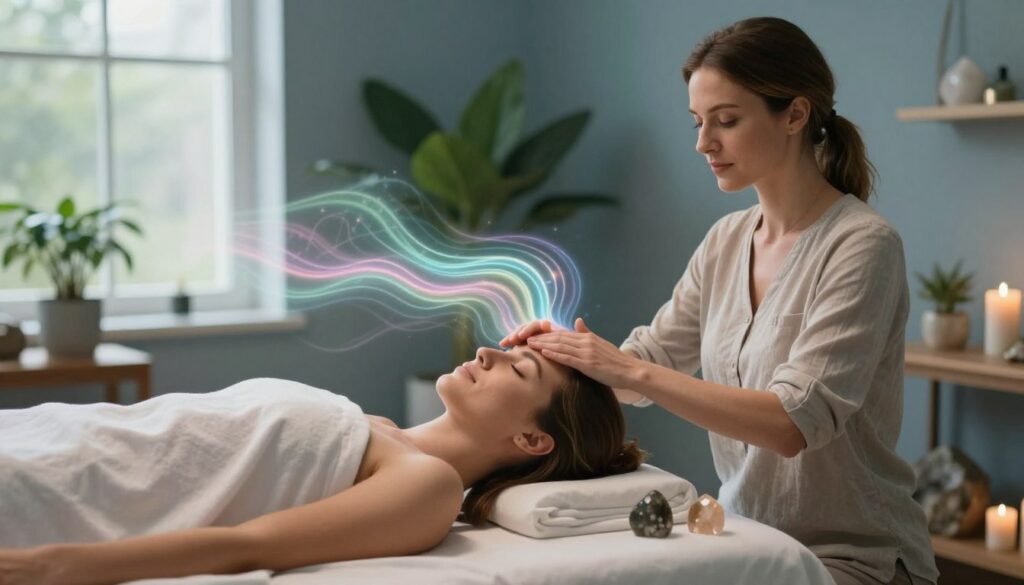
How Energy Healing Is Thought to Work
Practitioners use a handful of clear models to explain how subtle fields and bodily systems might support calm.
The biofield idea and energy balance goal
Biofield describes a massless field said to surround and permeate living bodies. Many approaches aim to restore a normal energy balance so the body can self-regulate better.
Chinese medicine: qi, meridians, and pathways
In chinese medicine, qi flows through meridians or pathways. Therapies target points to ease stagnation and improve flow, using the blockage metaphor to explain discomfort or tension.
Chakras and energy centers
The chakra model maps several centers linked to physical and emotional themes. Practitioners may work with these centers to support balance across body and mind.
Why sessions often feel calming
Most reports tie calming effects to the nervous system. Sessions can trigger a relaxation response, shifting the body toward rest and digest and lowering tension.
Normal responses include warmth, tingling, heaviness or lightness, emotional release, or deep relaxation. Some people feel neutral, and that is also a common, valid outcome.
“Some people notice changes like slowed breathing, reduced heart rate, or clearer thinking after sessions.”

| Model | Core idea | Common description |
|---|---|---|
| Biofield | Field surrounding the body | Restore energy balance and regulation |
| Chinese medicine | Qi flows through meridians | Unblock pathways to improve flow |
| Chakras | Energy centers along the midline | Balance centers for emotional and physical themes |
For practical tips on sharing intention or distance work, see this short guide on how to send healing energy.
Popular Energy Healing Methods You’ll See in the US
If you walk into a wellness studio in the U.S., these are the methods you’ll most often see on menus and intake forms.
Reiki — Practitioners place hands lightly on or hover over the body. Sessions are often calming and used for stress management and gentle support.
Acupuncture — A traditional Chinese medicine approach that uses very thin needles at points across the head, neck, back, and limbs. Most people report mild pressure or a tingling sensation. It’s widely offered for pain, tension, and symptom relief in integrative clinics.
Qigong and tai chi — Slow, guided movement with breath and focus. These moving meditation practices build resilience and can help with sleep, blood pressure, and reduced pain over time.
EFT tapping — A structured process that pairs tapping on acupressure points with brief verbal reframing. People use it for emotional regulation and quick stress relief.
Therapeutic Touch and pranic approaches — Non-touch or near-body scanning and hand motions taught to rebalance the field for those who prefer strong physical boundaries.
Polarity, Quantum Touch, and reflexology — Polarity blends gentle touch, movement, and lifestyle tips. Quantum Touch uses light touch, breath, and focused attention. Reflexology targets pressure points on hands, feet, and ears and is popular because it feels relaxing and is easy to access.
Many of these practices appear in spas, integrative medicine clinics, and private practices across the country.

| Modality | Typical session | Common uses |
|---|---|---|
| Reiki | Hands-on or hands-hovering; quiet session | Stress relief, relaxation, mood support |
| Acupuncture | Thin needles at acupoints; 20–60 min | Pain relief, tension, some chronic symptoms |
| Qigong / Tai Chi | Guided movement with breath; class or solo | Sleep, blood pressure, resilience |
| EFT tapping | Tapping points with verbal focus | Emotional regulation, anxiety relief |
| Reflexology | Pressure on hands, feet, ears | Relaxation, stress and minor pain relief |
What Energy Healing Therapy May Help With
Supportive sessions often aim to reduce arousal and help folks unwind after a long day.
Stress relief, relaxation, and better sleep quality
Relaxation-focused sessions can trigger a calming response in the nervous system. That shift may lower heart rate and ease muscle tension.
By reducing arousal before bed, some people notice better sleep continuity and quicker falling asleep.
Anxiety, depression, and burnout symptom support
People use these practices for symptom relief when they feel emotionally overloaded. Sessions are often paired with counseling to address root causes and coping skills.
Reported outcomes include fewer anxiety spikes and steadier mood over time, though clinical evidence remains limited.
Pain and tension: how people use therapies alongside medical care
Clients commonly book acupuncture, reflexology, or Reiki to complement physical therapy and medical treatment.
These approaches may ease muscle tightness and improve comfort, helping patients better engage in rehab or daily activity.
Supportive care in integrative mental health and addiction recovery settings
Some programs add acupuncture, meditation, or gentle movement to help regulate stress and reduce cravings.
Used together with counseling and medical care, these practices can support relapse prevention and emotional stability.
| Area | Typical benefit | What improvement can look like |
|---|---|---|
| Stress & sleep | Deeper relaxation | Fewer night wakings; easier sleep onset |
| Anxiety & mood | Symptom support | Reduced panic spikes; steadier mood |
| Pain & tension | Comfort and coping | Less muscle tightness; better rehab participation |
| Addiction recovery | Stress regulation | Lower cravings; improved emotional control |
“Many people report calm, clearer thinking, and small but steady gains in sleep and mood.”

For a simple guide on how to perform a session at home, see this short how-to overview.
What the Research Says Today
The research landscape shows promising signals for some methods while many areas remain under-researched. Readers should expect mixed results and cautious conclusions from clinical work.

Where evidence is strongest: acupuncture and Reiki in clinical trials
Acupuncture and Reiki have more clinical trials than most alternatives. Some trials report modest benefits for pain, stress, and anxiety symptoms compared with usual care or sham controls.
Where evidence is limited: why more high-quality studies are needed
Many techniques lack large, consistent studies. Common limits include small sample sizes, varying protocols, and trouble with blinding.
- Inconsistent methods make results hard to compare.
- Subjective outcomes like relaxation are tricky to measure.
- More rigorous trials in diverse settings are needed.
What “better than placebo” can mean for symptoms like stress and anxiety
Better than placebo may mean small but meaningful relief in stress or anxiety symptoms. Even modest gains can help quality of life when added to standard medical treatment.
“Use these approaches as complementary support and seek licensed medical care for serious or worsening conditions.”
| Modality | Research strength | Typical findings |
|---|---|---|
| Acupuncture | Moderate | Reduced pain and stress in some trials |
| Reiki | Limited to moderate | Some studies show reduced anxiety and burnout |
| Other methods | Low | Preliminary or mixed results |
Safety, Risks, and When to Talk to a Healthcare Provider
Knowing safety basics helps you use complementary practices wisely. Most approaches are non-invasive and low-risk, so they rarely cause physical harm. Low-risk does not mean no considerations; check conditions and medications before trying something new.
Why many methods are low-risk
Sessions often involve light touch or hands-hovering and minimal physical strain. That makes them suitable for relaxation and stress support for many people.
Talk to a provider first when:
- New or severe pain, unexplained symptoms, or complex chronic conditions.
- Persistent insomnia or worsening anxiety or depression.
- Pregnancy, recent surgery, or medication questions—especially blood thinners.
Complement, not replacement
Use these approaches alongside clinician-led care. For example, someone might use Reiki for calm during cancer care or add acupuncture while following physical therapy and medical treatment. Always keep your care team informed.
Red flags and vetting tips
Avoid practitioners who promise permanent cures, demand exclusive loyalty, pressure relationships, or disrespect consent. Good signs include transparent pricing, clear scope (no medical claims), and willingness to collaborate with your primary clinician.
“Ask for consent options: hands-hovering, no-touch, or stopping at any time.”
For a trusted overview on safe use, see this resource.
What to Expect in an Energy Healing Session
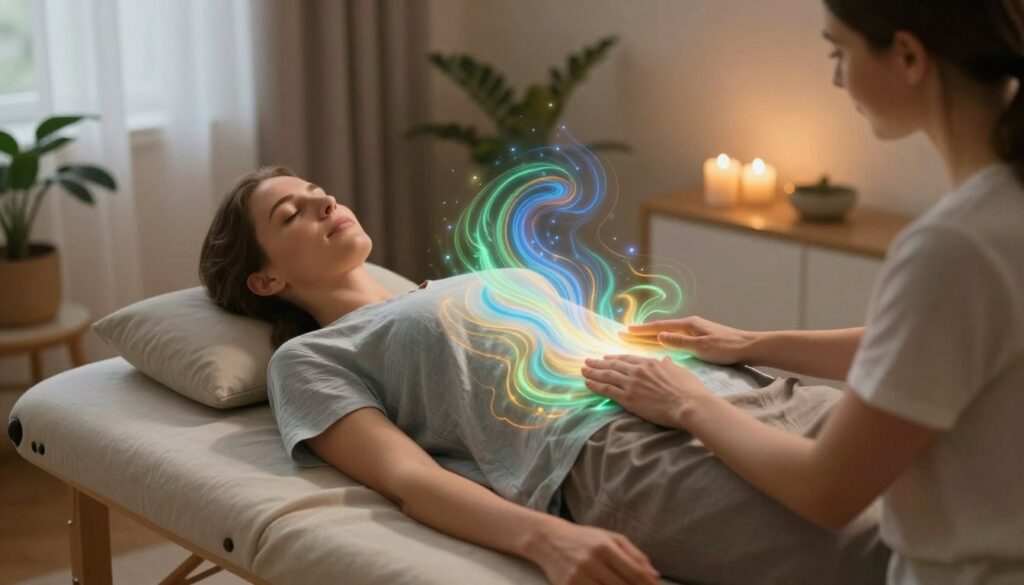
A single session usually follows a short conversation, a few centering breaths, and a quiet assessment of where tension shows up in the body.
Common session flow
Most visits begin with a brief intake: you describe goals and recent symptoms. The practitioner may ask about sleep, stressors, or medications.
Sessions often include intention-setting and guided breathing or short visualization. Then the practitioner scans for sensations or imbalances in the energy field and sets a focused intention.
Touch, no-touch, and boundaries
Options include hands-on contact, hands-hovering, or fully no-touch approaches. Acupuncture and reflexology use needles or pressure in contrast to non-contact methods.
Boundary phrases you can use: “I prefer no touch,” “Please avoid my feet,” “Let me know before you move near my face,” “Pause if I ask.”
After-effects and simple integration
Common after-effects include tiredness, emotional release, or deep relaxation. Feeling neutral is normal too.
Practitioners may assign brief “homework” such as breathwork, gentle meditation, or noticing body sensations to support integration.
Remote sessions and setup
Distance sessions via Zoom mirror in-person flow: intake, guided relaxation, and practitioner-led work. Create a quiet, comfortable space and wear loose clothes.
Expect guidance on posture, breathing, and when to give feedback during the session.
“Many people leave feeling calmer, sometimes tired, and often with a clear suggestion for simple follow-up self-care.”
| Step | Typical elements | What you may feel |
|---|---|---|
| Intake | Brief history, goals, boundaries | Talking, clarifying expectations |
| Centering | Breath, visualization, intention | Calm, slowed breath |
| Scan & session | Hands-on / hover / remote focus | Warmth, tingling, heaviness, or subtle change |
| Aftercare | Hydration, rest, homework | Tiredness, emotional processing, relief |
How to Get Started With Energy Healing Practices at Home
Start small at home with a few short habits that help calm the nervous system and support daily balance. A low-pressure plan makes these practices feel doable on busy days.
Meditation and breathwork for daily balance
Daily meditation can be brief: 5 minutes of focused breath in the morning steadies the mind. Try box breathing now—inhale 4, hold 4, exhale 4, hold 4—and repeat three to five times to slow heart rate and ease stress.
Gentle movement options
Choose a gentle path that fits your body. Beginner qigong helps gentle energy flow, tai chi gives “meditation in motion,” and yoga supports grounding and flexibility.
None require fancy gear. A few minutes of stretching or slow forms each day builds resilience and can ease pain or tension over time.

Building a consistent routine
Aim for a 5–10 minute morning reset and a 5-minute evening wind-down. Track simple markers—sleep quality, stress level, tension, mood—to see if the practice helps symptoms over weeks.
If days get busy, scale down: one breath set or a two-minute stretch keeps momentum. For more guided options and resources, consider a short psychic healing guide to expand your practice gently.
“Small, steady steps often bring the clearest shift in sleep, mood, and overall health.”
Conclusion
To close, here are simple, realistic takeaways that help you move forward with calm and caution.
Key summary: energy healing and related approaches form a broad set of complementary tools many people use to support relaxation, mood, and overall health. They often help the body and mind feel steadier when added to standard care.
Safety first: treat these methods as complements, not replacements for medical or mental health treatment. Talk with your clinician for serious symptoms or diagnosed conditions.
Start small: pick one low-risk option—guided breathwork, qigong, or a vetted local practitioner—and track how your body responds over a few weeks. Research varies by method, but practical symptom relief matters to many.
Explore gently, stay informed, and choose what helps you feel more balanced while keeping your care team in the loop.
FAQ
What does energy healing therapy mean in integrative health?
Energy healing therapy refers to a set of noninvasive practices that aim to support the body’s natural capacity for recovery by working with subtle life force or body energy and the surrounding energy field. Providers use hands-on touch, hands-hovering techniques, movement, breath, or guided attention to help promote relaxation, reduce stress, and encourage balance alongside standard medical care.
Why do people choose energy-based approaches for stress and emotional balance?
Many people seek these methods for their calming effects and the way they support emotional regulation. Techniques such as guided breathwork, meditation, Reiki, and qigong can trigger the relaxation response, lower tension, and improve sleep, making them useful complements to mental health care and stress-management routines.
How is the concept of life force described across traditions?
Different systems use different terms—Chinese medicine calls it qi and maps it along meridians; South Asian traditions describe subtle currents and chakras; modern biofield models refer to an electromagnetic and informational field around the body. All emphasize maintaining flow and balance rather than blocking or stagnation.
What are common methods people find in the U.S.?
Popular options include Reiki (hands-on or hands-hovering), acupuncture (a traditional Chinese medicine practice), qigong and tai chi (moving meditations), EFT tapping and acupressure, Therapeutic Touch, pranic healing, polarity therapy, quantum touch, and reflexology. Many are offered in clinical integrative settings and wellness centers.
Can these practices help with pain, anxiety, or sleep problems?
Yes. Research and clinical reports suggest benefits for stress relief, improved sleep quality, and symptom support for anxiety and pain when used alongside medical care. Effects vary by person and condition, and these practices often work best as part of a broader care plan.
What does research say about effectiveness?
Evidence is strongest for acupuncture and some positive trial results for Reiki and relaxation-based approaches. Overall, more high-quality, larger studies are needed. In many trials, outcomes show improvements beyond placebo for stress and symptom relief, but results depend on conditions studied and study design.
Are these treatments safe?
Most are low-risk and noninvasive. Skilled practitioners follow hygiene and boundary standards. Acupuncture carries procedure-specific risks, so choose licensed clinicians. Always use these therapies as complementary care and consult your healthcare provider when you have a serious condition or are undergoing medical treatment.
How does a typical session proceed?
Sessions usually begin with intake and intention-setting, followed by assessment for imbalances. Practitioners may use touch, hovering hands, movement, or guided meditation. Afterward, you might feel relaxed, tired, or emotionally lighter. Providers often recommend simple self-care practices to integrate the session.
What about distance or remote sessions—do they work?
Many practitioners offer remote sessions via phone or video and report similar calming effects for clients. Remote work typically uses guided relaxation, visualization, and intention-setting. Individual responses vary, but many people find remote appointments convenient and effective for stress and emotional support.
How can I start practicing at home to support balance and resilience?
Simple steps include daily meditation or breathwork, short qigong or tai chi routines, gentle yoga, and regular sleep and stress-management habits. Consistency matters: brief daily practices often yield more benefit than occasional longer sessions.
When should I avoid using energy-based services alone?
Do not rely on these practices as a replacement for urgent or lifesaving medical care. If you have serious medical conditions, uncontrolled psychiatric symptoms, or are in active cancer treatment, discuss complementary options with your primary clinician to ensure safety and coordination.
How do I choose a qualified practitioner?
Look for credentialed professionals—licensed acupuncturists for acupuncture, Reiki practitioners with reputable training, or clinicians affiliated with integrative health centers. Ask about training, scope of practice, ethical standards, and whether they coordinate with medical providers.
Will insurance cover these services?
Coverage varies. Many insurance plans cover acupuncture for specific diagnoses and some integrative services in employee wellness or hospital-based programs. Check your plan details and ask providers about sliding-scale fees or bundled packages.