

This short guide explains a common complementary wellness approach in plain U.S. English. Many traditions describe a life force that helps keep the body, mind, and spirit in balance. Sessions usually aim to promote relaxation and calm sensations like warmth or tingling.
Expect practical details: you will learn simple frameworks such as fields, meridians, and chakras. The guide also covers what a session looks like, popular methods like Reiki and acupuncture, likely benefits, and current research about use alongside conventional care.
This topic suits readers dealing with stress, anxiety, pain, sleep trouble, or anyone curious about mind-body wellness. Most sessions are non-invasive and low risk, but they should complement—not replace diagnosis or treatment from licensed healthcare providers.
For a deeper walkthrough of methods and safe practice tips, see the ultimate guide to energy methods.
Key Takeaways
- Simple definition and realistic expectations for complementary care.
- Sessions often support relaxation and restore balance.
- Common frameworks: fields, meridians, chakras; common methods: Reiki, acupuncture.
- Useful for stress, pain, sleep issues, and general well-being exploration.
- Low risk but not a substitute for licensed medical treatment.
What Is Healing Energy?
Many people turn to gentle touch and guided calm to ease stress and restore inner balance.
Healing energy often refers to a life force idea where body balance affects how you feel. Practitioners aim to restore harmony and help the body regulate itself.

How practitioners describe the approach
Energy healing therapy usually involves a practitioner using hands-on or hands-off methods to encourage normal flow and address perceived imbalances. Sessions focus on deep relaxation and support for natural recovery.
Common sensations and variations
People report warmth, tingling, heaviness or lightness, calm, and sometimes tears or laughter. Responses differ by goal, stress level, and comfort with touch.
Simple practical notes
- Most sessions keep you fully clothed.
- You can request light touch, hands hovering, or no touch.
- Mind-body connection often explains outcomes like better sleep and feeling grounded.
| Aspect | Typical report | Why it matters |
|---|---|---|
| Relaxation | Deep calm, low heart rate | Supports stress relief and sleep |
| Sensations | Warmth, tingling | Signals nervous system shift |
| Emotional release | Tears, laughter | Helps process feelings safely |
How Healing Energy Is Believed to Work in the Body
A straightforward frame: many practitioners explain effects through the mind-body connection. When stress stays high, the nervous system can remain in a fight-or-flight state. Balance-focused approaches aim to shift the body toward rest-and-repair, helping sleep, mood, and physical tension.
Frameworks people use
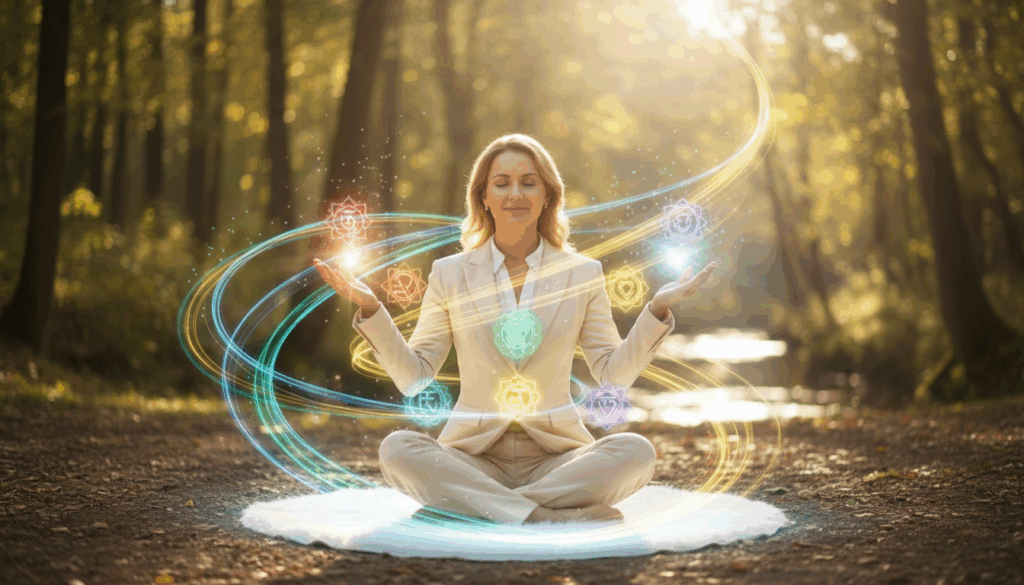
Different traditions offer maps for that shift. Some describe a biofield or energy field around the body. Traditional Chinese medicine talks about meridians—about twelve main pathways. Ancient systems name chakras as centers that link feeling and function.
Blockages, flow, and the typical process
Practitioners may point to blockages where flow energy feels restricted. Pain, fatigue, or emotional heaviness can be seen as signs of limited flow that may relate to illness risk or slowed recovery.
- Assess: practitioner checks symptoms and areas of tension.
- Support flow: hands-on, hands-off, movement, or breath work to encourage change.
- Integrate: rest, hydration, gentle movement, and breathing help hold gains.
Evidence-aware note: these frameworks help many people feel better, but they are not always measured the same way in Western medicine. Results vary by person and condition.
Types of Energy Healing Techniques You’ll Hear About Most
Here’s a simple guide to the most commonly offered methods and why people try them.
Reiki
Rei suggests higher knowing and Ki refers to life force. Sessions use light hands on, light touch, or hands hovering to promote deep relaxation.
Acupuncture
A traditional Chinese medicine practice that uses very thin needles at acupressure points. It aims to rebalance flow and support pain relief and other symptoms.
Qigong
Gentle movement and breathing train the body to improve qi flow. People report better sleep, less pain, and calmer nerves.
Pranic Healing
Practitioners scan for aura blockages, then clear and “recharge” non-touch areas to support recovery and comfort.
Therapeutic Touch, EFT, Polarity, Quantum Touch, Reflexology
Therapeutic Touch often works without direct contact to clear field imbalances.
EFT combines tapping points with reframing thoughts to calm emotional patterns.
Polarity Therapy mixes gentle pressure, movement, and habit changes for balance.
Quantum Touch adds focused breathing and light touch where pain appears to aid flow.
Reflexology uses pressure on hands, feet, and ears to support pathways and deep relaxation.
- Why choose a method: stress relief, pain support, emotional balance, or simply relaxation.
- Try one session to see which practice fits your needs and comfort level.
- For techniques on giving distant support, see how to send healing energy to.
What Happens During an Energy Healing Session
A session typically follows a clear, gentle process so people feel safe and informed. Practitioners begin with intake and set intentions together. This helps match treatment to your symptoms and goals.
Intake and intention-setting
Expect a brief conversation about current health, recent symptoms, and goals like better sleep, less anxiety, or pain relief. The practitioner will ask about medical history and comfort with touch.
Hands, touch options, and consent
You remain fully clothed. You can choose hands-on, light touch, hands-off hovering, or no contact for sensitive areas. Practitioners confirm consent and modify touch at any time.

Positions, treatment flow, and common sensations
Many sessions use a massage table; chair options are common in clinics. During the treatment phase, people report warmth, tingling, heaviness, lightness, or deep calm.
Some clients drift to sleep; others feel alert and peaceful—both are normal.
After-session debrief and self-care
Afterwards, the practitioner will review what you noticed and suggest simple integration steps: rest, hydrate, gentle movement, or journaling. If pain spikes or symptoms worsen, pause and check in with a licensed clinician.
“A short follow-up chat helps hold the benefits and plan safe next steps.”
For practical how-to guidance on performing related methods, see perform energy methods.
Potential Benefits for Stress, Anxiety, Pain, and Overall Well-Being
Clients often notice small but steady shifts in mood, sleep, and tension after repeated sessions. These shifts tend to help people cope better with daily demands rather than cure an illness.

Relaxation and better sleep
Relaxation can downshift the stress response, making it easier to fall and stay asleep. Over time, better rest often boosts daytime focus and recovery.
Supporting emotional health
Sessions may reduce anxiety and improve mood for some people, especially when combined with therapy, breath work, or healthy routines. Feeling more grounded is a common report.
Pain, muscle tension, and comfort care
Many use these sessions as supportive care alongside medicine. Reports include less muscle tightness and improved comfort while following medical plans.
Quality of life, self-discovery, and spirit
People describe everyday wins: more patience, fewer stress spirals, and a clearer sense of self. Some welcome a spirit-centered perspective; others keep the approach focused on relaxation.
Realistic expectations: benefits may be subtle and build over several visits. Track sleep, stress, and pain across sessions before judging results.
For a focused look at a specific approach, see scalar energy healing.
| Goal | Common outcome | How it helps | Best when paired with |
|---|---|---|---|
| Stress relief | Lower tension, calmer mind | Reduces fight-or-flight signals | Breathing practice, sleep hygiene |
| Improved sleep | Faster sleep onset, deeper rest | Supports nervous system reset | Routine bedtime, reduced screens |
| Pain support | Less tightness, better comfort | May ease muscle guarding and perception of pain | Medical care, physical therapy |
| Personal growth | Greater self-awareness, hope | Quiet fosters insight and habit change | Journaling, counseling |
Does Energy Healing Actually Work? What Research and Clinical Trials Suggest
Scientific studies have examined some practices more than others, so findings differ by method and goal.

Where evidence is strongest
Acupuncture has the largest body of clinical trials showing benefits for pain, nausea, and some sleep outcomes. Trials for Reiki show promising effects on stress, anxiety, and burnout in several small studies.
Why more high-quality trials matter
Better trials use larger samples, consistent measures, and strong controls to reduce bias. Without those elements, results stay uncertain for many practices.
Evidence versus personal experience
Personal response can feel powerful even when measured effects are small. Placebo and expectation can produce real changes in stress and pain pathways.
Practical checklist:
- Define one clear goal (sleep, pain, stress).
- Track a measurable outcome for several sessions.
- Reassess and pair with medicine or therapy if needed.
| Aspect | Current findings | What to watch |
|---|---|---|
| Acupuncture | Multiple trials support pain and some sleep gains | Study quality varies; best when combined with standard care |
| Reiki | Small trials suggest stress and anxiety benefits | More large-scale trials needed for firm estimates |
| Other practices | Limited or mixed trial data | Seek transparent practitioners and track outcomes |
Safety, Side Effects, and Using Energy Healing Alongside Medicine
Knowing risks and limits helps you use complementary therapy alongside medical care safely.
Why most therapies are low-risk and non-invasive
Most sessions are gentle, non-invasive, and focus on relaxation. Practitioners often offer light touch, hands-off options, or work with you fully clothed, which lowers physical risk.
Realistic side effects and aftercare
Many people report no side effects. Some feel tired, emotional, or like they are “processing” after a session. These effects usually pass within a day or two.
Self-care after a session helps: rest, hydrate, and note any changes in symptoms or mood.
When to keep conventional medicine and talk with your provider
Always continue prescribed treatment for any illness or chronic condition. Talk to your clinician before starting sessions if you are pregnant, in cancer care, on complex medication, or have severe mental health symptoms.
Choosing a practitioner: training and patient-centered care
Pick someone with clear training, informed consent, transparent pricing, and respect for boundaries. A patient-centered practice lets you choose hands-on or hands-off options, flexible session length, and trauma-aware limits.
| Red flag | What to do |
|---|---|
| Claims of cure or stopping meds | Decline and consult your clinician |
| No informed consent | Find a different practitioner |
| Pressure to skip medical care | Prioritize licensed treatment |
For more practical guidance on combining this approach with medical care, see energy healing.
Conclusion
, Small, intentional practices can make the body feel more balanced and resilient.
Energy healing refers to a life force concept many use to support the body and restore balance by encouraging healthy flow.
Try one low-pressure option that matches your comfort—touch or no touch—and set a clear intention like sleep or emotional grounding.
Track sleep, tension, and mood for a week after a visit to measure change. Pair this approach with medical care or therapy when needed.
Curious about chakra work? Learn more with a short guide to chakra balancing.
Bottom line: whether seen as spiritual practice or a mind-body reset, the goal is to help you feel steadier in daily life.
FAQ
What does healing energy mean and how does it work?
Many people describe it as a life force that supports balance in body, mind, and spirit. Practitioners aim to restore smooth flow through systems like meridians or chakras, reduce stress, and support the body’s own repair processes. Sessions often focus on relaxation and easing muscle tension while encouraging an overall sense of calm.
How do therapists explain what happens in the body during a session?
Providers point to the mind-body connection and the stress response. By promoting relaxation and lowering sympathetic arousal, treatments may help reduce pain signals, ease anxiety, and improve sleep. Some frameworks use energy fields and pressure pathways as models to guide techniques.
What sensations might I feel during a session?
Common responses include warmth, tingling, deep relaxation, and emotional release. People sometimes report shifts in breathing, reduced muscle tightness, or clearer thinking. Responses vary—some feel immediate change, others notice gradual effects.
Which techniques are most common and how do they differ?
Popular approaches include Reiki (light touch or hands hovering), acupuncture (needle stimulation of acupoints), Qigong (movement and breath), and Therapeutic Touch (non-touch field work). Other methods are reflexology, Emotional Freedom Technique (tapping), pranic healing, polarity therapy, and Quantum Touch. Each uses different tools and movement to influence flow and comfort.
What happens during an intake and the actual session?
Expect a short intake to review symptoms, goals, and medical history, plus intention-setting. Sessions may involve hands-on positions or hands-off options while you remain fully clothed. Afterward, practitioners often suggest hydration, gentle self-care, and time to integrate the experience.
Can this help stress, anxiety, or chronic pain?
Many clients find improved relaxation, better sleep, and reduced muscle tension. Treatments can support emotional well-being and serve as comfort care alongside conventional pain management. Outcomes depend on the person, condition, and consistency of sessions.
Is there scientific evidence supporting these therapies?
Evidence varies by method. Acupuncture and Reiki have the strongest clinical research showing potential benefits for pain and anxiety, while high-quality trials are still needed for several other approaches. Personal experience and placebo effects can both play roles in reported improvements.
Are there risks or side effects I should know about?
Most methods are low-risk and noninvasive. Mild reactions can include fatigue, temporary emotional shifts, or increased soreness as the body adjusts. Always inform your healthcare provider about complementary treatments, and avoid replacing essential medical care with only alternative approaches.
How do I choose a reputable practitioner?
Look for clear training, professional credentials, good client reviews, and a patient-centered approach. Ask about session goals, safety practices, and how they coordinate care with medical providers. A trustworthy practitioner respects informed consent and keeps conventional treatment in place when needed.
How many sessions will I need to feel a benefit?
It depends on symptoms and goals. Some people notice changes after one visit; others need a series of sessions for lasting shifts. Practitioners often recommend an initial plan with periodic reassessment and adjustments based on progress.
Can people use these therapies alongside medicine and physical therapy?
Yes. Most energy-based approaches are complementary and can support relaxation, pain relief, and recovery when used with medical care or physical therapy. Discuss integration with your primary clinician to ensure safe coordination.