

This short guide asks a clear question: can sexual energy serve as a form of healing in everyday life?
We keep this practical and shame-free. Think of this current as a broader life force that can show up as creativity, vitality, and simple presence, not only in sex. This piece is an informational look, not medical advice.
You’ll get plain definitions, tradition-based frameworks like prana and chi, a quick nervous system primer, trauma-safe tips, and simple solo and partner practices. Tantra’s idea of transmutation gets a friendly, down-to-earth intro.
Expect practical takeaways for connecting with this power without pressure. We’ll also clarify the difference between inward connection and performance-driven sexuality.
Key Takeaways
- Explore how this life force can show up beyond sex.
- This article offers information, not medical advice.
- Learn basic frameworks and nervous system context.
- Find trauma-safe, low-pressure practices to try.
- See how Tantra frames transmutation in simple terms.
Why This Question Matters in Modern Wellness
Modern wellness conversations are asking whether our sexual drive can be tapped to boost creativity, mood, and resilience.
Sexuality beyond sex acts in today’s culture
In the United States, somatic work, embodiment, and trauma-informed care have nudged sexuality into mainstream well-being talks. Many teachers frame such urges as a broader life force that fuels creativity and vitality.
What people mean by “energy,” “vibration,” and “life force”
Most people use these words to name felt states in the body and nervous system, not only mystical ideas. Examples include feeling uplifted around certain friends, drained after large gatherings, or suddenly alive after music or movement.
| Everyday Signal | Common Meaning | Wellness Response |
|---|---|---|
| Feeling calm with someone | Safe, regulated nervous system | Seek more gentle presence |
| Drained after events | Overstimulation | Set boundaries, rest |
| Creative bursts after intimacy | Life force activation | Channel into projects |
Many readers get confused when morality or performance mixes with this topic. Asking whether this life force can help your mind and body shifts the focus from problem to resource. Not everyone experiences vibration the same way, and personal meaning matters more than strict labels.
What Sexual Energy Really Is Beyond Sex
Think of this urge as a quiet current that fuels curiosity, drive, and creative output beyond physical acts.
At its core, sexual energy acts like a life force energy — an inner vitality that powers creativity, motivation, and emotional aliveness rather than only arousal.
How it differs from being “turned on”
You can feel alive, warm, and magnetic without wanting sex. Baseline vitality shows up as steadiness, clearer boundaries, and a bigger yes or no in the body.
Everyday signs of this life force
- More presence in the body and calmer attention.
- Sudden creative bursts or clearer personal truth.
- Playfulness, drive to make, and gentle inner humming rather than intensity.
“Pleasure often signals safety and aliveness, not a performance metric.”

| Sign | What it suggests | Simple practice |
|---|---|---|
| Warmth in chest or belly | Grounded life force | Slow breath and notice |
| Clearer boundaries | Authentic self-connection | Say a polite no and pause |
| Creative burst | Channeling vitality | Write or move for 10 minutes |
How Traditions Describe Sexual Energy as a Universal Force
Many wisdom traditions offer maps that describe a shared life force flowing through our bodies.
Prana in yoga and chi in Chinese practice act as practical frameworks. They help people notice shifts in breath, mood, and sensation without asking for belief.
Prana and chi as helpful maps
These systems treat vitality as a moving force that supports attention, movement, and creativity. Teachers point to breath, posture, and simple movement to sense changes.
Chakras and energy centers
Chakra models link the root with safety, the sacral with creativity and sexuality, the heart with connection, and the throat with expression. Tradition suggests this force may travel upward toward the chest and voice.
Some lineages describe multiple subtle bodies and thousands of channels. That language tried to explain how feeling, emotion, and vitality move through different parts of you.

| Model | Key focus | Practice |
|---|---|---|
| Prana / Chi | Breath and circulation | Breathwork, movement |
| Chakras | Safety, creativity, expression | Visualization, colors |
| Subtle bodies | Sensation layers | Sound, touch, gentle tracking |
Treat these maps as lenses. They offer useful ways to build self-awareness and safe practices in a modern, grounded form.
Is sexual energy healing energy in the body and mind?
A gentle shift in breath or posture can let held charge soften and welcome new clarity. When this inner current moves without tightness, it often supports vitality, increased awareness, and emotional integration across the body and mind.
How free-flowing sexual energy connects you to vitality and inspiration
Free-flowing means less bracing in the pelvis, deeper breath, and more tolerance for subtle sensation. Practically, that looks like easier movement, clearer ideas, and small bursts of creative momentum.
Why the pelvis and hips can hold stored emotion and stress
Many somatic teachers point to the lower belly, hips, and pelvis as common areas for tension. Patterns of protection, shame, or long-held stress tend to show up there.
Gentle attention, soft movement, and patient breath help those tissues relax without forcing release.
How authenticity, boundaries, and vulnerability can be part of healing
- Authenticity often reveals your true yes and no—honoring that builds safety.
- Setting clear boundaries supports steady regulation in both body and mind.
- Vulnerability works like a skill: honest self-checks, without judgment, create momentum for change.
When sexual energy naturally rises toward the heart and connection
When aliveness feels safe, the current may lift into warmth, affection, and deeper connection rather than remain purely physical. That blending can widen intimacy and bring a fuller sense of life.
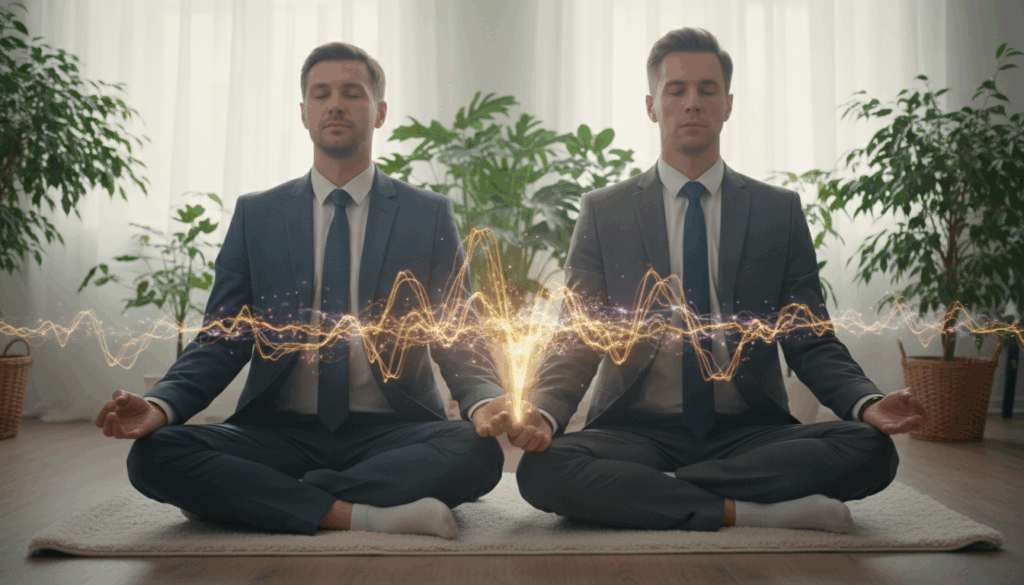
Note: Healing never requires sex, and safety and consent must come first. For guided practices, see the ultimate guide to energy healing.
Sexual Energy vs. Desire, Lust, and Performance Pressure
Let’s break down the difference between raw inner vitality and directed wanting, and why that matters in practice.
Neutral vitality versus directed wanting
Sexual energy can feel like a neutral life force—calm, present, and available. Desires give that force a direction toward a person, outcome, or experience. Lust often shows up as urgency or craving; it isn’t inherently bad, just more intense.

How performance mindset blocks presence
Performance focus pulls attention into evaluation. People chase orgasms, worry about looks, or monitor “doing it right.” That loop takes you out of bodily sensation and the here and now.
- Clear definitions: neutral vitality, directed desire, and craving-driven lust.
- Real-life signs: checking the phone mid-moment, rehearsing moves, or racing to a finish.
- Gendered pressure: many women feel urged to appear desirable; many men feel urged to perform—both reduce embodied intimacy.
Quick reframe: ask, “What do I feel right now?” instead of, “How am I doing?” This simple shift returns attention to sensation and choice. Healthy sexuality supports self-awareness, not comparison or scripts. For practical guidance on gentle practices, see how to send healing energy to.
Can Sexual Energy Feel Dark or Intense?
Intensity often shows up as heat, trembling, or sudden emotion. That raw feeling can alarm you, but it frequently points to old wounds — shame, fear, grief, or rejection — surfacing when the body opens to sensation.

When shadow shows up as old material
Normalize intensity: big feelings do not mean something is broken. They usually mean memory and stored tension are moving through the system.
Put simply, the body may register a strong force and the mind will add a story. Learn to separate the felt sensation from the narrative that calls it dark.
Power dynamics versus life force
Vital life force and coercive control are different things. Manipulation, pressure, or domination are relational harms, not the same as a healthy flow of power inside you.
Consensual kink can be a distinct kind of experience when mutuality and consent shape meaning. If intensity feels unsafe, slow down, choose supportive practices, and seek help rather than pushing through.
Why Sexual Energy Is Often Suppressed in the United States
Cultural scripts in the United States commonly frame desire as risky, private, or wrong. Limited sex education, moralized messages, and media that prizes appearance over presence shape how people learn about their bodies.
Shame-based messaging teaches many to freeze or hide felt sensation. When feeling becomes embarrassing, the nervous system often treats it as unsafe. That makes natural cues harder to trust.

What suppression looks like
Common signs include numbness, low desire, trouble receiving pleasure, or feeling detached during sex. Some people chase intense experiences or novelty to feel alive again.
How overcompensation shows up
Overcompensation can mean constant validation seeking, conquest, or compulsive chasing of intensity. These patterns can mask a deeper need for grounded presence and authentic power.
Gendered patterns to notice
- Women: often carry body-image pressure, people-pleasing, and a worry about appearing desirable rather than present.
- Men: commonly face performance anxiety, emotional shutdown, and a push to prove power through outcome.
None of this is personal failure. These are learned cultural habits that can shift with curiosity, safety, and support. For gentle practices that help people reconnect, see practical grounding tools.
Sexual Energy and the Nervous System
How your nervous system cycles helps explain why arousal can feel intense one moment and calm the next.

Activation and release: sympathetic vs. parasympathetic rhythms
Your body has a simple two-mode design: a go mode for action and an unwind mode for rest.
Activation brings faster heart rate, alertness, and amplified sensation. That often links to arousal and creative drive.
Release returns breath, digestion, and soothe. Afterglow and grounding live here when the system settles.
Why arousal can feel both calming and overwhelming
When activation rises without safety cues, flooding can happen. Mind stories such as fear or shame make it louder.
Simple tools help: longer exhales, slow movement, and hands-on grounding let the body process over time instead of rushing release.
| State | Signs | Support |
|---|---|---|
| Activation | Quick breath, heat | Slow inhales, gentle movement |
| Release | Warmth, ease | Long exhales, soft touch |
| Overwhelm | Tension, panic | Pause, consent cues, professional support |
Takeaway: learning your rhythms gives choice over pace and practice. Over time, this life force can feel more like steady presence than sudden surge.
Trauma, Healing, and Safety When Working With Sexual Energy
Working with our inner drive requires steady pacing and clear safety, not dramatic breaks or forced release.
Gentle is powerful: forcing release can push the nervous system back into threat mode. That often creates more shutdown, panic, or dissociation instead of lasting change.

Consent, sovereignty, and listening to your body
Sovereignty means you set the pace and choose touch, practice, and timing. Your yes and no always matter.
- Try phrases: “I’m curious, I want to go slowly,” or “That’s a no today.”
- Simple signals—hand on heart, a coded word—help you stay in control during partner work.
When to seek professional support
Common trauma cues include numbness, panic, freezing, or feeling like you must please. These signs tell you to slow down and seek help.
Look for trauma-informed therapists, somatic clinicians, or sex therapy specialists when symptoms persist or disrupt daily life. Support is a strong, practical step for women, men, and anyone on this journey.
| Risk Sign | What it means | Suggested action |
|---|---|---|
| Dissociation or zoning out | Overwhelm in the body | Pause practice, ground with breath, contact a therapist |
| Flashbacks or intense panic | Re-triggered memory | Stop, seek trauma-informed care, use safety tools |
| Compulsive pushing for release | Workaround, not integration | Choose slow practices, set boundaries, consult a clinician |
“Choosing safety over speed makes real integration possible.”
Ways to Connect With Sexual Energy Without Having Sex
You can connect with inner vitality without sex. Small, safe practices help people build presence, reduce shame, and bring steady life into the lower belly and hips.
Breathwork and active meditation
Try slow, continuous breath with longer exhales. Breathe into the lower belly and notice sensation without forcing release. This gently activates then soothes the nervous system.
Movement for hips and pelvis
Move in small ways: slow hip circles, swaying, or intuitive dance. Yin-style hip openers or gentle pelvic tilts help mobilize tension and welcome new flow.
Touch and awareness
Place one hand on the lower belly and one at the heart. Notice warmth, tension, or numbness with zero judgment. This simple check-in builds safety and self-compassion.
Creativity and shame release
Channel drive into writing, art, singing, or building things. Creative work offers a healthy outlet for pleasure and life force while reducing pressure.
| Practice | What it does | How to start |
|---|---|---|
| Gentle breathwork | Calms, invites lower-belly sensation | 5 minutes: slow inhale, longer exhale |
| Hip movement | Releases pelvic tension | 3 minutes of circles or sway |
| Hands-on awareness | Checks for safety and warmth | One-hand belly, one-hand heart for 1–2 minutes |
| Creative channel | Transforms drive into making | Write, sing, or build for 10 minutes |
“You don’t need sex to feel alive; daily practices can build steady presence.”
Using Sexual Energy With a Partner for Deeper Connection
Sharing presence with another person changes how desire lands in the body. When partners choose pacing and curiosity over speed, intimacy grows with steady trust. That steady approach helps a nervous system settle and feel safe.
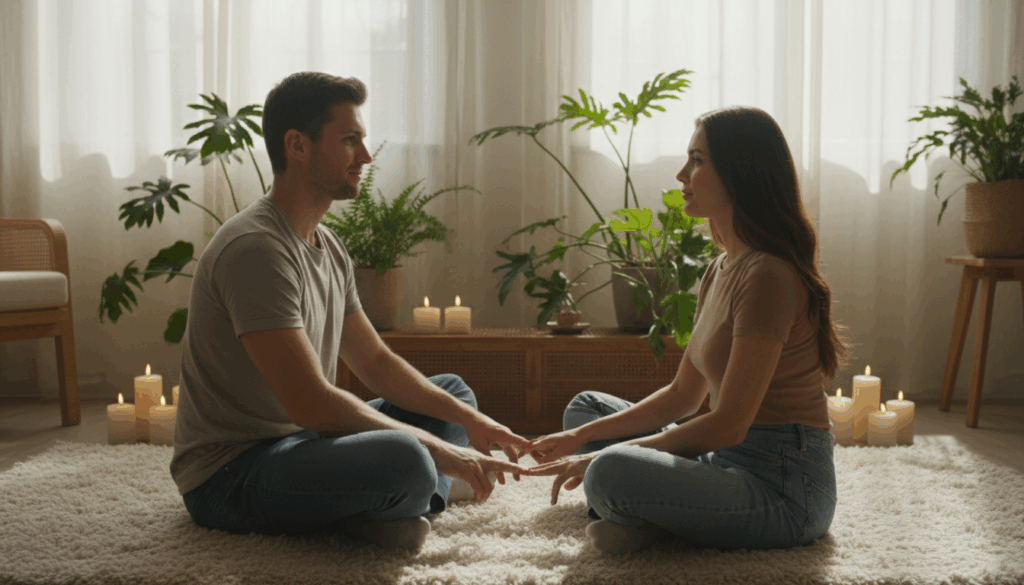
Presence over intensity: building trust and safety
Presence signals calm. The nervous system reads steadiness as safety, which supports deeper sensation and mutual trust.
- Try eye-contact breaks and check-ins every few minutes.
- Use slower touch and permission to pause rather than racing to a goal.
- Say simple prompts: “I’d love slower,” or “Can we stay with kissing longer?”
Heart and desire: blending affection with pleasure
When warmth, honesty, and care join desire, intimacy feels connected instead of performative. This links the heart with physical wanting and often reduces shame.
How conscious intimacy supports relationship repair
Mindful partnering can repair trust, improve attunement, and lower resentment tied to unmet needs. Consent remains ongoing—ask, listen, and offer renegotiation.
“Slow, curious touch lets two people build toward closeness on a safe course.”
For guided partner practices and a deeper course on presence, see partner practices course.
Tantra’s Lens on Sexual Energy, Transmutation, and Sublimation
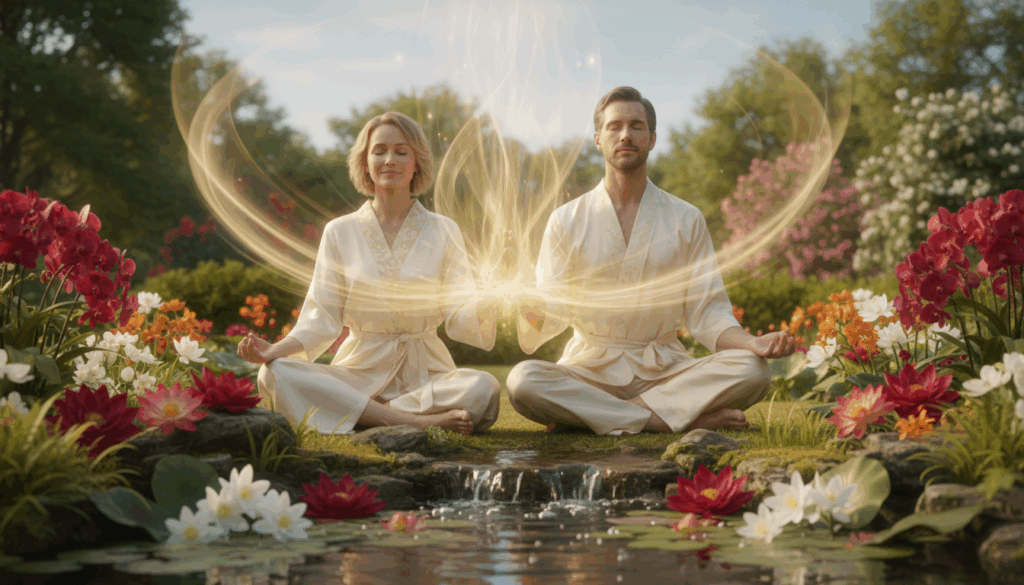
Tantra works like a methodical study of inner flow. It trains attention, posture, breath, and sound to help you notice what moves in the body. Teachers present it as structured practice, not just erotic technique.
Refining raw force into usable life force
Transmutation often appears in Tantra as a refining process. Think of crude oil turned into fuel: rough, high-charge impulses become steadier vitality you can direct. Practices include focused breath, subtle movement, and gentle retention to steady sensation.
Directing upward: sublimation and safe guidance
Sublimation means guiding that refined current upward through posture, attention, and breath. Many lineages teach movement toward the chest and throat to support clarity, creativity, and heart openness.
Retention, circulation, and intention
Retention and circulation recur in teachings, along with clear intention. These themes encourage pacing and respect for the nervous system. Forcing leads to overwhelm; slow, consistent practice builds usable change.
| Theme | Method | Practical use |
|---|---|---|
| Transmutation | Breath + visualization | Channel toward creative work |
| Sublimation | Posture + upward attention | Support clarity, focus, heart connection |
| Circulation | Movement + sound | Reduce stuckness, steady presence |
Try a simple intention: breathe into the lower belly, imagine gentle upward flow, then spend ten minutes on a project. For ritual-style focus on desire and purpose, see a short guide such as how to do a love spell with.
Sexual Pleasure, Orgasm, and Whole-Body Energy
Orgasm can arrive as a wave that ripples through muscles, breath, and attention. Some tantric and somatic teachers describe these waves as movement—warmth, pulsing, or tingling—that travels through the torso and limbs.

How orgasmic waves can feel like movement
Orgasm is one possible expression of sexual energy, not the only goal of presence or play. Waves often feel like spreading warmth, rhythmic pulsing, or light vibration that steps beyond the genitals.
What full-body experiences suggest about mind–body connection
When attention stays in the body rather than performance, sensation can widen. That full-body pleasure points to stronger mind–body connection and smoother circulation of internal energy.
“Full-body experiences can nourish and integrate when approached with presence and safety.”
Practical tips: slow your breath, relax your jaw and shoulders, stay curious, and take short pauses to integrate sensation. If intensity becomes overwhelming, pause, ground with feet on the floor, and choose regulation over pushing for more.
Astrology and Sexual Energy as Life Force Expression
Astrology can act as a language for seeing how temperament shapes desire, power, and connection. Use it as a mirror, not a rulebook, to notice habits and preferences in intimacy and drive.

How the four elements channel desire
Fire signs show bold passion and direct pursuit. They favor heat, spontaneity, and quick attraction.
Water types prefer depth and emotional connection. They bring tenderness, trust, and slow unfolding.
Earth people value sensual grounding and steady presence. They offer touch, reliability, and comfort.
Air charts highlight curiosity, talk, and playful flirtation. They turn desire into conversation and shared ideas.
Scorpio: transformation, depth, and shared force
Scorpio symbolism often points to rebirth, truth-telling, and inner alchemy. When this sign shows up, sexual energy can feel like a pull toward intense closeness and personal change.
Use this lens to improve connection: ask for what you need, name boundaries, and practice honest check-ins. Power here means self-knowledge and embodied authenticity, not control.
“Astrology offers patterns, not prescriptions—use them to deepen choice and care.”
Conclusion
This final note pulls the main threads: when tended with curiosity, your inner sexual drive can become a steady life force that supports presence, creativity, and calmer nervous rhythms.
Remember the distinctions: that drive goes beyond acts; desire points outward; performance pulls attention away; intensity can surface old material without meaning moral failure.
Choose one small habit—breath, a short hip movement, a ten-minute creative task, or a self-compassion check-in—and practice it over time. For guided methods, try a short how-to to perform energy healing.
If trauma or overwhelm appears, seek a trauma-informed therapist or clinician. Your relationship to this force is personal. Honor what your body shows and move at your own pace.
FAQ
What does it mean to call sexual energy a form of healing energy?
Many traditions and modern teachers describe sexual force as a life-giving power that fuels creativity, connection, and vitality. When this force flows without shame or blockages it can ease tension, boost mood, and support emotional release. Think of it as a resource your body and heart can use for renewal rather than only a prompt for sex.
How is this force different from desire, lust, or performance?
Desire is a directed urge; lust is intense wanting; performance pressure is anxiety about outcome. The life force behind these can be neutral and wide-ranging. It becomes problematic only when channeled into anxiety or achievement instead of presence and choice.
Can someone access this life force without having sex?
Yes. Breathwork, mindful movement, creative practice, and gentle touch can awaken sacral flow and aliveness. Practices that release hip and pelvic tension often reconnect people to this energy without any sexual act involved.
Why might this force feel dark or overwhelming sometimes?
Intense feelings often signal stored shame, fear, or old wounds surfacing. Those shadows are not the same as the life force itself; they are content the force brings up to be noticed and integrated. Working slowly and with support helps when things feel intense.
How do body areas like the pelvis and hips relate to stored emotion?
The pelvis and hips commonly hold chronic tension and guardedness. Releasing that hold through movement or somatic work can allow deeper sensation, emotion, and inspiration to move, which many people describe as healing.
What role do chakras, prana, and chi play in these ideas?
Traditional systems use frameworks like chakras, prana, and chi to map how life force circulates. The sacral region is linked to creativity and desire; the heart to love and connection. These models offer practical ways to notice and work with internal flow.
When does working with this force require professional help?
Seek a trauma-informed therapist, sex therapist, or somatic practitioner if old wounds emerge, if boundaries feel unclear, or if activation overwhelms your nervous system. Qualified support helps you stay safe while exploring deep material.
How does nervous system state affect how this force feels?
The sympathetic system fuels activation and drive; the parasympathetic supports rest and surrender. When regulation is balanced, the life force can feel energizing and calming. Dysregulation can turn it into panic, numbness, or dissociation.
Can partners use this force to deepen relationship healing?
Yes. Prioritizing presence, consent, and slow pacing builds trust. Practices that link heart-centered connection with lower-body aliveness foster intimacy that feels authentic rather than performative.
What are safe ways to begin reconnecting with this power at home?
Start with gentle breathwork, pelvic-opening movement, journaling about desire and boundaries, and creative outlets like dance or art. Add self-compassion and nervous-system regulation techniques to reduce shame and build consistent practice.
How does tantra approach transmutation or sublimation of raw force?
Tantra studies how to refine and circulate raw power through the body—retention, intention, and movement of that force are common themes. The goal is not abstinence but mastery and conscious use of energy for wider life expression.
Are full-body orgasms or waves evidence of life-force movement?
Many people report whole-body sensations during deep orgasmic states. These experiences often reflect strong mind-body connection and release patterns, pointing to the broader capacity of the body to move and integrate sensation.
How do cultural messages in the United States affect access to this force?
Shame-based messaging and gendered expectations often disconnect people from bodily wisdom. That can show up as numbness, overcompensation, or difficulty claiming pleasure. Unlearning those messages is part of reconnecting.
Can creative expression be a channel for this life force?
Absolutely. Artistic work, movement, and play translate inner aliveness into tangible form. Creativity is a healthy outlet for the same currents that fuel intimacy and desire.
Is it normal for this force to change over time or with age?
Yes. Energy, desire, and expression shift with life stages, hormones, relationships, and experience. Tuning into changing needs and adjusting practices keeps connection vibrant and adaptive.