

This guide starts by answering a simple question many people ask: is this practice factual or fiction? Fiongal Greenlaw of The Wellness Foundry compares it to an X-ray — a diagnostic tool that highlights what is happening now, not a locked prophecy.
Sessions often use three to seven cards, with the reader interpreting imagery and positions to reveal patterns and likely paths. The Rider‑Waite deck, published in 1910 by Pamela Colman Smith and A.E. Waite, made modern interpretation more accessible by illustrating the Minor Arcana.
The value lies in usefulness and clarity. Some people find surprising accuracy, while others stay skeptical. A skilled reader frames symbolic messages into clear takeaways and helps you use insight to guide choices instead of claiming to predict future events with certainty.
Key Takeaways
- Think of the practice as a reflective tool that mirrors current patterns.
- Typical sessions pull a few cards and focus on imagery and position.
- Rider‑Waite standardized many modern interpretations.
- Accuracy varies; usefulness depends on framing and the reader’s skill.
- Use insights to support personal agency and make calmer choices.
What Tarot Really Is: History, Meaning, and Why People Turn to the Cards
What began as 15th‑century card games grew into a symbolic method people use to explore life.
Originating in Europe as simple games, the deck later shifted toward divination and self‑reflection.
By 1910 the Rider‑Waite set, created by Pamela Colman Smith and A.E. Waite, added full illustrations to the Minor Arcana.
That change made it easier for readers to work with images instead of relying only on esoteric study.
Think of the practice as a mirror: it highlights current energies and patterns rather than locking in a fixed future.
Sessions commonly pull three to seven cards and focus on how symbols and positions map to your real‑world context.
Many people book readings for clarity during transitions, to connect with intuition, or to get perspective on routines.
A session is a structured conversation: readers translate archetypes and visuals into practical meaning you can use immediately.
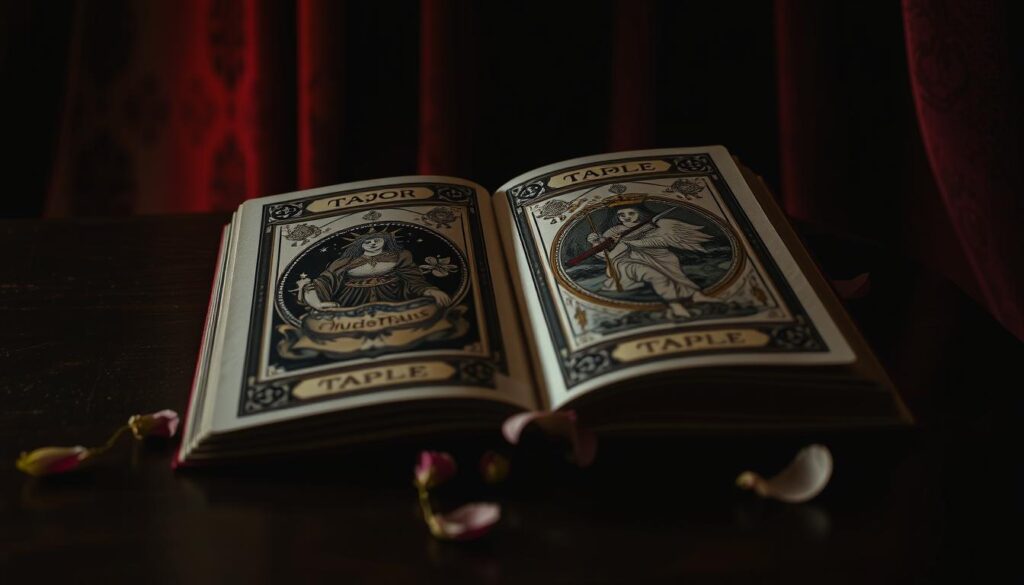
- Rider‑Waite standardized imagery that supports clearer meanings over time.
- Illustrated Minor Arcana opened the practice to more people by easing interpretation.
- Belief is personal; you can gain useful knowledge even with a curious, skeptical mindset.
| Aspect | Then (15th–19th c.) | Now (post‑1910) |
|---|---|---|
| Primary use | Gameplay and leisure | Reflection and guidance |
| Imagery | Minimal on Minor suits | Fully illustrated Minor Arcana (Rider‑Waite) |
| Typical session | Not applicable | 3–7 cards; symbol discussion; practical advice |
| Why people consult | Social pastime | Clarity, connection, context |
For a focused look at practical study and symbolism, see this exploration of the Eight of Pentacles.
Are tarot card reading true?
At its heart, this practice often works like a quick mirror for what’s already in your life.
Belief vs. skepticism: Some people report a vivid experience that matches their situation. Others find the session vague or symbolic. When images and themes line up with recent events, a reading can feel strikingly accurate to a person.
Why experiences feel accurate
Symbolism sparks personal associations. The mind links images to memory, emotion, and detail. A clear question and openness help the process focus, which can heighten perceived accuracy.
What “truth” often means
Practical truth usually points to probabilities and patterns, not fixed forecasts that will predict future outcomes with certainty. Readings offer insight you can use to shape choices.
“A concise session can name what you felt but couldn’t put into words.”
| What feels accurate | Why it helps | What it does not do |
|---|---|---|
| Personal resonance | Gives language to a feeling | Guarantee a set future |
| Pattern spotting | Supports clearer choices | Replace personal responsibility |
| Focused reflection | Highlights likely paths | Act as absolute proof |
| Images and symbols | Prompt thoughtful action | Promise fixed outcomes |
For a closer look at intuition and vision, see this guide to clairvoyant abilities. Use insight, not surrender, to help move forward.
How Tarot Readings Work: Spreads, Symbols, and the Role of Intuition
When a querent brings a sharp question, the deck can map energy around it.
The roles are simple: the querent offers context and asks the question. The reader guides the process and translates images into messages. This connection frames what appears in the layout.
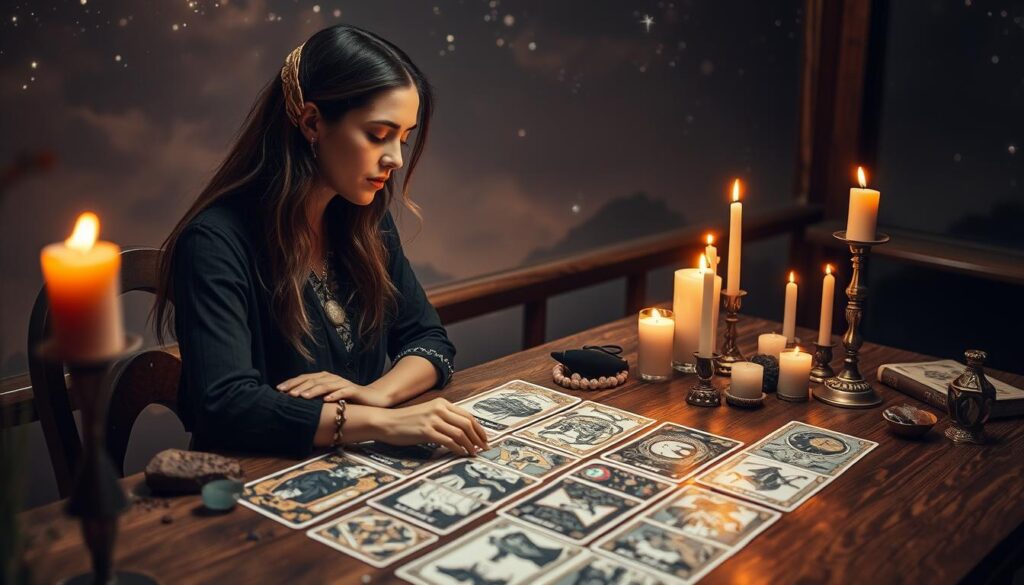
Popular spreads range from a one-card pull for quick focus to a three-card past‑present‑future view. The ten-card Celtic Cross gives a wider map of influences and likely paths. Many sessions pull three to seven cards to balance detail with clarity.
Readers blend positional meanings, symbols, and intuition to form a coherent story. Symbols act as anchors while intuition highlights what matters now. Insights usually point to tendencies and choices rather than fixed future outcomes.
Online sessions keep the same core: a clear question, a spread, and interpretation. Video, voice, or chat shifts the medium but not the work. If you want guidance on turning this skill into a profession, see how to become a paid psychic.
| Element | Use | Common pull |
|---|---|---|
| One‑card | Quick focus and next step | 1 |
| Three‑card | Past, present, future context | 3 |
| Celtic Cross | Deep mapping of influences | 10 |
Accuracy, Limits, and Misconceptions Explained
How well a session helps you comes down to who interprets the symbols, how focused your question is, and your mindset. Practitioners say the practice reflects present energy and likely outcomes, not fixed fate.
What influences quality
What shapes accuracy
- Reader experience: a skilled reader adds context and nuance.
- Clear questions: specific queries sharpen useful insight.
- Open mindset: receptivity helps translate symbols into action.
What it does not do
Limits and common misconceptions
This practice will not predict future events with certainty. It outlines patterns and probabilities to help you act in your situation.
Debunking myths
- Cards are not evil, and they do not carry curses.
- You do not need psychic gifts; study and practice build skill.
- Scary cards like Death or the Tower usually signal transformation, not doom.
Choose quality: seek readers who explain methods, set boundaries, and offer clear, actionable insight. Ethical practitioners avoid guaranteed predictions and honor free will.
“Use the session to spot patterns; take what fits and leave the rest.”

Give yourself time after a session to integrate knowledge before big decisions. If you want to learn the craft or turn it into work, consider how to become a telephone psychic for practical steps.
Using Tarot in Real Life: Love, Career, and Everyday Decisions
Practical sessions help you turn symbolic insight into small, real changes in relationships and work.
Turning insights into action
Love: Use pulls to spot patterns in communication, values, and boundaries. Note one behavior you can try this week to support connection. Journal reactions to track progress.
Career: Ask focused questions to clarify priorities and map options. Treat guidance as a tool to plan next steps—not as a replacement for professional choices.

Practical tips
- Self-reading basics: pull a few cards, jot impressions, then pick one action to test this week.
- Everyday decisions: ask precise questions to illuminate your situation and weigh possibilities.
- Collaborate with a reader: arrive with context, ask clear questions, and confirm what resonates.
- Pick a format you prefer—video, voice, or chat—since platforms differ in style and reviews.
“Give yourself a week to reflect on takeaways before big changes.”
Follow-through matters: Insight only becomes helpful when you convert it into small, steady actions at work, in love, and in personal growth. For help building intuition and focus, see how to get clairvoyance.
Conclusion
A thoughtful session can act like a short mirror that highlights choices you can make now. ,
In short: sessions and readings help a querent frame a clear question, spot patterns, and weigh possibilities without surrendering free will.
Predictions are not guarantees. Accuracy depends on clarity, ethics, and how a person uses messages over time.
Trust your intuition. Let meanings that resonate guide one small action this week, then watch how the situation shifts.
Pick readers who show a clear process, empathy, and grounded delivery. For a focused example of symbolism and conflict, see this Five of Swords guide.
Thanks for reading. With calm reflection and steady action, you meet the future better prepared and more aligned with your life.
FAQ
What is the difference between historical tarot decks and modern decks?
Early decks from 15th-century Europe served as playing cards and later evolved into symbolic systems. Modern decks like the Rider-Waite or Thoth emphasize imagery and archetype, helping readers interpret themes such as change, choices, and relationships rather than dictating literal future events.
Why do people consult a reader when they need clarity?
Many seek a session to gain perspective on a situation, uncover hidden options, or connect with intuition. A skilled practitioner helps frame questions, highlights patterns, and suggests practical steps so clients can make more informed decisions.
Do readings predict specific outcomes or just possibilities?
Readings tend to outline possibilities and likely trends based on current energies and choices. They are most useful for spotting opportunities, risks, and timing, not for issuing guaranteed prophecies.
How can a session feel accurate even if there’s no proof of prediction?
Accuracy often comes from a mix of symbolic resonance, the reader’s experience, and the client’s openness. People notice details that match their life and remember hits more than misses, which makes messages seem especially meaningful.
What role does intuition play in an interpretation?
Intuition allows a practitioner to connect card meanings to a person’s question, tone, and energy. It complements knowledge of symbolism and technique, letting the reader craft a relevant narrative rather than recite rote definitions.
Are online sessions different from in-person consultations?
The core process—question, shuffle, interpret—remains the same. Online work can be equally effective; it relies more on clear communication and the reader’s ability to translate images into actionable insight through video, phone, or message.
What affects a reading’s reliability?
Reliability improves with a focused question, a skilled reader, and a client willing to reflect honestly. Vague questions, emotional bias, or treating the session as a final verdict reduce usefulness.
Can a reading change your choices or outcomes?
Yes. Most people use guidance to weigh options or adjust behavior. Readings often increase awareness, which can shift decisions and therefore influence future results.
Are there common misconceptions I should ignore?
Ignore fears that sessions summon curses or require supernatural talent. Readings are interpretive tools, not moral judgments or guaranteed fate. Anyone can learn the basics with practice and good study.
How should I prepare for a session to get the most value?
Bring a clear, specific question and be ready to discuss context. Relax, be honest about your priorities, and treat the exchange as collaborative. That mindset creates the best environment for useful insight.
Can readings help with work and relationships?
Yes. A session can highlight strengths, risks, and timing related to career moves, partnerships, or family matters. It provides perspectives to consider, not step-by-step scripts.
What if I don’t believe—can a session still help?
Skeptics often gain value by using the session as a sounding board or a way to explore options. Even without full belief, the process can surface practical ideas and prompt reflection.
How often should someone consult a reader?
Frequency depends on personal needs. Some people book sessions for major crossroads, others check in monthly for short guidance. Avoid dependence; use readings as one of several decision-making tools.