
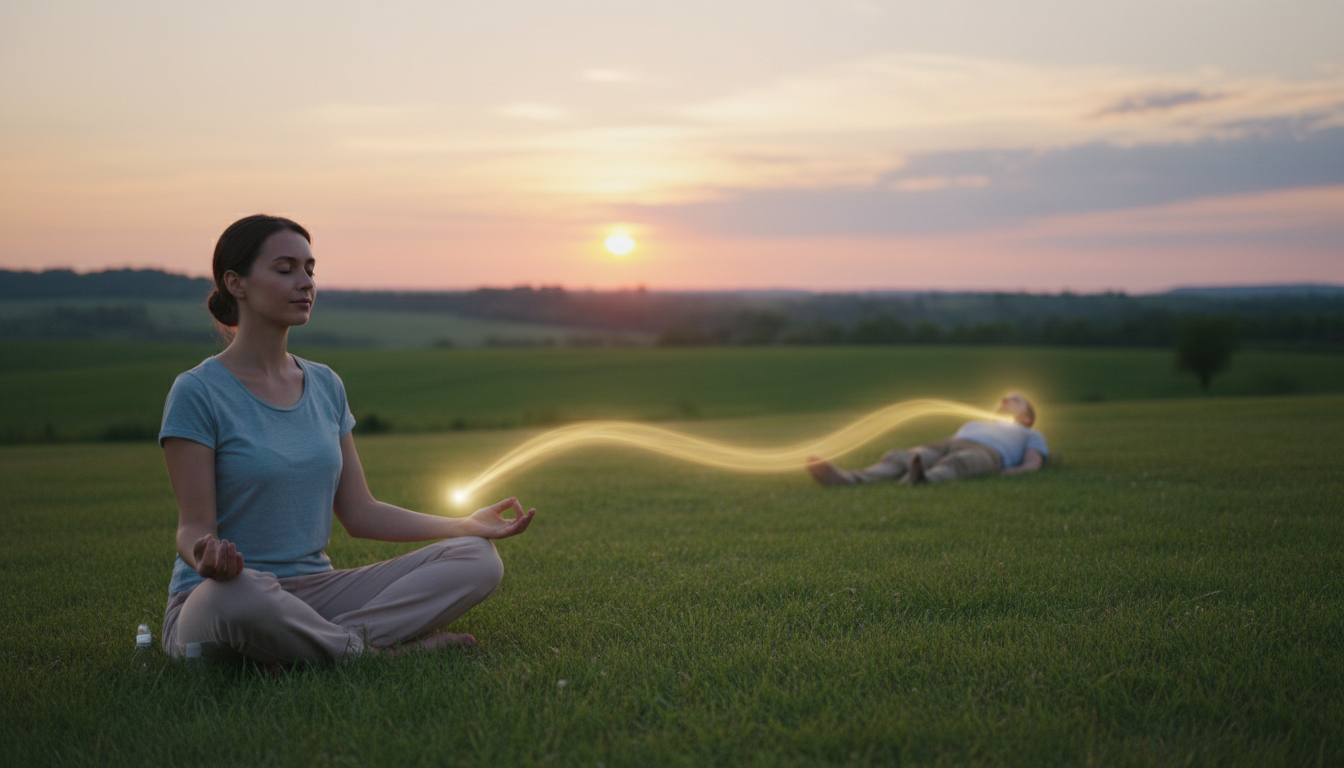
Today you’ll learn a simple, respectful distance-based method that fits busy lives. This short intro defines distance healing as sending kind intention beyond physical space, often through focused attention and calm breath. Many people use this gentle method when a loved one is far away.
Nicky Sutton’s approach emphasizes opening the heart center, steady focus, and a brief guided meditation that works without knowing location. The full piece will walk through a clear process: relax, activate the heart, connect, direct care, close, and ground.
Note: This is a complementary practice that can support comfort and calm. It is not a substitute for medical or mental health care. If you want a deeper walk-through, see this short guide at a trusted resource.
Key Takeaways
- Distance healing uses focused intention from anywhere.
- Nicky Sutton’s method centers on the heart and brief meditation.
- The upcoming steps are simple and easy to fit into a day.
- This practice supports emotional comfort, not medical care.
- Later sections cover sensations, imagery tips, and aftercare.
What “Healing Energy” Means and How Distance Healing Works
Many traditions describe a subtle life force that carries caring intention across space. Healing energy can be described simply as focused compassion plus steady attention aimed at another’s wellbeing. That pairing—intention and presence—forms the practical core.

Distance healing is often understood as an energetic connection that isn’t limited by physical distance. Think of it like radio or music: you can feel a song from far away when you tune into the right station. That analogy helps make the idea feel less abstract.
Core ingredients most practitioners name are clear: intention, steady attention, loving feeling, and supportive thoughts that quiet mental noise. Many cultures call the life force chi, prana, or ki, and modern methods blend these older frameworks with meditation, Reiki, or guided practices.
- Energy healing is an umbrella term that includes Reiki and meditation-based approaches.
- Some studies report benefits such as relaxation and reduced pain perception, but results vary and evidence quality differs by method.
Practical takeaway: you don’t need special equipment—your mind, focused intention, and calm presence are the foundation. For a deeper overview, see the ultimate guide to energy healing.
When to Use Distance Energy Healing and What It Can Support
A calm, focused intention can act like a gentle signal of care when someone faces stress. Use this practice when a person feels overwhelmed, emotionally fragile, or needs comfort but you can’t be there in person.
Emotional support fits moments of anxiety, grief, heartbreak, or a tense appointment. A steady loving intention often feels like a steadying hand on the shoulder and can uplift mood or quiet racing thoughts.
For physical comfort, many people pair this with medical care. The aim is relaxation, easing stress responses, and supporting overall health rather than replacing professional treatment.

Sample intentions: comfort for rest, nervous-system calm, courage before a visit, or ease through a difficult night. Keep the recipient in mind as a whole person—body, feelings, and mindset—rather than forcing a specific result.
Boundaries: Offer support, don’t control choices. If concerns are clinical, encourage professional help.
When you’re ready to prepare your space and set a clear intention, consider a short guide or classes like psychic-medium classes for deeper practice and structure.
Set Up Your Space, Safety, and Intention Before You Send Healing
Choose a soft-lit room and a comfy seat — this helps steady your mind and feelings. Make sure you won’t be interrupted: phone on silent, door closed, and a short block of uninterrupted time.
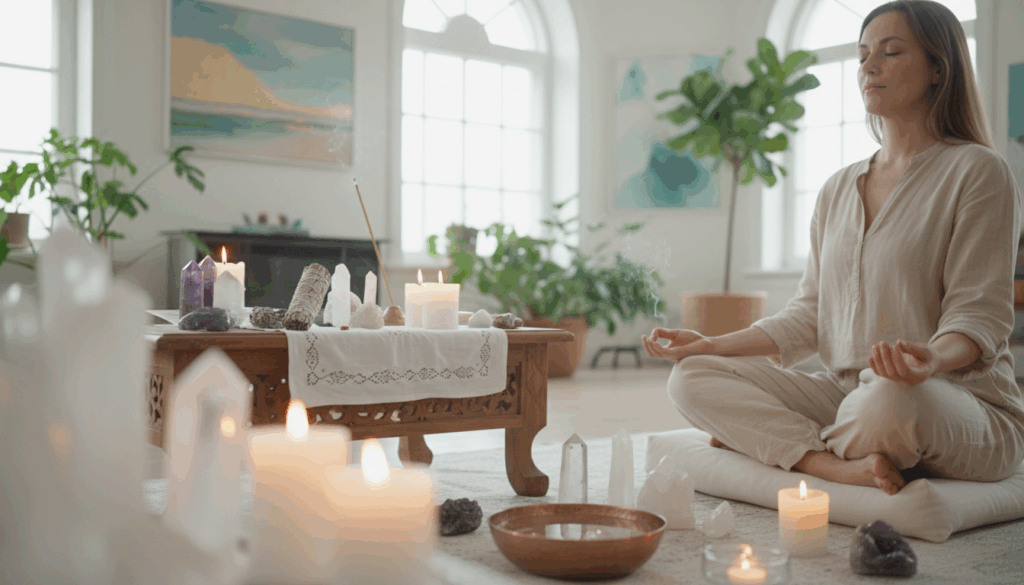
Create a calm environment
Dim lights, comfortable posture, and minimal noise make it easier to hold steady attention. Avoid doing this while driving or during tasks that need full focus. That small safety step protects both you and the recipient.
Set a clear intention
Identify who you are focusing on and the kind of support you want to offer: calm, rest, strength, or comfort. Try a simple phrase: “I am sending healing to [name] today for peace and comfort.”
Consent, boundaries, and emotional safety
Ask permission when possible. If you can’t, set an intention that your care is offered only if welcome and for the highest good. If you feel upset or frantic, pause and regulate your breathing first so your feelings don’t overwhelm the practice.
Quick checklist
- Set aside a specific time
- Take a few slow breaths
- Choose a single focus and release results
- Keep your thoughts gentle and steady
For an extra ritual option, consider a short gentle intention ritual before you begin.
How to Send Healing Energy to Someone With a Simple Guided Meditation Process
Begin by taking a few slow breaths and giving your attention permission to slow down. Inhale deeply, exhale fully. Repeat until the body softens.
Relax: take deep, steady breathing and let muscle tension fade. This stabilizes the mind for the guided meditation that follows.
Activate the heart: place your awareness at the center of the chest. Notice a warm, gentle glow forming. Feel that loving healing energy expand there.
Connect with the person in your mind. You do not need a location—your clear intention acts like an address. Hold a calm wish for their comfort.
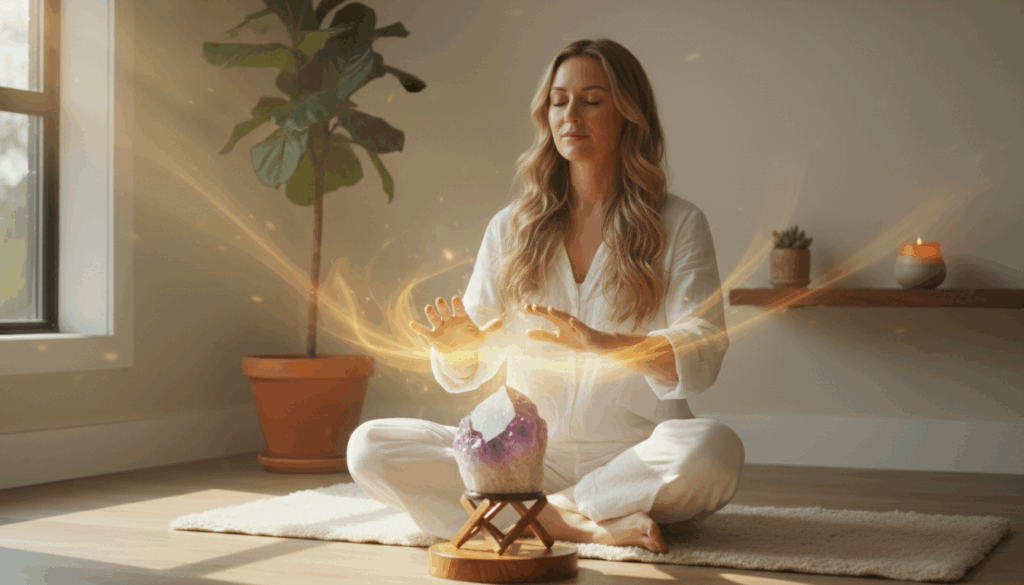
Direct through the palm: raise one hand. Imagine energy flowing from your heart, down the arm, and out the palm toward their heart or an area of pain.
Alternative: cup your hands and build a ball of white light. Grow it until it feels full, then release it and trust the light finds what is needed.
Close gently: let the heart glow recede, lower your hands, and return attention to the breath. Open your eyes when ready.
| Method | Key Feeling | When to Use |
|---|---|---|
| Palm projection | Warm flow down the arm | Focused relief for a specific area |
| Ball of white light | Contained, bright field between hands | General comfort or distance situations |
| Both combined | Heart-centered intention + visible light | When you want both focus and breadth |
Visualization, Sensation, and Signs You’re “Doing It Right”
Visualization often varies widely—some people see clear pictures, others sense a gentle shift without images. All of these inner styles can support a calm meditation and a steady mind.

If images don’t come, trust felt sense and intuition
Don’t pressure yourself to create perfect scenes. With gentle repetition, visualization often becomes clearer. Many practitioners recommend using a felt sense or simple knowing as a valid route.
Common signs that the practice is working
People report warmth moving down the arms, a calm focus in the chest, or emotion rising and releasing. These subtle shifts are normal and useful markers of connection.
“Steadiness, not drama, is the clearest sign that your intention is grounded.”
Handling distracting thoughts
When thoughts intrude, label them—“planning,” “worry,” or “doubt”—then return to slow breath and the heart space. Try a simple internal cue, for example: “One more minute of calm and comfort.”
| Sign | What it feels like | When it helps |
|---|---|---|
| Visualization | Clear images or scenes | Guided meditations and focus work |
| Felt sense | Gentle knowing or warmth | When images are scarce |
| Emotion shift | Release or softening | After brief sessions, for grounding |
Note: Subtle, steady shifts matter. A short session can stir feelings, so plan a brief grounding step after this practice.
Aftercare: Grounding, Gratitude, and Reflecting on the Experience
Ending a practice with simple steps helps you feel grounded and emotionally steady. After a session you may feel open or vulnerable, so short aftercare restores balance and clarity.

Quick grounding options
Take moment and try a two-minute reset: slow breath for six counts, or notice five things you can see, hear, and feel.
Do a brief head-to-toe body scan. If you can, step outside and feel grass under your feet—this practical move settles the nervous system.
Seal the session with gratitude
Take moment to feel thankful for your ability to care, for any calm that showed up, and for the connection. Trust that your intention has been released without clinging to outcomes.
Journal prompts and tracking
- What did I feel while connecting?
- Which moments felt warm or calm?
- How did my body feel after the meditation?
- What thoughts or insights arose?
Track patterns: note best times of day, which method felt easiest, and how focus shifts over time. This process supports long-term health and steady practice.
“You can care deeply while staying centered in your own life.”
For tools that refine focus and observation, explore ways to improve psychic readings as part of your wider meditations and self study.
Conclusion
Close with a simple pause that honors your care and gently returns attention to the present.
Summarize the flow: prepare your space, set clear consent and intention, relax with breath, activate the heart, connect, then use a palm or ball of light and finish by closing and grounding.
Remember: this is an act of love and supportive intention, not a replacement for professional care or a tool for control. Keep your practice simple: one clear intention and a few quiet minutes can be enough.
Try this guided meditation send a few times per week during stressful seasons to build steady focus. A closing line you can use: “May you be comforted; may you feel supported; may you receive what you need.”
Subtle results still matter — your grounded presence can change how you show up for the recipient. For a short ritual you can add, explore a simple ritual and keep learning with gentle practice.
FAQ
What does “healing energy” mean and how can distance healing work?
Healing energy refers to focused intention and attention meant to support someone’s well‑being. Distance healing works by holding a clear intention for the recipient while using visualization, breath, and presence. Many traditions—such as Reiki, prayer, and guided meditation—use similar steps: calm the mind, center the heart, and direct compassionate focus toward the person even across physical distance.
What are the core ingredients of an effective distance healing practice?
The main elements are intention, focused attention, compassion, and a steady breath. Intention names the need; attention sustains it; compassion fuels the quality; and simple techniques like grounding, visualization, or placing hands over the heart help keep the mind steady throughout the session.
When is remote energy work most useful?
Remote work often supports emotional needs such as stress, grief, anxiety, or loneliness and can offer physical comfort as a complementary practice for pain or recovery. People also choose it for convenience, flexibility, or when in‑person support isn’t possible.
Do I need consent before directing energy toward someone?
Yes. Respectful practice requires consent or clear ethical intent. If direct consent isn’t available, focus on sending general goodwill, light, and comfort rather than specific interventions. Honor boundaries and avoid imposing energy on someone who prefers not to receive it.
How should I prepare my space and mindset before a session?
Create a quiet, undisturbed spot with dim lighting and a comfortable seat. Take a moment to set a clear intention, check your timeline, and minimize distractions like phone alerts. A short breathing exercise or brief body scan helps settle the mind and prepare your focus.
What is a simple guided meditation process I can use right away?
Begin with deep, steady breaths to relax the body. Bring attention to the heart center and cultivate a warm feeling of care. Picture the person in your mind and hold their image with kindness. Direct that warmth through your palms toward their heart or a specific area, or imagine forming a ball of white light between your hands and releasing it toward them. Close by returning attention to your body and breathing slowly.
I struggle with visualizing—can I still be effective?
Yes. If visualization is hard, use a felt sense: notice warmth in your chest, an intuitive knowing, or simple phrases like “be well” repeated silently. Sensation, intention, and steady attention can be just as powerful as clear images.
What physical sensations indicate the practice is working?
Common signs include warmth or tingling in the hands or arms, a calm centeredness, emotional release, or a subtle shift in focus. These vary by person and session; absence of sensation doesn’t mean nothing changed.
How do I handle distracting thoughts during a session?
Acknowledge the thought without judgment and gently return attention to the breath or heart. Briefly labeling distractions—“thinking,” “planning,” or “worrying”—and letting them pass helps maintain focus without creating pressure.
What aftercare should I do once a session ends?
Ground yourself with a few deep breaths, a short body scan, or connection with the five senses. Offer gratitude for the experience and, if helpful, journal a few lines about impressions or outcomes. Drinking water and a light stretch can support physical grounding.
How often should I practice remote healing for someone?
Frequency depends on need and energy limits. Short daily sessions can offer steady support, while longer practices may be used less often. Listen to your own energy and schedule rest to avoid burnout.
Can energy work replace medical or mental‑health treatment?
No. Energy practices are complementary tools. They can help reduce stress and support emotional well‑being but should not replace professional medical care or therapy. Encourage the recipient to seek appropriate treatment for serious conditions.
Are there simple journal prompts to track my practice?
Yes. Try brief prompts like: What did I intend? What sensations did I notice? How did the person respond afterward? What felt different in my energy? Short entries after each session help track trends and growth.
What quick checklist can I run through before beginning?
Time: set a start and end. Breath: take three calming breaths. Mindset: set a clear, compassionate intention. Distractions: silence devices and choose a quiet spot. Consent: ensure ethical alignment. These small steps create steady practice.