

This short guide explains a popular wellness approach in clear, simple terms for readers in the United States. Supporters describe the method as working with subtle energy fields to help the body relax and restore balance rather than treating one symptom.
The article previews origins, how advocates say the waves operate, possible benefits, typical devices, what sessions feel like, and the limits of current science. Expect straightforward explanations and practical tips for exploring non-invasive options safely.
Responsible note: this content is informational. It does not replace medical diagnosis or treatment. Evidence quality varies and mainstream clinical support is limited.
People often search this topic when facing stress, fatigue, or chronic discomfort and when they want drug-free wellness tools that may support natural processes. Later sections will repeat a simple idea: proponents believe those waves aim to guide the body from dis-ease back toward balance.
Key Takeaways
- Intro defines the approach in beginner-friendly terms.
- Readers will learn origins, devices, session feel, and science limits.
- The guide frames claims responsibly and avoids medical advice.
- Common reasons to explore include stress, fatigue, and chronic discomfort.
- For a deeper overview, see the ultimate guide.
What is scalar energy healing and why people are curious about it today
Curiosity about gentle wellness options has grown as many seek non-invasive ways to reduce stress and restore daily balance. Supporters describe a different kind of wave behavior and point to subtle benefits like better sleep, clearer thinking, and steadier mood.

Scalar energy vs. traditional electromagnetic waves in plain English
In plain language, most electromagnetic waves move side to side—think of ripples across a pond. Proponents say these other waves act more like a push-and-pull pulse along the travel path, which they call longitudinal or compressional.
This distinction is used to explain claims that such waves can pass through matter with less loss and reach deeper systems inside the body. Those descriptions come from testimonials rather than large clinical trials, so readers should note the difference between reports and scientific proof.
The big promise: supporting overall well-being through the body’s energy field
Practitioners often use the term biofield or energy field to mean a subtle, organizing system around and within the body. The central promise is simple: by calming and aligning that field, a person may feel more relaxed, focused, and vital over time.
Many claims focus on gradual, whole-person shifts—better sleep, improved mood, and steadier energy—rather than quick medical cures. Individual experiences vary, so stay curious but cautious. Look for transparent device makers and reputable practitioners, and consider this as a complement, not a substitute, to medical care.
Learn more from a balanced overview at this guide.
The origins of scalar waves: from Maxwell to Tesla to modern energy healing
Certain scientific names and experiments often appear in wellness storytelling. Supporters trace a line from classical physics through early electrical work to later biofield studies.
James Clerk Maxwell and early ideas
Supporters point to Maxwell as a starting place. They say his equations opened thinking about fields and wave behavior.
Note: academic physics frames Maxwell differently than popular wellness summaries. The connection is often interpretive rather than literal.
Nikola Tesla and “radiant” experiments
Tesla’s late-1800s work with abrupt direct-current discharges and his language about radiant power get cited in marketing. Many devices borrow his name to suggest innovation and historical roots.

Dr. Valerie Hunt and biofield patterns
UCLA researcher Dr. Valerie Hunt is frequently referenced for linking patterns in human fields to homeostasis. Supporters claim more chaotic patterns align with illness and that coherent, standing-wave-like signals align with stability.
Quick timeline overview:
- Maxwell: theoretical groundwork about fields.
- Tesla: experimental language that later inspired “radiant” labels.
- Hunt: observational links between field patterns and system balance.
| Era | Figure | Contribution | How supporters use it |
|---|---|---|---|
| 1860s–1870s | James Clerk Maxwell | Unified electromagnetism theory | Framed as early groundwork for field-based claims |
| 1890s | Nikola Tesla | Radiant experiments with abrupt discharges | Name used to market modern devices |
| 1970s–1980s | Dr. Valerie Hunt | Research on human biofields and patterns | Linked coherence with homeostasis and stability |
| Today | Wellness communities | Devices and sessions inspired by prior work | Supporters claim balanced fields support better function |
For readers curious about practical steps and methods to try, see this guide to send healing energy.
How scalar wave therapy is believed to work with energy fields
Practitioners describe focused wave patterns that aim to shift subtle body rhythms toward calmer, steadier states. This approach treats patterns, not tissues, and frames the goal as restoring overall balance through gentle influence.

Longitudinal pulses and the standing-wave idea
Think of longitudinal or compressional motion like sound pushing and pulling air. Supporters use this everyday image to explain how pulses travel along a path instead of side to side.
Standing waves are described as stable patterns that form when waves align. Advocates say a standing wave can reduce chaos in a field and help the body re-establish homeostasis.
Penetration and interaction with body energy fields
Claims state these pulses pass through solids, liquids, and gases with less loss, so they may reach deep, hard-to-access areas. Supporters say the waves interact with body energy fields to encourage more coherent patterns and improved balance.
From dis-ease to calm
Translated into outcomes, people seek greater relaxation, less reactivity, and easier rest. Experiences vary: some report distinct sensations right away, while others notice subtle shifts after several sessions.
| Claim | Mechanism | Typical outcome |
|---|---|---|
| Directed longitudinal pulses | Standing-wave alignment with subtle field | Calmer internal rhythms |
| Deep penetration through matter | Interaction with body energy fields | Access to hard-to-reach systems |
| Reset from chaos to coherence | Promotes homeostasis | Better relaxation and balance |
For step-by-step guidance on sessions and practical tips, see a concise guide on how to perform energy sessions.
Potential benefits of scalar energy healing for mind and body
Many people try gentle field-based sessions hoping for clearer thinking and steadier days. Below, claims are grouped into mental, emotional, and physical benefits so beginners can match results to real goals.
Mental clarity and focus
Mental clarity often tops the list. Supporters say reduced mental noise leads to better focus and decision-making.
People report clearer thinking after sessions, which can help work, study, and daily planning.
Stress relief and emotional harmony
Sessions are usually framed as balancing rhythms to calm the nervous system. That may reduce perceived stress and improve emotional harmony.
Users describe feeling less reactive and more emotionally steady over time rather than instant fixes.
Vitality and daily energy levels
Claims about vitality target real-life issues like morning stamina and afternoon crashes.
Supporters say gentle pulses or waves can help optimize the body natural rhythm so energy feels more even through the day.
Immune support and cellular regeneration
Some proponents link sessions to better immune response and improved cellular regeneration. These ideas frame assistance to the body natural repair systems.
Evidence remains limited, so track sleep, mood, and resilience. Do not replace proven medical care when addressing serious conditions.

For guided courses and practitioner training, consider a reputable program like practitioner training. Keep expectations realistic and monitor changes with simple measures such as sleep quality and mood logs.
Scalar energy healing for chronic pain and physical discomfort
Many people with long-term discomfort seek gentle, non-drug options that aim to ease daily aches without invasive care.
Why it’s considered non-invasive and drug-free for pain management
Supporters describe focused pulses and subtle field shifts that promote relaxation and reduce energetic congestion. They say these waves can reach deeper layers and target root imbalance instead of just masking symptoms.
Conditions often mentioned
Commonly discussed conditions include arthritis, fibromyalgia, and migraines. These examples appear often online, but they are not guarantees or replacements for diagnosis.
- Arthritis — joint stiffness and soreness.
- Fibromyalgia — widespread sensitivity and fatigue.
- Migraines — recurring head pain and light sensitivity.
Expectations: this approach is usually framed as complementary support for chronic pain that has many causes. Track changes with a pain scale, range-of-motion notes, and sleep quality logs to judge effects over time.
Safety note: coordinate with licensed clinicians for persistent issues and seek urgent care for sudden or worsening symptoms.
Common applications and devices in the scalar wellness world
A quick map helps readers spot common tools and session types in the modern wellness landscape.

Practitioner-led sessions for individuals, clients, and animals
Practitioners offer guided sessions for individuals and remote clients. Sessions often start with intention setting, gentle positioning, and quiet observation.
Some trainers extend services to animals. Joan Ranquet appears in community circles as an educator for animal work, which users describe as supportive rather than curative.
At-home devices: beds, chambers, pendants, and targeted tools
Common categories include beds or lounges, enclosed chambers, wearable pendants, and handheld wands. Marketers claim these devices create a supportive field that promotes calm and balance.
Buyer tip: look for clear instructions, realistic claims, and transparent pricing. Keep regular medical care when needed.
Structured water and frequency-based combinations
Some users add “charged” or structured water and pair sessions with sound or light frequencies. Supporters say paired processes may amplify effects, though evidence varies.
| Application | Typical Use | Claimed Benefit |
|---|---|---|
| Practitioner sessions | In-person or remote for individuals and clients | Guided relaxation and balance support |
| Animal sessions | Hands-off approaches for pets and livestock | Calm behavior and comfort (supportive role) |
| At-home devices | Beds, chambers, pendants, wands | Daily routine aid for steady rhythms |
| Structured water + frequencies | Combined with sound or light | Hydration support and amplified routines |
What a scalar energy healing experience may feel like
A typical session often feels calm and simple, more like quiet rest than an active therapy. Many people find the first visit low-pressure and easy to follow.
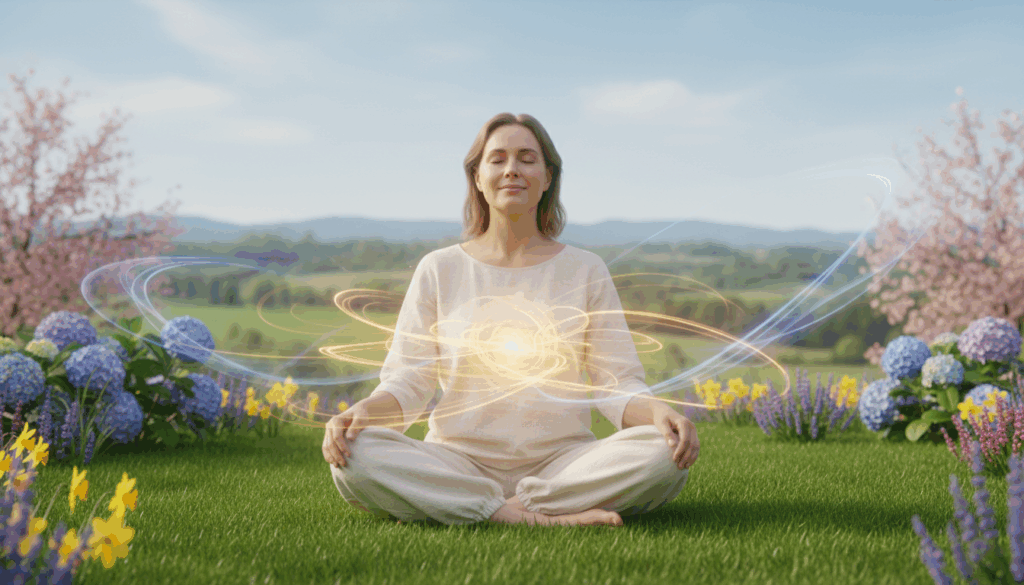
Typical session flow: intention, comfort, and observing effects over time
Sessions usually begin with a short intake and a moment to set an intention. Then you settle into a comfortable position while a practitioner or device runs a gentle protocol.
Most of the time the environment stays quiet and supportive. Practitioners often ask you to notice sensations without forcing a reaction.
Tracking changes: pain levels, sleep, clarity, and overall well-being
Reported sensations vary. People commonly note warmth, mild tingling, deep relaxation, or sleepiness. Other times, they feel nothing noticeable immediately.
Why observe over time: many providers suggest multiple sessions before judging effects. Subtle shifts often accumulate rather than appear at once.
- Track pain levels and any changes in discomfort.
- Note sleep duration and sleep quality each night.
- Record mental clarity, focus, and mood stability.
- Rate overall well-being and daily energy state.
| Step | Typical Duration | Common Notes |
|---|---|---|
| Intake & intention | 5–10 minutes | Brief questions; set goals for the session |
| Relaxation exposure | 20–40 minutes | Lie or sit comfortably; observe sensations |
| Post-session check | 5–10 minutes | Short feedback and simple aftercare tips |
Practical tips: journal changes, drink water after a session, and rest if you feel mildly tired. For further reading on safe exploration, see a helpful primer on energy healing.
Safety, limitations, and the science question in the present day
Understanding limits and study gaps gives practical context for anyone curious about this therapy.

Why supporters generally call it safe
Supporters point to non-invasive protocols, no drugs, and gentle sessions as reasons many people across ages try this approach.
That said, safe does not always mean effective for every condition. Use it as a supportive practice, not a replacement for medical care.
Skepticism, misunderstandings, and placebo debates
Critics note limited clinical trials and a gap between testimonials and rigorous proof. Confusion often arises when technical terms sound scientific but lack consistent evidence.
Placebo effects may explain some reported benefits; distinguishing personal reports from medical-grade proof matters for informed choice.
How to approach it responsibly alongside medical care
- Keep regular medical appointments and share complementary use with your clinician.
- Avoid sellers who promise cures, pressure you to stop medications, or use fear-based marketing.
- Track sleep, pain, and mood to judge any potential benefit over time.
Final note: for some people this practice can offer stress support and gentle balance in today’s wellness world when used thoughtfully and transparently. Learn more about related topics in the discover telepathic abilities guide.
Conclusion
,In closing, keep curiosity and caution balanced when exploring scalar and energy approaches for calm and clearer days.
Supporters frame this work as gentle field-based care that aims to restore balance in the body by encouraging coherent standing waves and patterns. Historical names like Maxwell, Tesla, and Dr. Hunt appear in stories, but history does not equal clinical proof.
If you try a session or device, pick a reputable practitioner, track sleep, pain, mood, and clarity, and note if waves penetrate deep systems for you. Use these practices as supportive wellness tools, not replacements for medical care.
Responsible tip: keep your clinician informed and treat this therapy as a possible complement with limited scientific validation.
FAQ
What is "Scalar Energy Healing: A Beginner’s Guide" about?
This guide introduces the idea that subtle fields and longitudinal waves may influence the body’s natural balance. It summarizes historical context, proposed mechanisms, common applications, and reported benefits such as improved relaxation, clarity, and support for recovery. The goal is to explain concepts in plain language so readers can decide whether to explore further.
Why are people curious about this topic today?
Interest has grown as more wellness practitioners and consumers look for noninvasive methods to support stress relief, sleep, and chronic discomfort without drugs. New devices, online communities, and a desire for holistic approaches contribute to the conversation around body fields, balance, and potential well-being effects.
How does this approach differ from familiar electromagnetic waves?
Advocates distinguish longitudinal, or compressional, field patterns from transverse electromagnetic radiation. They describe these waves as having different propagation and interaction characteristics with living tissue. The contrast is often framed as a different type of field effect rather than conventional radio or light-based therapy.
What is the big promise for overall well-being?
Supporters suggest calming chaotic or imbalanced fields can promote relaxation, clearer thinking, better sleep, and an improved sense of vitality. The promise is helping the body return toward its natural homeostasis so other healing processes can operate more effectively.
Where did these ideas originate?
The conversation traces through physics and alternative health history. Foundational names in electromagnetic theory inspired later interpretations, and inventors and researchers in the late 1800s and 1900s contributed to modern interpretations linking subtle fields with biological regulation and homeostasis.
What did early physicists contribute to this topic?
Early electromagnetic theory provided mathematical tools and language for discussing fields. Those foundations later influenced explorers who proposed additional field concepts and speculative models for how different wave types might interact with matter and living systems.
How did late 19th– and 20th‑century inventors influence modern ideas?
Inventors proposed radiant effects and alternative energy concepts that encouraged further experimentation. Their work was often exploratory and sometimes controversial, yet it inspired later developers and therapists to test devices and protocols aimed at wellness and field modulation.
How do proponents say this therapy works with body fields?
Practitioners describe using standing or longitudinal wave patterns to gently entrain or calm disturbed fields. The proposed effect is an interaction at multiple tissue layers that encourages the body’s natural regulatory systems to reduce stress responses and promote balance.
Can these waves penetrate deeply into tissue?
Supporters claim certain wave forms may reach deeper structures than surface-only treatments, allowing influence on cellular and biofield processes. Independent measurement and reproducible laboratory evidence remain limited, so claims vary among manufacturers and clinicians.
How might this help move the body from "dis‑ease" toward balance?
Practitioners combine intentional settings, comfortable environments, and repeated sessions to reduce nervous system arousal. The idea is lower agitation, improved sleep, and reduced tension — factors that support overall relaxation and recovery.
What mental benefits are often reported?
Clients frequently report improved clarity, better focus, and a calmer internal state after sessions. Many describe fewer intrusive thoughts and an easier ability to concentrate on daily tasks, which can enhance productivity and mood.
How does it address stress and emotional harmony?
By promoting deeper relaxation and reducing perceived stress, sessions aim to lessen emotional reactivity. Some users notice smoother mood swings and a greater sense of balance when therapy becomes part of a regular self-care routine.
Can it increase vitality and daily energy levels?
Reports mention improved sleep quality and steadier daytime energy. The claimed mechanism ties into better nervous system regulation and more efficient recovery cycles, which can support daily stamina and motivation over time.
Are there claims about immune support and cellular regeneration?
Some proponents link field balancing with enhanced cellular function and regenerative processes. These claims are framed as supportive rather than curative and are best considered complementary to conventional medical care and healthy lifestyle choices.
Is this used for chronic pain and physical discomfort?
Many people seek it as a noninvasive, drug‑free option for managing persistent pain. Practitioners often pair sessions with other therapies to address conditions such as joint pain, widespread muscle pain, and headache disorders.
Which conditions are commonly mentioned by users?
Arthritis, widespread pain syndromes, tension and migraine headaches, and musculoskeletal discomfort appear frequently in anecdotal reports. Individual responses vary and professional medical advice is recommended for diagnosis and treatment planning.
What kinds of applications and devices exist?
Offerings range from practitioner-led sessions to at-home units like beds, chambers, pendants, and handheld tools. Some protocols combine structured water, light, or sound to create layered frequency-based treatments.
Are there practitioner sessions for people and animals?
Yes. Some clinicians work with humans and pets in person, using larger systems or treatment rooms. Animal practitioners adapt protocols for safety and comfort, while owners may use smaller devices under guidance.
What might a typical session feel like?
Sessions usually begin with a short intake, followed by a relaxed position in a chair or on a table. Many clients feel warmth, tingling, or a gentle sense of calm. Others describe visual impressions, drowsiness, or improved sleep that night.
How should changes be tracked after sessions?
Practitioners recommend keeping a simple journal noting pain levels, sleep quality, mood, and concentration. Tracking over weeks helps determine patterns and whether adjustments to frequency or duration are needed.
Is this approach considered safe?
Supporters and many practitioners describe it as low risk and noninvasive when used properly. Still, people with implanted medical devices, pregnancy, or serious health conditions should consult their healthcare provider before trying new modalities.
What are common criticisms and scientific concerns?
Critics point to limited high‑quality clinical trials and a need for reproducible measurements. Skeptics also raise placebo and expectation effects as possible explanations for reported benefits. Responsible providers present it as complementary care rather than a medical cure.
How can someone approach this responsibly?
Start by researching reputable clinics and device manufacturers, ask about evidence and safety protocols, and use it alongside conventional medical advice. Keep realistic goals and track outcomes over time to judge personal benefit.
How often do people typically undergo sessions?
Frequency varies: some try weekly sessions at first, then reduce to monthly maintenance; others use short at‑home sessions daily. A clinician can help tailor a plan based on symptoms, response, and lifestyle.
Who may benefit most from exploring this type of therapy?
Individuals seeking nonpharmacological support for stress, sleep issues, chronic discomfort, or a greater sense of balance sometimes find it helpful. Responses differ, so personal experimentation under guidance is common.
Are there combined approaches that enhance results?
Many practitioners integrate breathwork, guided relaxation, movement, or nutrition counseling. Combining modalities often aims to address multiple lifestyle factors that influence overall resilience and health.