

Welcome. This short guide gives a friendly, grounded way for beginners to learn simple practices that work with life force in daily life.
You can learn these steps with or without formal training. With practice, directing attention, breath, visualization, and clear intention becomes easier and more natural.
By the end, you will be able to run a brief self-session, try a basic hands-based method, and get a starter view of remote work. Practice makes progress; small daily sessions help you notice subtle shifts.
Core techniques include grounding, sensing between palms, a gentle head-to-toe scan, breathwork, light visualization, intention-setting, and closing a session.
Do this at home in a quiet room or a comfortable chair for just a few minutes a day. Always ask permission before working with others and prioritize your comfort and safety.
Key Takeaways
- Learn a simple, beginner-first approach you can use at home.
- Practice daily for steady progress and better awareness.
- Core methods: grounding, palms sensing, scanning, breath, visualization.
- Ask consent before working with others and set clear boundaries.
- Not a substitute for medical or mental health care; seek professional help when needed.
- Explore further reading with a practical guide or remote session tips: ultimate guide and remote session tips.
Healing Energy Basics: What “Channeling” Means and Why It Works for Mind and Body
This short primer explains what it looks like when attention and intention organize subtle flows that support the mind and body.
Channeling here means focusing your attention in a simple, steady way so inner currents feel more organized and calm. When you pay attention to breath, sensation, or thoughts, the nervous system often settles and your sense of balance improves.
Think of intention as the steering wheel: you set a gentle direction—comfort, ease, or support—and let the system respond. You are not forcing outcomes.
Chakras offer a beginner map from root up to crown: grounding, creativity, confidence, heart openness, clear voice, inner knowing, and connection. Noticing where energy flowing feels tight, heavy, numb, or light helps you learn patterns without needing firm belief.
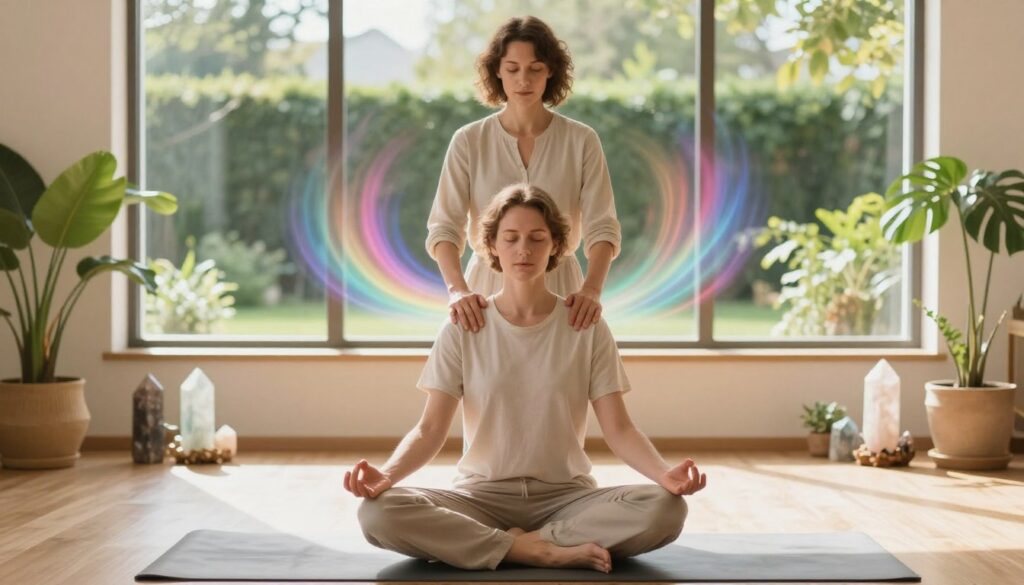
Authenticity matters. Sending healing works best when you are honest about being tired or anxious and still choose to work gently. Next, we’ll use calm attention starting at the head and move through the body with safe, simple steps.
How to Channel Healing Energy for Yourself and Others
Set the scene: choose a quiet place, sit with support, silence notifications, and commit a small block of time. Ground by feeling your feet and imagining breath dropping down the spine into the Earth.

Palms sensing and scanning
Hold palms facing each other and slowly move them closer and farther. Pay attention for tingling, warmth, or gentle pressure. This simple practice helps you feel energy between your hands.
Scan from head to toe with hands a few inches off the body. Notice temperature shifts or cool spots. Cooler areas can suggest less flow and may need extra breath or patience.
Breath, light, and sending
Place left hand on the heart and right hand on the belly. Inhale belly → ribs → collarbone; exhale as if releasing stagnant energy. Visualize a vertical tube of light through the chakras, anchored into the Earth for stability.
Open the crown gently and invite a steady connection from above. Move the light from crown → heart → arms → palms and imagine sending support outward. Work with clear intention for the highest good.
Close the session
Return the crown to normal size, cut the connection, take a few plain breaths, and offer thanks. If you plan to work with others, always ask consent first.
| Step | Action | Simple Cue |
|---|---|---|
| Prepare | Quiet place, grounded posture, short time | Feet on floor |
| Palms | Move palms in/out, sense between hands | Tingle or warmth |
| Scan | Hands inches off body, note cool/heat | Cool = less flow |
| Breath & Light | Left hand heart, right hand belly; vertical light | Full inhale sequence |
| Close | Seal crown, cut connection, give thanks | Three normal breaths |
For a fuller practical guide, see the psychic healing guide for more techniques and safety tips.
Sending Healing at a Distance: Simple Techniques for Remote Connection
Distance healing is a focused practice where you direct attention and clear imagery toward someone who isn’t in the same place. It helps when in-person sessions aren’t possible and works with steady breath, calm thought, and guided visualization.
Prepare your space and yourself. Sit in a quiet place, choose a short block of time, and ground by feeling your feet and taking three even breaths. Let go of looping thoughts and set a calm intention.
Make a clear connection
Say the recipient’s name aloud or in your mind and form a vivid picture of them. Brighten that image like technicolor and imagine a strong light link between your head and theirs. Repeat the name if your focus drifts.
Send supportive light
Visualize warm, glowing light wrapping their body from top of the head down to the toes. Hold the image of them healthy and whole. Send emotions such as love, compassion, steadiness, and relief—supportive, not controlling.
“A clear image and steady breath make distant sessions feel grounded and practical.”
For professional online options, consider providers like The Urban Alchemist, whose sessions with Catherine Cenandez and Linda Stocco may help with anxiety, grief, depression, and stuck thoughts. For related practice, see a guide on discover telepathic abilities.
| Stage | Action | Quick cue |
|---|---|---|
| Prepare | Quiet place, grounding breath, short time | Feet on floor |
| Connect | Say name, build vivid image, imagine link | Technicolor picture |
| Send | Surround with warm light, send love and steadiness | Blanket of light |
| Close | Release link, return awareness, normal breaths | Three calm breaths |

Conclusion
, Finish small practices by grounding and noticing a steadier presence.
Ground first, sense with your palms, scan gently, use steady breath, and visualize light alignment. Send support through heart and hands, then close the session with a calm seal.
Your mind directs where energy follows, so steady repetition matters more than perfection. Be honest about your state; authenticity makes healing work kinder and more effective.
When you work with others, hold intention for the highest good and avoid controlling outcomes. Try a simple 5–10 minute routine several times a week to build confidence and sensitivity.
For a practical next step, see this channeling guide. Bring awareness back to the body, breathe naturally, and carry the steadier energy into your day.
FAQ
What does channeling healing energy mean for mind and body?
It means focusing attention and intention so the body, thoughts, and feelings align toward wellness. By directing awareness—especially through breath and heart-centered focus—you guide circulation, calm the nervous system, and support mental clarity. This practice blends mindful presence with simple visualization and gentle movement.
How does attention affect energy flow in the body?
Attention acts like a spotlight: where you place it, sensations intensify. Noticing warmth, tingling, or shifts lets you move awareness from head to toe, ease tension, and guide circulation. Regular practice sharpens that sensing, making subtle changes easier and faster.
Can beginners sense the subtle field between the palms?
Yes. Start by rubbing your hands, then hold them a few inches apart and breathe slowly. Many people feel warmth, coolness, or a magnetic pull. These signals are cues to practice longer and refine hand placement during sessions for self-care or while supporting others.
What simple chakra overview helps newcomers get started?
Think of seven main points from root (base) to crown (top). The root anchors, the sacral and solar plexus relate to emotion and will, the heart links compassion, the throat handles expression, third eye supports insight, and the crown connects to meaning. Gentle attention and breath can harmonize each area.
How do I prepare my space and steady my body before a session?
Choose a quiet, clutter-free spot and sit or lie comfortably. Ground yourself by feeling feet or seat against the floor, do a few slow breaths, and set a clear intention. Dim lights or soft music can help. Short rituals—lighting a candle or placing a plant—anchor the practice.
What breathing techniques shift a stuck pattern quickly?
Heart-and-belly breathing works well: inhale into the abdomen, then the chest, pause briefly, and exhale slowly. This pattern calms the nervous system, moves stagnant sensations, and increases focus. Repeat for several minutes until you notice ease in body or mind.
How can I visualize alignment without overcomplicating things?
Picture a straight, gentle column of light from base to crown, letting it pass through each focal point. Keep the image simple and steady; imagine each area receiving soft, balancing light. Short sessions with clear intent beat long, distracted ones.
What’s a safe way to connect beyond myself and invite a source of support?
Open your top point with a brief invitation: breathe, imagine a bright, benevolent light, and allow it to merge with your column. Stay grounded and set a clear limit—ask that any assistance serve your highest good. If anything feels uneasy, close the connection and return to the body.
How do I direct sensations through my palms to help someone else?
Center in your heart, sense the field between your hands, and visualize warm, healing light moving outward. Hold friendly intent—comfort, balance, or calm—rather than a specific outcome. Keep sessions brief and check in verbally if the person is present.
What should I focus on during a session to ensure ethical practice?
Work with the highest good in mind: consent, respect, and noninvasiveness. Concentrate on supportive qualities like relaxation, balance, or pain relief rather than trying to fix someone. Obtain permission, remain humble about limits, and encourage professional care when needed.
How do I close a practice and return to everyday life?
Seal the session by grounding—feel your feet, take a few steady breaths, and visualize the light gently retracting into your heart. Offer thanks for whatever arose, stretch, and drink water. These steps restore normal awareness and protect your own vitality.
Can I send support at a distance, and what basic steps help it feel real?
Yes. Prepare your space, center yourself, and create a clear connection by holding an image of the person or saying their name silently. Envision surrounding them with warm, bright light and intend comfort or balance. Keep the sending focused, simple, and time-limited.
What common sensations or signs show that a remote session worked?
Reports often include relaxation, improved sleep, reduced tension, or a lifted mood. You may notice changes in your own body—lightness or tiredness—which signal energy shifts. Follow up with the recipient and suggest practical self-care if needed.
How often should I practice to build skill and confidence?
Short, regular practice is best. Spend five to fifteen minutes daily on breath, hand sensing, or visualization. Consistency develops sensitivity, focus, and the ability to help yourself and others responsibly.
Are there any precautions I should take before offering sessions to others?
Always get consent, avoid diagnosing or promising cures, and encourage medical or mental health support when appropriate. If someone shows intense emotional or physical reactions, pause and suggest professional care. Protect your own limits by grounding and closing fully after each session.
Which simple tools can support practice and focus?
Soft lighting, a timer, comfortable seating, grounding stones like hematite, and gentle playlists can help. Journaling brief notes after sessions tracks progress. Tools should aid attention, not replace the core skills of breath, intention, and presence.