

Remote viewing began as a term coined by Ingo Swann for sensing distant locations beyond ordinary perception. The practice gained public attention when the Stargate Project ran for two decades and declassified in 1995.
This concise guide is a 5 min read that explains using a single coordinate to focus on a target image during an initial session. You will learn one simple step first: train attention so you can better view a distant scene.
Start with a brief setup and a clear target. The method helps you access information not available through the five senses. This guide invites gentle practice, patience, and simple experiments that build skill over time.
Key Takeaways
- Remote viewing has roots in Ingo Swann’s research and the Stargate Project.
- This short guide provides a 5 min read introduction to basic practice.
- Using a single coordinate helps focus attention on a target image.
- Learning to steady attention is the essential first skill.
- Try the linked primer for related energy techniques: sending healing energy.
Understanding the Basics of Remote Viewing
Remote viewing rests on the idea that trained attention can gather distant information without ordinary senses.
What is this practice?
What is Remote Viewing
It is a trained ability that lets a person report impressions about a faraway place. A viewer learns to receive simple sensory cues, then translate them into words or sketches.
Many people compare the skill to learning a musical tune: practice improves accuracy. This short guide is a 2 min read that highlights core steps and daily habits that build the connection between mind and world.
The History of Coordinate Remote Viewing
Ingo Swann worked with physicists Russell Targ and Harold Puthoff at the Stanford Research Institute. Their experiments led the U.S. government to fund the Stargate Project, spending roughly $20 million during the Cold War.
- Training: Swann helped shape a six-stage system used to train reliable viewers.
- Testing: Researchers even explored whether a viewer could affect detectors or report objects at a distance.
- Potential: Many successful people say intuitive flashes aided life and business decisions.
| Element | Role | Example |
|---|---|---|
| Viewer | Receives impressions | Sketches a target layout |
| Training | Builds consistent reports | Six-stage system from SRI |
| Government | Funded research | Stargate Project, ~$20M |
How to Quiet Your Mind for Coordinate Remote Viewing
Begin by letting attention rest on one small anchor: the breath. This simple focus pulls the thinking brain away from busy thoughts and lowers internal noise. Spend a few steady breaths until the body feels calmer.
Next, recite the coordinate aloud or silently. Saying the number pair creates a mental anchor that keeps the viewer connected to the target image. The repetition distracts conscious analysis and opens space for raw impressions.
This short 2 min read guide suggests a clear sequence: breathing, reciting the coordinate, then noting any early impressions in simple words. Each step that reduces chatter improves the chance of receiving useful information.
Be patient in this moment. It can take up to thirty minutes before a clear image or concrete data arrives. Use plain words for initial findings and delay higher-level deductions until more evidence appears.

- Focus breath first, then anchor with the coordinate.
- Keep descriptions short to avoid over-analysis.
- Allow time for perception to emerge without forcing it.
Preparing Your Physical Environment for Success
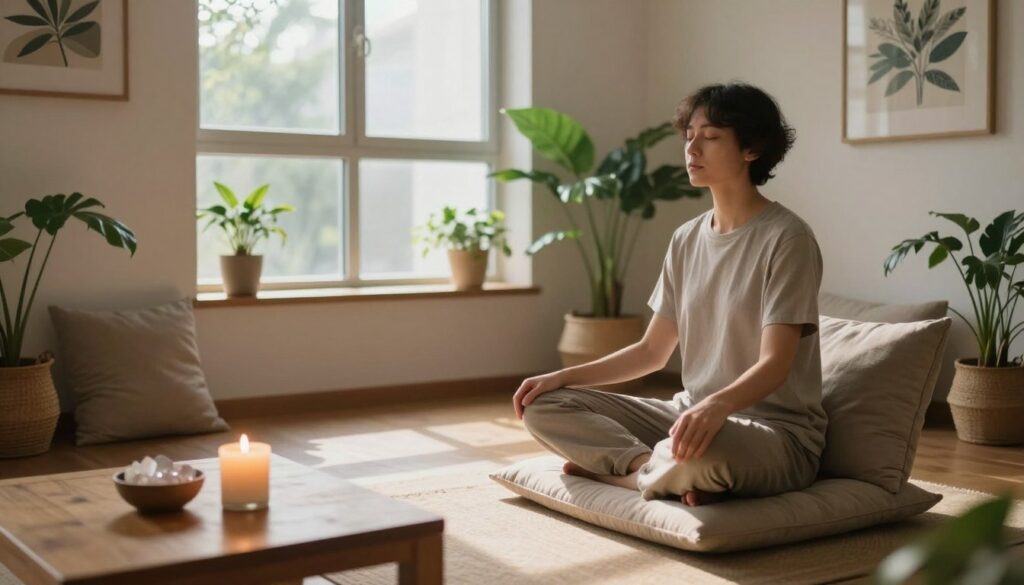
Set up a dedicated place where the body can relax without drifting off. Use a bed or a comfy chair that supports your head so you stay comfortable for longer practice sessions.
Block light and mute interruptions. Turn off overhead lamps, draw curtains, and silence your phone. A darkened space reduces visual clutter and helps the viewer keep focus on the target image.
Reserve about thirty minutes in a quiet place where pets or housemates won’t interrupt. This step gives the session room to unfold and lets subtle impressions arrive without distraction.
Optimizing Your Space for Focus
- Comfort: Support the neck and keep the body relaxed but alert.
- Light control: Block sunlight and stray lamps; use soft, indirect options if needed.
- Silence: Mute devices and close doors to avoid sudden noises.
This 2 min read highlights why a well-prepared environment helps the viewer enter deep states more reliably. Removing distractions gives the body the best chance to receive subtle data about the target and objects at the site.
For practical exercises that pair with a good setup, try this short set of drills available here: remote viewing exercises.
The Role of Meditation in Accessing Psychic Data
Meditation anchors attention and opens channels for subtle perception. Regular sitting trims mental clutter so impressions can arrive with less distortion. This makes it easier for a viewer to notice faint signals during a session.
Dr. Courtney Brown highlights meditation as a core part of training. He reports that disciplined practice helps a person receive clearer psychic abilities and useful information about distant targets.
Many people find that steady meditation builds a stronger connection with intuitive perception. Even government research noted the value of focused mental states during decades of program work.
Benefits at a glance:
- Builds a repeatable practice that enhances viewing accuracy.
- Reduces inner chatter so subtle data can surface.
- Honors the gift of consciousness and deepens life perception.
For a practical primer on developing this skill, consider this short guide to become a psychic mind reader.

Establishing a Consistent Breathing Pattern
Adopt a repeatable breath routine that helps the body stay still and receptive. Try a 4/2 cycle: breathe in for 4, pause for 2, breathe out for 4, pause for 2. Repeat this rhythm for several minutes until the breath feels steady.
Remaining relatively motionless while breathing keeps the body in a meditative state. This reduces noise in the brain and helps the viewer hold focus on the target without drifting or falling asleep.
This 2 min read explains why consistent breathing matters. Practicing the 4/2 pattern for a few minutes prepares the body for a longer session of about 30 minutes. Controlled breathing lets impressions arrive with less interference.
Quick tips:
- Keep posture relaxed but supported.
- Count silently if attention wanders.
- Use the rhythm as an anchor whenever thoughts surge.

For guided practice that strengthens breath work and viewing skills, try this short guide to improve psychic readings.
Managing Visuals and Sensory Impressions
What appears first is often a small fragment: a shape, a smell, a texture, or a color that feels meaningful. Accept that these cues are part of the target rather than the whole image.
Interpreting Vague Impressions
Describe plainly. Use simple words for each cue—color, temperature, size—rather than naming objects. This keeps analysis from distorting raw data.
Managing impressions is a vital step in remote viewing practice. Spend several minutes observing small signals and note them without adding story or context.
Recognizing Gestalts
Look for basic components: living versus manmade, rough versus smooth, open space versus enclosed area. These gestalts give a quick map of the site.
- Focus on colors, textures, and dominant shapes.
- Allow every sense—sound, scent, pressure—to inform the description.
- Stay in a neutral state so the viewer can gather data without logical interference.
Many people find their perception of the world shifts when they trust subtle impressions. For a related primer on developing similar abilities, see this short guide: discover your telepathic abilities.
Avoiding High Level Deductions During Sessions
When impressions arrive, prefer simple descriptors instead of full labels. Note color, shape, texture, temperature, or position in space. Keep each line brief so the viewer captures raw data without the brain inventing details.
Ingo Swann urged viewers to open perception slowly. Resist naming a “car” and write “vehicle” or note wheels and metal. This small step protects session accuracy and keeps higher thought from contaminating impressions.
Record every odd word, sketch, or image exactly as it appears. A short list of descriptors can reveal the target more clearly than a single confident guess.
- Describe features, not objects.
- Separate signal from noise in each moment.
- Let impressions accumulate before drawing conclusions.
For a related primer on sharpening these skills, see the psychic powers primer.
Maintaining an Open and Balanced Mindset
A balanced attitude helps perception arrive without pressure or pretense. Let curiosity lead while holding gentle skepticism about each first impression.
The paradox of confidence often surprises new viewers: faint impressions tend to be more accurate, yet they feel uncertain. Good practitioners learn to trust that uncertainty as a signal, not a failure.
The Paradox of Confidence
Ingo Swann and other trainers warned that certainty can corrupt data. When a person leaps to a bold label, the result often becomes less reliable.
Accepting the ambiguity of the moment gives perception space. This reduces pressure and helps more useful information and images appear naturally.
- Stay open: note impressions without forcing a story.
- Balance curiosity with healthy skepticism during practice.
- Remember that government studies, like Stargate, found top viewers stayed humble about results.

Train this mindset and the ability will sharpen. For a related primer on clairvoyant skill development, see the clairvoyant abilities primer.
Conclusion
Patience and small, regular sessions often bring the strongest images and insights. People who practice steadily notice clearer impressions and a firmer connection between perception and result.
, Mastering simple meditation and steady posture supports the body and sharpens ability. Each image you record is part of a larger process that yields useful information over time.
This guide gives the essentials you need to begin exploring psychic abilities. Keep an open attitude and stay consistent; that way your unique abilities will grow with practice.
FAQ
What is coordinate remote viewing?
Coordinate remote viewing is a trained practice where a person uses a set of coordinates or identifiers to perceive information about a distant target. It focuses on sensory impressions, shapes, and spatial details rather than logical deduction. Practitioners record images, impressions, and words that arise without forcing conclusions.
How does a beginner start with this practice?
Start with short, regular sessions of five to fifteen minutes. Create a quiet space, sit comfortably, and use a gentle breathing pattern to settle the body. Use neutral coordinates provided by a trainer or a randomized list, and note down raw impressions—colors, textures, sounds—without labeling them. Practice builds skill and clarity over weeks.
What role does meditation play in accessing impressions?
Meditation helps reduce inner chatter and cultivates sustained attention. Simple breath-focused meditation or body scans can lower stress and let subtle sensations surface. Aim for brief daily practice that complements sessions; even ten minutes improves focus and sensory clarity.
How should I prepare my physical environment?
Choose a quiet, dimly lit room with minimal distractions. Comfortable seating, neutral décor, and stable temperature help. Remove devices or mute notifications. Keep a notepad and pen nearby for quick sketches and notes. Consistent setup supports reliable practice.
What breathing pattern works best during sessions?
Use slow, even breaths: inhale gently for four counts, hold one or two, then exhale for six counts. This regulated rhythm calms the nervous system and anchors attention. Keep breathing natural and unobtrusive so impressions can emerge without strain.
How do I handle vague or fleeting impressions?
Treat fleeting impressions as data, not answers. Sketch shapes, jot single words, and mark sensations like warmth or motion. Don’t explain them in the moment. Review later for patterns. Over time, small clues often assemble into clearer images.
What are gestalts and how do I recognize them?
Gestalts are holistic impressions—an overall feel, mood, or scene—rather than discrete objects. You’ll notice them as atmospheres, spatial layouts, or emotional tones. Record these broad impressions first; they often guide later details.
How can I avoid making high-level deductions during a session?
Focus on raw sensory data instead of names, functions, or narratives. Use neutral descriptors like “rounded,” “metal,” or “cool” rather than “car” or “building.” If a logical label appears, bracket it and return to simple sensations. Training with blind targets reduces guesswork.
What mindset helps maintain balance while practicing?
Stay curious and detached. Aim for relaxed confidence: trust the process but don’t cling to outcomes. Treat hits and misses as feedback. Regular rest, hydration, and modest expectations keep practice sustainable.
How long before I see improvement in perception?
Results vary, but many people notice clearer impressions within a few weeks of consistent practice. Short, frequent sessions and journaling accelerate progress. Patience and structured training matter more than long, sporadic attempts.
Can group practice improve abilities?
Group sessions offer feedback, diverse targets, and accountability. Coordinated practice with peers or a coach helps compare impressions and refine methods. Use blind targets and structured protocols to avoid influence and maintain integrity.
Are there ethical or safety considerations?
Respect privacy and consent. Avoid targeting individuals without permission. Keep expectations realistic and seek mental health support if practice triggers anxiety or distress. Use techniques as a supplemental personal skill, not a substitute for professional advice.
Which resources are useful for learning more?
Look for books and courses on controlled remote perception, breathing-based meditation, and sensory awareness. Organizations that teach structured protocols offer step-by-step exercises and peer review. Track progress with a simple journal and recorded sessions.