
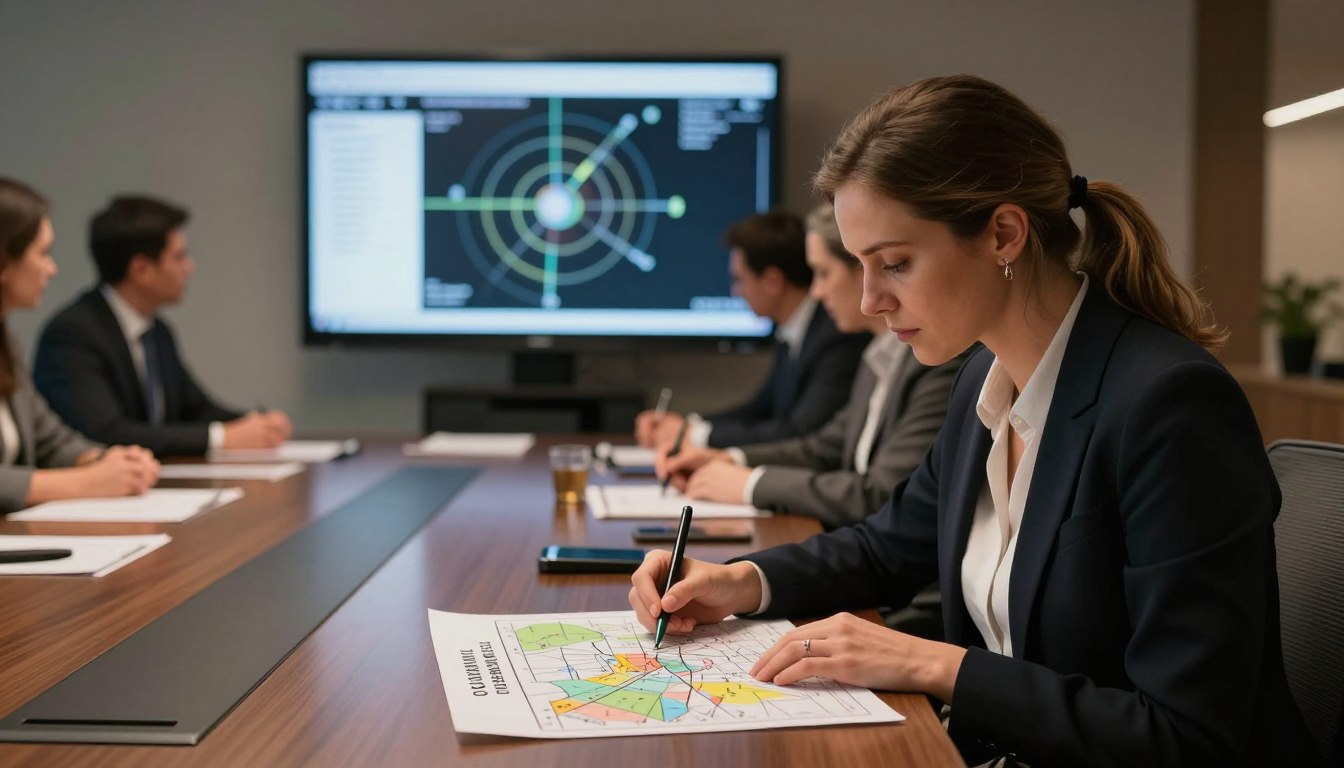
This short intro sets the stage for students and curious readers in the United States who want clear, practical insight on two major methods of remote perception.
Dr. David Morehouse leads a six-day Extended Remote Viewing course for graduates of the Introduction program, showing how formal training moves learners from basic drills to deeper practice.
The article explores how remote viewing acts as a method to gather information about distant targets without physical senses. It traces the path from early military use to structured classes today.
This is a friendly, present-tense guide. Each segment is labeled as a 5 min read or a 10 min read to help you manage your time and learning steps.
Key Takeaways
- CRV and ERV follow distinct protocols used in different training stages.
- Dr. David Morehouse offers an intensive six-day ERV course for qualified students.
- Remote viewing is a structured method to access non-physical information.
- Historical military roots led to the modern curriculum and safety in practice.
- Use the provided min read labels to plan study time effectively.
Understanding the Core Concepts of Remote Viewing
This short 5 min read outlines how trained methods let a person report details about a distant site without relying on standard senses. The goal is practical clarity for readers in the United States curious about structured extrasensory practice.

The Basics of Remote Perception
Remote viewing is a disciplined method of extrasensory perception that lets people access information about a target site without using physical senses. Practitioners follow a protocol that reduces guesswork and keeps notes focused on raw impressions.
During a typical session the viewer records simple sensory fragments—shapes, textures, or movement—while the mind stays calm. This structured approach helps convert fleeting impressions into usable data about a distant target.
The Role of Intuition
Meditation is often used to quiet the mind and lower mental noise before a session. That stillness improves a viewer’s ability to tell genuine information from internal chatter.
- Consistent training refines the ability to notice accurate details.
- Practice teaches viewers to separate intuition from imagination.
- With repetition, people can describe a target site more reliably, even if the site is thousands of miles away.
Defining Coordinate Remote Viewing
This short 5 min read outlines a disciplined, six-stage method that helps a viewer move from raw impressions to clear notes in a session.
The practice follows a metronomic cadence that helps people objectify what they sense without immediate interpretation. A viewer records fragments on paper, turning sensation into a two-dimensional record.
Protocols keep the process repeatable. Strict rules make the information easier to check and verify by others. This structure builds trust in results and in the viewer’s skill.

Training teaches suppression of the analytical mind so perception arrives unfiltered. That restraint helps the viewer capture detail before the mind interprets or fills gaps.
- Six-stage cadence guides data collection and analysis.
- Notes and sketches objectify impressions on paper.
- Standard protocols make work verifiable by peers.
| Stage | Focus | Outcome |
|---|---|---|
| 1 | Orientation | Clear intent for the target |
| 3 | Sketching | Two-dimensional record of impressions |
| 6 | Analysis | Organized information for feedback |
With practice, people gain confidence in their ability to access information without using physical senses. That skill lays a foundation for more advanced sessions and further training.
Exploring the Nature of Extended Remote Viewing

Extended Remote Viewing grew over decades as a more fluid approach. Capt. F. Holmes “Skip” Atwater first named the method in the early 1980s at Ft. Meade.
The method trains the mind to move toward Theta and hypnagogic states. In that edge-of-sleep space, mental noise drops and impressions arrive more vividly.
A session usually involves a monitor who guides the viewer toward a complex target. The monitor asks focused questions to pull clear information from deeper layers of perception.
“ERV lets the viewer sit on the edge of consciousness and report intuitive, layered impressions.”
This process is meant for people who finished basic training and want to develop advanced abilities. It moves away from strict rules so a viewer can follow intuitive leads.
- Fluid protocol that emphasizes trance-like states.
- Monitor-led questioning to reveal detail about a target.
- Access to deeper, often more vivid impressions than the physical senses provide.
| Aspect | ERV Feature | Practical Result |
|---|---|---|
| Origin | Named by Capt. F. Holmes “Skip” Atwater | Formalized practice in the 1980s |
| Brain State | Theta / hypnagogic | Reduced mental noise, richer impressions |
| Session Role | Monitor-guided | Focused questions that elicit layered data |
For practical exercises and guided drills that complement ERV training, see a concise set of practice routines at remote viewing exercises. These help viewers refine their ability to access subtle impressions over time.
Key Differences Between Coordinate Remote Viewing and Extended Remote Viewing
CRV follows a strict, stage-based protocol that helps a viewer track impressions step by step. The process asks for sketches, notes, and controlled checks so information can be verified later.
ERV leans into a relaxed, trance-like state. In that space a person reports layered impressions and flows with the mind’s spontaneous imagery. This approach suits complex targets that benefit from non-linear exploration.

Practitioners choose methods based on skill and training. CRV prioritizes repeatable reports. ERV favors depth and richer sensory experiences that can surface unexpected detail.
Time and commitment shape results. A dedicated viewer who follows a protocol gains consistency. A person who learns to hold a passive state may access subtler information distant targets hide.
“The method you pick should match your goals: clear, verifiable notes or open, layered perception.”
- Structure: CRV is regimented; ERV is flexible.
- Data: CRV uses standardized reporting; ERV uses mind maps and narrative leads.
- Outcome: Results reflect the viewer’s training and chosen process.
Comparing Brainwave States and Mental Preparation
This short 5 min read explains how trainers guide the mind from an alert, focused state into deeper, receptive rhythms that help a viewer access subtle information about a target.

The Shift from Alpha to Theta
Alpha is where many viewers begin. It supports calm attention and clear note-taking during a controlled session.
Theta and occasionally Delta offer a quieter inner field. In those states impressions can arrive with more layered perception, especially for a complex target.
Meditation and guided relaxation are practical tools to make this shift. Short breathing drills lower mental chatter so the mind can notice faint signals.
- The move from Alpha to Theta is central for advanced training and improved abilities.
- Regular practice helps people sense the subtle physical signs that indicate a successful shift.
- Calm preparation reduces analytic interference, so the viewer captures clearer information during a session.
Tip: Spend focused time on simple meditation and short guided practices. Over time, viewers gain the ability to enter the right brainwave state on demand and better handle complex targets.
For guided exercises that support this kind of preparation, see a practical routine on how to send someone healing energy, which offers breathing and focus drills useful for training.
The Role of the Monitor in Session Protocols
A skilled monitor guides a session so the viewer can focus fully on the target without distraction. The monitor keeps time, follows set protocols, and protects the integrity of the work.

The monitor uses clear steps that help the viewer stay on task without leading perceptions. This structure applies whether the team uses a strict stage process or a looser, trance-based method.
Monitors record raw information as it arrives. That lets the viewer concentrate on sensing, sketching, or reporting impressions. The result is cleaner data for feedback and analysis.
Good monitors do not interpret. They ask neutral prompts, note timing, and keep the session objective. This support is vital when a complex target needs long, steady attention.
For practical breathing and focus drills that help monitors and viewers prepare, see a short routine on breathing and focus drills. These practices improve the mind’s readiness and the overall quality of sessions.
Structural Differences in Data Collection
This 5 min read looks at how note-taking and prompts change the way a team captures impressions during a session. Protocols that favor flow let the mind link ideas, while strict forms force linear records.

Using Non-linear Mind Mapping
Non-linear maps let a viewer record impressions as clusters and links. That approach mirrors how intuition connects shapes, sounds, and feelings.
Use simple nodes for each sensation and draw lines to related items. Over time, those links reveal layered information about a complex target.
- Capture first impressions without judging them.
- Note repeated motifs; they often point to core details.
- Allow sketches, words, and arrows to coexist on one page.
The Importance of Seed Questions
Seed questions focus attention without leading the mind. A monitor asks short prompts that push toward concrete details about a distant target.
Simple queries saved for later feedback improve accuracy and help people trust initial impressions. For a practical companion on perception drills, see this psychic vision guide.
Training Prerequisites and Skill Development
This short 5 min read explains why many programs ask students to complete a formal coordinate remote protocol course before moving on to looser techniques.
A solid foundation in basic protocols gives students steady footing for more fluid practice. Early training teaches timing, clear note-taking, and how to quiet the analytic mind so impressions arrive with less interference.
Skill grows slowly. Practice sessions focus on short runs, simple targets, and regular feedback. Over time a student learns to handle a complex target with better precision.
Consistent practice and feedback are the fastest path to reliable progress. Tutors review notes, point out patterns, and help the viewer see which responses hold up under testing.
Mastering basics builds confidence. With that confidence, learners can safely explore wider abilities, refine perception, and develop remote viewing skill for longer or more intricate sessions.
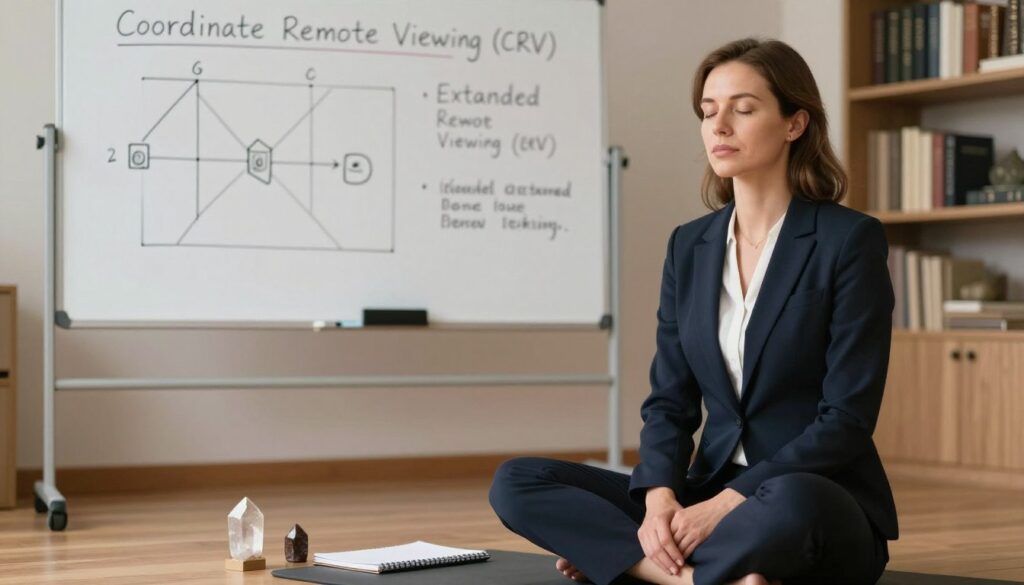
- Complete basic protocol training first.
- Use short, frequent sessions to build ability.
- Seek structured feedback to improve information accuracy.
Historical Origins and Development
This short 5 min read traces how formal experiments in the 1970s shaped modern practice.
In the early 1970s Russell Targ and Harold Puthoff began formal study at the stanford research institute. Their work tested whether trained people could report distant sites under controlled lab conditions.
The subsequent Stargate Program ran for decades. Government teams used a cadre of remote viewers to evaluate operational uses, often under classified conditions.
While mainstream science remains divided, the data and protocols from those years gave instructors a working foundation. Trainers adapted lab methods into classroom training and practical drills.

The legacy matters because it links controlled research at a research institute to today’s structured curriculum. Students learn the early tests so they can judge methods and expected results.
“Early lab work set standards that guides use and evaluation of reports about a distant target.”
- Stanford teams formalized test protocols that shaped later practice.
- Stargate applied lab methods over many years to evaluate usable information.
- Understanding origin helps learners assess training and their own ability.
| Year | Lead Researchers | Institution |
|---|---|---|
| Early 1970s | Russell Targ, Harold Puthoff | Stanford Research Institute |
| 1970s–1990s | Government teams | Stargate Program |
| Post-1990s | Trainers & Schools | Public training programs |
Evaluating Accuracy and Empirical Evidence
This short 5 min read looks at how researchers test reports against known facts to judge accuracy.
Assessing how often a session matches known facts is the clearest way to judge accuracy. Empirical evidence comes from scoring impressions against quantifiable attributes of a distant target site.
Physicists and teams at the research institute spent decades designing controlled tests. Results are often debated because some findings may align with chance rather than clear extrasensory perception.

Many remote viewers report useful information and repeatable successes. Still, the broader science community calls for reproducible methods and transparent scoring to accept results as proof.
Students should keep a grounded view. Track sessions, use blind targets, and apply statistical checks. That practice helps separate honest ability from coincidence over time.
| Measure | What it tests | Practical note |
|---|---|---|
| Hit rate | Match to target attributes | Simple and direct; needs clear scoring |
| Statistical analysis | Significance beyond chance | Requires many sessions for confidence |
| Blind replication | Repeatability by other teams | Key for scientific acceptance |
Addressing Common Myths and Misconceptions
Misconceptions thrive when complex subjects meet sensational headlines instead of careful study.
Learning a skill: Many people assume only naturals can do this work. In truth, basic practice and guided training develop the ability to gather usable information about a target.
Stanford research drew public attention. The Stanford Research Institute ran controlled studies, yet mainstream science often calls the field controversial. That tension fuels myths more than data does.
Safety: Worried about harm? Sessions are no more risky than a focused meditation practice. Proper guidance keeps mental clarity and emotional safety intact.
- Accuracy is not guaranteed; even experts get vague results.
- Chance plays a role, so use blind testing and feedback to judge performance.
- Balanced study beats sensational stories for steady progress.
For a practical take on technique and personal development, see this short guide on practical clairvoyant training.

| Myth | Reality | Practical Tip |
|---|---|---|
| Only naturals succeed | Skill improves with practice | Follow structured drills and feedback |
| Scientifically proven | Mixed results at research institute | Use blind tests and stats to assess accuracy |
| Sessions are harmful | Comparable to meditation | Practice grounding and short sessions |
Choosing the Right Approach for Your Practice
This short 5 min read helps you match goals to practice time and the best training path for your needs.
Pick an approach that fits how much practice time you can realistically commit each week. If you want steady, testable reports, a structured protocol may suit you. If you prefer a looser, trance-based path, choose exercises that let intuition expand.
Decide how you value concrete information versus layered impressions. Honest self-assessment of current skill helps you plan gradual progress. Simple drills build confidence; longer sessions reward exploration.

- Set short goals: practice runs, review notes, and seek feedback.
- Try both non-linear mapping and strict protocols to see which feels natural.
- Keep a journal to track what works and what needs more training.
If you want practical drills that support this choice, see a set of practical drills that many students use while they develop remote viewing skills.
“Pick methods that match your schedule and long-term goals.”
Conclusion
This min read (5) wraps up practical points you can use as you plan study and practice.
Summary: You’ve seen historical context, core training needs, and the key protocols that shape two major methods. Use that framework to judge what fits your schedule and learning style.
Keep practice steady and stay curious. Honest feedback and short, focused sessions build skill over time.
For further reading and course options, visit this remote viewing resource. Thank you for taking the time to read this min read (5).
FAQ
What are the core concepts of remote perception?
Core concepts center on using trained awareness to gather information about a distant target site without relying on physical senses. Practitioners learn protocols, mental discipline, and ways to record impressions. Sessions often emphasize neutral observation, sketching impressions, and noting sensory-like cues such as shapes, textures, and emotions.
How does intuition play a role in these practices?
Intuition guides spontaneous impressions and helps filter useful material from noise. Training strengthens the ability to recognize reliable impressions and to separate gut-level hits from guesswork. Consistent journaling and feedback improve judgment over time.
What defines Coordinate Remote Viewing methods?
This structured protocol uses a point of reference such as map coordinates or a random identifier as a starting seed. Viewers follow staged procedures that produce layered outputs: initial gestalt sketches, sensory descriptors, and progressive refinement. A monitor often reads protocol cues and records verbatim reports.
How do other, more open approaches differ?
Some methods favor looser, trance-like sessions where the viewer lets impressions unfold without strict staging. These sessions may rely on free-association, mind mapping, or extended periods in a meditative state. The output can be more narrative and less compartmentalized than strictly staged protocols.
How do mental states affect performance?
Performance often links to brainwave patterns and relaxation. Many practitioners aim to move from alert alpha into deeper theta rhythms to access subtler impressions. Proper preparation, breath work, and brief meditation help shift the mind into a receptive state.
What role does a monitor play during a session?
A monitor manages protocol steps, offers seed prompts, and records responses verbatim. They provide an objective frame that reduces bias and ensures sessions remain consistent. Feedback from the monitor helps viewers calibrate and improve accuracy.
How is data usually collected during a session?
Data collection can be linear or non-linear. Many teams use mind maps and sketches to capture emergent impressions. Seed questions help direct attention to specific aspects of a complex target so the viewer can break down the task into manageable elements.
What training prerequisites are common for new learners?
Beginners often start with attention training, sensory awareness exercises, and simple practice targets. Instruction focuses on disciplined note-taking, learning protocol stages, and developing the ability to report raw impressions without interpretation.
Where did modern practice originate and who contributed to its study?
Interest and formal research expanded in the latter half of the 20th century with institutions such as the Stanford Research Institute conducting controlled studies. Later programs within U.S. government research, commonly referenced in public sources, further shaped protocols and operational approaches.
What does empirical evidence say about accuracy?
Research over decades produced mixed results. Some controlled studies reported above-chance hits under strict protocols, while other investigations showed limited reproducibility. Methodology, feedback, and evaluator scoring significantly influence measured outcomes.
What common myths should readers be aware of?
Myths include the idea that everyone can achieve consistent, detailed results quickly or that sessions substitute for physical investigation. Another myth is that training guarantees scientific-level accuracy; outcomes vary widely and depend on practice, protocol, and evaluator methods.
How should someone choose an approach to practice?
Choose based on goals and temperament. Structured protocols suit people who prefer stepwise learning and measurable feedback. Open, meditative methods fit those who want exploratory, intuitive experiences. Combining elements from both can help balance accuracy and depth.
Can people develop reliable skill with practice?
Yes, many practitioners report improved clarity and consistency after regular practice, guided feedback, and disciplined protocol use. Skill development emphasizes honest record-keeping, critical review, and steady practice rather than quick results.