

On April 27, 1973, a pioneering probe of a distant gas giant took place at the Stanford Research Institute. Researchers Harold Puthoff and Russell Targ coordinated a controlled experiment to test whether trained consciousness could gather accurate information about faraway targets.
Declassified CIA documents later showed that the notes from that day contained details later validated by NASA missions. This overlap of notes and later probe findings made the experiment a key case in studies that link human perception to empirical data.
The early work shaped how scientists and meditators view mental potential. By examining the methods and the reported results, readers can see why this 1973 experiment remains a cornerstone for those exploring the limits of human perception.
Key Takeaways
- The 1973 session at SRI produced notes later corroborated by NASA probes.
- Puthoff and Targ led the experiment to test trained consciousness under controlled conditions.
- The case is a primary study for researchers of perception and anomalous phenomena.
- Declassified documents add historical and scientific weight to the claims.
- For further context on related figures, see a page on famous psychics.
The Enigma of Ingo Swann and Remote Viewing
Growing up in Colorado and working as an artist, Ingo Swann developed an unusual way to focus the mind. His creative training shaped how he described distant scenes and informed early protocols later called remote viewing.

Early Life and Artistic Background
Born in 1933, Ingo Swann used sketching and close observation to sharpen visual memory. That practice helped him form techniques to separate imagination from observed detail.
Defining Remote Viewing
Remote viewing is defined as the purported ability of the human mind to access information about distant targets without physical senses. Swann coined the name and helped shape repeatable approaches.
- Artist-led focus trained steady attention and disciplined reporting.
- Foundational abilities stressed consistency over flair.
- Critics debated the claims, yet his influence persisted.
| Trait | Artist Influence | Practical Effect |
|---|---|---|
| Observation | Sketching detail | Improved sensory recall |
| Focus | Visual training | Better session consistency |
| Control | Discipline in practice | Separation of perception and imagination |
Origins of Psychic Exploration at Stanford Research Institute
In the early 1970s, a small laboratory at the Stanford Research Institute became the focal point for experiments that bridged intuition and formal science.
Physicists Harold Puthoff and Russell Targ led the team that shaped protocols to test whether trained perception could provide useful information for intelligence work.
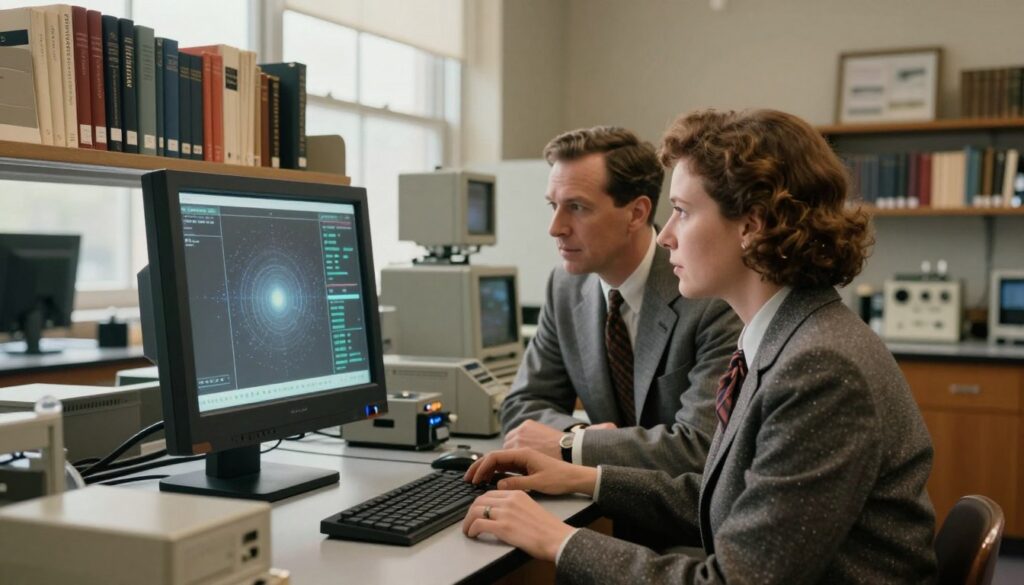
The group formalized procedures to reduce bias and to record observations in ways that could be examined by peers. Their goal was to treat the practice as a repeatable study, not a parlor trick.
“We set strict controls so reported impressions could be compared to objective data.”
- The institute moved from informal trials to controlled experiments.
- Puthoff Russell Targ applied physics-style rigor to human perception.
- The intelligence community monitored the work for possible operational use.
That collaboration with Ingo Swann at Stanford Research established the baseline methods many later teams used. For more on related protocols, see a short guide on structured remote viewing.
Analyzing Ingo Swann Jupiter Remote Viewing Session Results
The 1973 notes offer a striking mix of sensory detail and concise claims about a distant gas giant.
During that April experiment, the viewer described a poisonous atmosphere made of hydrogen, helium, ammonia, and methane. These elements match later probe findings and strengthened interest in the reported data.
One of the most debated observations was a sketch that suggested rings around the planet. That drawing predated scientific confirmation by several years and led researchers and intelligence analysts to compare impressions with scant contemporary information.
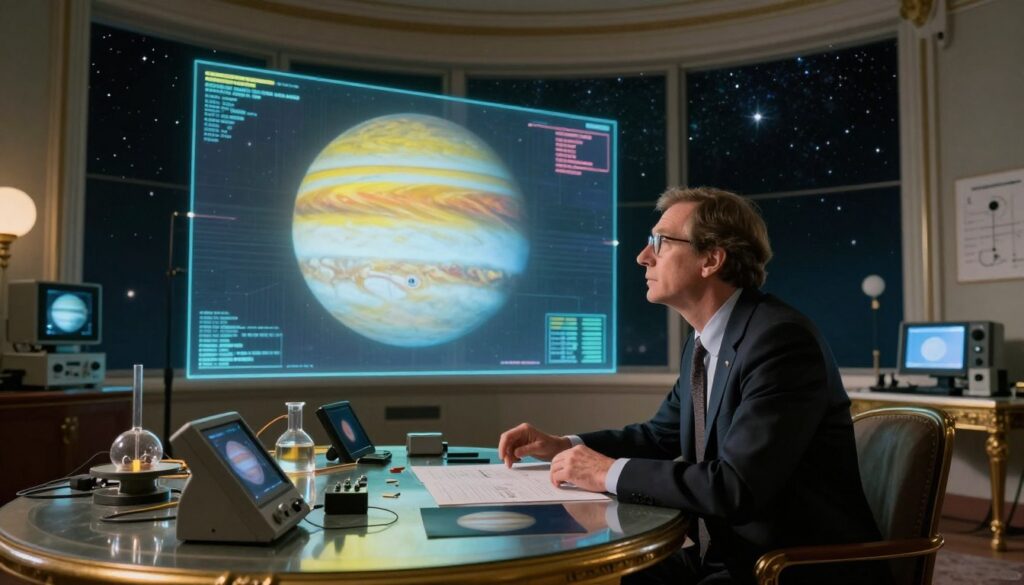
Researchers noted clear references to layered cloud cover and turbulent features on the surface. When the probe data arrived, many details were seen as notable overlaps rather than full proofs.
“The notes provided testable claims that could be checked by later space probes.”
- Key claims: rings, complex atmosphere, cloud cover.
- Data compared: session notes vs. probe findings.
- Significance: raised questions about non-instrumental information gathering.
| Claim | Session Detail | Probe Confirmation |
|---|---|---|
| Atmosphere | Hydrogen, helium, ammonia, methane | Confirmed by probes |
| Rings | Sketch of faint rings | Observed in 1979 |
| Cloud layers | Layered, turbulent cover | Seen by probes |
The Methodology Behind Controlled Remote Viewing
Researchers refined a repeatable protocol to help practitioners report impressions about distant targets with less bias. The method aimed to make perception more consistent and testable for scientific review.
Structured Visualization
Structured visualization breaks a complex scene into simple cues. Practitioners sketch shapes, note textures, and label sensory impressions one step at a time.
This approach helps separate clear data from imagination. It improves the reliability of remote viewing by guiding the mind through a steady reporting process.
Breath-Linked Focus
Breath-linked focus uses steady breathing to calm the body and sharpen attention. Short, slow breaths anchor the mind and reduce physical distraction.
With this foundation, a viewer can attend to subtle impressions about a specific target and record them without rushing.
Conscious Expansion
Conscious expansion trains practitioners to extend awareness beyond the physical body. Exercises encourage relaxed attention and openness to faint cues from distant targets.
Developing these abilities was central for teams that wanted to standardize viewing and compare notes objectively.
- Step-by-step process: focus the mind on a target.
- Breath work: calm the body to steady perception.
- Visualization: record impressions without bias.
- Training: build abilities to make viewing more consistent.
To practice basics, try guided exercises that teach breath-linked focus and structured reporting, such as this short set of remote viewing exercises.
Observations of the Gas Giant Atmosphere
Observers from the 1973 trial reported towering storms and fierce winds sweeping across the planet’s visible layers.
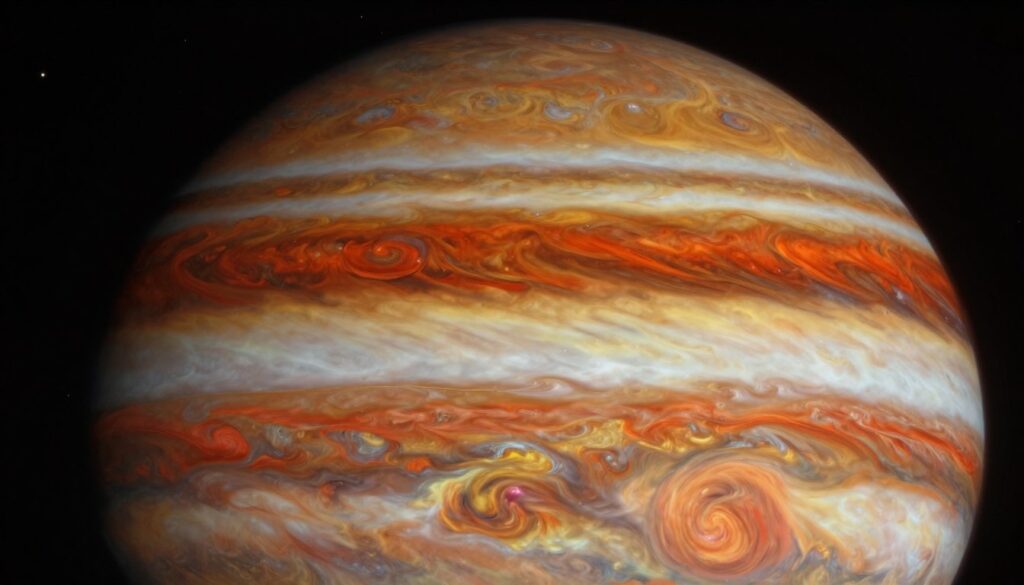
Descriptions emphasized a hydrogen-rich atmosphere with complex, stratified layers of gas. Notes describe banded cloud cover and shifting bands that rode high above deeper layers.
Reports singled out a massive turbulent region identified as the Great Red Spot, described as a long-lived vortex of intense turbulence. Scientists later compared those observations with probe data to check for overlaps.
Observers also noted crystalline structures and tall, mountain-like protrusions that appeared to rise through the layers. These details suggested the planet’s surface was not solid rock but a mix of dense, swirling elements and suspended crystals.
“The session captured features that could be matched against later probe findings.”
- Hydrogen-rich atmosphere with layered gas.
- Gigantic storms and shifting cloud cover.
- Mention of rings and turbulent regions like the Great Red Spot.
Such observations remain a focal point for researchers who study how human perception can produce testable descriptions of space phenomena. The combination of descriptive details and later probes invites careful comparison.
Comparing Psychic Impressions with Voyager Data
When probe imagery arrived, researchers had a direct test of the impressions recorded four years earlier. This comparison let scientists measure how closely human perception matched measurable space data.
Ingo Swann and colleagues had sketched features that could be looked at objectively. Analysts compared notes to the probe readings and searched for matching elements in the planet’s atmosphere and cloud cover.
The Discovery of Planetary Rings
Voyager 1 confirmed faint rings in 1979—an element that had appeared in a 1973 sketch. The confirmation made the reported impressions especially notable for both proponents and skeptics.
Key overlaps included hydrogen and helium in the atmosphere and distinct layered cloud patterns. Observers also pointed out the Great Red Spot and other large features that the probe later documented.
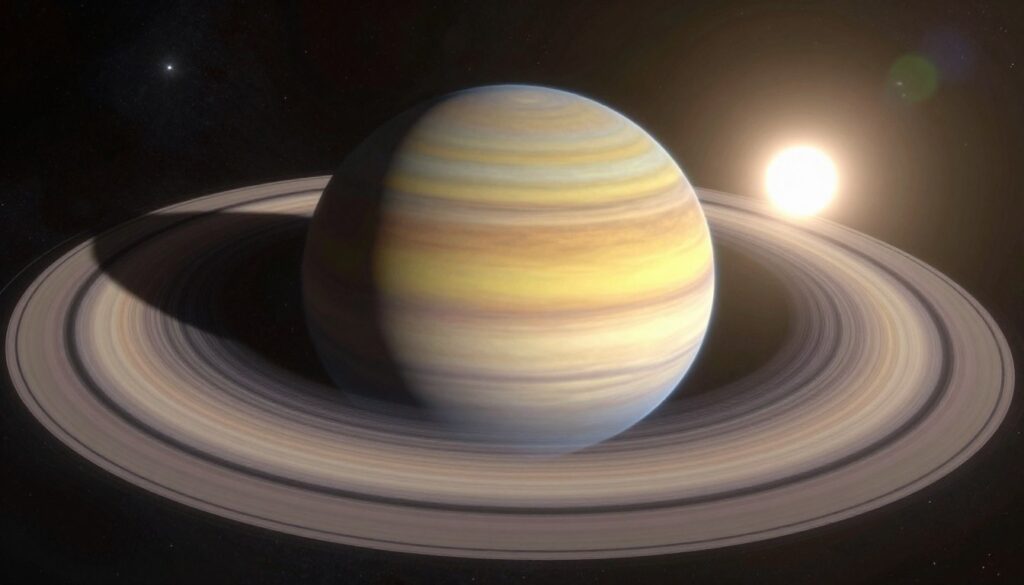
“The side-by-side check of notes and probe data remains one of the most cited comparisons in the field.”
- When the results compared the 1973 notes to Voyager data, the rings claim stood out.
- Probe data validated a layered atmosphere with banded clouds and hydrogen elements.
- Researchers found several impressions aligned with later instrument readings from space probes.
While debate continues, the matched observations offer a clear case where human impressions and hard data intersect. For a related perspective, see a short forecast on a related forecast.
The Role of Government Intelligence in Psychic Research
During the Cold War, U.S. agencies quietly funded experiments that tested whether trained minds could supply useful intelligence and actionable information.
The Stargate Project was a long-running program that aimed to turn claims about human perception and special abilities into practical tools for gathering data on distant targets.
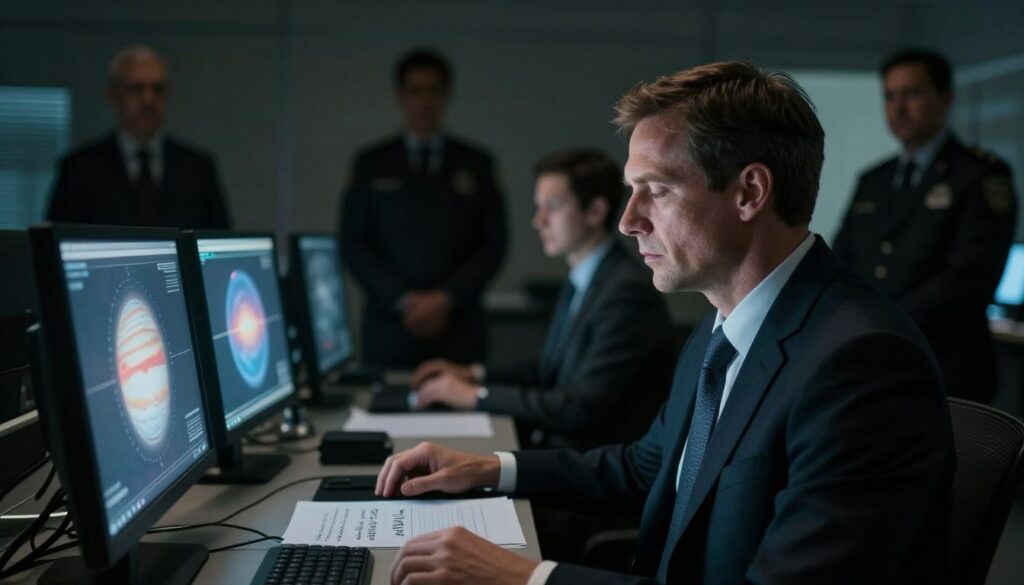
Researchers evaluated practitioners to see if their reports could add reliable data where sensors could not reach. The CIA backed much of the work to counter perceived Soviet interest in similar techniques.
The intelligence community used these tests to collect information on sites and events that were otherwise inaccessible. Many of the program’s publicized claims sparked debate among analysts and scientists.
“While intriguing, the program ultimately found the methods were not consistently reliable for operations.”
- The community sought actionable information on distant targets.
- Government researchers vetted individual abilities and recorded details.
- The effort remained classified for years and remains a controversial chapter in intelligence history.
Scientific Skepticism and the Challenge of Validation
A central criticism is that many notable impressions lack repeatable replication under strict controls. This gap drives much of the scientific debate about psychic claims tied to planetary features.
The Problem of Reproducibility
Laboratory tests have struggled to produce consistent outcomes. When trained individuals report striking details, other labs often fail to match those results.
That lack of reproducibility makes it hard for mainstream science to accept such methods as reliable sources of data or operational intelligence.
Cognitive Bias and Anecdotal Evidence
Critics note that many observations read like ambiguous phrases that can match many possible targets. This raises questions about confirmation bias and chance.
Descriptions of atmosphere, cloud cover, or surface features may reflect interpretation instead of precise measurement. Skeptics often view such claims as coincidental rather than proof.
“Anecdotes can point to interesting possibilities, but they do not replace rigorous, repeatable study.”
- The scientific community points to inconsistent study outcomes as a major concern.
- Some described atmosphere traits match probe data, but ambiguity remains.
- Careful comparison of notes and later probes is needed to move from claims to solid results.
| Issue | Concern | Implication |
|---|---|---|
| Reproducibility | Inconsistent lab outcomes | Limits scientific acceptance |
| Bias | Ambiguous language | Matches may be coincidental |
| Verification | Few controlled confirmations | Needs more rigorous data |
Despite these doubts, interest persists. The ongoing study of remote viewing continues to challenge how we gather and test unusual forms of information.
Consciousness and the Theory of Nonlocal Perception
Some theories propose that consciousness can tap into information that is not bound by space or time. This idea frames the mind as more than processes inside the body.

Nonlocal perception suggests that a trained observer can access data about distant targets without physical contact. Proponents say this explains how remote viewing can produce useful impressions about faraway scenes.
Researchers explore how the mind might connect to a shared field of information. If true, that link would let perception reach beyond the senses and provide testable reports about distant targets.
- Theory: consciousness links to a universal information field, bypassing the physical body.
- Practice: by training the mind to enter altered states, practitioners aim to gather clear impressions.
- Implication: this view challenges mainstream science and invites fresh experiments on perception.
While still controversial, the framework offers a possible explanation for notable cases from the 1970s. For context on key practitioners and history, see a short profile.
“If perception can be nonlocal, the map of what the mind can access grows far larger.”
Key Collaborators in the Stargate Project
A tight-knit team of practitioners and scientists shaped the protocols that guided Stargate’s best-known experiments.
Pat Price and Joe McMoneagle joined forces with a lead viewer to expand the scope of controlled reporting. Their work added depth to many published observations and helped test claims about distant targets.
Physicists Harold Puthoff and Russell Targ provided the laboratory oversight. They designed procedures at the Stanford Research Institute to reduce bias and make each target verifiable.
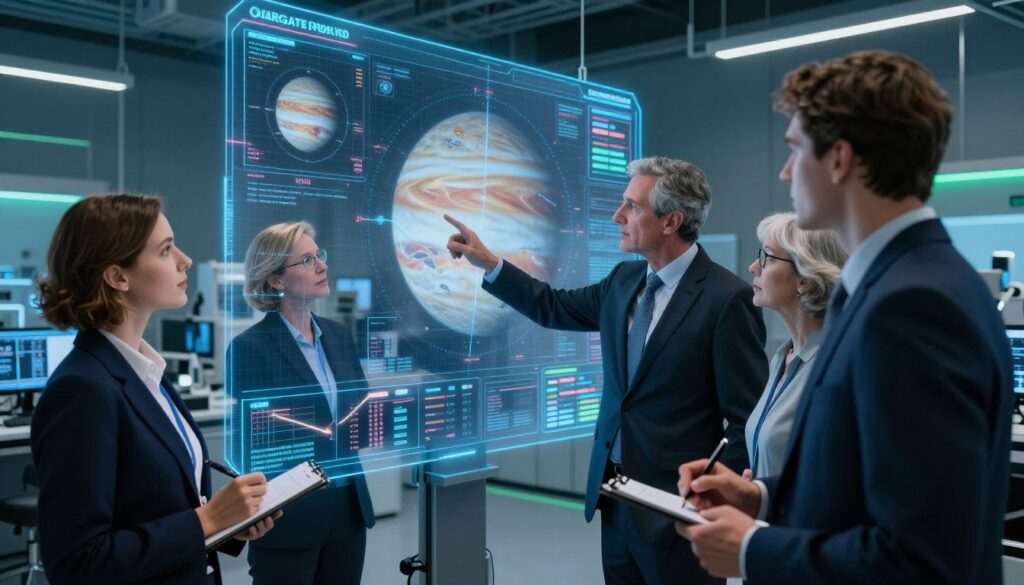
“Collaboration between trained viewers and careful researchers created the structure needed to evaluate unusual abilities.”
- Team composition: skilled viewers, lab scientists, and protocol managers.
- Purpose: produce testable information about distant targets for intelligence use.
- Outcome: mixed results, but lasting influence on methods and data collection.
For more on the research lead, see a short profile on Hal Puthoff, which explains how scientific controls shaped the project’s approach.
Future Implications for Space Exploration and Human Potential
Future missions may blend instrument readings with trained human impressions to expand how we study distant worlds.
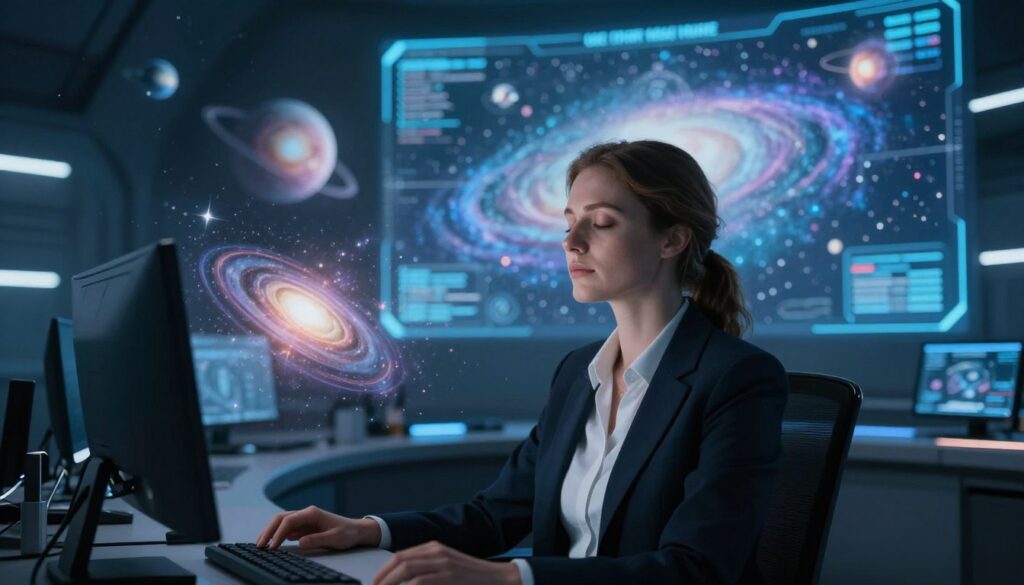
As humanity plans longer trips and deeper probes, researchers consider whether disciplined perception can yield useful clues alongside sensors.
Remote viewing techniques could serve as an experimental layer of data collection. They might help mission teams prioritize targets or spot subtle patterns that instruments miss.
The history of skilled practitioners suggests the mind may hold untapped tools for exploration. Continuing research into human perception can test those limits under controlled conditions.
- Future missions could pilot perception studies alongside traditional sensors.
- Testing will clarify if human reports add unique, actionable insight.
- Ethical and operational frameworks must guide any integration.
“Combining technology and trained perception may open new paths for discovery.”
Speculative but promising, the merge of consciousness research and space exploration invites cautious study. Over decades, the balance of instruments and human potential could reshape how we map the cosmos.
Conclusion: Reflecting on the Boundaries of Reality
That April trial stands as a crossroads between human intuition and instrumented inquiry. The account raised sharp questions about consciousness, the mind, and how far perception can reach when instruments cannot. Early notes offered striking details and notable observations about the planet that later matched collected data.
Reviewing the work at the Stanford Research Institute shows why debate endures. The results prompted both interest and skepticism, as some claims found support while others stayed ambiguous. Probes and later scientific discoveries verified parts of the record, yet many questions about method and abilities remain.
Ultimately, the legacy asks us to keep testing. Balanced study can bridge curiosity and rigorous science, and may expand what a trained mind can report about a distant surface or a single probe encounter.
FAQ
What were the main claims from Ingo Swann’s Jupiter observations?
He reported layered cloud structures, vivid color bands, and atmospheric details he described as zones of differing density and motion. He also mentioned large, storm-like formations and a subtle ring structure around the planet that hadn’t been widely known at the time.
Where did this work take place and who supported it?
The research occurred under contract at the Stanford Research Institute and involved physicists and intelligence personnel. Key figures included Russell Targ and Harold Puthoff, who documented experiments and pursued follow-up testing with interest from government agencies.
How did the controlled protocols of the project operate?
Practitioners used structured visualization steps, breath-linked focus techniques, and protocols intended to reduce cueing. Sessions emphasized blind targets and sequential checks to isolate impressions from prior knowledge.
Did the impressions match later spacecraft data?
Some reported features, such as layered clouds and storm systems, aligned in broad strokes with Voyager probe imagery. Claims about fine details and composition, like specific elemental readings, remain controversial because they lacked rigorous, independently replicated verification.
Was there scientific validation for the findings?
Mainstream science has generally been skeptical. Critics point to reproducibility problems, potential cognitive bias, and the difficulty of objectively scoring qualitative descriptions against complex planetary data sets.
What is the significance of the reported ring-like structure?
The mention of rings attracted attention because it preceded some published observations suggesting tenuous ring material. Whether the impressions reflected genuine detection or coincidental description is debated and has not been settled.
Who collaborated on the Stargate-related studies?
The work linked to the Stargate program involved researchers at the Stanford Research Institute and later participants in government-sponsored intelligence projects. Collaborators included scientists, military officers, and program managers interested in unconventional information-gathering methods.
How do proponents explain apparent accuracy in some descriptions?
Supporters argue that disciplined protocols and blind testing reduce normal sensory contamination, proposing a model of nonlocal perception or consciousness-based access to distant targets. They advocate further controlled research to test these hypotheses.
What are the main scientific objections to these claims?
Objections focus on lack of reproducible results, insufficient controls against subtle cueing, and reliance on anecdotal matches. Researchers emphasize statistical rigor, preregistered protocols, and independent replication before accepting extraordinary claims.
How did government interest influence the research direction?
Intelligence funding and operational interest steered some studies toward applied outcomes and operational testing. That support provided resources but also drew scrutiny and heightened expectations for demonstrable utility.
What methodological improvements are suggested for future research?
Recommendations include double-blind designs, standardized scoring systems, larger sample sizes, preregistration of targets, and independent replication. These steps aim to reduce bias and clarify whether any effect exceeds chance.
Could consciousness play a role in nonlocal perception?
Some theorists propose consciousness-based models to explain reported phenomena, arguing for mechanisms outside classical sensory channels. These ideas remain speculative and require interdisciplinary testing across neuroscience, psychology, and physics.
How should a reader interpret historical claims versus probe data?
Treat anecdotal or subjective impressions as intriguing historical records rather than definitive scientific findings. Compare them cautiously with probe measurements, prioritizing empirical data while acknowledging the cultural and scientific context of the original work.
Are there reliable sources to learn more?
Primary documents from the Stanford Research Institute, publications by involved researchers, and peer-reviewed critiques provide balanced perspectives. NASA probe reports and subsequent analyses offer authoritative datasets for comparing descriptive claims with instrument readings.