

Remote viewing traces back to the 1970s, when Ingo Swann coined the term during early experiments. The practice asks the mind to access information about a distant target without using the five physical senses. This introduction sets a clear path for readers who seek structured training and reliable sessions.
In simple steps, you will learn how to prepare a session with an envelope, a quiet space, and a clear target. The guide shows ways to record impressions, images, shapes, colors, and details. With steady practice, people improve accuracy and sharpen perception of thoughts versus real data.
Whether you study the Stargate Project or want better intuition, this manual covers history, methods, and ethical practice. For further training resources, see how to become a professional remote for guided steps and exercises.
Key Takeaways
- Ingo Swann named remote viewing during 1970s research.
- Sessions use a target, envelope, and quiet space for focus.
- Practice builds the ability to record images and impressions clearly.
- Training helps separate internal thoughts from target information.
- Consistent sessions improve accuracy, skill, and perception.
Understanding the Fundamentals of Remote Viewing
This discipline teaches a structured approach for collecting subtle impressions about targets beyond the five senses. It blends clear procedures with disciplined reporting so practitioners can track what they receive and test results.
Defining the Practice
Remote viewing is a disciplined method of accessing information about a distant target site without relying on the five physical senses. A trained viewer records raw impressions, shapes, and feelings that may point to real-world details.
The Science vs. Pseudoscience Debate
Supporters treat this as a legitimate form of perception and sometimes link it with psychic abilities. Critics argue the lack of a reliable mechanism and reproducible lab results keeps it controversial.
“Researchers have studied viewing for decades, yet the scientific community remains divided on its validity.”
- Calm mind: Filtering outside noise helps the viewer notice subtle impressions.
- Disciplined reporting: Separating imagination from objective information is essential.
- Ongoing study: Long-term research has produced mixed outcomes, so careful protocols matter.
For practical exercises and structured training, see remote viewing exercises.
The Historical Origins of Remote Perception
The 1970s saw scientists bring disciplined methods to study perception beyond ordinary senses.
Physicists Russell Targ and Harold Puthoff led pioneering experiments at the Stanford Research Institute. Their work asked whether the human mind could gather useful information about distant targets without normal sensory input.
These controlled sessions tested many individuals. Researchers recorded raw impressions and compared them to real-world targets. The data helped define protocols for later testing.
Government interest grew during the Cold War. Funding created the Stargate Project, which explored military uses for remote viewing. That program used strict controls and repeat trials to judge the ability of selected viewers.

The history of this research institute mixes notable results and spirited debate about repeatability. Even now, the early experiments shape how we study viewing and value reports of impressions from trained observers.
How to Become a Professional Remote Viewer
Begin training with sealed images and short, timed sessions that test your perceptual accuracy. Use an envelope system so the target remains unknown. This simple control preserves data integrity and builds trust in recorded impressions.
Schedule regular practice. Brief, daily sessions help the mind learn to access clear images and factual information about distant places or objects. Keep logs of each session and compare notes with the actual target later.
Quiet your mind and steady your eye. Record every sensory impression without judging it. A neutral mindset reduces bias and helps separate imagination from potential target details.
The path requires time, structured training, and patience. As people gain experience, viewing becomes more consistent and the ability to access locations or persons improves. Join supervised practice groups or find a mentor for feedback and ethical guidance.
- Use sealed envelopes with images for blind trials.
- Keep short, frequent sessions that emphasize accuracy over quantity.
- Maintain neutral reporting to protect data quality and track progress.
Essential Mental Preparation for Success
A calm, predictable setting primes the mind for clearer impressions during viewing practice. Start by choosing a quiet room and turning off alerts. Small changes in light and seating help reduce distractions.

Creating a Quiet Environment
Remove noise sources and note the time of day when you focus best. Consistent timing trains your attention and signals your brain that practice begins.
Deep breathing and short meditation clear stray thoughts. Use three slow breaths, then let impressions flow without judgment.
- Keep sessions brief: Short blocks sharpen accuracy and protect concentration.
- Record first impressions: Write raw notes immediately to avoid conscious editing.
- Stay neutral: Calmness supports the ability to receive information rather than create it.
With steady preparation, your capacity for clear viewing grows. For energy-focused routines, see simple energy practices that pair well with session prep.
Mastering the Remote Viewing Protocol
Mastering the protocol means setting clear controls that protect the integrity of every session. A solid process helps people collect usable information and keeps practice repeatable.

Setting the Target
Choose a single, specific target and keep it sealed in an envelope until comparison time. A clear target gives the mind a stable focus and reduces distracting thoughts.
The Double Blind Requirement
Double-blind design means neither the viewer nor the monitor knows the image or object. This prevents subtle cues and protects data accuracy during the viewing session.
Recording Raw Data
Record raw impressions first: shapes, colors, textures, temperatures, and simple sketches. Note patterns and loose images before any interpretation.
- Keep every detail dated and timed for later comparison.
- Avoid early judgments; separate facts from thoughts.
- Train regularly with sealed targets to build disciplined reporting and improve accuracy.
“Strict protocol turns impressions into testable results.”
Developing Your Sensory Impressions
Learning to hold small sensory details in your mind helps convert fleeting impressions into usable information.
Start simple: note colors, shapes, textures, and any strong feelings that arise during a session. These basic items often point toward the target.
Use the mind’s eye to sketch quick images. Trust the first flashes; initial impressions are often the clearest. Then add slow, calm checks for patterns and spatial cues around the image.

“Record raw impressions first; later analysis separates fact from fancy.”
Practice regularly with short sessions. Keep a dated log of images, colors, and shapes. Over time, this library of impressions improves accuracy and trains perception.
- Focus on the space around an object to reveal context.
- Distinguish rapid thoughts from steady impressions.
- Compare notes across sessions for recurring patterns.
| Skill | What to Record | Goal |
|---|---|---|
| Visual detail | Colors, shapes, brightness | Improve image clarity |
| Spatial sense | Distances, layout, surrounding space | Contextual accuracy |
| Emotional tone | Feelings, temperature, mood | Validate impressions |
The Role of the Monitor in Sessions
A monitor’s steady role preserves conditions that let impressions surface without outside influence.
The monitor acts as a neutral guide during a remote viewing session. Their job is to keep the viewer on task and protect protocol. They must never hint at facts about the target.
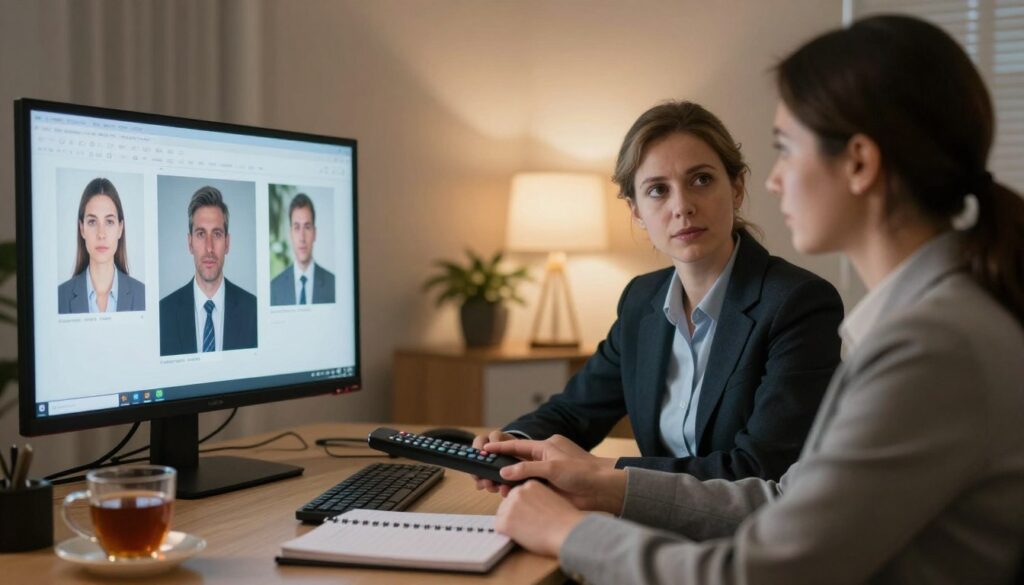
Skilled monitors use open-ended prompts to expand descriptions and clarify vague images. This helps a viewer hold an image longer and capture more detail. Asking gentle, non-leading questions improves the quality of reported information.
Joe McMoneagle has highlighted the value of a calm, trained monitor in professional practice. Institutions such as the Monroe Institute train people to perform both roles so teams can work in harmony.
- The monitor stays neutral and keeps the double-blind intact.
- They manage time, note-taking, and the session environment.
- With practice, the pair refines ability and gains clearer impressions.
| Role | Main Tasks | Benefit |
|---|---|---|
| Monitor | Maintain protocol, ask open prompts, manage time | Reduces bias, improves data integrity |
| Viewer | Record raw impressions, sketch images, report sensations | Generates usable information about the target |
| Team | Review results, compare notes, refine practice | Enhances accuracy and training growth |
Analyzing and Interpreting Your Data
After each viewing session, reviewing your notes against the real target reveals what your perceptions captured and missed. This step turns impressions into learning moments and helps you track progress over time.

Comparing Notes with Reality
Open the envelope and study the image or object. Look for matching shapes, colors, and small details you recorded during the session.
Analyze patterns in your notes. Mark repeated symbols, spatial cues, and any emotions tied to the image. This practice trains the mind and improves future accuracy.
- Note exact matches and near-misses between your impressions and the image.
- Record where thoughts drifted, so you can separate imagination from factual hits.
- Log time, place, and process details for each session to spot trends across sessions.
Even imperfect matches have value. Document similarities and differences. Over weeks of practice, this analytical approach refines your ability to describe locations, objects, and people with greater precision.
Overcoming Common Challenges and Myths
Clear facts and calm practice cut through the noise around viewing and perception. Many people think only gifted psychics can access images or information. That idea is a myth.
The Stanford Research Institute and later studies at the research institute helped demystify this field. Those programs showed results that invite debate, rather than proof of magic.
Self-doubt is a real obstacle. Trusting first impressions and keeping simple notes improves confidence over time. Accuracy will vary from session to session, and that is normal.
Safety worries are common. Viewing practice is usually as safe as meditation. Proper training and short sessions reduce mental strain and support steady progress.

- Myth: Only naturals succeed — false. Training helps most people learn core skills.
- Fact: Studies at stanford research show both hits and misses under control.
- Tip: Regular practice and clear logs improve your perception and access to target details.
“Consistent training turns raw impressions into useful information.”
For guidance on expanding visual skills and clairvoyant practice, see exploring clairvoyant abilities.
Expanding Your Abilities Through Consistent Practice
Steady effort and repeat sessions reveal the patterns that mark true connections with a target.
Consistent practice is the most effective way to build skill. Short, frequent sessions train the mind to hold clear images and stronger impressions. Over time, viewing shifts from vague flashes toward useful information.
After each session, take the time to compare notes with the real image or object. That review highlights matches in shapes, colors, and spatial cues. Noting near-misses shows where perception drifted and where focus improved.

Progress moves from simple images in an envelope to complex locations, objects, and people. Institutions inspired by classic work, such as stanford research programs and the Monroe Institute, stress steady training and neutral reporting.
- Keep brief logs for every session.
- Look for recurring patterns across sessions.
- Increase challenge slowly: add layers of detail or larger locations.
“Each session is a lesson; accuracy grows when you learn from every result.”
For online courses and guided practice, see psychic online training.
The Spiritual and Personal Benefits of Training
Disciplined remote viewing practice often brings more than factual hits on a target. Many people report a calmer inner life and a clearer sense of purpose after regular sessions.
Training encourages you to look beyond physical limits and notice subtle patterns in daily life. This shift can deepen spiritual connection and foster the belief that we are more than bodies and roles.
Working with sealed images and timed sessions builds focus. Over time, intuition improves and decision-making grows stronger. Developing psychic abilities also helps you trust first impressions and read context more easily.

- Inner peace: regular practice quiets the mind and reduces reactivity.
- Broader perspective: viewing trains you to see connections beyond the obvious.
- Practical growth: skills from training often improve resilience and self-awareness.
“The benefits go far beyond information; they open a path into deeper human connection.”
Conclusion
End each session with calm reflection; that small habit turns impressions into useful lessons. Keep short notes and simple sketches so the mind can learn patterns over time.
Following a clear protocol and steady practice helps you gather reliable information about any target. Expect some misses—every session teaches something and refines your skills.
Trust first impressions while staying neutral during reporting. With regular work, images and impressions grow clearer and your abilities expand. Use honest logs, review results, and give yourself time to improve as a dedicated viewer in this field of remote viewing.
FAQ
What is remote viewing and where did it originate?
Remote viewing is an alleged method for perceiving distant people, places, or objects using only the mind. Modern interest grew during the Cold War. Notably, researchers at the Stanford Research Institute and government programs in the United States explored the phenomenon in the 1970s and 1980s.
What roles do a viewer and a monitor play during a session?
The viewer focuses on impressions while the monitor provides the target cue and maintains protocol integrity. The monitor also records time, ensures double-blind conditions when needed, and helps guide the viewer back to neutral state between trials.
How are targets set and kept blind in experiments?
Targets are often sealed in envelopes or coded so neither the viewer nor the monitor knows details. Double-blind procedures mean an independent coordinator assigns targets and only reveals results after data comparison, reducing bias and enhancing credibility.
What should a typical viewing session include?
A session usually begins with relaxation, brief target cueing, and several timed runs. The viewer records raw impressions—sketches, words, sensory notes—without analysis. Sessions end with feedback where accuracy is compared against the true target.
How can outcomes be evaluated for accuracy?
Researchers use objective scoring, blind judging, and statistical analysis. Comparing notes from multiple viewers, using independent raters, and tracking hit rates over many sessions help assess skill and rule out chance.
Are there training methods that improve performance?
Practice that emphasizes quiet focus, sensory labeling, and disciplined note-taking helps. Many programs teach stepwise protocols, sensory isolation exercises, and feedback-rich practice sessions to refine impressions and increase reproducibility.
What challenges do newcomers face when learning this skill?
Common issues include mental chatter, premature analysis, and visual imagination dominating impressions. Overcoming these requires structure: short timed trials, strict no-analysis rules during data collection, and consistent practice.
Is there scientific support for this practice?
Research at institutions like the Stanford Research Institute produced mixed results and ongoing debate. Some studies reported statistically significant findings, while critics point to replication issues and methodological weaknesses. The topic remains controversial in mainstream science.
Can anyone access distant locations or people during a session?
Practitioners report varying results. Some achieve useful impressions of locations, objects, or people; others see vague patterns or symbolic images. Progress depends on disciplined practice, protocol adherence, and honest record-keeping.
What ethical considerations should guides and researchers follow?
Maintain informed consent, avoid making definitive claims that affect safety or legal matters, and respect privacy when targeting people or private property. Transparent methods and independent verification reduce harm and build trust.
How important is the environment for reliable sessions?
A quiet, low-distraction space improves focus. Comfortable seating, neutral lighting, and minimal sensory input help reduce interference. Many practitioners also use short breaks, grounding exercises, and eye-closure techniques.
What types of impressions are commonly reported?
Viewers often note shapes, colors, textures, temperatures, and simple actions. Some receive words, emotional tones, or symbolic imagery. Recording raw sensory data without premature labeling often yields clearer post-session analysis.
How should findings be documented and analyzed?
Keep dated session logs with sketches, timestamps, and verbatim impressions. Use independent judges for scoring and compare results against known targets. Repeated trials and aggregated data provide a clearer picture of skill development.
Are there spiritual or personal benefits reported by practitioners?
Many report enhanced intuition, greater mental discipline, and improved self-awareness. Some experience a stronger sense of connectedness or creativity. These outcomes are subjective and vary widely among individuals.
Where can one find reputable instruction or study materials?
Look for instructors with documented practice records, transparent protocols, and peer-reviewed or well-documented training curricula. Academic papers from institutions such as the Stanford Research Institute provide historical context, while modern training groups often publish method details and blind-study results.