
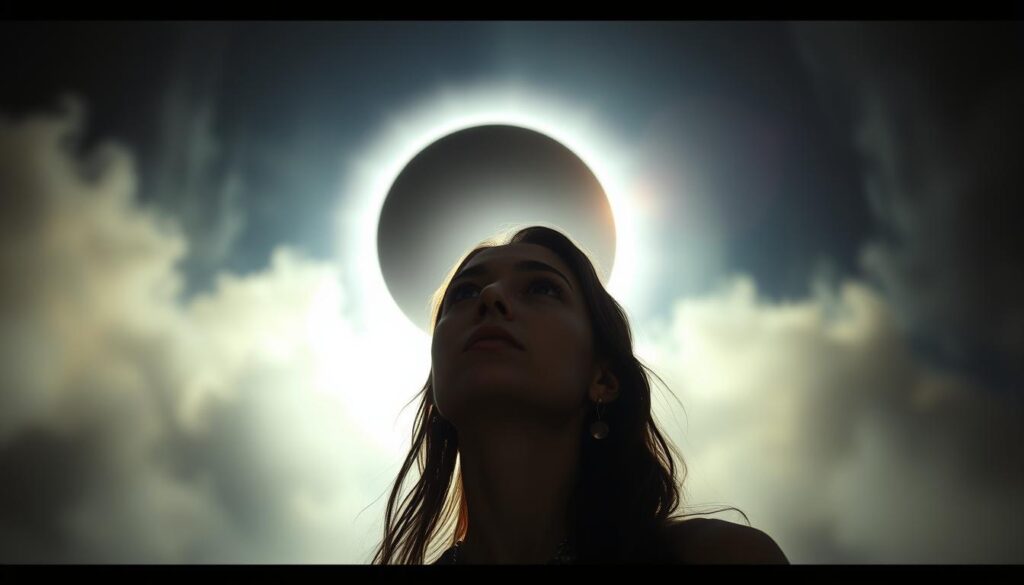
Heads turn each January when online buzz ties old quatrains to modern events. This piece looks at those links and separates quick social media claims from careful reading. We focus on a single, newsworthy detail: a rare total solar eclipse visible in parts of Europe, and why that image attracts attention.
We map how fans, skeptics, and trend-watchers frame predictions. You will see how translations, manuscript versions, and poetic wording let readers fit lines to many headlines. Our goal is clear: show how one sixteenth-century astrologer has been reinterpreted over time.
Along the way, we ground claims in history and explain why vague language can be reshaped to match almost any big moment in the world. Read on for a short, friendly guide to judge viral prophecy stories with calm, basic tools.
Key Takeaways
- There is no verse that names 2026 explicitly.
- Eclipse imagery often fuels modern links to old quatrains.
- Translation choices change how lines read.
- Skeptic and fan views shape each viral claim differently.
- Simple checks help separate entertainment from solid evidence.
How we’re analyzing the 2026 Nostradamus buzz right now
We outline a clear process to separate classic quatrains from viral claims. This helps readers judge whether a social post is playful remixing or a careful historical reading.
Scope: separating prophecies, prediction, and viral interpretations
Scope defines what we accept as evidence. We treat original prophecies in their historical language as primary. We then contrast those lines with fast-moving social media takes that compress long context into click-friendly clips.
We also set a time frame for monitoring trends and list the people driving the biggest spikes.
Sources used: historical quatrains, scholarship, and current social media trends
Our sources include the original quatrains, peer-reviewed commentary on Middle French and Latin, and live trend tracking on TikTok, Twitter/X, and YouTube.
For background reading and a compiled chronology, see a respected timeline resource.
Method: mapping verses to claims without retrofitting yesterday’s headlines
We follow three steps: identify a claim, locate the cited verse, and test whether the text supports that claim. We flag retrofitting when after-the-fact links stretch wording to fit events.
Translation choices matter. Small spelling shifts and multiple manuscripts allow wide reinterpretation, so we emphasize direct line citations and cautious reading.
| Source Type | Strengths | Limitations |
|---|---|---|
| Original quatrains | Primary text; direct wording | Archaic language; multiple manuscripts |
| Scholarly commentary | Context and translation notes | Varied interpretations; academic debate |
| Social platforms | Real-time trends; wide reach | Click-driven edits; loose sourcing |
What the quatrains actually say—and don’t say—about 2026
Close study shows many famous lines lack any calendar tag. The often-cited “seven months, great war” verse reappears whenever European tensions rise. Yet it names sixteenth-century places, not a modern date.
Numerology attempts—tying I:26 or II:26 to a new calendar year—look neat but rest on numbering, not text. Quatrain counts function as organization, not timestamps.
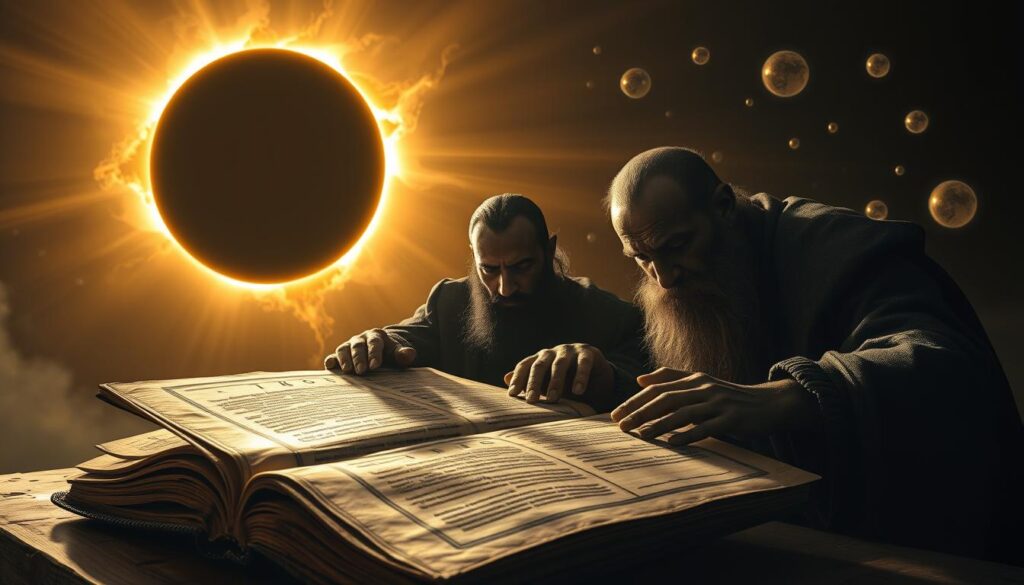
The upcoming total solar eclipse prompts searches for “darkened sun” or “celestial fire.” Sky images are common in Renaissance astrology and do not single out one event.
Scholars and skeptics agree: Middle French ambiguity, variant spellings, and multiple manuscripts let readers project modern meaning. That makes confident, date-specific claims unreliable.
- The “seven months” line lacks any explicit date and uses period place names.
- Claims of a looming world war often rely on modern context, not clear textual evidence.
- Eclipse motifs are widespread and not a secure link to a scheduled solar event.
| Claim | Textual basis | Major limit |
|---|---|---|
| “Seven months, great war” | Quoted from a quatrain | No year; period place names |
| I:26 / II:26 numerology | Quatrain numbering only | Numbers are organizational, not dates |
| “Darkened sun” imagery | Common Renaissance motif | Not tied to specific eclipse dates |
| Scholarly caution | Manuscript and language notes | Allows wide retrofitting |
For a compact chronology and translations to compare, see a compiled timeline at that resource. The safest reading is modest: enjoy cultural debate, but avoid forcing lines into a chosen narrative.
The 2025-2026 social trend: World War III, AI takeover, and viral quatrains
A wave of viral clips tied to old quatrains flooded short-form feeds in late 2025, mixing real fears with theatrical hype. Millions engaged across TikTok, Twitter/X, and YouTube as creators folded ancient lines into modern scenarios.
What’s trending: cosmic fireball, global conflict scenarios, and platform dynamics
Trending themes include a so-called cosmic fireball, global conflict narratives, and an AI takeover storyline. Short clips push these predictions fast, often without clear textual evidence.
The “Living Nostradamus” effect: Athos Salomé and amplified AI predictions
Athos Salomé, labeled by some outlets as a modern seer, has amplified near-term AI warnings. Media pickups helped these claims spread beyond niche channels into mainstream feeds.
Why this content goes viral in the U.S.: anxiety, entertainment, and endless interpretability
U.S. audiences respond because the mix of geopolitics and tech taps real anxiety. The content also entertains: ambiguity lets creators replay and remix lines endlessly.
- Emotion-driven clips get prioritized by algorithms.
- People share to warn, to joke, or to spark debate.
- Creators remix and “debunk,” which paradoxically keeps the trend alive.
For background on how these narratives evolved through 2025, see a detailed recap of earlier predictions on this topic at this timeline.
What did Nostradamus predict for the year 2026: evidence-based answers
Careful review shows claims tying a specific year to loose quatrains rest on interpretation, not direct text.
Bottom line: established references agree there is no explicit calendar label assigning 2026 to any verse. That means most modern predictions use flexible readings to match current events.
Key points to keep in mind:
- Primary texts contain imagery, not clear dates.
- The eclipse in Europe is a strong narrative hook but not strong textual proof.
- The “seven months, great war” line reappears with crises yet has no dated anchor.
Use a short checklist when you see precise claims: find the cited quatrain, compare translations, and ask whether modern context is doing the heavy lifting. For a compact reference and timeline of predictions, see a curated summary at this resource.
| Claim Type | Evidence Strength | Recommended Action |
|---|---|---|
| Text-based dating | Weak — no explicit dates | Verify original verse and manuscript |
| Eclipse-linked claims | Moderate narrative appeal, low textual link | Treat as storytelling, not proof |
| World war predictions | Context-driven; borrowed credibility | Compare scholarly consensus before sharing |
Conclusion
Long-term reviews show that confident forecasts rarely come from clear, dated verses. Open phrasing invites fresh readings when major events or an eclipse catch public attention.
History teaches that loose lines slide into stories about war, world conflict, or strange fire in the sky. That shift often reflects what people fear, not textual proof.
Use healthy skepticism. Check original wording, credible translations, and whether a claim leans on hindsight. Treat modern predictions as cultural debate, not a guide for action.
Practical takeaway: focus on resilience and verified risks. For related materials and a compact guide, see our history resources.
FAQ
Who was Michel de Nostradamus and why do people link him to 2026?
Michel de Nostradamus was a 16th-century French apothecary and astrologer known for his Centuries — collections of quatrains written in obscure Middle French. Modern readers and social media users often match vague lines and numbers from those verses to current events and calendar years, which fuels speculation about dates like 2026.
Are there specific quatrains that mention the number 26 or a war lasting seven months?
Some quatrains include numbers and references that enthusiasts read as “26” or a seven-month conflict. Scholarly editions show those lines are ambiguous and open to many readings. Manuscript variants, translation issues, and numerology leaps make any link to a particular year or exact duration unreliable.
How do historians and linguists treat these viral interpretations?
Scholars stress that the Centuries use imprecise, symbolic language and multiple manuscript versions. Academics caution against retrofitting modern headlines to centuries-old verses. Reliable analysis relies on context, provenance, and language studies rather than social media snippets.
Could upcoming astronomical events in 2026 be the “dark sun” or celestial fire mentioned in a quatrain?
Celestial imagery appears in several quatrains, but those images are poetic and common in Renaissance writing. Solar eclipses and comets happen regularly. Astronomers publish precise predictions; poets of the past did not provide the same scientific detail, so matching literary imagery to a scheduled 2026 event is speculative.
What is the “I:26, II:26” numerology argument and is it valid?
The I:26 and II:26 framing refers to chapter and verse-like references or counts of letters and words used by some interpreters. Experts say such numerology often imposes modern numbering schemes on texts that weren’t composed with those structures, undermining the argument’s validity.
Why do social platforms amplify claims about prophetic warnings for the U.S. and the world?
Viral spread taps into anxiety, entertainment value, and the interpretability of cryptic verses. Content that hints at war, disaster, or dramatic change gains shares and engagement quickly, especially when paired with striking visuals or influencers who specialize in fear-driven narratives.
Who is Athos Salomé and what is the “Living Nostradamus” effect?
Athos Salomé is a contemporary figure linked in some circles to amplified predictive content and AI-assisted readings of ancient texts. The “Living Nostradamus” effect describes modern personalities or tools that reinterpret historical quatrains as timely prophecies, increasing their cultural reach.
Can AI or modern interpreters make accurate new readings of the Centuries?
AI and modern commentators can surface patterns and translations, but accuracy depends on scholarly input, critical editions, and linguistic expertise. Automated tools may highlight coincidences but cannot replace careful philology and historical context.
Should readers worry about an imminent world war or AI takeover based on these verses?
No credible historical reading provides a dated warning of an imminent global conflict or technological apocalypse tied specifically to 2026. Contemporary risk assessments from governments, think tanks, and scientific bodies are better sources for gauging those threats.
Where can I find trustworthy information on interpretations of the Centuries?
Consult university presses, peer-reviewed journals, and reputable historians of early modern Europe. Libraries and established translations with scholarly commentary give the clearest picture. Avoid single viral posts that lack citations or context.