

Ingo Swann was a noted psi researcher who helped shape the Stargate Project. He spent decades studying mind-based skills and altered states. His work pushed limits and sparked debate in scientific circles.
This article explores how his observations link human telepathy to broader ideas about contact beyond Earth. We examine reports, field notes, and published claims to weigh their impact. Expect clear examples and a balanced view.
By studying Swann, readers can see how human telepathy might act as a bridge to non-human signals. This piece also looks at tough questions about evidence and method. It aims to help you decide what seems plausible.
For a deeper profile, visit Ingo Swann archive.
Key Takeaways
- Swann was central to government psi research and public debate.
- His notes offer a unique view on mind-based contact across space.
- Human telepathy is presented as a possible communication channel.
- Claims require careful testing and clear methods.
- This article maps ideas so readers can form their own view.
Introduction to Ingo Swann and His Legacy
This section summarizes a complex career that tied private study to formal government efforts. His work helped shape methods and raised tough questions about evidence and purpose.

The Renowned Psi Researcher
As a renowned psi researcher, he helped craft remote viewing protocols during the 1970s. Colleagues and records show he guided experiments that moved psi from anecdote toward repeatable procedure.
Background on the Stargate Project
The CIA began Scanate at the Stanford Research Institute in 1970 to test remote viewing under controlled conditions. A later date, 1978, marked when the Defense Intelligence Agency formalized this work as the Stargate Project.
- He played a pivotal role in developing methods used by government teams.
- This book offers a close look at a researcher linked to SRI and agency-funded studies.
- When shopping for parapsychology literature, note how sponsorship shaped reporting and access.
Understanding Penetration the Question of Extraterrestrial and Human Telepathy
This chapter looks squarely at a bold claim: that mature alien telepathy may exist and that our own mental skills lag behind. Penetration acts as a primer on how two fields overlap—psi research and contact studies.
As a renowned psi researcher, Swann asks whether weak Earth-based telepathy might one day scale to interspecies exchange. He contrasts undeveloped human telepathy with a probable existence fully developed alien telepathy to show what we lack.

The book discusses undeveloped human telepathy in practical terms. It offers steps and models that aim to answer important questions about means to learn Earth and space-based communication.
- Foundational text: frames the intersection of psi and contact.
- Comparative view: undeveloped human vs. fully developed alien systems.
- Practical aim: suggests paths to answer important questions about cross-species signals.
For a practical guide to developing basic skills that echo these ideas, see mystic development exercises.
The Stargate Project and Remote Viewing Origins
Early remote viewing experiments aimed to map distant sites using trained minds rather than cameras. Researchers framed the method as a mental process that could bypass physical barriers. This section defines the practice and its early use in intelligence work.
Defining Remote Viewing
Remote viewing was described as a mental skill where viewers could virtually spy on targets in far-off places. Teams tested this under controlled settings to judge reliability.

By 1978, the date when the DIA formalized operations, remote viewing was a prime tool for exploring links between minds and possible non-Earth signals. Ingo Swann applied his abilities to gather intelligence that agencies could not obtain by other means.
“Remote viewing attempted to tap unexplored capacities of the mind to report on distant sites and events.”
- Mind-based scouting for inaccessible targets.
- Field reports tied psychic methods to intelligence needs.
- Work in this book traces how such methods probed questions about extraterrestrial human links.
| Aspect | Role | Outcome |
|---|---|---|
| Method | Remote description of distant sites | Supplemented conventional intel |
| Practitioner | Trained viewers including noted figures | Produced field notes and reports |
| Date | 1970s, formalized in 1978 | Adopted by DIA as a research tool |
| Focus | Consciousness and potential outside influence | Investigated extraterrestrial human telepathy |
For profiles of other notable practitioners, see famous psychics.
Analyzing the Secretive Axelrod Encounters
An ultra-secret client named Axelrod pressed for repeated remote viewing work that tied field sessions to top agency aims.

According to the book, Axelrod hired teams for quiet tasks and demanded strict verbal secrecy agreements. Those pacts kept field notes locked for years.
During one assignment, the author served as an arctic circle witness. He recounts seeing a massive, unidentified craft arrive while on that trip.
These episodes shaped a larger argument about the question extraterrestrial presence and how deep classified work can block public access to facts.
- Axelrod used off-the-books requests and tight secrecy agreements.
- Field reports include an Arctic circle witness account of a large craft.
- When shopping for sources about agency cover-ups, these pages stand out.
“For years I was sworn to silence; those bonds finally expired and I could speak.”
That admission frames how secrecy can limit inquiry and how one circle witness can change the narrative.
Uncovering the Truth About the Moon
Archived reports and whistleblower testimony point to lunar irregularities that officials rarely address. This section outlines claims that the Moon may host unexpected features and that some evidence has been suppressed.
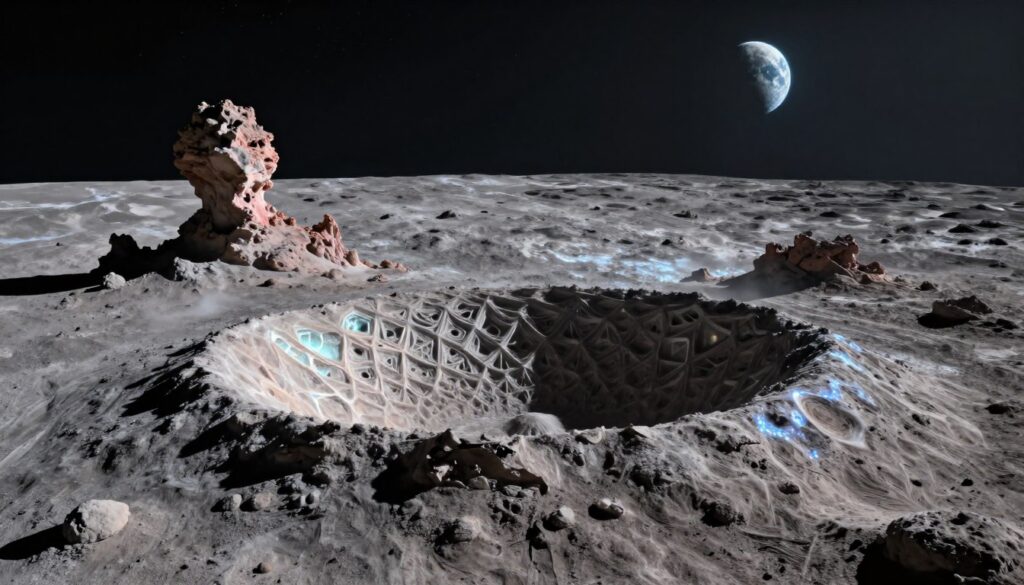
Anomalies on the Lunar Surface
Researchers cite unusual formations and unexpected thermal readings that do not fit a “dead” model. Some mission logs mention reflective structures, cavities, and energy signatures that lack clear geological explanation.
Those brief entries create a pattern. Observers argue these entries deserve fuller study and open debate.
Suppressed Evidence
Many claim that reports were redacted or held back by agencies. The book challenges the Dead Moon Dictum and asks whether officials are hiding facts we officially know far less about than they admit.
“Files marked for restriction hint at material that contradicts the public narrative.”
| Claim | Source Type | Implication |
|---|---|---|
| Unusual surface features | Mission logs, photos | May indicate non-geological structures |
| Hidden thermal anomalies | Spectral data | Suggests active processes or materials |
| Redacted field notes | Agency archives | Limits public verification |
| Possible communication hub | Eyewitness reports, analysis | Raises ideas about extraterrestrial human telepathy |
Conclusion: The chapter urges readers to weigh suppressed material against official claims. It also explores fact officially know far ‘re admitting moon and suggests that more transparency would help settle whether the lunar record hides important surprises.
For related practical exercises and skill-building tied to these themes, see psychic development guide.
The Concept of the Dead Moon Dictum
Sworn silence and official doctrine create a convenient story: a lifeless lunar surface that needs no further inquiry.
The Dead Moon Dictum is presented in this book as a deliberate strategy to shape public belief about lunar reality.

That doctrine explains why authorities avoid detailing the Moon’s far side. It frames the avoidance as science, while critics say motive is control.
Swann’s text offers deep penetration into the logic used to keep activity hidden. He links the question extraterrestrial human activity to why records stay sealed.
A key claim is that human telepathy may let sensitive witnesses bypass official filters. If true, this link changes how we might know far ‘re admitting moon truths.
“Secrecy can be dressed up as consensus, but consensus can mask inconvenient facts.”
Want to explore skill-building tied to these ideas? See a practical guide to developing perception at discover your telepathic abilities.
Exploring Earthside and Spaceside Telepathy
This chapter separates local mental skills from those reported beyond our skies and asks how each could connect in practice.

Bridging the Gap Between Species
Swann frames two modes: Earthside methods that rely on trained practice, and spaceside channels that operate at far greater scale.
The book discusses undeveloped human telepathy and contrasts probable existence fully developed alien telepathy to show what we might learn. It argues that developed alien telepathy is likely a natural ability found elsewhere.
To close the gap, the text offers a roadmap. Simple drills, disciplined observation, and cross-modal testing are promoted as means learn earth-based skills that map onto wider contact systems.
- Practice controlled reception and reporting daily.
- Compare results with remote sensing to check accuracy.
- Document forms, since telepathy may many different expressions.
“A mature, developed alien telepathy may exist; our work must match its scale to communicate.”
Intellectual Phase Locking and Public Ignorance
A cultural lock can silence clear evidence even when it sits in plain view. This section describes a psychological method the book calls Intellectual Phase Locking.
Intellectual Phase Locking works by shaping what people accept as credible. It channels attention away from uncomfortable reports so those reports fade from public debate.
The author argues this process prevents society from facing the question extraterrestrial human contact now seen in many field notes. It also explores fact officially know far ‘re admitting and how this shapes public belief.

- Mechanism: social habit plus institutional framing that dulls curiosity.
- Effect: obvious data about the Moon and UFOs gets ignored or reclassified.
- Consequence: a steady state of public ignorance that protects status quo policy.
“We must know far ‘re admitting the truth, as records hint officials already understand more than they share.”
In short, the book shows how Intellectual Phase Locking keeps contact claims marginal. It urges readers to test redacted records and to demand clearer answers about what agencies officially know.
Examining the Role of Swann-Ryder Productions
Swann-Ryder Productions has acted as a careful steward for important titles that might otherwise vanish. Its small press model focused on faithful reprints and clear attribution.
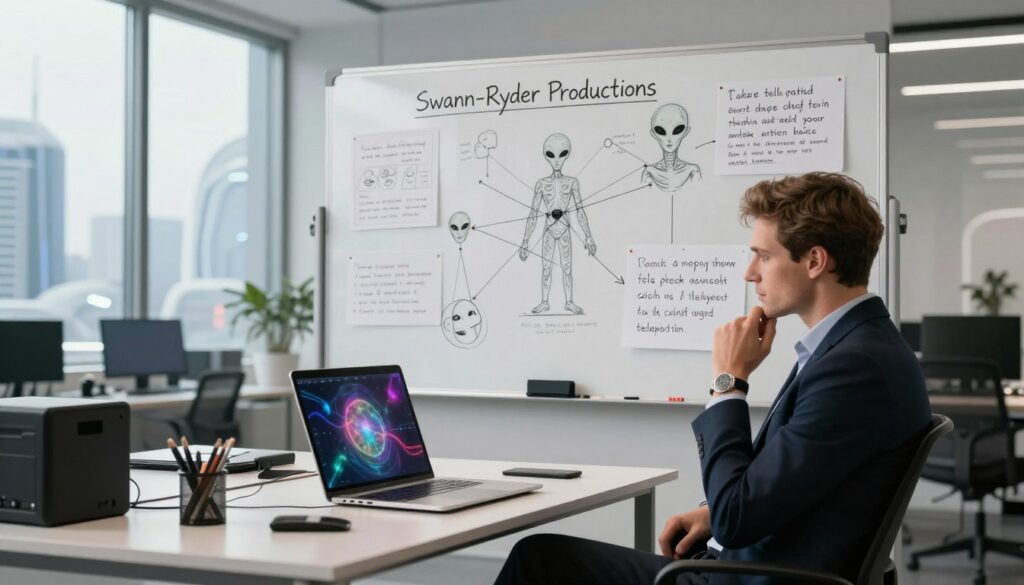
For readers seeking authentic editions, imprint matters. When shopping for any classic print, look for the official mark to ensure you get original text and accurate pagination.
The book preserved by this firm now serves as a living archive. That effort keeps archives open for students, journalists, and independent researchers.
“Independent publishers can make controversial work available long after larger houses move on.”
| Role | Benefit | Who it helps |
|---|---|---|
| Faithful reprints | Preserve original content | Researchers, libraries |
| Clear imprint | Assures authenticity | Collectors, students |
| Ongoing availability | Long-term access | Future investigators |
- Support for independent presses sustains access.
- Buying marked editions helps maintain archives.
- Preservation ensures debated material stays in public view.
Perspectives on Government Secrecy and UFOs
An Arctic circle witness account stands out as a clear test case. Agency files from a key date show tight locks on that report.
Since 1978, government secrecy regarding aerial reports has been a hallmark of the agency that ran pilot psi projects.
The book explains how secrecy agreements kept researchers from speaking after sessions. Those contracts carved away public access and stopped field notes from reaching open archives.

By tracing the date stamps on memos and redactions, readers can see a pattern of suppression that lasts decades. The Arctic circle witness episode — a report of a massive craft — remains a focal point in debates over information control.
- Secrecy agreements were used to silence direct testimony.
- Agency practice hardened after key dates tied to program funding.
- The circle witness story shows how reports get contained within closed systems.
“Classified files and signed nondisclosure pacts shaped what the public could learn.”
For background on related psychic research and how perception was studied, see what is ESP.
Is This Book Worth Your Time
This edition earns attention for its blend of memoir, field notes, and method that shaped a controversial research era.
Recommendation: For readers curious about the history behind remote viewing and agency programs, this book is a foundational read. It pairs personal accounts with procedural detail that scholars and casual readers both can use.
If you are shopping for paranormal literature, consider this title for its unusual mix of narrative and analysis. The edition from swann-ryder productions adds useful notes and careful reproduction that make it library-ready.

Despite debate around some claims, the book presents a sustained argument that merits study. It challenges assumptions and invites readers to test sources, methods, and field notes.
“A must-read for anyone tracing the roots of mental‑based intelligence work.”
- Clear historical value for Stargate Project research.
- Strong archival quality in this edition.
- Useful for both study and collection.
| Feature | Why It Matters | Best For |
|---|---|---|
| Firsthand reporting | Shows methods and incidents | Researchers, students |
| Analytical chapters | Frames claims with process | Critical readers |
| Publisher notes | Ensures textual fidelity | Collectors, libraries |
| Overall value | Foundational in the field | Anyone studying remote viewing |
Conclusion
Readers are asked to weigh field notes and policy records against striking eyewitness accounts. This closing view highlights how careful study can reshape what we accept about contact and sighting reports.
Ingo Swann provides a unique perspective on the question extraterrestrial human interaction that keeps challenging modern science. His work suggests human telepathy could act as a bridge to other intelligences and so invites practical testing.
The book offers answers to important questions that many claim were suppressed by agencies. By studying the extraterrestrial human telepathy link, investigators may peel back layers of secrecy and see clearer lines of evidence. Human telepathy ingo research remains a vital resource for anyone chasing big mysteries.
FAQ
Who was Ingo Swann and why is he important?
Ingo Swann was a well-known psi researcher and artist who helped develop remote viewing protocols used by government programs. His work influenced parapsychology and inspired discussion about nonlocal perception. He combined disciplined experimentation with field reports, leaving a legacy that still sparks curiosity in research circles.
What was the Stargate Project?
The Stargate Project was a U.S. government program that explored remote viewing for intelligence use. Researchers tested trained viewers in controlled settings to evaluate whether mental perception could provide useful information about distant locations or hidden targets. Results remain debated, but the program brought attention to psychic research in national security contexts.
How did remote viewing differ from ordinary intuition?
Remote viewing used structured protocols, blind controls, and independent verification to reduce bias and chance hits. Unlike everyday intuition, sessions aimed to produce repeatable, documentable impressions that could be scored and compared against target data. This process sought to apply scientific rigor to anomalous perception.
What are the Axelrod encounters referenced in the book?
The Axelrod encounters describe a set of secretive reports and alleged meetings that surfaced in some research circles. They are presented as case studies that challenge mainstream explanations and raise questions about how sensitive episodes were handled by agencies and investigators. Details remain contested and often rely on witness testimony.
Does the book claim there are anomalies on the Moon?
The book discusses reported anomalies on the lunar surface and examines how some images and testimonies were interpreted. It explores why certain items attracted attention and how alternative explanations competed with official narratives. The account emphasizes inquiry over definitive proof.
What is meant by "suppressed evidence" in the lunar context?
Suppressed evidence refers to incidents where documents, images, or witness accounts were withheld, classified, or downplayed. The book surveys instances where researchers felt data deserved more attention and questions whether institutional priorities affected public knowledge.
What does "Dead Moon Dictum" refer to?
The Dead Moon Dictum is a term used to capture the idea that the Moon should be treated as inert or free of active phenomena. The book uses that phrase to frame debates about whether lunar observations deserved deeper scientific or policy responses and whether prevailing attitudes limited inquiry.
How does the book address mind-to-mind links between species?
The text explores reports and theories about cross-species or cross-culture mental communication, comparing claims with documented remote viewing cases. It highlights methodological challenges and suggests lines of research that might clarify whether such connections operate under specific conditions.
What is intellectual phase locking and why does it matter?
Intellectual phase locking describes how groups adopt shared assumptions and ignore contradictory data. The book argues this dynamic contributed to public ignorance and slowed acceptance of certain anomalous findings. Understanding the process helps explain institutional resistance to unconventional research.
Who were Swann-Ryder Productions and what role did they play?
Swann-Ryder Productions refers to collaborative efforts around media and outreach by researchers and producers who wanted to publicize remote viewing and related findings. Their work helped package complex topics for wider audiences and sparked public debate about secrecy and science.
How does the book treat government secrecy and UFO reports?
The book examines declassified files, witness statements, and policy choices to assess how agencies managed UFO reports and psychic research. It neither endorses sensational claims nor dismisses all evidence, instead urging transparency and rigorous review where warranted.
Is this book a reliable source for learning about these topics?
The book offers a mix of firsthand accounts, program histories, and critical analysis. Readers should treat it as a starting point, cross-checking claims with declassified records, peer-reviewed studies, and independent investigations to form a balanced view.