
This guide offers a simple, grounded path you can use at home for everyday stress and wellness support. It lays out hands-on and hands-near self-practice, breath work, gentle awareness, and clear techniques that beginners can follow.
Expect steady, calming results rather than instant cures. This approach is meant to complement medical care, not replace it. You will learn practical steps and safe methods you can repeat.
Many people notice warmth, tingling, or a soft pulsing during a session. Feeling nothing at all is normal too. The focus is on felt experience: relaxed breathing, calmer nerves, and a steadier mood.
What follows is a clear layout: basics of the field, how your personal field works, setting up a quiet space, a step-by-step session plan, and aftercare tips to make this a lasting habit. Each section will include practical checklists you can return to anytime.
Key Takeaways
- Simple steps make self-practice accessible for beginners.
- Use breath and gentle touch or hands-near placement for best results.
- This method supports wellness and pairs with conventional care.
- Sensations vary; absence of feeling is common and normal.
- Follow clear routines and aftercare to build a steady habit.
Energy healing basics you can use at home
A light hand placement often helps the body and mind settle into a gentler rhythm.
Energy work in modern wellness is a practical umbrella for gentle practices that favor relaxation, calm awareness, and internal balance. Think of it as simple self-care that supports rest and clarity rather than a quick fix.
What “work” means in modern wellness
At home, this work blends breath, brief scanning, and soft touch. Practitioners mix Reiki-inspired methods, breath patterns, and chakra awareness to ease stuck places and encourage flow.
The practitioner “hands” approach
Placing hands lightly on or just above the head, chest, belly, or shoulders invites calming influence. Hands act as a gentle guide for sensations and focus.
Why this is a holistic approach
This method treats the whole person — body, mind, and emotions. Worry or racing thoughts change how a session feels. Sessions often sit alongside other routines like sleep habits or therapy.
“Simple intention, grounding, gentle scanning, clear breath, and a calm close make a practical home routine.”
- Home basics: set intention, ground, scan, breathe, close.
- Goal: restore balance and support how you feel.
Your energy field, aura, and the idea of “flow”
Picture a clear stream versus one clogged with leaves. When flow moves freely, sensations and feelings glide through your body and field. When it stalls, parts of you can feel heavy, tense, or stuck.
Inside the body and around the body
Most models describe two linked layers. One is the internal life inside the body — breath, circulation, and felt sensation. The other is the subtle field that surrounds you, often called the aura.
Stress and a narrowed field
Stress commonly shows as a tighter chest, shallow breathing, and a smaller sense of personal space. In this framework, those signs mean the field can shrink or warp.
Balance and harmony as the goal
Perfection is not the aim. Gentle balance and inner harmony help you feel more like yourself in daily life.
“Notice patterns first; language is a tool, not a rule.”
| Aspect | Typical sign | Gentle focus |
|---|---|---|
| Internal flow | Shallow breath, tight chest | Soften breath, gentle scanning |
| External field | Sense of shrinkage or crowding | Expand attention outward slowly |
| Blocked areas | Local tension or numbness | Invite gentle movement or touch |
| Goal | Reduced stress, steadier life | Balance, calm, and harmony |
Language about the energy field is optional. If it helps you notice patterns in mood or body, use it. For more detailed guidance, see the ultimate guide.
Benefits of energy healing for stress, sleep, and overall wellness
A brief session can quickly shift your nervous system into a calmer, more rested state. This change often shows up as lower tension and a steadier mood for individuals across different life levels.
Relaxation, improved sleep, and reduced muscle tension
One practical benefit: energy healing often helps reduce stress by guiding the nervous system toward rest. When the body downshifts, falling asleep and staying asleep becomes easier.
Gentle sessions invite softening in tight places like the jaw, shoulders, and hips. The aim is release through ease rather than force.
Emotional release, mental clarity, and self-discovery
Emotional release can come as sighs, tears, laughter, or a lighter sense of self. These shifts often change physical sensation and mental clutter.
Mental clarity and subtle self-discovery follow for many people. Practices create more space between thoughts and reaction, which supports clearer choices.
Supporting circulation and immune function as part of whole-body health
When relaxation becomes routine, circulation often improves and sleep quality supports repair. People pair this work with movement, hydration, and therapy to boost overall health.
“Small, steady practices can add up to meaningful change in body and mind.”
- Reduce stress and promote calm baseline.
- Improve sleep by easing the nervous system.
- Support muscle relaxation, circulation, and immune resilience.
Is energy healing new and who can benefit today?
People have used subtle-body models for wellness for thousands of years. These ideas appear in multiple traditions and still influence modern practices.
Roots across cultures: Chakra concepts appear in ancient Hindu texts as early as 1500 BCE. Meridian maps form a core of traditional Chinese medicine. Together, these systems offer long-standing frameworks for body and mind care.
Who may find this useful
Individuals facing chronic stress, anxiety, recovery from injury, or ongoing pain often use these gentle practices alongside therapy and medical care. Sessions can offer extra tools for self-regulation between appointments.
Trauma-sensitive and practical approach
Trauma-sensitive pacing matters. Choose small steps, clear choice, and slow transitions. That keeps practice safe and grounded.
Note: Chronic pain can involve emotional and nervous-system patterns; gentle practices may ease reactivity and support rest.
For a practical guide on sharing supportive methods, see this short resource: sending supportive care guidance.
Safety, boundaries, and when to talk to your doctor
Keeping sessions short, simple, and gentle protects your nervous system. Treat this work as complementary support—not a substitute for medical diagnosis, medication, psychotherapy, or emergency care.
Boundary tips: stop if you feel dizzy, panicked, or experience sharp pain. Choose non‑invasive methods first: hands‑near placement, breathwork, and brief sessions. Stay fully clothed and keep clear consent for anyone else present.
Choosing gentle practices at home
Start with short sessions and simple methods. Use calming breath, soft touch, and quiet awareness. If you have trauma or pronounced anxiety, favor very short steps and slow pacing.
When to contact medical or mental health professionals
- See a doctor for chest pain, fainting, new or worsening symptoms, persistent insomnia, or severe fatigue affecting daily life.
- Talk with a therapist for panic attacks, intrusive thoughts, self‑harm risk, or intense emotional flooding after a session.
Priority reminder: safety signals come first; techniques come next.
For a practical guided session, try this guided session that outlines gentle, home‑safe steps.
If you’re skeptical, here’s how to approach energy healing without the “woo”
If you’re skeptical, treat this practice like a simple relaxation experiment you can measure by changes in breath, sleep, and tension.
Staying practical: focus on relaxation, stress response, and felt experience
Start small. Try one method for 10 minutes and note changes in breath, muscle tension, or sleep that night.
Use clear techniques that aim at lowering stress and building a steady sense of calm.
What people commonly feel during sessions
Many people report warmth, tingling, gentle pulsing, or a sense of heaviness lifting. Others notice calmness, clearer thinking, or an emotional release like quiet tears or laughter.
- Treat the session as a short test you can rate after.
- Track stress levels, mood, and body tension for honest feedback.
- Expect wide levels of sensation—feeling a lot or very little are both valid.
Value the real-time self-connection: gentle attention and steady breath help you influence your nervous system. Stay curious and simple rather than forcing belief or dramatic results.
For a practical guide, try this practical guide and note what changes for you.
Setting up your space for energy healing at home
Set aside a small corner of your home where quiet and comfort come first. A clear, calm spot helps your body relax and your mind stay present during practice.
Create comfort
Clothing: wear loose, breathable layers so movement and breath feel easy.
Support: use a pillow under the knees when lying down, a blanket for warmth, and a glass of water within reach for quick hydration.
Environmental support
Reset the room: dim lights or use a soft lamp. Choose silence or gentle music. Put your phone on Do Not Disturb and set a timer so you can stay present.
Minimizing distractions matters because the body relaxes faster when attention isn’t split across the world outside the room.
Optional tools and mindful placement
Crystals and stones are optional additions. If you use them, set a clear intention—calm, rest, or grounding—and place each item with care rather than scatter them randomly.
Remember: tools support the session, but your attention, steady breath, and gentle hands placement are the core methods.
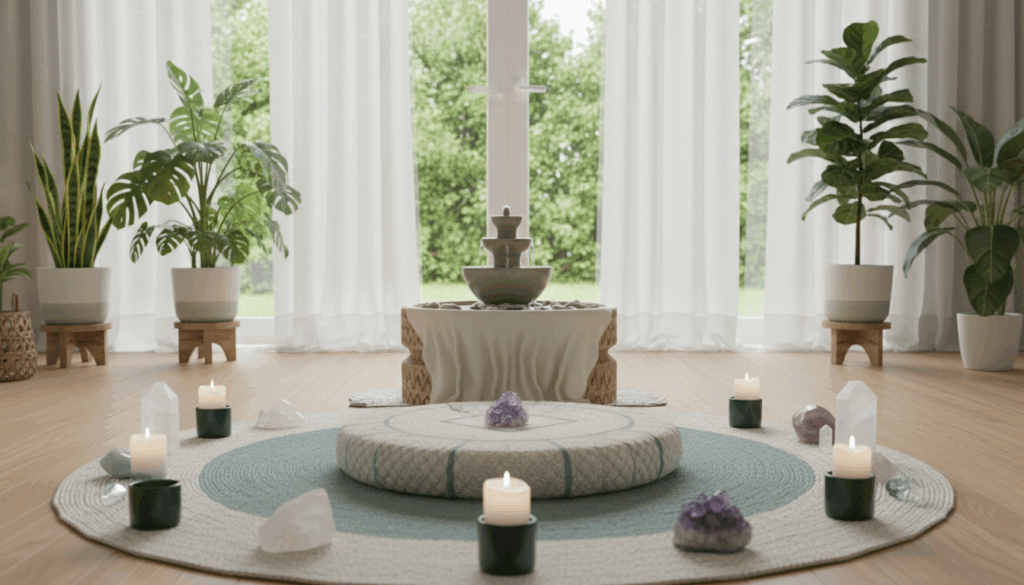
“A small, tidy ritual space helps signal safety and focus for both body and mind.”
| Item | Why it helps | Quick tip | Position |
|---|---|---|---|
| Loose clothing | Allows full breath and comfort | Choose natural fabrics | Lying or seated |
| Pillow & blanket | Reduces strain and keeps warmth | Pillow under knees for low back support | Lying down |
| Timer & phone off | Prevents interruptions | Set a gentle alarm | Any position |
| Crystals (optional) | Focus aid when used with intention | Place thoughtfully; state your aim | Near hands or heart |
For guidance on keeping clear boundaries and protection practices while using tools, see this short resource on psychic protection practices.
How to do energy healing at home step-by-step
Begin with a single, clear aim so the session stays focused and calm. Pick one simple goal—unwind before bed, ease shoulder tightness, or support recovery—so the routine feels manageable rather than vague.
Set an intention
State the goal aloud or in your head. Keep it brief and kind: “I want more rest tonight” or “I’ll soften my shoulders.” This anchors the process and gives your mind a simple target.
Ground and sense body energy
Take 60–90 seconds to check breath depth, tension spots, heart rate, and mood. Rate your state from 1–10. This quick check gives a baseline you can compare after the session.
Hands placement sequence
Use gentle hands-on or hands-near contact. A basic order works well: head → throat → heart → belly. Keep touch light and comfortable. Stay still for several breaths at each spot.
Scan and encourage flow energy
Move slowly and notice blocked areas as tightness, buzzing, or numbness. Don’t judge sensations. If a spot feels stuck, linger there with calm breath and invite natural flow.
Session length and close
Aim for 10–20 minutes if you’re starting. End with hands over heart and belly and take three slow, full breaths. Recheck your mood, breath, and body energy before rising.
Mini-debrief
Drink water and write one sentence about what you noticed—sensations, emotions, or quiet. This simple record helps track progress over time.
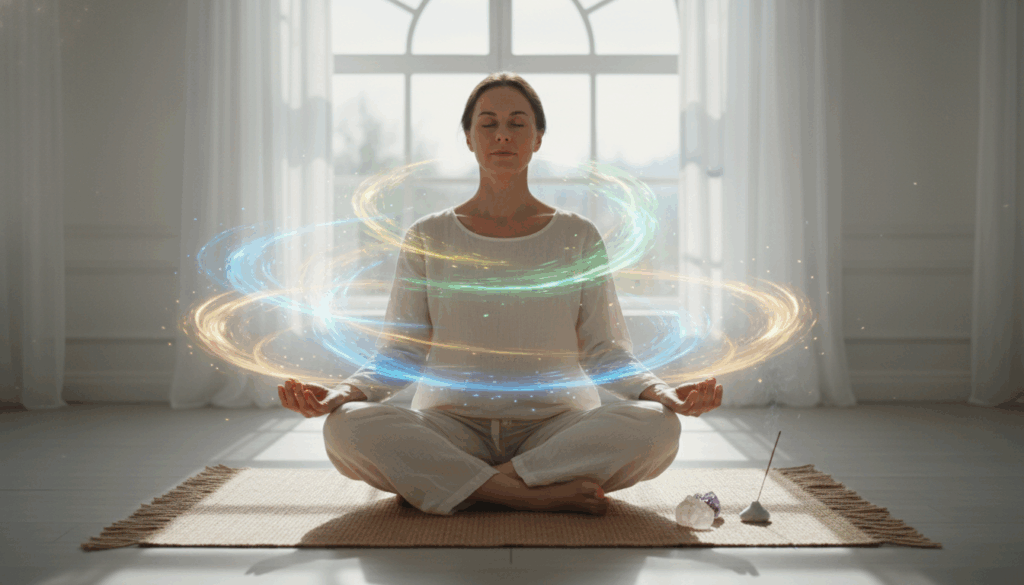
| Step | Action | Time | Quick tip |
|---|---|---|---|
| Intention | Pick one clear goal | 30 sec | Speak it softly |
| Grounding | Sense breath, tension, mood | 60–90 sec | Rate 1–10 |
| Hands placement | Head → throat → heart → belly | 5–12 min | Light touch or hover |
| Close & debrief | Hands to heart, three breaths, hydrate | 2–3 min | Write one sentence |
Breathwork to restore balance and support the healing process
A few steady breaths can change your felt state more quickly than many other simple practices. Use this brief work as the on-ramp before hands placement or seated practice. It helps the mind and body settle so later steps feel clearer and calmer.

Why breath shifts the mind‑body connection
Slow, exhale‑weighted breathing signals safety to the nervous system. Longer exhales lower arousal and ease stress levels. That quick shift changes heart rate, muscle tone, and attention.
Simple breathing patterns for relaxation
Try one of these approachable patterns. Use whichever feels natural.
- 4 in / 6 out: Inhale four seconds, exhale six. Good for evening or pre‑sleep practice.
- Box breathing: Four seconds inhale, four hold, four exhale, four hold. Use this when focus is needed.
- Extended exhale: Slow inhale, longer quiet exhale. Use during short breaks to restore balance.
Short script and what you might notice
Try this line: “Inhale through the nose, exhale slowly, soften shoulders.” Repeat for three to eight cycles and then check in.
Common sensations include tingling, warmth, a gentle release, or a calmer baseline. Emotional softening may appear. Nothing noticeable is perfectly fine too.
Practical tip: Rate stress and body tension before and after practice on a 1–10 scale. That keeps results measurable and useful across different levels.
Reiki-inspired self-healing techniques you can practice gently
A short Reiki-style routine can be a clear, calming pause in a busy day. This section gives a simple, safe sequence you can use while fully clothed and seated or lying down.
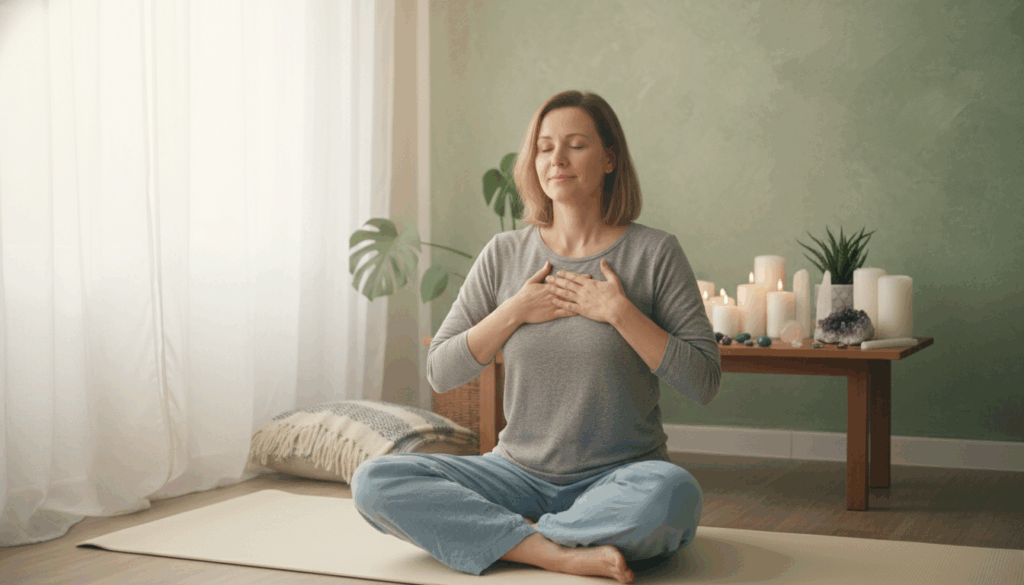
Core concept and origin
Reiki began in Japan with Mikao Usui. “Rei” means universal or spiritual and “Ki” means life force. The system frames the practitioner as a channel, not a source, so presence matters more than force.
Beginner self-treatment sequence
Use light contact or hover hands. Stay gentle and stop if anything feels activating.
- Forehead and temples — 1–3 minutes
- Throat and upper chest — 1–3 minutes
- Heart center — 1–3 minutes
- Belly then hips — 1–3 minutes each
Nervous system benefits and common experiences
Reiki-style practice often guides the parasympathetic rest and digest response. People notice warmth under the hands, tingling, or quiet calm. Subtle shifts are valid.
“Gentle presence and steady breath often bring the deepest change.”
| Position | Description | Typical notice |
|---|---|---|
| Forehead | Soften brow, relax eye area | Warmth, release |
| Heart | Light touch over sternum | Calm, slow breath |
| Belly | Hands over lower abdomen | Grounding, gentle pulse |
Chakras, meridians, and energetic patterns to pay attention to
Chakras and meridians act like simple maps that help you notice repeated tensions in the body.
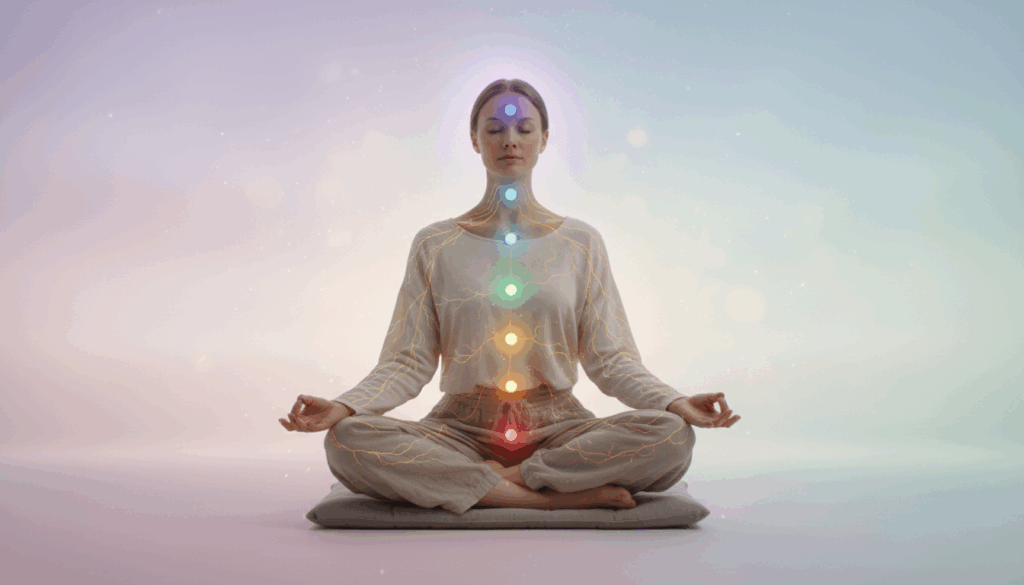
Where stuck spots come from
Stress, injury, and strong feelings often show as local tightness: a tight throat when holding back words, a heavy chest with grief, a clenched belly with anxiety.
Use awareness as a guide
Track what you sense. Note the place, the trigger, and any repeating pattern. Over time, these notes form useful clues about your system and mind.
“Name the spot, notice the pattern, then respond with simple care.”
Simple reflection prompts and gentle support
- Throat tension: “What am I not saying?”
- Shoulder load: “What am I carrying?”
- Chest heaviness: “What needs tending?”
Pair a brief hands placement and calm breath at the noticed spot to invite soft release. These maps are tools for self-understanding, not medical labels. For more on balancing, see chakra balancing.
| Map | Common sign | Gentle action |
|---|---|---|
| Chakras | Local emotion or tightness | Place hands, breathe slowly |
| Meridians | Linear tension or pain | Soothing touch along the line |
| Nervous system | Wide arousal, anxiety | Slow exhale patterns, rest |
Movement, sound, and stillness to broaden your energy field
Gentle movement, soft sound, and quiet rest each widen your felt sense and open the field around you. These simple choices help shift from contraction into more flow and calm.
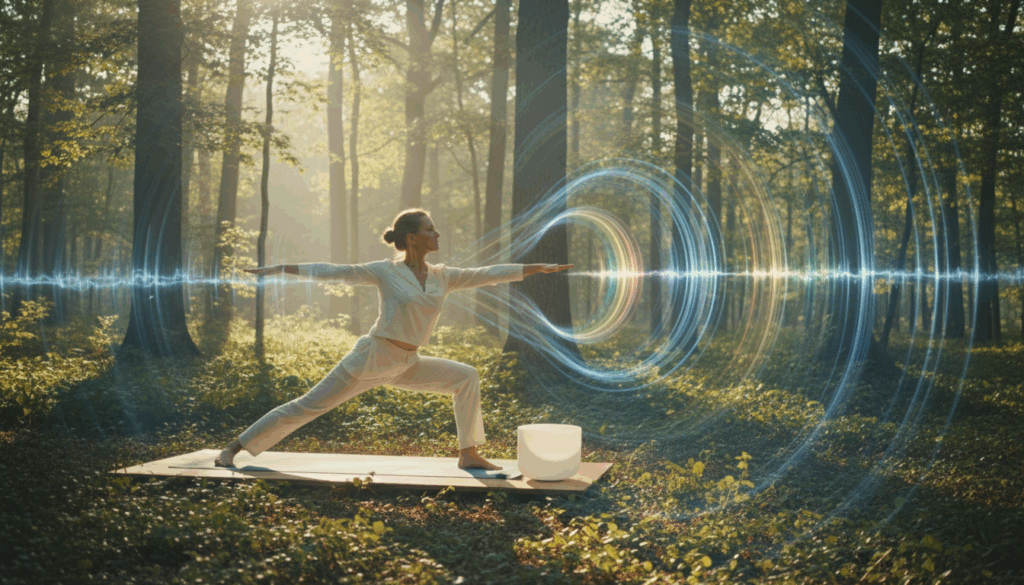
Gentle movement and stretching
Movement need not be vigorous. Try neck rolls, shoulder circles, hip rocks, and slow forward bends.
Move with breath. Pause where you feel a hold and breathe into that place. These small acts invite more flow through body and field.
Sound for nervous system calm
Humming, singing quietly, or soft music can change tone quickly. Sound vibrates the body and often brings instant ease.
Try a low hum for ten breaths, then rest. Notice changes in breathing and mood.
Meditation, prayer, rest, and solitude
Short meditation sessions of 3–5 minutes add steady benefits over time. Prayer or quiet reflection works similarly for many people.
Rest and solitude are legitimate practices when the world feels busy. A brief pause can restore balance and harmony.
Community and connection
Supportive relationships lower baseline stress and widen life’s scope. Share gentle practices with a friend or join a small group for steady care.
| Method | What it does | Quick tip |
|---|---|---|
| Neck rolls | Releases tension, improves flow | Move slowly with an exhale |
| Humming | Calms nervous system | Hum for 8–10 breaths |
| Short meditation | Builds steady inner peace | 3–5 minutes daily |
| Shared practice | Boosts connection and support | Try a weekly check‑in |
“Small, steady moves and moments of quiet expand how alive and open you feel.”
Emotional release and the “feel to heal” approach
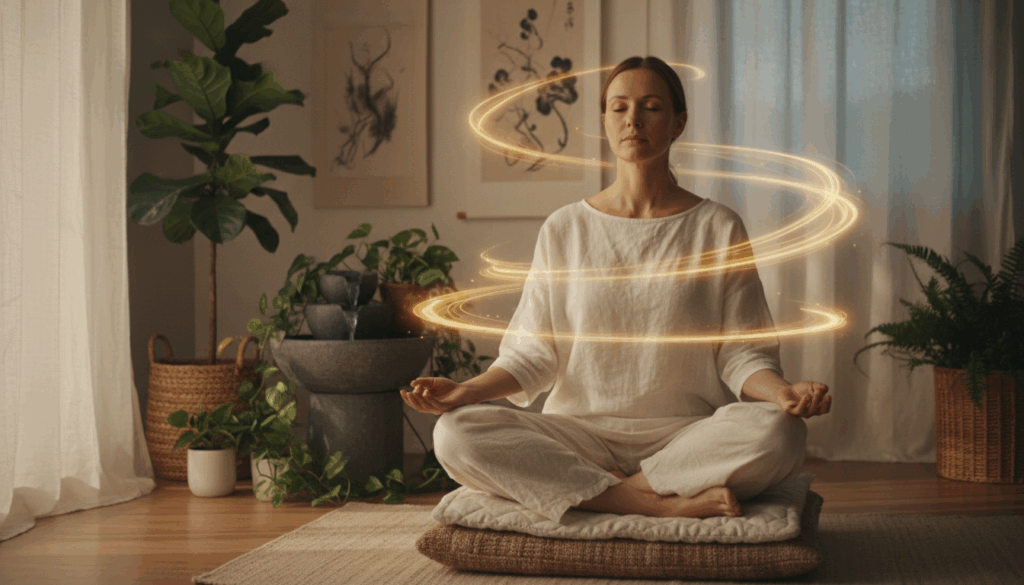
When feelings are noticed and named, physical tension often loosens and breathing deepens. This simple step explains the core of a grounded feel to heal approach.
Why feelings change your body
Emotions shape your daily load. Under chronic stress, the emotional physical weight tightens muscles and shrinks your felt space. Naming a feeling reduces internal pressure and invites release.
Small practices that lift your state
- Write three specific gratitude items each night.
- Say a short compassion phrase like, “May I be kind to myself.”
- Place a hand on your heart and breathe slowly for five breaths.
Normalizing release and after-session care
Tears or laughter are common forms of emotional release. They signal movement, not weakness.
After a session: drink water, keep the evening simple, avoid intense talks, and choose gentle inputs—walk, warm shower, or quiet music.
“Small releases add up; track your calm in simple notes.”
Over the long journey, these steps reduce the emotional physical load and raise your resilience. Track your levels of calm and celebrate steady healing and growing peace.
Aftercare, consistency, and knowing when to book a professional session
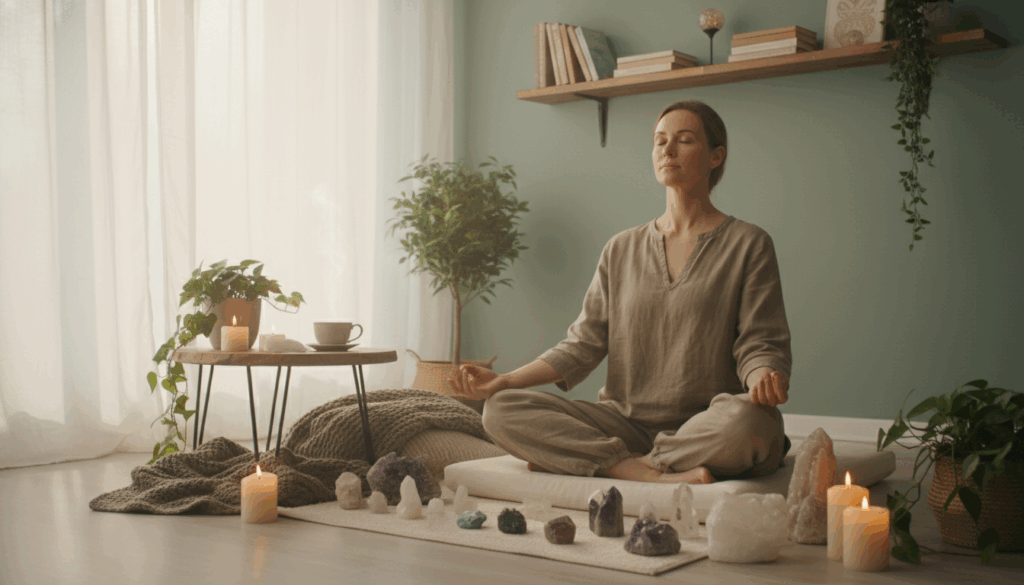
A brief check-in with yourself after a session makes results clearer. Start with small steps: hydrate, rest a few minutes, and note one sentence about what you felt. This helps the body integrate subtle shifts and gives a clear baseline for future sessions.
Post-session debrief
Keep it simple. Write what you noticed: sensations, mood change, or a single insight. Drink water and sit quietly for five minutes before rising.
Creating a realistic cadence
Consistency builds progress more than occasional long sessions. Aim for 2–4 short home sessions per week rather than one long session that is hard to repeat.
- 10 minutes after work — a quick reset.
- 15 minutes before bed — wind down and rest.
- Pick a daily trigger like brushing teeth or a tea ritual.
When a professional session may help
Consider booking when you feel stuck, want tailored guidance, or need help holding a calmer state longer. Professional sessions often start with an intake about goals and comfort needs.
“A professional session can deepen regulation and give practical recommendations you can use between visits.”
| What to expect | Typical details | Why it helps |
|---|---|---|
| Initial consultation | Discuss goals, health, and preferences | Creates a personalized plan |
| Session setup | Fully clothed, comfortable table or chair | Supports relaxation and safety |
| In-session notes | Hands-on or hands-near work; optional crystals | Targets body awareness and regulation |
| Post-session debrief | Insights, recommendations, follow-up plan | Bridges sessions with ongoing therapy |
How sessions and therapy pair: Professional sessions often support regulation and body awareness between therapy appointments. For individuals working through anxiety, trauma, or chronic stress, this combined approach can make clinical work more manageable and grounded.
Conclusion
A brief, focused pause each day can gently reshape how your body and mind feel. At home, energy healing offers a simple, repeatable way to restore balance, invite flow energy, and support body energy in daily life.
Practical steps: set a clear intention, ground, use light hands-on or hands-near placement, scan and soften blocked areas, then close and reflect. Results are often subtle—better sleep, calmer mood, less tension—but steady practice builds change.
Keep safety first: use this as complementary support for health and loop in a doctor or therapist if symptoms are intense or persistent. Choose one small practice today, track what you notice, and let your routine evolve with your life toward more balance and harmony.
FAQ
What does “energy work” mean in modern wellness?
It refers to practices that sense and influence the body’s subtle field and patterns. Practitioners and self-practitioners use hands-on or hands-near techniques, breath, movement, and focused attention to support balance, reduce stress, and improve overall wellness.
How does the practitioner hands approach help restore normal energy balance?
Hands-on or hands-near placement acts as a focal point for attention and intention. That focused contact often reduces muscle tension, encourages circulation, and helps people notice blocked areas, so they can invite more flow and harmony into body and mind.
Why is this considered a holistic mind-body approach?
It addresses emotional, mental, and physical patterns together. By working with breath, posture, and felt sensations, people often gain clarity, emotional release, and improved sleep while supporting whole-body systems like circulation and immune response.
What’s the difference between energy inside the body and around it?
Internal energy refers to sensations, breath, and movement within tissues and organs. The surrounding field—often called the aura—describes the felt space that extends beyond the skin. Both interact: internal tension can shrink the field, while calm expands it.
How can stress distort or shrink the energy field?
Chronic stress tightens muscles, speeds breath, and narrows attention. Those changes reduce range of motion and sensory openness, which people describe as a smaller field or less flow. Relaxation practices reverse those patterns and restore balance.
What does balance and harmony look like in this work?
It feels like steady breath, relaxed muscles, clearer thinking, and an increased sense of presence. Physiologically you may notice lower heart rate and softer tension; emotionally you may feel calmer and more centered.
What benefits can people expect for stress, sleep, and overall wellness?
Regular practice often leads to deeper relaxation, fewer night wakings, less muscle tightness, and improved mood. Over time, many report better coping with anxiety, clearer mental focus, and greater resilience.
Can sessions support emotional release, mental clarity, and self-discovery?
Yes. Focused attention and gentle touch can bring up stored feelings. With safe processing—journaling, breathwork, or talking with a trusted helper—people often gain insight and emotional relief.
How might this work support circulation and immune function?
By reducing chronic tension and activating the parasympathetic nervous system, practices can improve blood flow and digestion. Better rest and lower stress hormones indirectly help immune regulation as part of whole-body health.
Are these methods new, and who can benefit today?
No. Many techniques draw from longstanding systems such as meridians and chakra traditions found across cultures. People with anxiety, trauma histories, chronic pain, or anyone wanting calmer sleep and less stress can benefit.
How do meridian and chakra roots influence modern practice?
Those systems provide maps of patterns and common blocked spots. Practitioners use them as guides for where breath, touch, or movement may help shift stuck energy and restore function.
When should someone see a doctor instead of relying on these practices?
Use these approaches as complementary care. Seek medical or mental health help for acute pain, unexplained symptoms, severe depression, suicidal thoughts, or anything requiring diagnosis or urgent treatment.
How can I choose gentle, non-invasive practices for home use?
Focus on simple breathwork, grounding, gentle hands-on self-treatment, and mindful movement like stretching or yoga. Avoid forcing sensations; choose approaches that feel safe and calming for your body.
What signs mean I may need added medical or mental health support?
Persistent or worsening pain, sudden changes in mood, fainting, breathlessness, or intrusive thoughts are red flags. If a session increases panic or disorientation, stop and contact a healthcare professional.
If I’m skeptical, how can I approach this practically?
Treat sessions as relaxation and nervous-system training. Track breath, heart rate, sleep, and mood before and after. If you notice consistent improvements in calm and sleep, the approach may be useful even without metaphysical beliefs.
What do people commonly feel during sessions?
Common sensations include warmth, tingling, muscle softening, emotional release, and shifts in breath. Some feel deep relaxation or brief fatigue afterward; these responses are typically normal and short-lived.
How should I set up a home space for a session?
Create comfort with loose clothing, pillows, and blankets. Keep water nearby. Choose quiet, soft lighting, and minimize distractions. A simple, tidy space helps focus and relaxation.
Are crystals or stones necessary, and how do I use them intentionally?
Tools are optional. If you use crystals, treat them as tactile anchors for attention—hold or place them nearby to support intention and calm, rather than as required medical devices.
What are simple steps for a self-session at home?
Set a clear intention, ground with a few slow breaths, use hands-on or hands-near positions along the torso or shoulders, scan for tight spots, invite gentle movement or breath into those areas, then close by checking mood and hydration.
Why is breathwork important for restoring balance?
Breath links mind and body. Slow, steady patterns shift the nervous system from fight-or-flight toward rest, lowering heart rate and easing muscle tension so other practices work better.
Which breathing patterns help with relaxation and emotion regulation?
Try a 4-4 pattern (inhale 4 counts, exhale 4 counts) or box breathing (4-4-4-4). Longer exhales—such as 4 in, 6 out—encourage parasympathetic response and calm.
What sensations should I notice during breathwork or hands-on practice?
Look for warmth, tingling, softening of tight spots, slower breath, and a sense of calm. Emotional release like tears or laughter can occur and is often part of processing.
What is Reiki and how do Reiki-inspired methods work for self-care?
Reiki frames practice as channeling universal life force through the hands. Reiki-style self-treatment uses set hand positions over the head, chest, and abdomen to reduce stress and invite relaxation.
How can self-treatment hand positions reduce stress?
Placing hands gently on the face, sternum, or lower belly supports grounding, slows breath, and signals safety to the nervous system, activating rest-and-digest responses.
How do chakras, meridians, and patterns reveal stuck spots?
Awareness and gentle palpation often show recurring tension in areas linked with expression, heart openness, or root stability. Noticing these themes helps target movement, breath, or talk-based practices.
What movement, sound, or stillness practices broaden the field?
Gentle yoga, mindful stretching, humming, singing, or listening to soft music calm the nervous system. Meditation, prayer, and rest deepen peace. Social support and community also enhance healing.
How do emotions change your energy load and wellness?
Emotions like grief or anger increase muscular tension and cognitive load. Working with breath and safe expression—through talk, tears, or creative outlets—reduces that load and restores clarity.
What are healthy ways to process tears, laughter, and sensitivity after sessions?
Allow time for rest, hydrate, journal brief notes about feelings, and use grounding moves like walking or gentle stretching. Reach out to a friend or clinician if intense emotions persist.
What aftercare helps maintain gains and plan a healing cadence?
Hydration, light movement, short journaling, and a calming routine before bed all help. Aim for realistic frequency—daily short practices and longer weekly sessions often work well.
When should I book an in-person professional session?
Consider an in-person session if you want hands-on guidance, have chronic pain, complex trauma, or need deeper support. A professional can tailor techniques, assess safety, and connect you with medical care when needed.