
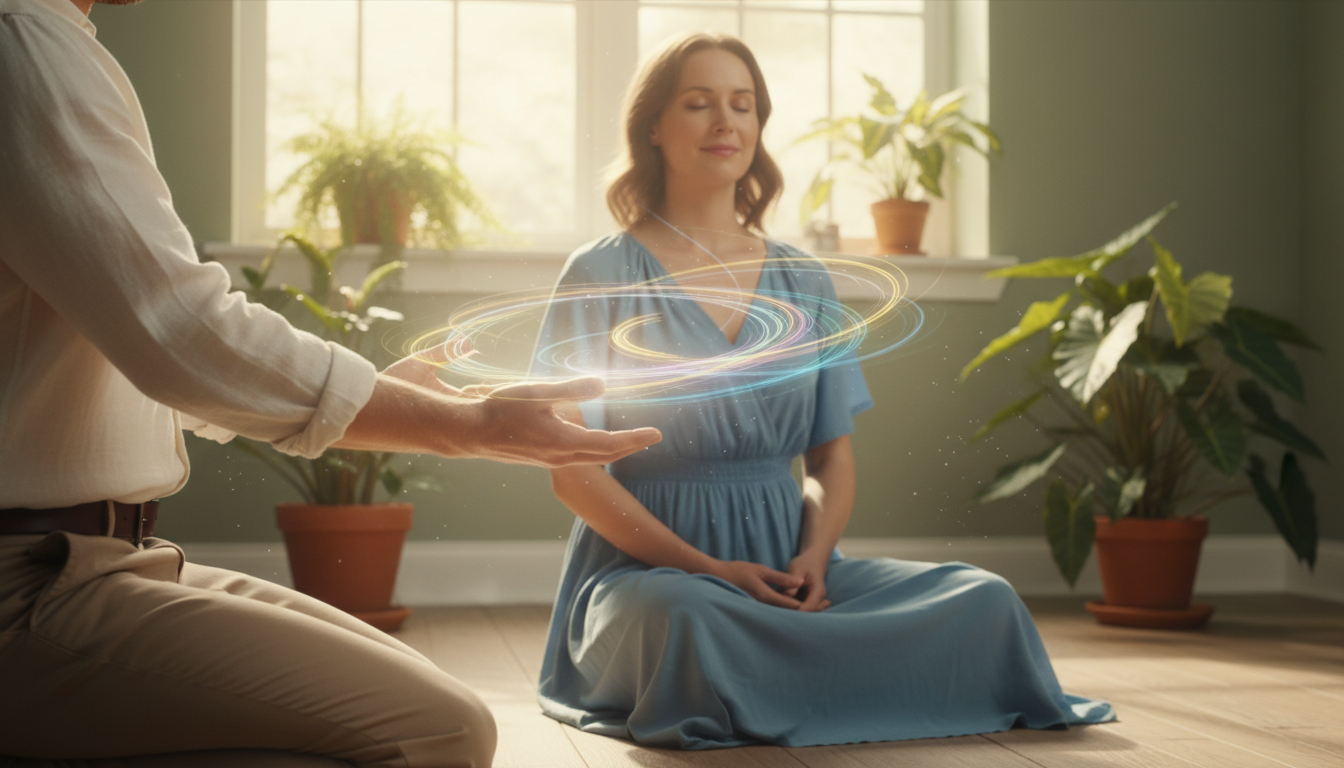
This short guide explains how energy healing works in plain terms. The goal is to describe what a session looks like, why people often feel calmer afterward, and where this approach fits with mainstream care.
Many practitioners describe the aim as restoring an energy balance through gentle hand gestures or touch. People use these methods to support stress relief and overall well-being rather than to replace medical treatment.
We will preview common modalities like Reiki and acupuncture, note what practitioners often do with their hands, and offer practical safety tips. Expect varied personal experiences; skepticism and curiosity are both welcome.
Read on for a grounded look at traditions, session flow, possible benefits, and how to think about evidence in everyday terms.
Key Takeaways
- Learn clear, non-hyped explanations of what to expect in a session.
- Understand the central idea of restoring balance for mind and body.
- See brief previews of common modalities such as Reiki and acupuncture.
- Know that these practices support stress relief, not medical replacement.
- Get simple safety tips and guidance on evaluating claims.
What energy healing is and why people use it
Some individuals choose hands-on sessions to support sleep, stress relief, and recovery. In everyday terms, energy healing therapy means a practitioner uses hands-on or hands-near techniques to support a sense of balance and well-being.
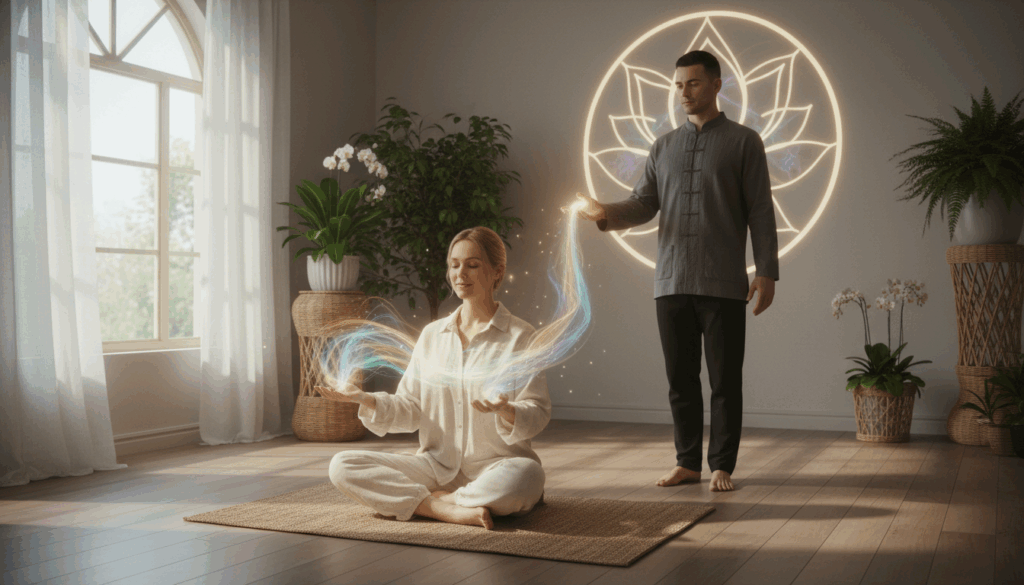
Complementary and integrative care often pairs these sessions with conventional medicine, talk therapy, or physical therapy. Many people use this approach to relax, improve sleep, reduce tension, or feel more grounded during recovery.
Core idea: restore balance to support well-being
The central aim is to help your system return to a calmer, more regulated state. Think of a session as an extra layer of support for stress response and internal alignment while you continue medical care.
- Common reasons: stress relief, better sleep, anxiety support, pain relief.
- Approach: non-invasive techniques used alongside standard treatments.
- Variation: some seek spiritual growth; others want practical symptom help.
| Use | Typical Goal | When to combine with |
|---|---|---|
| Relaxation | Lower stress | Primary care, therapy |
| Sleep support | Improved rest | Sleep medicine, lifestyle changes |
| Pain relief | Reduced tension | Physical therapy, prescriptions |
The basic principles behind energy, healing, and the human system
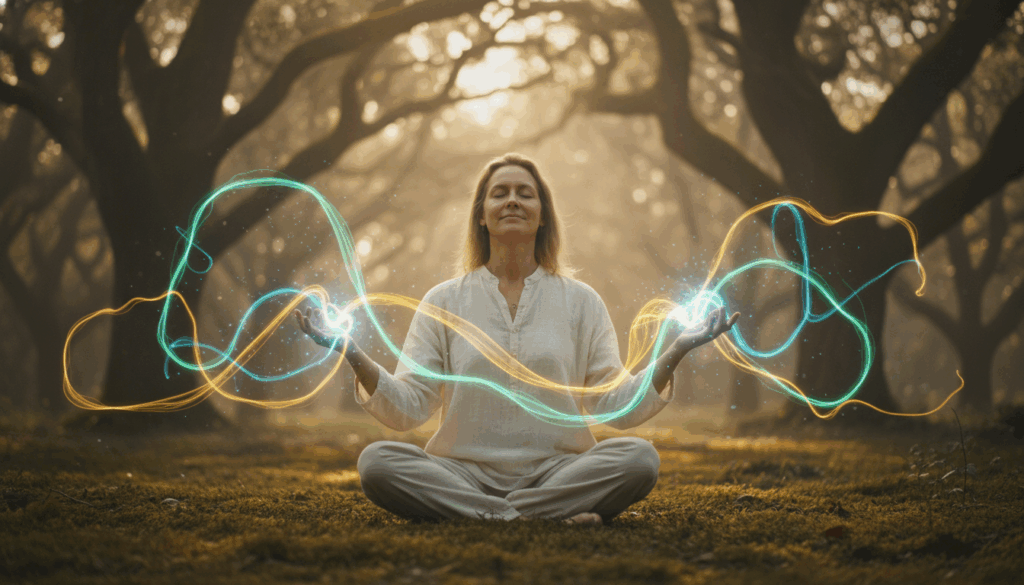
Across cultures, people name a subtle vital force that supports life—Ki in Japan, Qi in China, and Prana in India. These labels point to a shared idea: a life force that helps the body stay balanced and responsive.
Life force across traditions: Ki, Qi, and Prana
Ki, Qi, and Prana are different words for a similar notion of vital force. Practitioners use these terms to describe a unifying field that supports breathing, movement, mood, and overall life functions.
Pathways and meridians in chinese medicine
In chinese medicine, the body is mapped with twelve major meridians. These pathways describe places where practitioners observe or guide energy flow to keep the system balanced.
Blockages, imbalance, and common symptoms
The model of blockages and imbalance explains why stress, anxiety, and pain may appear. When flow feels stuck, people often notice sleep trouble, low mood, muscle tension, or fatigue.
“Think of this as a practical map some therapies use to organize care, not a literal rule for every person.”
Many sessions aim to locate where flow seems disrupted and support a return to balance. If you want a deeper guide to practice and options, see this comprehensive overview.
| Concept | What it means | Common signs |
|---|---|---|
| Life force | Vital current (Ki/Qi/Prana) | Vitality, mood, breath |
| Meridians | Pathways for flow (12 major) | Local tension, referred pain |
| Blockages | Stuck flow or imbalance | Stress, anxiety, sleep issues, pain |
How energy healing works in practice
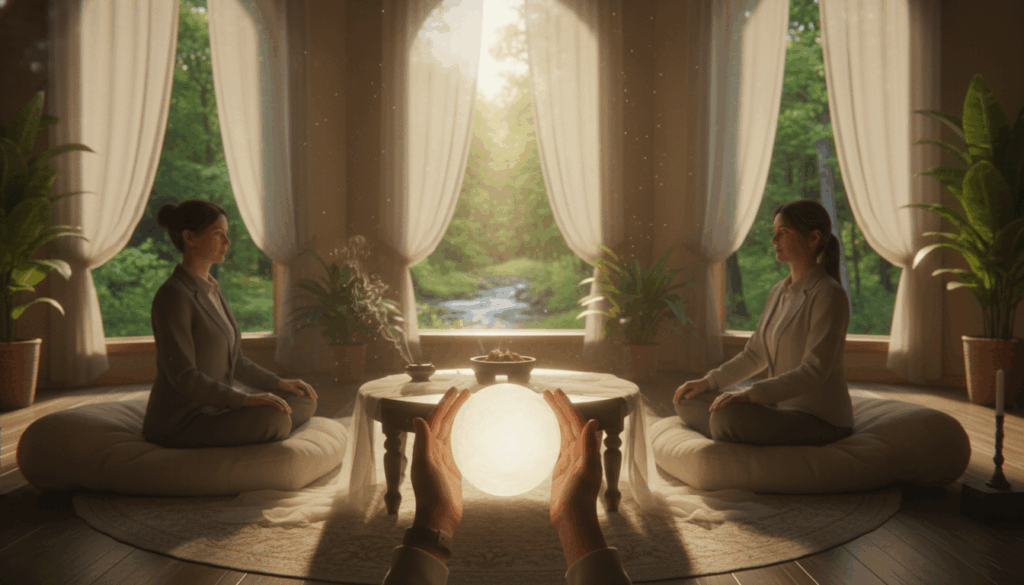
A typical visit begins with the practitioner taking a moment to ground, then moving hands lightly over the client to sense differences in the field.
Channeling through touch or hands-near contact is common. The practitioner may place hands on the body or hover them a few inches above. This gentle placement aims to guide flow energy and support calm in the system.
Scanning the field and spotting imbalance
Practitioners often scan by moving their hands and noticing sensations—warmth, coolness, tightness, or a sense of resistance. These impressions help identify areas where blockages might appear.
Clearing blockages and supporting flow
Clearing usually involves steady hand positions, gentle shifts, and focused intention. Time and repeated attention help support better flow energy and a restored sense of balance.
Relaxation, the nervous system, and why it matters
Sessions frequently induce deep calm tied to the parasympathetic nervous system. When the body shifts out of fight-or-flight, people report less muscle tension, reduced stress, and clearer thinking.
Mind, body, spirit and focused attention
Practitioners center their awareness before and during the process. That calm focus supports the session and can feel spiritual to some and simply soothing to others.
What to expect: sensations range from subtle warmth to emotional release. Both are normal, and many people find the process relaxing and clarifying. For practical guides on sending intention and presence, see this simple guide.
| Step | Typical action | Possible result |
|---|---|---|
| Centering | Practitioner breathes and focuses | Calm, clearer intention |
| Scanning | Hands move through the field | Spot tension or imbalance |
| Clearing | Gentle hand holds or hovering | Improved flow energy, less tension |
| Integration | Debrief and rest | Reduced stress, greater balance |
Common energy healing modalities you’ll see today
Here’s a friendly map of the most common practices so you can tell them apart and set expectations.
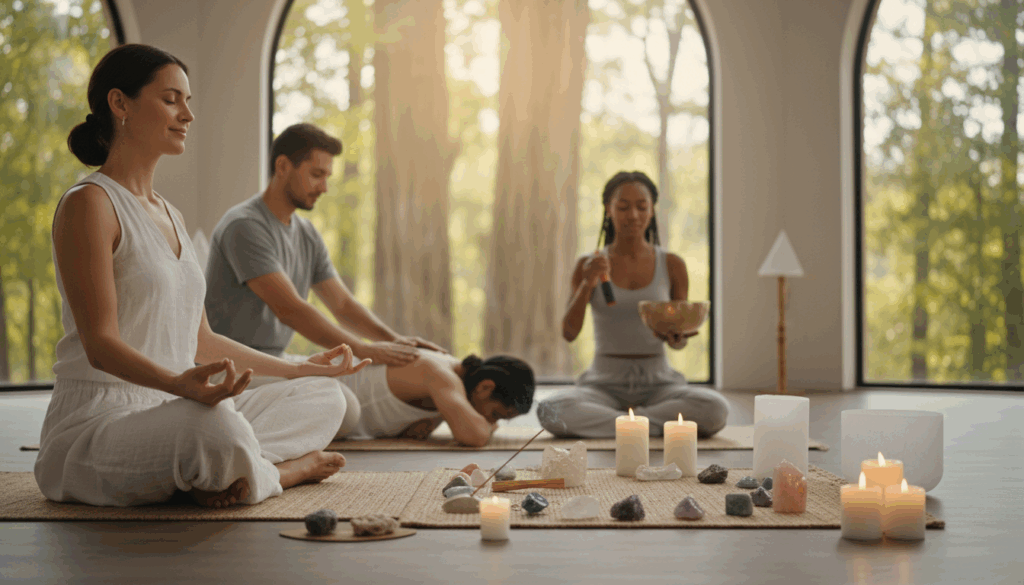
Reiki
Reiki uses the idea of a universal life force. Practitioners place their hands on or just above the body and act as a channel to restore balance. Sessions often feel calming and restorative.
Acupuncture
Acupuncture uses very thin needles at acupressure points on the head, neck, back, and limbs. The goal is to rebalance the system and support pain relief alongside other treatments.
Qigong
Qigong combines gentle movement and breath to train qi for better sleep, stress control, and overall health. It is a daily-practice form rather than a single session.
Pranic, Therapeutic Touch, and EFT
Pranic methods scan the aura and clear blockages without contact. Therapeutic Touch centers the practitioner, assesses the field, and rebalances from near the body.
Emotional Freedom Technique (EFT) pairs tapping on points with focused statements to reduce distress and regulate the system.
Polarity, Quantum Touch, and Reflexology
Polarity Therapy mixes gentle pressure with lifestyle guidance like mindful movement and diet to restore balance. Quantum Touch blends touch with breath and focused attention to shift sensations.
Reflexology applies pressure to the hands, feet, or ears to ease stress and relieve pain in the body.
For a short guide to practicing these approaches, see this simple how-to resource.
What to expect during an energy healing session
A brief conversation at the start helps tailor a session to your goals and safety needs.
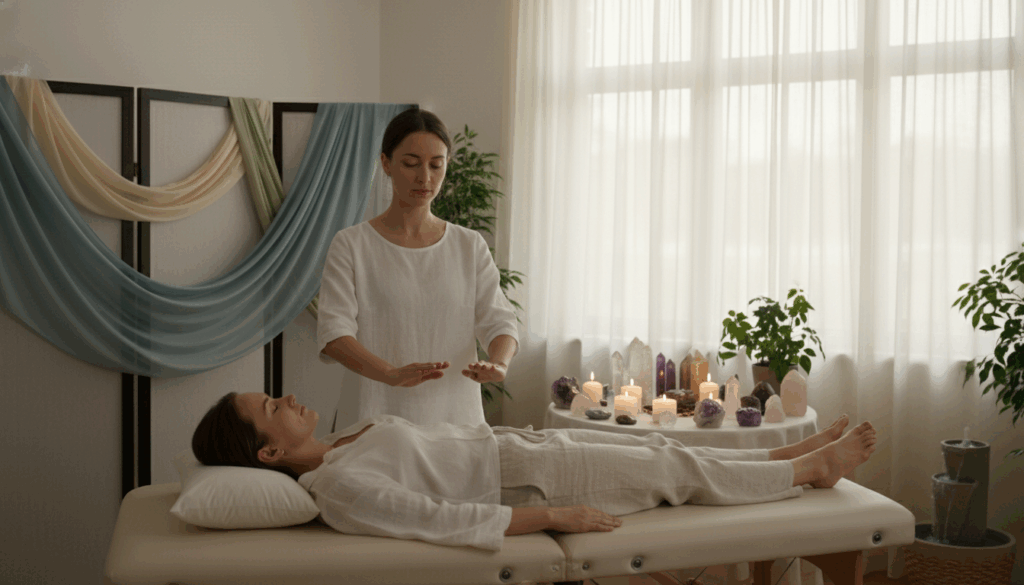
Before you begin: consultation and goals
Your practitioner will ask a few quick questions about medical history, medications, and what you hope to address—stress, sleep, pain, or recovery.
This is the time to set boundaries and mention any mental health concerns so the care fits your needs.
During the session: position and process
You usually lie fully clothed on a table while the practitioner uses hands-on or hands-near techniques. The process is gentle and takes place over quiet, relaxed time.
Common sensations and the range of experience
People report warmth, tingling, or a soft pulsing in the body. Others note emotional release or clearer mind moments.
Some feel little physically yet notice better sleep or calmer stress afterward. All responses are normal.
Tools and the closing steps
Practitioners may add crystals, simple breath guidance, or chakra work depending on style. Afterward there is a short debrief, drink water, and rest if you feel tender.
“Track sleep, mood, and pain for a day or two—it helps decide next steps.”
Practical tip: Keep a short log after your first session and consider follow-up based on real changes in body and mind. For more on chakra balancing elements, see that guide.
What research says about whether energy healing works
When we look at trials and reviews, a few modalities stand out with measurable results. Clinical work has focused most on acupuncture, and to a lesser extent Reiki. Other therapies have far fewer rigorous trials, so the overall picture remains mixed.

Stronger study signals: acupuncture and Reiki
Acupuncture has multiple clinical trials showing benefits for pain, sleep, and quality of life when added to standard medicine.
Reiki studies are smaller but suggest improvements in relaxation and some mental health markers.
What “measurable benefits” can mean
Measurable often means better sleep scores, lower reported pain, or improved mood on questionnaires.
These gains can support daily health and quality of life, even if they are modest.
Where evidence is thin and what to expect
Many treatments lack high-quality trials. That makes it hard to give firm success rates for most approaches.
Context matters: placebo, expectation, and a calm setting can still produce real, useful outcomes for people.
Practical rule: keep primary medical care in place and use energy healing as complementary support. Track sleep, mood, or symptom changes to judge benefit over time. For an overview of options, see energy healing.
Potential benefits for body, mind, and mental health
A short session can lead to measurable changes in physical comfort and mental calm. Many reports list better rest, less tension, and clearer thinking after a few visits.
Stress relief and deeper relaxation
Deep calm often shows up first. When the nervous system downshifts, muscle tension drops and daily resilience improves.
Better rest follows for many people, which can boost overall quality of life over time.
Emotional support for anxiety and mood
Sessions may offer space for emotional release and steadier mood. People managing anxiety or low mood sometimes report fewer intense symptoms after treatment.
Personal history and current stress shape the response, so results vary by person.
Pain relief and reduced muscle tension
Relaxation can ease both acute and chronic discomfort. When muscles loosen, perceived pain often falls and movement becomes easier.
Recovery support alongside medical care
Used with standard medical plans, this approach can help during illness, injury, or post-procedure rehab.
Note: keep primary care in place and use these sessions as a complement to recovery plans.
“Track sleep, mood, and pain for a week before and after sessions to spot real changes.”
For a clear overview of scalar methods, see this scalar methods overview. Personalize your plan and measure symptoms so you can judge benefit over time.
Safety, risks, and how to use energy healing responsibly
Most sessions carry low physical risk because they avoid needles, drugs, and forceful manipulation.
Why many people view this as low-risk: sessions are usually non-invasive, gentle, and require no medication. That makes them easy to add to a self-care plan.
When to check with your healthcare team
If you have a chronic condition, are pregnant, recently had surgery, or face a complex diagnosis, ask your primary clinician before starting. Use these sessions in addition to, not instead of, standard medicine.
Practical boundaries and consent
- Get clear consent before any touch.
- Confirm session scope and confidentiality.
- Know you may stop at any time.
Red flags to watch for
“Anyone claiming they can cure disease, urging you to stop medical treatment, or promising guaranteed results is not being responsible.”
Empower yourself: safe practitioners welcome questions, explain their process, and support collaborative care with your existing providers. If something feels off, trust your instincts and seek a second opinion.
How to choose the right practitioner and get the most from treatment
Picking the right practitioner shapes whether a plan feels safe, useful, and respectful of your needs. Start with clear goals and a short list of what matters most to you.

Match methods to your goals
For stress and sleep, try calming approaches like Reiki or breath-based work that focus on relaxation and mind rest.
For pain, consider acupuncture or reflexology that target the body more directly.
For spirit or growth, look for Reiki or chakra-focused sessions and a practitioner who offers gentle guidance.
Questions to ask before booking
- What will you do during the session?
- Hands-on or hands-near?
- What training and certifications do you have?
- How do you handle consent and boundaries?
- How do you work alongside my medical team?
Frequency, tracking, and simple follow-up practices
Try 1–3 visits to see if the style fits. Then space sessions based on stress level, symptoms, and budget.
Track sleep, anxiety, pain intensity, mood, and daily function to judge progress.
Between visits, support results with gentle movement (qigong-style mobility), short breath practice, hydration, and steady sleep habits.
Practitioner checklist
- Clear training background and honest description of their work.
- Transparent pricing and session outline (including crystals or tools if used).
- Respect for boundaries and willingness to coordinate with your healthcare.
“The right practitioner is someone you trust, who respects your beliefs, and who works with your broader care plan.”
Conclusion
A realistic way to view these approaches is as tools that help the nervous system settle and restore a sense of balance. They use structured touch or hands-near presence, focused attention, and calm to support the body and mind.
Next steps: choose a modality that fits your goals, vet a practitioner carefully, and try a short session with clear expectations. Keep sessions simple and note what changes.
Research is strongest for acupuncture and Reiki; most benefits tie to relaxation, stress regulation, and symptom support rather than cures. Use these methods alongside standard medical care.
Keep tracking sleep, pain, and mood. Trust your instincts, stay curious, and prioritize safety. Skepticism is welcome—what matters is whether this approach improves your life over time.
FAQ
What is energy healing and why do people seek it?
Many turn to this complementary approach to reduce stress, ease pain, and support emotional balance. Practitioners aim to restore a person’s life force so the body-mind system can function more smoothly alongside conventional care.
Is this therapy meant to replace medical treatment?
No. It is typically used as an integrative option to complement medicine. People should continue prescribed treatments and consult their healthcare provider before changing care plans.
What traditions describe life force, and what do those terms mean?
Different systems use different names: Ki in Japan, Qi in Chinese medicine, and Prana in Ayurveda. All refer to a subtle force or field believed to support physiology and vitality.
How do practitioners find where the system is out of balance?
Common methods include scanning the field with hands-on or hands-near assessment, observing physical signs, and discussing symptoms. Some use palpation, breath observation, or instruments like meridian charts in acupuncture.
What sensations might I feel during a session?
Clients often report warmth, tingling, pulsing, deep relaxation, or emotional release. Some notice mental clarity or fatigue afterward; these are usually short-lived and part of the body’s adjustment.
Are there different modalities I should know about?
Yes. Popular options include Reiki, acupuncture, Qigong, Pranic methods, Therapeutic Touch, Emotional Freedom Technique (tapping), Polarity Therapy, Quantum Touch, and reflexology. Each uses distinct techniques but shares a focus on balance.
Can a session involve touch or is it non-contact?
Both approaches exist. Some practitioners place hands on the body, others work a few inches away. You can request touch preferences and boundaries during the intake conversation.
What happens before and after a typical appointment?
Beforehand you’ll discuss goals and health history. Sessions are usually done fully clothed on a table or chair. Afterward the practitioner may debrief, suggest hydration, and offer ways to integrate changes, like breathwork or movement.
What does research say about measurable benefits?
Acupuncture and certain Reiki studies show measurable effects for pain and relaxation. However, evidence varies across therapies, and high-quality trials are limited for many approaches. Setting realistic expectations matters.
Who should avoid these treatments or take extra caution?
Most sessions are low-risk and noninvasive, but people with unstable medical conditions, bleeding disorders, or implanted devices should check with their doctor. Avoid practitioners who promise cures or pressure you to stop medical care.
How do I choose a reputable practitioner?
Ask about training, experience, session structure, hygiene, and professional boundaries. Look for credentialed acupuncturists licensed by state boards or members of recognized organizations for other modalities.
How often should I schedule sessions to see benefits?
Frequency depends on goals. For acute issues, a few sessions over weeks may help; for chronic concerns, a regular schedule—weekly or biweekly—can build progress. Track symptoms to guide adjustments.
What self-care practices support balance between appointments?
Simple daily tools include breathwork, gentle movement like Qigong, mindfulness, adequate sleep, and hydration. These help maintain flow and reduce the nervous system’s stress response.
Are tools like crystals or chakra work necessary?
They are optional. Some practitioners incorporate crystals, breathwork, or chakra balancing as adjuncts. Their use depends on personal preference and the practitioner’s training.
Can sessions help mental health symptoms like anxiety or depression?
Many people report reduced anxiety and improved mood after treatments that promote deep relaxation. Energy-focused care can support mental health but should complement, not replace, professional mental health treatment when needed.