

Welcome. This friendly, practical guide explains what energy healing looks like for beginners. You will get a short, hands-on walkthrough for trying simple methods at home and a clear view of what a typical session involves.
This is informational, not medical. Many people seek these practices when they feel anxious, tense, or mentally cluttered. The goal is often a calmer mind and steadier daily life, not a guaranteed cure.
Inside, you will find basic techniques: gentle self-scan, breath with visualization, hands-near-body moves, and what remote sessions usually include. The language stays simple and respectful of different traditions.
Who this is for: curious beginners, people seeking relaxation, or anyone wanting a low-cost wellness practice. Who should get medical help: anyone with urgent health issues, severe mental illness, or persistent pain should consult a licensed clinician.
Key Takeaways
- Beginner-friendly steps for trying energy healing at home.
- Focus on relaxation, stress support, and balance, not cures.
- Core methods: self-scan, breath, visualization, hands-near-body.
- Remote sessions often use video and guided touch-free methods.
- Keep safety in mind; seek medical care for serious symptoms.
What Energy Healing Is and How It’s Supposed to Work
Many complementary practices describe unseen currents that shape our sense of balance and well‑being. In plain terms, this branch of complementary medicine treats vitality as a subtle system that can be observed and supported with gentle techniques.
Traditional life‑force models
Two well‑known concepts are qi (from Chinese medicine) and prana (from Ayurveda). Both act as cultural models for describing life force and daily balance.
When flow feels “stuck”
People use “stuck” to mean heaviness, tension, or a nagging sense that something feels off. This belief framework links tight shoulders or fatigue with racing thoughts or emotional overwhelm.
Energy field and the goal
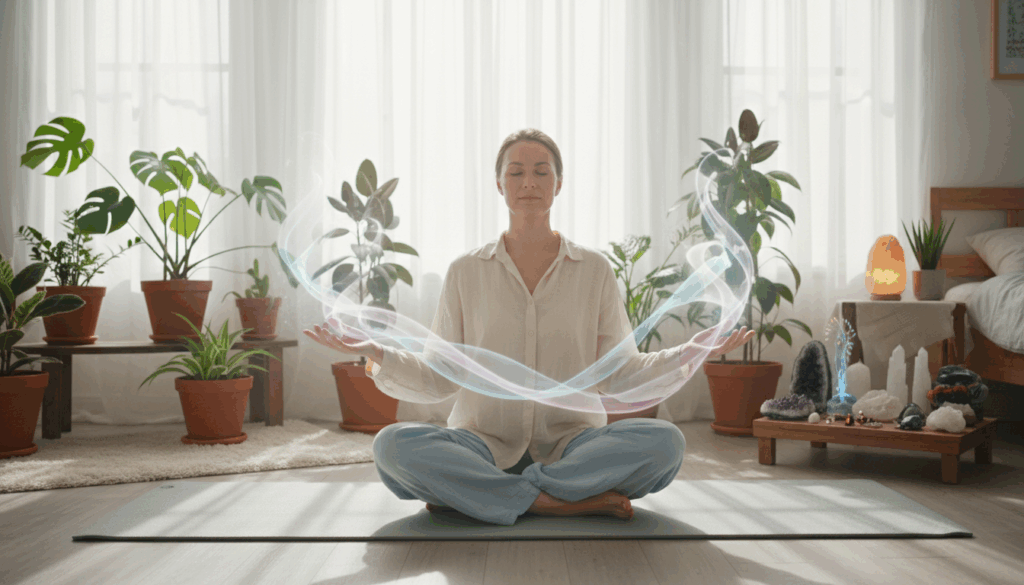
The idea of an energy field suggests a surrounding layer that supports the body and mind. Many methods aim to restore balance in that field, bringing more ease and steadier baseline wellness.
Note: Many report relaxation and comfort, but measurable mechanisms remain limited. Keep expectations practical and complementary to conventional health care.
- Other names: subtle energy, vibrational medicine, mind‑body medicine.
- Common goal: reduce strain and support daily balance.
| Term | Origin | Common meaning |
|---|---|---|
| Qi | Traditional Chinese Medicine | Vital current tied to organ balance and movement |
| Prana | Ayurveda | Breath‑related life force linked to vitality |
| Energy field | Modern and traditional sources | Surrounding layer that practitioners aim to balance |
For a practical, user‑friendly overview of approaches and session ideas, see this guide.
Set Yourself Up for Success Before You Start
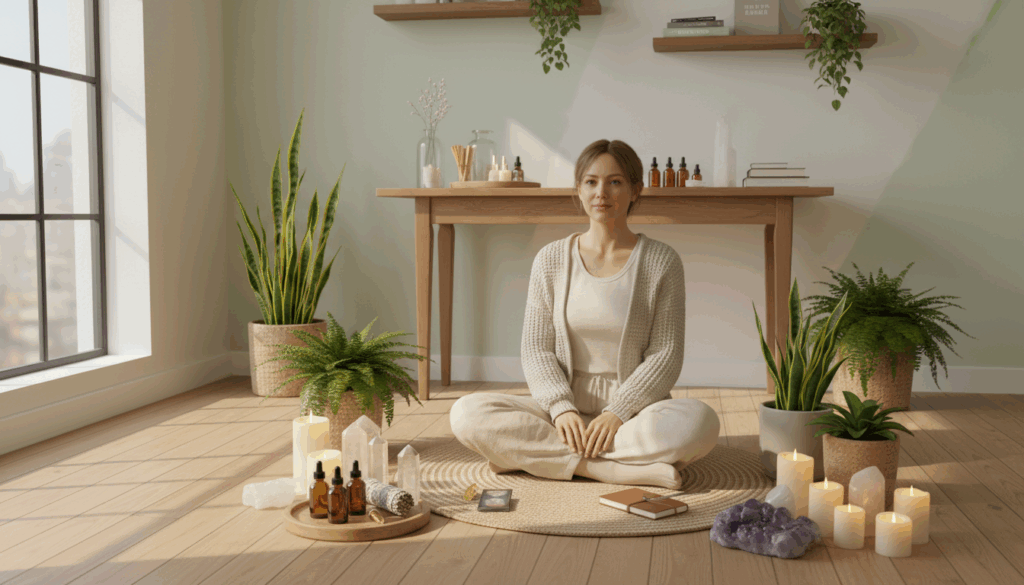
Start by arranging a quiet, comfortable spot where your body can relax and your mind can settle. A small, tidy area helps you downshift and makes the session more effective for deep relaxation and general wellness.
Create a calm space
Dim the lights, lower noise, and set a comfy temperature. Use a chair, bed, or yoga mat—choose what supports your posture and comfort.
Put your phone on Do Not Disturb, keep water nearby, and have a blanket if you tend to get chilly.
Grounding and intention
Feel your feet on the floor and notice contact points. Slow your attention and breathe with awareness.
Try this prompt: “I’m open to calm; I want to support my body energy and stress levels today.” Say it silently or out loud.
Simple breathing for clarity
Take five slow nasal inhales and exhales. Count to four on the inhale, and four on the exhale. This helps reduce anxiety and brings clear focus without fuss.
Success checklist
- Comfortable posture
- Steady breath
- A realistic goal: relaxation, not instant transformation
For guidance on remote sessions and sending calm from afar, see send healing energy.
| Step | Quick tip | Why it helps |
|---|---|---|
| Quiet spot | Dim lights, soft sound | Supports deep relaxation |
| Grounding | Feel feet, notice contact | Centers attention and body energy |
| Breathing | Slow nasal breaths (4-4) | Calms anxiety and adds clarity |
Energy Healing How To Practice a Simple Self-Session at Home
Set aside ten to twenty minutes and find a quiet seat for a short self-session you can repeat regularly. This compact routine supports relaxation and helps you notice body changes without needing special equipment.
Scan your body energy and notice sensations
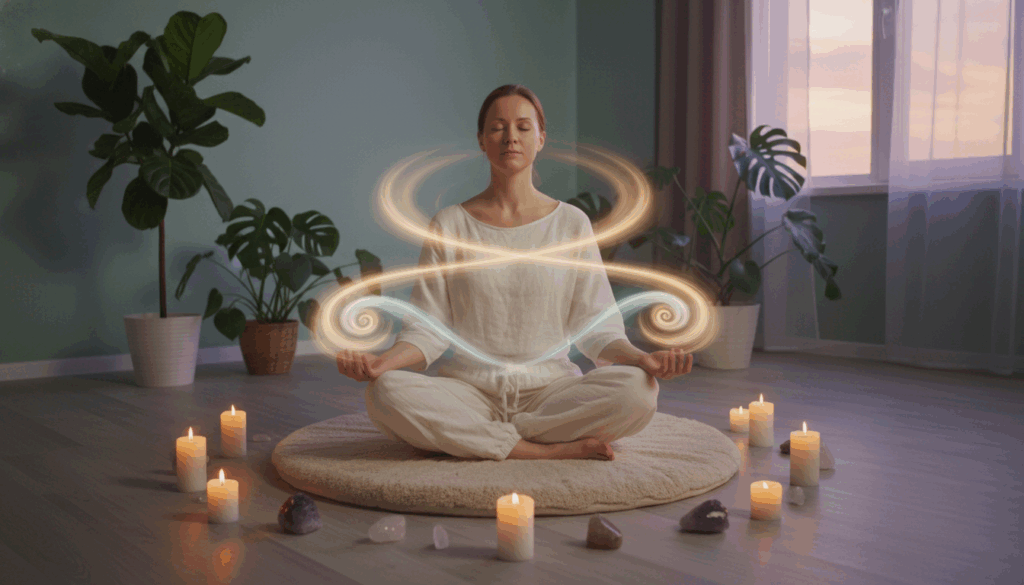
Sit or lie comfortably. Bring gentle attention to your head, neck, shoulders, chest, belly, hips, legs, and feet in order. Notice warmth, coolness, pulsing, numbness, tension, or areas that feel stuck.
If you track symptoms, quietly note any shifts. Keep observations simple and nonjudgmental.
Use breath and visualization to support flow
Take slow nasal breaths. On each inhale, imagine a warm light filling the area you just scanned. On each exhale, picture tension easing away.
This combined breathing and visualization often encourages smoother flow and a calmer body response.
Try gentle hands-near-body touch therapy techniques
Hover your hands a few inches above tense areas or rest them lightly if that feels better. Keep pressure soft; never push into pain.
Optional: Stay non-touch if you prefer. The goal is relaxation, not force.
Close the practice: rest, hydration, and journaling
Finish with three quiet breaths. Drink a glass of water and write one short line about sensations or mental clarity—this helps track patterns across sessions.
- Quiet spot and 5 slow breaths.
- Head-to-toe scan (5–10 breaths per area).
- Breath + warm-light visualization (3–5 minutes).
- Hands-near-body option (1–3 minutes per area).
- Close with water and one journal note.
| Step | Time | Why it helps |
|---|---|---|
| Scan | 3–5 min | Identifies tension and symptoms for focused care |
| Breath + Visualization | 3–7 min | Supports calmer responses and improved flow |
| Hands-near-body | 2–6 min | Promotes relaxation; optional and gentle |
Troubleshooting: If you feel nothing, keep practicing—sensations may build over sessions. If emotions arise, breathe and allow them without judgment. If your mind wanders, gently return to the breath.
For more guided session ideas and step outlines, see this practical guide.
How to Do Remote or Distance Healing (and Receive It Online)
Virtual sessions let a sender and recipient link through visualization and guided breath. This approach is popular because it can be done from anywhere in the world, helping people who cannot reach local practitioners.
Connecting with the recipient through visualization and focused attention
Prepare a quiet space, ground yourself, and set a calm, compassionate intention. Visualize a bright light bridge between you and the recipient and, if helpful, softly repeat their name to keep focus.
Sending with compassion and a “healthy and whole” focus
Imagine a warm, glowing field moving along that light link. Hold the image of them healthy and whole. Keep feelings of care and kindness in your mind rather than forceful effort.
What a virtual session can look like
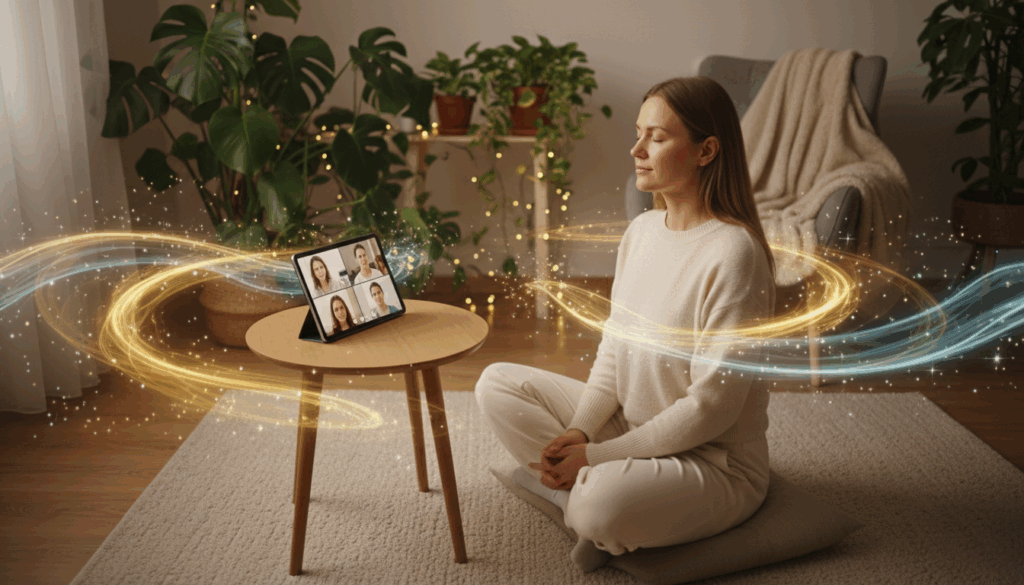
The recipient lies down with the camera on, and both agree on timing. A short check-in starts the session, then guided breathing settles the nervous system. Sessions often use plain video platforms.
Common experiences and practical tips
People report tingling, deep relaxation, and sound-bath‑like effects from the sender’s breath. For success, mute notifications, agree on a buffer after the session, and hydrate. You can learn more through psychic-medium classes.
| Role | Quick prep | Expected experience |
|---|---|---|
| Sender | Quiet space, ground, visualize link | Focused attention, warmth, steady compassion |
| Recipient | Lie down, camera ready, guided breath | Tingling, relaxation, clearer mind |
| Both | Agree timing, mute devices, hydrate | Gentle calm and after-session clarity |
Popular Energy Healing Techniques and Which Ones Fit Your Goals
This short guide matches common methods with goals like calm, stress relief, mobility, and steadier balance. Use it as a friendly menu when you’re choosing an approach or speaking with a practitioner.
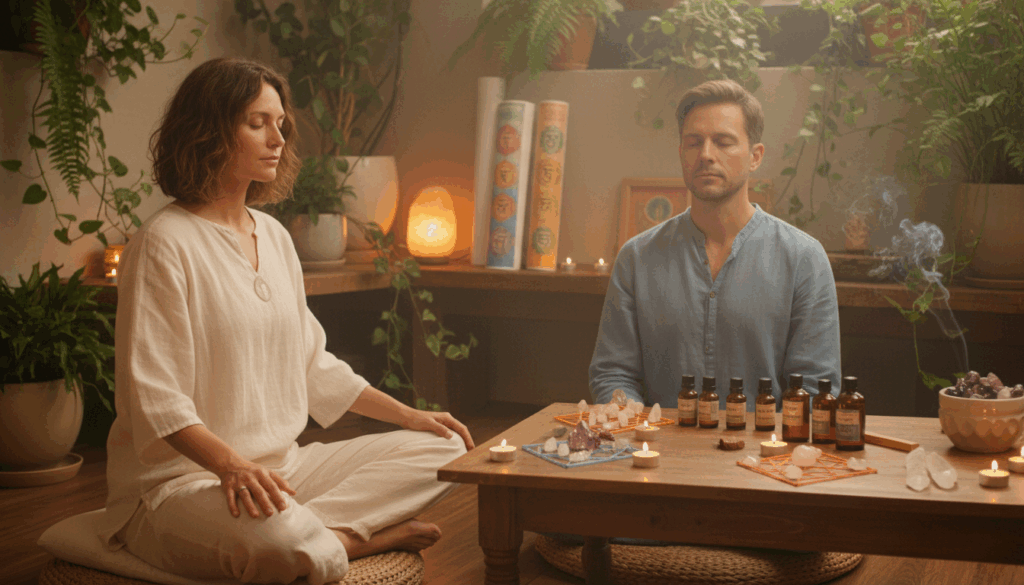
Reiki
Practical note: Hands are placed lightly on or held above the body to promote deep relaxation. Many people choose this for rest, reduced tension, or general calm.
Chakra balancing
This approach works with seven main centers and often combines breath, visualization, sound, or crystals. It focuses on mind‑body balance rather than a medical fix.
Aura cleansing
Surrounding‑field care uses meditation, sound, or crystals to clear perceived blockages. Claims are optional; the tools are mostly used for comfort and clarity.
EFT tapping
EFT is a structured stress tool that taps acupressure points while repeating a short statement. It’s popular for anxiety and emotional regulation and is easy to learn at home.
Qigong and yoga-based practices
These pair breath with movement to train flow through the body. Both can support mobility, sleep, and symptom relief when practiced regularly.
Acupuncture vs non-touch methods
Needle-based acupuncture requires in-person care and cannot be done remotely. Non-touch approaches—like Therapeutic Touch, remote Reiki, or guided chakra work—may be offered virtually.
| Modality | Good for | Remote? |
|---|---|---|
| Reiki | Relaxation, stress support | Yes |
| Acupuncture | Pain, specific symptoms | No |
| EFT / Qigong | Anxiety, mobility, sleep | Yes (guided) |
Choosing a practitioner: Look for clear training, a stated scope of practice, and comfort with virtual sessions when needed. Match a method to your goals—stress relief, emotional regulation, or physical support—and check that it feels right for your health and wellness needs.
What Energy Healing Can and Can’t Do for Your Health
This section looks at realistic benefits people often report and the limits researchers have found.
Potential benefits supported in some research
Several studies suggest that certain practices may reduce perceived pain, ease anxiety, help sleep, and improve quality of life for some people.
For example, a 2014 review found that Reiki therapy showed promise for lowering pain and anxiety. A 2011 trial reported better mood after six 30‑minute sessions over weeks. Reviews in 2013 and a 2015 pilot of distant sessions also noted benefits for cancer‑related symptoms when used alongside usual care.
Why evidence is mixed and what “limited research” means
“Limited research” often means small trials, different methods across practitioners, and challenges measuring a subtle field or mechanism.
Studies vary in size and design, and contextual factors like the session setting or expectation can influence outcomes. That means results show promise but do not prove disease cures.
Safety and boundaries: complementary care, not a replacement
Use these practices as a complement to medical or mental health treatment, not a substitute. If symptoms are severe, seek licensed care.
Safety tips: stop if a session feels overwhelming, work within comfort, and choose practitioners who state their training and limits.
Track symptoms and stress levels before and after sessions. A simple journal note or a rating scale can show whether a practice supports your life over time.
When to seek help now: severe pain, suicidal thoughts, ongoing panic, or new worrying medical signs require immediate medical or emergency care.

| What people seek | Evidence snapshot | Role |
|---|---|---|
| Less pain | Several small trials show reduction in perceived pain | Adjunct |
| Lower anxiety | Reviews and trials note short‑term reductions | Supportive |
| Better sleep/quality of life | Some studies report improvements, more research needed | Complementary |
Conclusion
Here is a practical summary to help you try the routine with confidence.
Recap: prepare a quiet spot, ground and breathe, scan your body, use gentle visualization, then rest, hydrate, and note any changes.
The goal is calm and restored balance, not dramatic results in one session. Be patient and consistent; most people learn what works over several tries.
Remote sessions are a useful option when in-person help is not available. Clear communication and comfort matter for good outcomes.
Final note: use these complementary methods alongside qualified medical or mental health support when needed. If you want formal training, consider learning more about becoming a psychic healer at this course page.
FAQ
What is energy medicine and how does it relate to qi and prana?
Energy medicine refers to practices that work with a body’s subtle life force — terms like qi (China) and prana (India) describe this vital flow. Practitioners use breath, touch, movement, or focused attention to influence that field and promote balance across physical, mental, and emotional levels. Common aims include reduced anxiety, improved relaxation, and clearer mind-body connection.
How can “stuck” flow affect my body, mind, and emotions?
When flow feels blocked, people often notice tension, sleep disruption, mood swings, or chronic aches. These sensations may show up as tightness, numbness, or mental fog. Techniques that restore movement and balance in the field can ease symptoms and support overall wellness, though results vary between individuals.
What should I do before starting a self-session at home?
Set a quiet space free from distractions, ensure a comfortable temperature, and have water nearby. Ground with a few minutes of simple breath work and center by stating a short intention for the session. These steps promote deep relaxation and better focus for effective practice.
How do I scan my body and locate stuck points?
Sit or lie down and breathe slowly while gently bringing attention through the body from feet to head. Notice sensations like warmth, tingling, tightness, or dullness. Mark areas that hold tension or emotional charge, then use breath and visualization to invite more flow through those points.
What breathing and visualization techniques help support flow?
Use slow diaphragmatic breaths: inhale for four counts, pause, exhale for six. Pair each inhale with imagining clear light or warmth moving into a spot, and each exhale with tension leaving. This pairing calms anxiety and reinforces mental clarity during the practice.
Can I use hands-near-body touch methods if I don’t want direct contact?
Yes. Hovering hands a few inches above the body or lightly resting palms on ropa is a gentle way to influence the field and promote relaxation. These noninvasive methods are common in Reiki-style sessions and are suitable for self-care or client work.
How should I close a session for best results?
Finish with several minutes of stillness, drink water, and jot brief notes about sensations and any shifts. Journaling supports long-term clarity and helps you track progress across sessions. Resting afterward helps the body integrate changes.
How does remote or distance work function in practice?
Remote sessions use focused attention, visualization, or intention to connect with the recipient. Practitioners often imagine linking with the person, send compassionate light, and focus on a “healthy and whole” outcome. Many people report warmth, tingling, or deep relaxation during or after virtual sessions.
What should I expect in an online session setup?
Lie down comfortably, place the camera so the practitioner can see your face if needed, and follow guided breathing. Sessions usually begin with a brief intake, a relaxation protocol, a focused treatment period, and a short closing with aftercare suggestions.
Which techniques fit specific goals like stress relief or pain management?
For stress and anxiety, EFT tapping and breath-based practices work well. Chronic pain may respond to hands-on or hands-near modalities such as Reiki or progressive qigong movement. Chakra balancing and aura work support emotional regulation and clarity, while yoga and qigong train sustained flow through movement and breath.
Can acupuncture be done remotely like other non-touch methods?
No. Acupuncture requires needle insertion and physical assessment, so it cannot be performed remotely. Many non-touch modalities, however, adapt well to distance formats using guided visualization, verbal coaching, and breath work.
What benefits does research suggest for these practices?
Some studies show improvements in pain, sleep quality, anxiety, and overall quality of life when these practices are used alongside conventional care. Evidence varies by technique, study design, and condition, so outcomes are never guaranteed for every individual.
Are these practices a substitute for medical care or therapy?
No. These modalities work best as complementary approaches. They can support relaxation, clarity, and symptom relief but should not replace diagnosis or treatment from licensed medical professionals or mental health providers.
How do I choose a reliable practitioner or program?
Look for clear credentials, client reviews, and a transparent scope of practice. Reputable practitioners will explain what they can and cannot do, discuss safety and boundaries, and encourage continued medical care when appropriate. Trust, clear communication, and professional ethics matter most.