

Les Prophéties first appeared in 1555 as a short, strange book of quatrains arranged into “centuries.” Readers in the United States and beyond still turn to those verses when they seek meaning in global events. The blend of rhyme, metaphor, and mystery made the collection a cultural touchstone.
This listicle explores how a 16th-century seer’s words grew into modern predictions about the future and the wider world. You will find clear notes on key prophecies, the historic moments they are tied to, and why interpretations differ.
Expect a friendly, step-by-step guide that points out where quoted lines match documented events and where poetic latitude creates debate. We flag royal tragedies, city disasters, and political turning points that often get linked to these quatrains.
The aim is balanced intrigue and healthy scrutiny. Follow along for concise explanations, cautious connections to history, and a pointer to further reading in a concise Nostradamus guide.
Key Takeaways
- Les Prophéties is a poetic book of quatrains organized in centuries.
- Readers still mine the verses for predictions and cultural meaning.
- This guide links famous lines to documented events with caution.
- Ambiguity and metaphor explain enduring interest and controversy.
- The format is a clear, step-by-step list for easy reading.
How Nostradamus framed his prophecies: quatrains, centuries, and constant reinterpretation
A tight structure made the verses easy to reread and hard to pin down. He built his book by grouping four-line stanzas into long numbered sets. This design let each line travel across ages and invite fresh readings.

Les Prophéties: four-line quatrains spanning the centuries
The collection of quatrains is the backbone of the work. Each quatrain is short, image-rich, and stacked inside a named century to suggest scope across time.
Why ambiguity matters: metaphors, anagrams, and “Hister” vs. Hitler
Ambiguity is deliberate. Metaphor and wordplay make lines elastic, so readers can find modern meaning in old words.
Examples often cited include anagrams such as “Pau, Nay, Oloron” and the disputed term “Hister,” which may be a river name rather than a later ruler. Translation choices and slim wording add to that flexibility.
Result: the same name or place can serve as a reference to multiple events. Skeptics call this a tool for retrofitting; enthusiasts see it as evidence of foresight.
Most cited prophecies linked to historic events
Several standout quatrains get reused when people point to famous years and turning points. Below are concise takes on the verses most often tied to real moments.
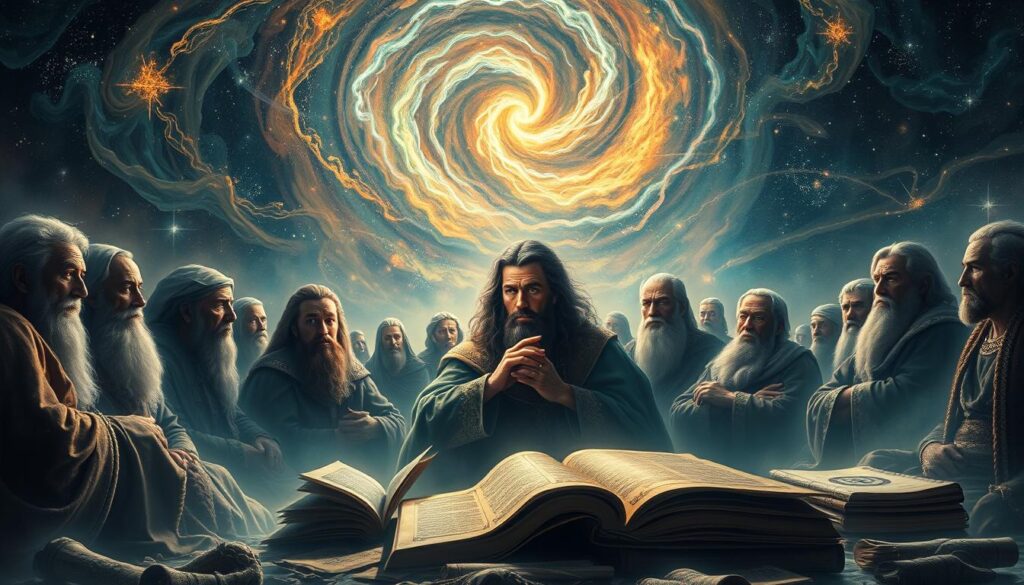
The death of Henry II: a young lion and a cruel end
A quatrain mentioning a “young lion,” a “golden cage,” and a cruel wound is often read as Henry II’s 1559 jousting death.
The king died after a lance splinter pierced his eye and temple. Critics note the quatrain also says a single battle, which sparks debate about precise matching.
The Great Fire of London and the “fire of ’66” image
Lines about a great blaze and an “ancient lady” draw readers to 1666. The phrase “fire of ’66” feels pointed.
But the actual blaze began in a bakery, not lightning. That contrast keeps the quatrain open to interpretation.
Revolutionary chants and the fall of the nobility
Verses about songs, chants, and the “enslaved” are linked to the Bastille and the social upheaval of 1789.
The imagery matches the voice of crowds and sudden political change across those years.
The Napoleon anagram and names turned to power
“Pau, Nay, Oloron” is read as an anagram that hints at a ruler rising to fame. That reading remains one of the most cited literary puzzles.
Hister, Hitler, and competing readings
A verse mentioning “Hister” and a child of poor people has been mapped to a 20th-century dictator. Others point out Hister was a river name, which alters the claim and the link to war.
Atomic devastation: two cities and lingering scourges
Lines about “within two cities” and “famine within plague” are applied to Hiroshima and Nagasaki.
Readers cite both the immediate blast and the long aftermath of radiation when they make the connection.
JFK and a blow from on high
A quatrain about evil falling “from on high” and an “innocent” accused is often read alongside John F. Kennedy’s assassination and the Oswald debate. The sparse wording fuels many interpretations.
September 11: the sky burns over a great city
Imagery of a burning sky at forty-five degrees and a “great new city” is linked to New York on 9/11. Scholars differ on numerical details, but the lines remain evocative.
Note: A single short quatrain can yield many readings. Emphasis on different words or events shapes very different prophecies.
Reading the quatrains alongside people, places, and wars
A single line can tie a river, a ruler, or a region to an event centuries later.
Names and near-matches: when rivers, rulers, and regions blur
One short phrase can act as a puzzle piece. A single name may point to a town, a waterway, or a leader. That flexibility fuels debate and keeps lines alive across eras.

Hister shows how geography complicates modern links. Some read it as a river or Danube region. Others treat the same syllable as a 20th-century figure. Those readings change the line’s reference and meaning.
Pau, Nay, Oloron offers another test. Seen as an anagram, it can point toward a famous ruler. Critics argue the rearrangement is selective. Supporters say it fits the rise of power in a later time.
| Term | Possible reference | Type | Why ambiguous |
|---|---|---|---|
| Hister | Danube region / leader | Place vs. person | Old place names resemble later surnames |
| Pau, Nay, Oloron | Anagram for a ruler | Wordplay | Readers stitch letters to fit events |
| Short epithets | Cities, tribes, armies | Broad reference | No fixed date or clear marker |
Translation choices, selective focus, and historical context shape each reading. Across any century, readers anchor lines to the conflicts and leaders that matter to them. That elasticity explains both fascination and skepticism.
Science and plague: predictions tied to disease and discovery
Lines in the book mix medical imagery and moral drama, so readers often link them to disease and discovery.
Pasteur celebrated, then disputed
“Pasteur will be celebrated almost as a God-like figure … but by other rumors he shall be dishonored.”
Readers tie this quatrain to Louis Pasteur because he changed microbiology and public health. He is seen as the man who helped make germ theory mainstream.
Pasteur’s work ranged from fermentation and pasteurization to early vaccines. Those advances explain why some call him celebrated.
Scholarly critiques emerged in later years. Reviews from the 1990s and beyond note disputes over his use of rivals’ findings. Some interpreters read those critiques as the “dishonored” rumor in the verse.
“Famine within plague”: two readings
The phrase “famine within plague” is read in two main ways. Some take it literally as epidemics that produce hunger and chaos.
Others apply it metaphorically to layered harm after wartime blasts — illness, food shortages, and social breakdown in certain years.
| Phrase | Common reading | Why ambiguous |
|---|---|---|
| Pasteur quote | Great scientist, later controversy | Clear name but broad reputation shifts |
| Within two cities / scourges | Radiation sickness or epidemics | Could match wartime fallout or disease waves |
| Famine within plague | Hunger after disease | Both literal epidemic and layered wartime suffering |
Why this matters: Lines about disease surface whenever societies face outbreaks. The mix of science, fame, and fallout keeps these prophecies in public discussion across years.
War, fire, and the end of worlds: why many believe
Dramatic images of burning cities and global conflict help certain lines feel like warnings for our age. Such imagery is vivid and easy to remember.
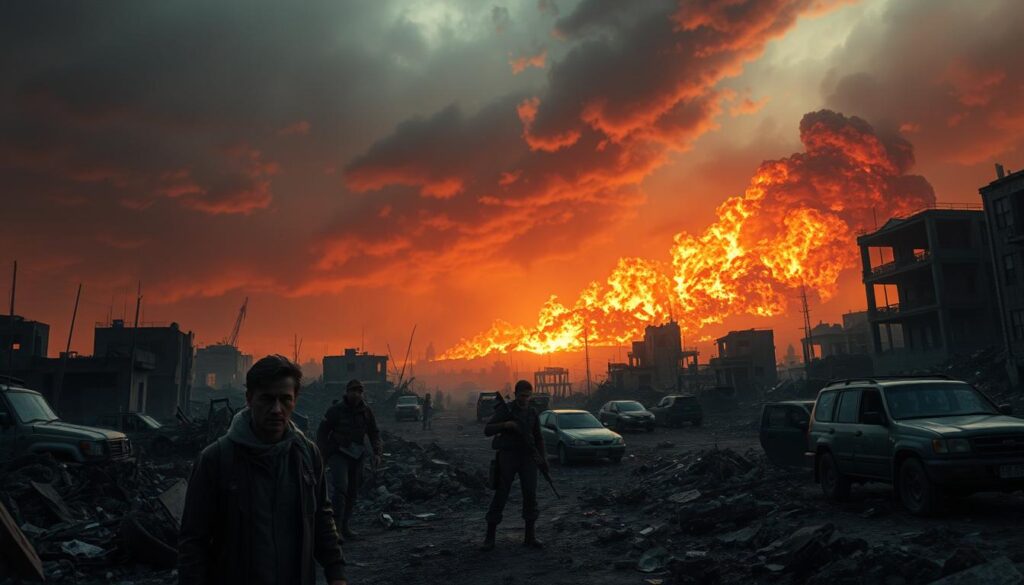
Cities aflame, mighty armies, and terrible weapons recur across centuries. That repetition makes readers tie the same lines to different events.
People tend to notice spectacular matches and forget quieter mismatches. Media storytelling and movies amplify the most dramatic quatrains. This reinforcement keeps belief alive.
During crises, end-times language gains traction. Audiences are more likely to read warnings into short, striking phrases.
| Imagery | Historic examples | Why it sticks | Effect over time |
|---|---|---|---|
| Cities aflame | Great Fire of London, large urban fires | Visual, easy to map to events | Memory favors dramatic matches |
| Empires in conflict | Napoleonic wars, world wars | Recurrent theme across ages | Quatrains feel timeless |
| Devastating weapons | Atomic attacks, modern arms | Shock and scale make links persuasive | Amplified by news and film |
For a year-by-year look at famous lines and later readings, see the predictions by year resource. This part helps readers track how single images move through history.
what has nostradamus predicted that still resonates today
Short stanzas from 1555 keep echoing in modern debates. Readers and commentators often map those lines to issues people face now: climate shocks, strained resources, political upheaval, and strange celestial fears.
From centuries-old verses to today’s headlines: the pull of prophecy
Nostradamus (born 1503) was an astrologer and physician. Les Prophéties appeared in 1555, arranged in numbered centuries of quatrains. That compact form makes the verses easy to reuse each year.
Contemporary commentators link images like a “world’s garden” to natural disasters and a “fireball” to asteroid scares. Others see echoes of resource strain in conflicts such as the war in Ukraine, or warnings about rising seas and an “Aquatic Empire.”

Many believe these readings, yet scholars remind readers they remain speculative. Familiar patterns—conflict fatigue, leadership rise, and environmental anxiety—help a quatrain feel timely in any given year.
| Modern theme | Common line | How readers connect it |
|---|---|---|
| Climate disasters | “world’s garden” | Linked to floods, fires, and food risks |
| Geopolitical strain | Resource exhaustion | Tied to wars and supply shortages |
| Leadership change | Rise of a man or movement | Compared to historical figures |
Tip: For a focused look at recent coverage and predictions for 2025, see predictions for 2025. Distinguish metaphor from precise forecasting when evaluating claims.
How to reference Nostradamus responsibly in modern contexts
Referencing old quatrains today requires precise context and careful wording.
Cite the exact wording and translation. Give the original line, the edition year, and the translator so readers can check how phrasing shapes meaning.
Note when a name may be geographic rather than personal. Examples like Hister show that near-matches can point to a river or place, not a later leader.
Record publication time and any edits. Many modern lists change lines over the years, and attribution often shifts with each edition.

“Compare translations and flag single-word claims. A lone term can change an entire reading.”
Separate story from evidence. Be clear which parts are illustrative and which rest on documentary support. Invite others to offer alternative readings.
| Practice | Why it matters | Quick action |
|---|---|---|
| Cite exact quatrain | Shows how translation affects meaning | Include line, translator, edition year |
| Clarify names | Avoid mixing places and people | Note possible geographic readings |
| Track edits over years | Prevents false precision | List edition changes and page refs |
For a helpful cross-check, consult the predictions resource. Responsible referencing keeps discussion honest and useful for others.
Conclusion
A handful of verses repeatedly surface when people explain wars, sudden deaths, and great fire. Compact quatrains link to famous events—Henry II’s fatal joust, London’s blaze, world war, atomic blasts—and so sustain lively debate about long-term predictions.
Many believe certain lines foreshadow major turns, while others point to broad metaphors and selective reading. Themes of leadership, plague, war, and the rise of a man keep the quatrains relevant across centuries and give readers a way to name crisis.
Appreciate the literary craft and check sources. For a clear quatrain guide and a quick cross-check, see the quatrain guide. Balance curiosity with evidence when you map poetic lines to real people and events in any year or future world.
FAQ
Who was Michel de Nostredame and why do people study his quatrains?
Michel de Nostredame, known as Nostradamus, was a 16th-century French apothecary and seer. He wrote Les Prophéties, a collection of four-line quatrains arranged into centuries. Readers study them for historical curiosity, literary interest, and the challenge of linking vague images to events across time.
How did he structure his prophecies and why are they so open to interpretation?
Nostradamus used cryptic language, metaphors, anagrams, and symbolic references across his centuries. Those techniques create ambiguity, allowing later readers to fit lines to diverse people, wars, plagues, and disasters. That flexibility fuels repeated reinterpretation.
Which quatrains are most often tied to famous events?
Commentators frequently point to verses linked to the death of Henry II, the Great Fire of London, the French Revolution, the rise of Napoleon and Adolf Hitler, atomic attacks, the JFK assassination, and the September 11 attacks. Each match usually relies on loose phrasing, linguistic coincidence, or retrospective reading.
Did Nostradamus explicitly name modern leaders like Napoleon or Hitler?
He did not use modern names directly. Some lines contain place-name fragments such as Pau, Nay, Oloron, which enthusiasts anagram into names. Others note words like “Hister,” which can be read as a river name or misinterpreted as Hitler. These near-matches depend on translation choices and context.
How do scholars approach links between quatrains and scientific or medical themes?
Scholars treat such links cautiously. References to plague, famine, or “scourges” reflect Renaissance concerns and personal experience with epidemics. Tying verses to later discoveries or figures like Louis Pasteur often involves broad metaphorical reading rather than clear prediction.
Are there quatrains that unmistakably describe modern warfare or atomic devastation?
No single quatrain offers an unmistakable, literal forecast of nuclear weapons. Lines mentioning “scourges in two cities” or great fire have been retrofitted to atomic events. These readings are persuasive to some but remain speculative and interpretive.
Why do so many people believe his verses forecast the end of the world?
The combination of apocalyptic imagery, human fear of catastrophe, and selective interpretation makes prophetic texts attractive as end‑of‑world evidence. Vague quatrains fit many scenarios, so readers focused on doom find confirming examples across centuries.
How should journalists or historians reference these quatrains responsibly?
Cite original texts and reputable translations, note the centuries and quatrain numbers, and clarify that many readings are retroactive. Emphasize linguistic ambiguity and avoid presenting speculative matches as factual forecasts.
Can quatrains be proven to refer to specific years or events beyond doubt?
No. Proof is lacking because of ambiguous phrasing, multiple translations, and the tendency to match verses after events occur. Strong claims require corroborating historical context, not only interpretive parallels.
Where can readers find reliable editions and analyses of Les Prophéties?
Academic presses, university libraries, and critical editions with scholarly annotations provide the best sources. Look for works by historians of early modern literature and critical translations that explain linguistic and historical context.
How do translations affect the meaning of a quatrain?
Translation choices shape names, verb tense, and imagery, which alters possible interpretations. Translators’ decisions about punctuation, capitalization, and word sense can create or remove perceived links to people, places, and events.
Is it fair to compare Renaissance prophecy methods with modern forecasting?
They differ fundamentally. Renaissance prophecy relies on allegory and poetic ambiguity. Modern forecasting uses data, models, and testable hypotheses. Treating the two as equivalent mixes literary tradition with empirical science.