

This tarot archetype signals endings that make room for fresh beginnings. The classic image shows an armored skeleton on a white horse, carrying a black banner with a white emblem. Armor suggests inevitability, the white horse hints at purification, and the banner points to renewal through closure.
People from every walk of life appear before this scene, which reminds us that major shifts touch everyone equally. Upright, the card invites release, transformation, and decisive transition. Reversed, it flags resistance, stagnation, and repeated patterns that block growth.
In practical terms, this tarot card often asks us to prune what no longer serves our life, from relationships to work and finances. Use it as a mirror: notice where to let go so you can adapt and rebuild with intent.
Key Takeaways
- Endings create space: This symbol shows that letting go invites renewal.
- Core symbols: Armor, white horse, and black banner point to purification and inevitability.
- Upright vs. reversed: One signals transition; the other signals resistance.
- Real-world guidance: It helps with relationship, career, and financial recalibration.
- Use it wisely: View the card as a tool for reflection, not fear.
Quick Guide: death card meaning at a glance
This tarot symbol often marks a definitive finish that clears space for the next chapter. In an upright position it signals a major phase ending and a new start—close one door, open another. The reversed form points to resisting change and staying stuck in limbo due to fear.
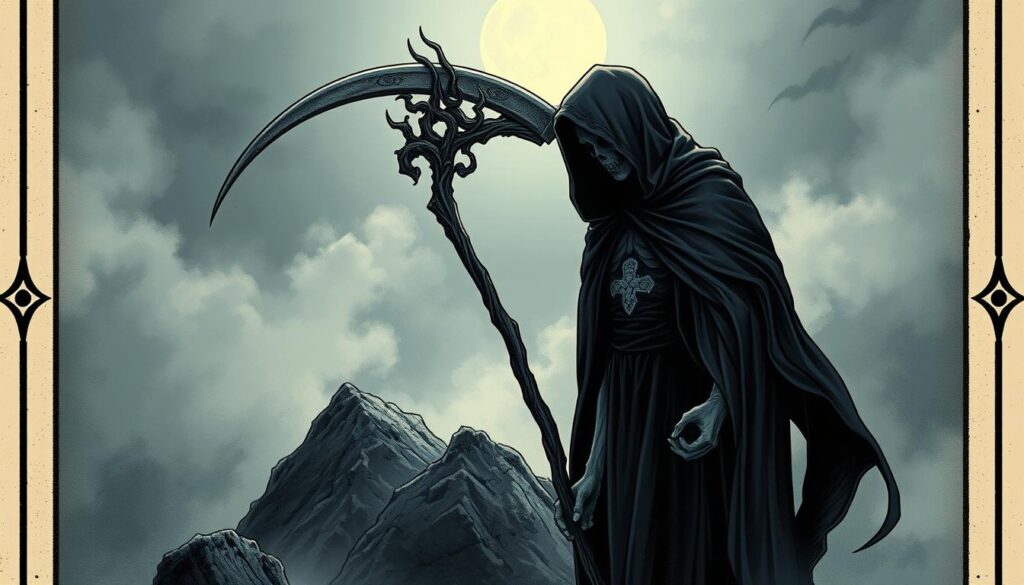
Instant takeaway: upright suggests endings that clear space for beginnings; reversed flags stuck energy in the moment of a reading.
- Timing: shifts unfolding now, momentum builds as you act.
- Love: relationships evolve or end when growth is blocked; singles shed old beliefs to welcome healthier connection.
- Career: take decisive steps toward a new path; reversed warns of clinging to an unhealthy role.
- Finances: upright may trigger loss that prompts better money habits; reversed warns against failing to adapt.
“Focus on what’s finishing, what’s emerging, and what you can actively let go.”
Micro-actions: declutter one space, cancel an outdated commitment, or have a hard conversation. Use this guidance to reframe change as transformation, not just loss. For practical tarot work that builds skill, see eight of pentacles.
Symbols that shape the Death tarot card
The artwork on this tarot scene maps the process of letting go and stepping into renewal.

The black flag and its white emblem: purification through endings
Black flag: The stark contrast shows how endings purge what no longer serves. This cleansing clears a fresh field for new choices.
White emblem: A mark of purity and rebirth, it signals that closure can wash away outdated ties to the past.
The white horse and armored skeleton: inevitability and renewal
The white horse carries steady momentum. It represents the force that moves change forward with calm purpose.
The armored skeleton underlines inevitability. No one can stop the cycle; resisting it only prolongs discomfort.
All walks of life before Death: equality of change
Images of king and pauper show that transformation touches every life and relationship, regardless of status.
When this symbol appears, look for habits or ties to release and then act. Use these motifs as anchors in readings or practice, and pair them with deliberate steps like those taught in four of swords practice.
| Symbol | Visual | Takeaway |
|---|---|---|
| Black flag | Stark banner with white emblem | Purification; clean slate |
| White horse | Pure, forward-moving steed | Momentum toward renewal |
| Armored skeleton | Invincible rider | Inevitability; accept change |
Upright Death: change, endings, and transformation
This upright pattern shows you’re at a threshold where an ending invites a fresh, purposeful start. It signals the close of a major phase and asks you to let go so a truer path can appear.

Core upright themes: close one door, open another
Core message: you must end one cycle to free space for new opportunities. Even if the timing feels sudden, the shift often brings clarity.
Upright in love readings: embrace change or release
In relationships, the upright symbol asks whether to evolve with a partner or honor a real ending. Both choices can support growth and emotional integrity.
For singles: letting go of past narratives clears room for healthier bonds and new connections.
Upright in career and finances: transitions and adapting to loss
At work, this tarot card encourages decisive moves toward a path you’ve considered. Small actions now can prevent forced changes later.
Financially, an impending loss may prompt better budgeting and value shifts. Treat it as a nudge to build stronger habits.
- Identify one attachment to release this week.
- End one recurring obligation and update a resume or plan.
- Schedule one honest conversation that aligns with the shift.
“Endings are completions that create genuine opportunity for renewal.”
For practical next steps and steady practice, pair this insight with the seven of pentacles guidance.
Reversed Death: resisting change and repeating patterns
A hesitant grip on the past can leave you circling the same spot instead of stepping forward. The reversed form often signals resistance that keeps one trapped in routines and habits rather than allowing true shifts.
Death reversed essentials: stagnancy, fear of the future, and a reluctance to accept necessary endings. This creates limbo, fatigue, and uncertainty about what comes next.
Reversed in love: clinging, revival, and breaking habits
In relationship readings, the reversed death card can point to clinging to comfort instead of addressing stale dynamics.
Some bonds may revive, but change requires broken patterns and new habits. Counseling, honest agreements, or a respectful ending can restore forward motion.
Work and money: unhealthy cycles and course-correction
In career contexts, expect signs of decay: chronic stress, disengagement, or reduced pay. Staying put often repeats self-defeating behaviors.
Financially, resisting adjustments after loss makes recovery slower. Prioritize essentials, cut recurring leaks, and rebuild buffers with steady choices.
- Do an honest inventory: name one role, routine, or identity that drains you.
- Journal practice: list what you fear losing and what you could gain by releasing it.
- Accountability step: share one concrete change with a trusted friend.
“Acknowledging resistance is the first brave step toward course-correction and healthier movement forward.”

| Area | What reversed shows | Action |
|---|---|---|
| Essence | Stagnancy; fear of change | Take inventory; name one thing to release |
| Love | Clinging or forced revival | Change habits or seek counseling |
| Career | Unhealthy cycles; disengagement | Map exit or redesign plan with steps |
| Finances | Failure to adapt to loss | Prioritize, cut leaks, rebuild savings |
For practical prompts and follow-up practice, pair this insight with a focused reading like the three-of-swords reflection to explore emotional patterns more deeply.
How to interpret the Death card in a reading
Begin a spread by naming the issue and noting how the querent feels about change right now.

Step-by-step: context, emotions, and surrounding cards
Start with context. Clarify the question, the time frame, and the emotional tone of the reading.
Then scan nearby cards. Cups hint at release, Pentacles show practical shifts, Swords bring clarity, and Wands urge action.
Past–present–future positions
In the past position, name what already ended. In present, spot the door closing now. In future, map what will emerge if the seeker cooperates with change.
Timing cues and combinations
When this card appears with The Tower expect sudden disruption. With The Hanged Man expect surrender and new perspective.
| Focus | What to watch | Action |
|---|---|---|
| Context | Question clarity; emotion | Frame the reading; note tone |
| Spread position | Past / Present / Future | Name endings; plan next steps |
| Pairings | Tower, Hanged Man, suits | Adjust urgency and method |
“What must end so something better can begin?”
Practical close: list three things to release this week and schedule one action for each. Use that as your integration prompt for career, relationship, or money shifts.
Applying the Death card to real life
Use this card as a lens to turn abstract change into clear, practical steps you can act on today.

Relationships and love: patterns, beliefs, and new opportunities
Spot one pattern to retire. Name a repeating behavior that hurts trust or blocks intimacy. Then choose one new belief to try that supports better boundaries.
Singles: rewrite a limiting story about love and take one small action, such as joining a group or messaging someone, to invite fresh chances.
Partnered people: decide to co-create a change that can revive the bond, or end things with care, clarity, and respect if growth isn’t possible.
Career and finances: letting go, planning, and moving forward
At work, an upright death card urges decisive shifts; reversed death warns against clinging to an unhealthy path. List three reasons you’re ready for a move and build a 30-day plan: networking, upskilling, and targeted applications.
Money: an ending can nudge better habits. Start a weekly budget check, cancel one subscription, and set a small weekly saving rule to stabilize the process.
- Prune low-impact tasks and delegate to free time for growth.
- If resistance appears, run one short experiment: a course, a trial project, or a networking coffee.
- Anchor change with a ritual — declutter a drawer to symbolize new space.
| Area | Action | Quick win |
|---|---|---|
| Relationship | Retire one pattern; adopt a trust-building belief | Schedule a focused conversation |
| Career | List reasons for change; create 30-day plan | Attend one industry event |
| Finances | Weekly budget review; cut a subscription | Start a small savings rule |
| Resistance | Name the fear; run a short experiment | Sign up for one mini-course |
“Celebrate small wins so you move forward with consistency rather than waiting for perfect timing.”
For further practice on handling conflict and boundaries in readings, see a focused exercise like the five of swords.
Common mistakes and pro tips
Readers often mistake this symbol for literal finality instead of a prompt to reassess and renew.
Avoid taking “Death” literally: focus on transition
Biggest misconception: treating a dramatic image as a fatal forecast. That reading fuels fear and freezes action.
Reframe the scene as a sign of phase change: an end that clears space for a new opportunity.

From resistance to renewal: practical ways to embrace change
Stop waiting for perfect clarity. Passivity prolongs discomfort and drains energy you need to move forward.
- Ask: “What is ready to end?” and “What could that unlock in this phase?”
- Set a deadline to decide, tell a trusted friend, and schedule a first action.
- Micro-habits: weekly planning, a five-minute declutter, and a quick money check-in.
| Area | Quick step | Metric |
|---|---|---|
| Work / career | Prune one task or meeting | Hours reclaimed |
| Personal | Declutter one drawer | Items removed |
| Finances | Cancel one subscription | Dollars saved |
“Endings close a chapter so the next can begin with intention.”
Conclusion
This conclusion reminds you that endings are tools for crafting a clearer, more honest next chapter.
The death tarot card marks a major phase in life: close one door so new opportunities can arrive. In upright form, cooperation with change speeds transformation. In reversed form, resisting keeps you circling the past.
Try this reflection: name one belief to release and pick one small step you can schedule this week to invite growth. Use courage and compassion as you move through transition.
Renewal waits when you let go with intent and plan. For a focused emotional follow-up, see a gentle five-of-cups reflection to process loss and welcome renewal.
FAQ
What does the Death card represent in a tarot deck?
The Death card signals major change, an ending that makes room for renewal. It rarely predicts physical death. Instead, it points to transformation: closing one phase so a new path can begin.
What are quick takeaways when this card appears?
At a glance, expect endings, release of old patterns, and a call to adapt. It can indicate loss or upheaval, but also fresh opportunities and necessary clearing to move forward.
What do the black flag and white emblem symbolize?
The black flag with a white emblem often stands for purification through endings. It suggests that out of darkness, a clean, honest renewal becomes possible.
Why is there a white horse and an armored skeleton in the image?
The white horse represents strength and the inevitability of change. The armored skeleton shows that transformation is essential and impartial — a force that removes what’s no longer useful.
What does the scene of people from all walks of life imply?
That image emphasizes equality of change. Endings affect everyone regardless of status, offering the same chance for renewal to all involved.
What themes appear when the card is upright?
Upright, it highlights endings, transformation, and opening new doors. It encourages acceptance and action to embrace the fresh possibilities that follow.
How does the upright position affect love readings?
In relationships, upright suggests release or change: letting go of an old dynamic, moving on, or entering a new phase that better fits both people.
What about upright in career and finances?
Upright often signals career transitions, layoffs, or financial shifts. It prompts proactive planning and adaptation to turn disruption into growth.
What does the reversed position indicate?
Reversed points to resisting change, stagnation, or clinging to past patterns. It warns that avoidance can prolong discomfort and block new possibilities.
How should I read reversed card in a love spread?
In relationships, reversed can show difficulty letting go, repeating unhealthy habits, or the need for a revival that requires conscious effort and honesty.
What does reversed mean for work and money?
For career and finances, it suggests unhealthy cycles, missed chances to pivot, or the need for course correction to prevent ongoing loss.
How do I interpret this card in a full reading?
Look at context, emotions, and surrounding cards. Assess whether the message is about concluding the past, warning against resistance, or pointing to a new path emerging.
How do past-present-future positions change its message?
In the past, it explains why current shifts began. In the present, it marks an active ending. In the future, it forecasts a forthcoming major phase shift.
Are there timing cues tied to this card?
The card often signals a phase already in motion rather than a fixed timeline. Combine it with other cards and life events to estimate timing of the shift.
How does it interact with The Tower or The Hanged Man?
With The Tower, expect sudden upheaval and rapid clearing. With The Hanged Man, it can mean voluntary surrender that eases transformation. Together they clarify intensity and attitude toward change.
How can I apply this card’s message to relationships?
Use it to spot repeating habits, outdated beliefs, or patterns that block closeness. Consider honest conversations, boundaries, or letting go when necessary to invite healthier dynamics.
How does it guide career and financial choices?
It encourages planning for transitions: upskilling, networking, or restructuring finances. Letting go of a failing approach can open more stable, aligned opportunities.
What common mistakes do people make when they see this card?
The main error is taking it literally or panicking. Another is resisting change instead of exploring how endings can unlock better options.
What practical steps help move from resistance to renewal?
Start small: list what must end, set clear goals, seek support, and create routines that reinforce new habits. Practical action speeds adjustment and reduces fear.
Can this card predict financial loss or new opportunity?
It can point to both. Loss may occur as part of a shift, but that clearing often makes room for new opportunity. Interpreting surrounding cards helps clarify which outcome is more likely.