
The Tarot serves as a symbolic map that mirrors our inner life and outer choices. Originating in fourteenth-century Europe, it evolved into an oracle by the seventeenth century and now helps many people seek clarity in the present.
In practical terms, a single illustrated piece from the 78-item deck reflects themes and patterns. Each image, position, and nearby piece shapes the meaning offered in a reading.
The system holds 22 Major Arcana, which move from The Fool (0) to The World (21). The remaining 56 fall into four suits tied to elements: Wands (Fire), Swords (Air), Cups (Water), Pentacles (Earth).
Readers don’t predict fate. Instead, this method gives a reflective mirror to guide decisions and reveal timing, tone, and the larger story behind events.
Key Takeaways
- Tarot offers insight into present life, not fixed future outcomes.
- The 78-piece deck mixes big archetypes and everyday scenes.
- Meaning shifts with image, placement, and surrounding cards.
- Major Arcana track major life beats; suits show daily currents.
- Use readings to gain clarity and make more grounded choices.
Beginner’s snapshot: what is a tarot card and why it matters today
For beginners, the deck works like a symbolic map that points to inner patterns and practical choices.
A symbolic map of consciousness and a tool for self-reflection
Each tarot card acts as a symbol in a larger order, helping you explore mind and life with a new perspective.
During a reading, meaning forms through the question you bring, the sequence the cards fall into, and how images speak to one another.
Tarot vs. fortune-telling: clarity, not fixed fate
Readings give people a calm way to pause and make sense of events rather than declare a set future.
This practice helps locate options, highlight timing, and reveal inner truth without needing psychic skill.
- Quick start: anyone can begin by shuffling, asking a question, and journaling impressions.
- How meaning grows: context, order, and symbol interplay shape insight.
- Big picture: Major images mark turning points; suit images track daily thoughts, emotions, actions, and resources.
Inside the tarot deck: Major Arcana, Minor Arcana, and the four suits
The structure balances big, archetypal images with daily-scene suits. The 22 major arcana act as life milestones. The remaining 56 minor arcana split into four suits that track everyday themes.
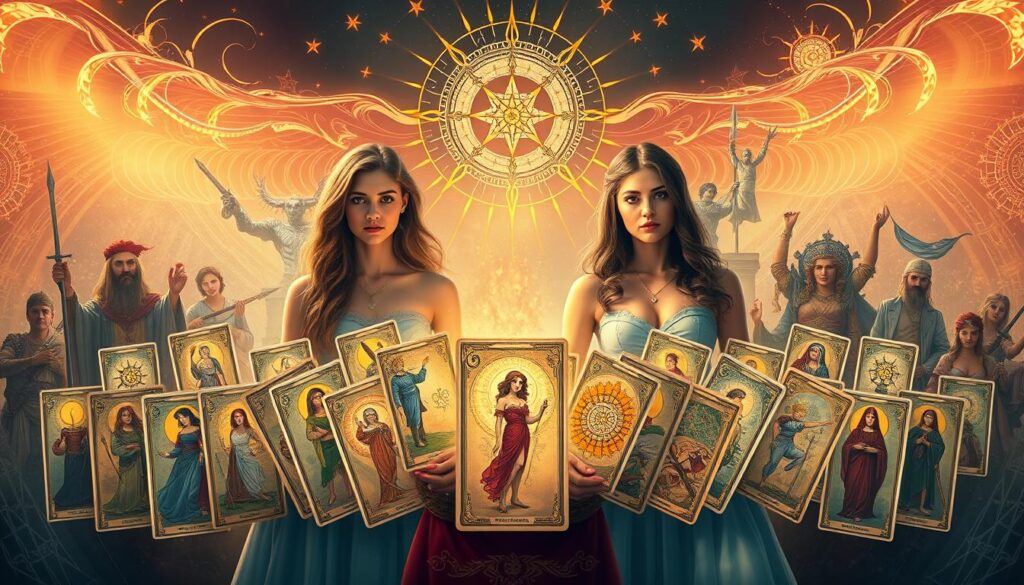
78-piece structure at a glance
Each suit contains Ace through Ten, then four court figures: Page (or Princess), Knight (or Prince), Queen, and King. Numbering for major arcana runs 0 to 21, giving a clear order for large cycles.
Court roles and practical meaning
Court pieces can point to people, role dynamics, growth stages, or inner traits. Read them with nearby cards: order and position shift nuance. For example, a Seven beside a court figure may hint at skill growth or an emerging relationship pattern.
- Wands / Fire: energy and initiative.
- Swords / Air: ideas and analysis.
- Cups / Water: feelings and relationships.
- Pentacles / Earth: resources and stability.
Check your tarot deck booklet for naming variants and use that guide while learning. Once you know this map, interpreting individual cards becomes clearer. For a deeper look at practical practice, see the Eight of Pentacles guide.
The story arc of the Major Arcana: the Fool’s Journey through life
The major arcana trace a themed life narrative that guides inner growth from bold beginnings to full integration.
The sequence acts as a teaching journey. Each image marks learning, testing, or awakening phases people meet over time. Read upright and reversed to catch shifts in tone and timing.

Milestones from The Fool (0) to The World (21)
The Fool’s leap begins with innocence and new starts. The Magician shows agency. The High Priestess points to inner knowing. Strength brings courage. Death reframes endings as transformation rather than final loss.
Common themes: change, balance, awakening, and completion
Some cards challenge stability: The Tower disrupts foundations, while The Devil exposes entanglements. Other cards restore hope: The Star, The Sun, and finally The World celebrate renewal and wholeness.
| Card | Upright | Reversed |
|---|---|---|
| The Fool | Innocence / new beginnings | Recklessness |
| The Magician | Willpower / creation | Trickery |
| Death | Endings / transformation | Fear of change |
| The World | Completion / integration | Delayed closure |
Use the Fool’s Journey as a practical map. Track each card’s meaning in a journal and note how timing shows up in daily life. For related context on transition themes, see the Six of Swords guide.
The Minor Arcana in daily life: cups, swords, wands, and pentacles
Minor Arcana bring everyday rhythms into sharp focus, showing how feelings, thoughts, actions, and resources play out. Use these suits to read patterns that repeat in routine choices and small moments.
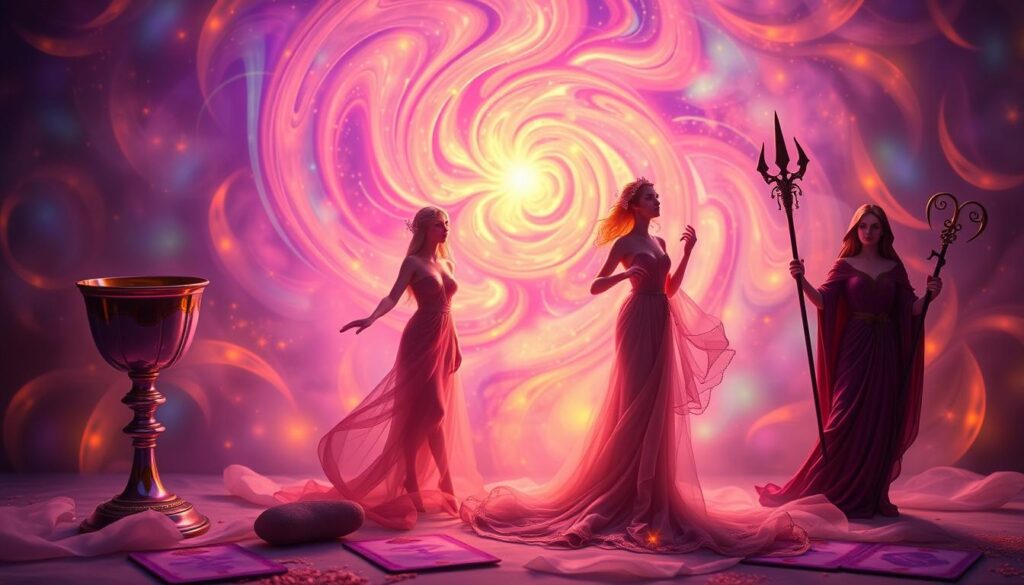
Cups (Water): emotions, relationships, intuition
Cups point to feelings, bonds, and inner knowing. When cups appear often, expect emphasis on compassion or emotional overwhelm.
Swords (Air): ideas, logic, conflict, communication
Swords bring thought, truth, and debate into view. Air clarity helps solve problems, but sharp edges can create friction.
Wands (Fire): energy, creativity, ambition, willpower
Wands signal momentum, drive, and creative spark. Channel that energy into projects and watch for recklessness or impatience.
Pentacles (Earth): body, nature, stability, work, resources
Pentacles anchor readings in the material: money, health, and craft. They invite steady planning and long‑term care of resources.
Read suit balance across spreads: a wands-heavy layout shows momentum, while many cups highlight inner tides. When swords dominate, clarify facts and improve communication. If pentacles lead, tend budgets, routines, and physical health to restore balance.
How tarot readings work: questions, spreads, and meaning in context
A reading begins with a clear question, then unfolds as the deck narrates possibilities. Start by centering breath, naming the issue, and shuffling with intent. That simple start shapes the tone and focus for interpretation.

From shuffling to layout: reading the story between images
Clarify the question, shuffle, and lay the chosen spread. Position gives each card its role.
Look for patterns: repeating suits, dominant imagery, or contrast between energies. These links help build coherent meaning across the spread.
Popular spreads and when to use them
Three-card spreads give quick clarity: Past–Present–Future or Situation–Action–Outcome. Use them for fast decisions.
Celtic Cross offers depth, mapping influences, hopes, and obstacles when a person faces complex choices.
“A spread is not a verdict; it offers prompts that point to choices and next steps.”
| Spread | Cards | Best use |
|---|---|---|
| Three-card | 3 | Quick clarity, daily choices |
| Celtic Cross | 10 | Layered decisions, context |
| Mind-Body-Spirit | 3 | Inner balance work |
Skilled readers guide the querent, offering options and power rather than fixed fate. Adapt spreads to fit timing and aim for clear, actionable meaning.
For practical spread examples, see the Four of Swords guide.
Reversed cards and nuance: shadows, blocks, and alternative expressions
Reversed positions often reveal where energy feels stuck or underused during a reading.
Define reversals simply: a reversed piece may show the same theme muted, blocked, or expressed in an unexpected way.
Practical approach for beginners: you can flip all pieces upright to reduce overwhelm. Still note the shadow side so you learn both light and dark expressions over time.
Consider these examples:
- The Hermit reversed: avoiding reflection or running from needed wisdom.
- The Chariot reversed: scattered focus, misdirected drive, or stalled momentum.
Reversals invite a new perspective rather than doom. Look at surrounding images and the question at hand to shape meaning and timing.
“Reversals are invitations to notice where a pattern is stuck, not automatic warnings.”
Be gentle: frame blocked signals as growth spots. Track reversed appearances in a journal to refine your way of reading over time.

Choosing a tarot deck: Rider-Waite-Smith and beyond
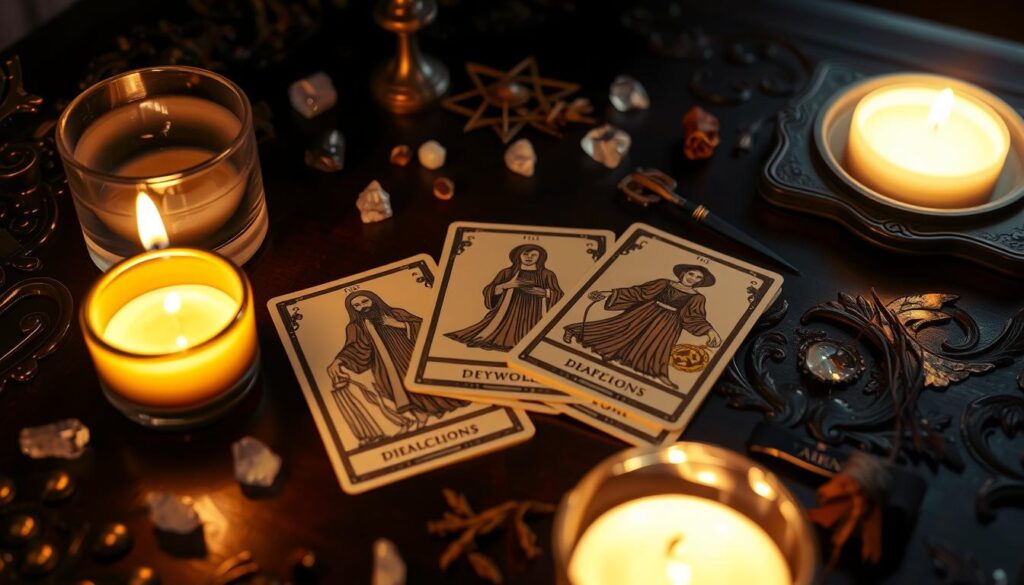
A deck that resonates will speed pattern recognition and deepen meaning in readings. The Rider‑Waite‑Smith (RWS) remains a top recommendation for beginners. Pamela Colman Smith’s clear scenes on the Minor Arcana help people link images to feeling and story without memorizing rigid keywords.
Why imagery matters for learning and practice
Imagery guides intuition. Detailed scenes let you spot narrative threads across cards during a spread. That boosts confidence and helps you learn the deck’s order naturally.
- Start with RWS: beginner‑friendly scenes support intuitive reading.
- Explore themes: Thoth, Hermetic, Wildwood, and pop‑culture decks offer different tones and symbolism.
- Compare guidebooks: card names and sequence sometimes vary; check any deck’s notes before study.
- Practical picks: mind the card stock, size, palette, and how clearly symbols show during spreads.
Begin with one tarot deck you love. As practice grows, add other decks to expand your language. Ultimately, the best deck makes reading clearer, repeatable, and meaningful for the people you serve.
Learning tarot for beginners: build skill, tell the story, read with care
Start by treating study as craft: build skill slowly, tell clear stories, and read with respect for the person before you. Learning grows through steady work and simple daily habits.
Study meanings, journal your readings, and practice spreads
Learn core meanings first — then speak them aloud to shape how you will tell story arcs during sessions. Read notes back to yourself to build fluency.
Journal every session. Record the spread, the question, and outcomes over time so your mind links symbols to real-life events.
Set intention, prepare your space, and engage with the querent
Set a calm tone: breathe, name the aim, and choose a spread that matches scope. Shuffle with the question in mind and invite the person to speak.
Ask clarifying questions and reflect language back. That simple practice centers meaning and keeps the session useful.
Ethical reading: empowerment over prediction
Frame readings as guidance, not fixed outcomes. Avoid giving definitive health, legal, or financial direction. Encourage clients to seek professional help when needed.
“Aim to hand people options and clarity, not fear or certainty.”

| Focus | Action | Why it matters |
|---|---|---|
| Study | Learn keywords, read aloud | Builds clear storytelling and memory |
| Practice | Three-card spreads daily | Improves timing and fluency |
| Ethics | Ask, reflect, empower | Protects client trust and wellbeing |
Track growth by reviewing notes and timing patterns. For a focused look at patience and long-term effort, see the Seven of Pentacles guide.
Conclusion
End with this: meanings grow when images meet context, question, and the reader’s intent. Treat each card as a prompt that links inner signals to clear choices.
The system blends Major Arcana milestones with everyday suit themes — cups, wands, swords, and pentacles — so you can read big turns and routine rhythms. Use the deck to map timing, energy, and the path ahead.
Learn by doing: pick one deck you love, practice simple spreads, and journal notes after each reading. Track repeats and shifts to sharpen skill.
Read ethically: offer options and clarity, not rigid future claims. For a focused look at feelings and pause, try the Four of Cups guide.
Keep exploring. Over time, patterns across cards and suits will help you tell grounded stories that meet people where they are.
FAQ
What does a tarot deck include and how is it structured?
A standard deck has 78 cards split into two groups: 22 Major Arcana and 56 Minor Arcana. The Minor group contains four suits — Cups, Swords, Wands, and Pentacles — each with numbered cards and court cards (Page, Knight, Queen, King). This layout creates a symbolic map useful for self-reflection and storytelling during readings.
How do Major Arcana cards differ from Minor Arcana cards?
Major Arcana cards mark major life themes and turning points, tracing the Fool’s Journey from innocence to completion. Minor Arcana focus on daily events, moods, and practical matters, showing how larger themes play out in work, relationships, and personal growth.
What do the four suits represent in practice?
Each suit aligns with an element and area of life: Cups (Water) for emotions and relationships; Swords (Air) for thought, conflict, and communication; Wands (Fire) for energy, creativity, and ambition; Pentacles (Earth) for resources, work, and material stability. Readers use these cues to ground interpretations.
How does a typical reading proceed from start to finish?
Readings usually begin with a question or intention, followed by shuffling and laying out a spread. The reader interprets cards in position and relation, weaving meanings into a coherent narrative tailored to the querent’s situation. Context matters more than any single card.
Which spreads suit different needs and why?
Short concerns fit a three-card spread (past, present, future). The Celtic Cross works for complex life situations with multiple influences. Choose spreads based on depth needed: simple for clarity, larger for nuance and timeline detail.
What do reversed cards mean during a reading?
Reversals add nuance — they can suggest delays, internal blocks, hidden aspects, or alternative expressions of a card’s upright meaning. Interpretation depends on surrounding cards and the reader’s intent, not just reversal status alone.
How should beginners choose a deck for learning?
Pick imagery that resonates and supports memory. Rider-Waite-Smith remains popular for its clear symbolism, which helps new readers learn meanings and archetypes. Visual clarity and personal connection speed up learning and build confidence.
What steps help someone learn to read effectively?
Study card meanings, keep a journal of readings, practice spreads often, and reflect on outcomes. Set clear intentions before each reading, prepare a focused space, and learn storytelling skills to link cards into meaningful guidance.
How do ethics fit into giving readings to others?
Ethical practice prioritizes empowerment, consent, and boundaries. Avoid deterministic statements, respect privacy, and offer actionable insight rather than fear. Encourage clients to make their own choices informed by the reading.
Can readings predict the future or should they be seen differently?
Readings offer perspective on likely trends, choices, and internal patterns rather than fixed destiny. They illuminate options and potential outcomes so people can act with more awareness. Clarity, not fatalism, is the primary aim.
How do I interpret court cards and numbering in the Minor Arcana?
Numbered cards show a progression from Ace (new beginnings) through Ten (completion). Court cards represent people or personality traits and can signal roles, stages of development, or aspects of the querent. Context and relational placement refine meaning.
What role do symbols, timing, and elements play in readings?
Symbols and elemental correspondences (Water, Air, Fire, Earth) add layers of meaning and help readers connect cards to time, energy, and people. Use them as flexible guides to enrich narratives, not strict rules.