

This brief trend report unpacks how people in the world link a set of old quatrains to recent events and fears. Researchers note that many modern readings point to shifting conflict in Europe, talk of a new plague, extreme hazards in South America, and even claims about papal succession.
Les Prophéties contains 942 quatrains first printed in 1555, but none are date-stamped. Interpreters infer timing after events unfold, which fuels online spread. NASA adds a clear data point: no evidence supports a predicted asteroid impact for this year.
This article steers a friendly, evidence-aware path. We will show which lines people cite, explain why those readings gain traction, and contrast them with verifiable context. For a timeline of popular yearly links, see a detailed roundup here: Nostradamus predictions by year.
Key Takeaways
- Interpretations are often retrospective and poetic, not scientific.
- Popular narratives focus on conflict, disease fears, weather disasters, and leadership claims.
- Primary text is ambiguous; readers should treat specific forecasts with caution.
- Data sources like NASA find no evidence for many doomsday claims.
- This report separates literary analysis from trending online claims to aid clear thinking.
Nostradamus in context: the astrologer, his quatrains, and how 2025 “predictions” are interpreted
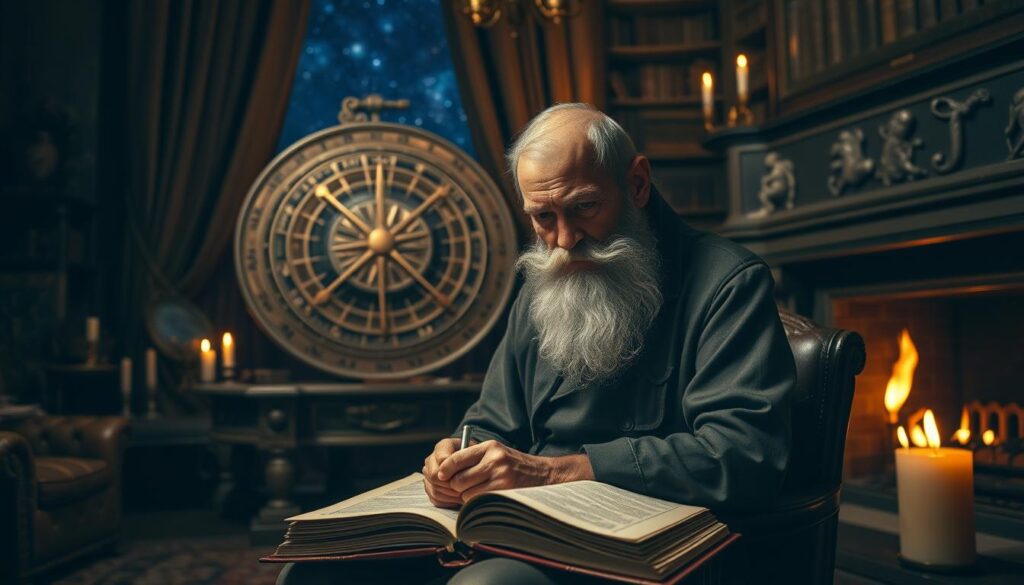
A Renaissance physician and astrologer wrote symbolic verse that keeps readers guessing centuries later. Michel de Nostredame was a man of his era: trained in medicine, versed in celestial charts, and fluent in poetic shorthand.
Les Prophéties is a collection of 942 short poems known as quatrains. These compact verses are symbolic, undated, and not a daily almanac. That form makes tying specific lines to concrete years tricky.
From poetry to “predictions”: methods and bias
Interpreters often use loose translation, keyword-matching, and after‑the‑fact alignment to link lines to major events. This process favors memorable fits over strict evidence.
Once a war, disaster, or political shift occurs, people and media tend to find lines that seem to match. That reinforcement grows a sense of prophetic power.
Why ambiguity matters
Ambiguity allows multiple readings: the same quatrain can apply to different leaders, cities, or lands across years. That openness gives the text lasting cultural power.
- Context first: literary form and translation issues matter.
- Evidence matters: historians warn against literal readings tied to single events.
- Next: we will track specific quatrains and show how links to current events are made and challenged.
What does Nostradamus say about the year 2025: key themes at a glance
Online readings cluster a few recurring themes into dramatic forecasts for the coming year. These themes include a drawn-out conflict shifting due to resource strain, a troubling plague motif tied to parts of Europe, acute natural disasters in South America, and sensational cosmic claims about a fireball.

Predictions clustered around long war, plague, natural disasters, and a cosmic “fireball”
Big narratives: long conflict possibly easing from exhaustion; “cruel wars” and an “ancient plague”; floods, fires, and geohazards in Brazil; and a paraphrased cosmic event often shared without a direct quatrain.
Trend analysis note: interpretations lack scientific proof and are not clearly dated
Quick mapping: many cited lines are loose translations or paraphrases rather than verbatim quotes. Social posts mix literal text with modern labels, which inflates perceived specificity.
- Gut check: climate and natural disasters are real-world risks, but linking them to poetic quatrains is not scientific forecasting.
- Coverage favors sensational things audiences already fear, so virality outpaces accuracy.
- Ambiguity lets single lines fit multiple events; keep a skeptical lens.
We will unpack each theme and weigh claims against verified context in the next sections. For more timeline detail, see predictions 2025.
Through long war all the army exhausted: conflict, money, and the fate of a continent-wide war
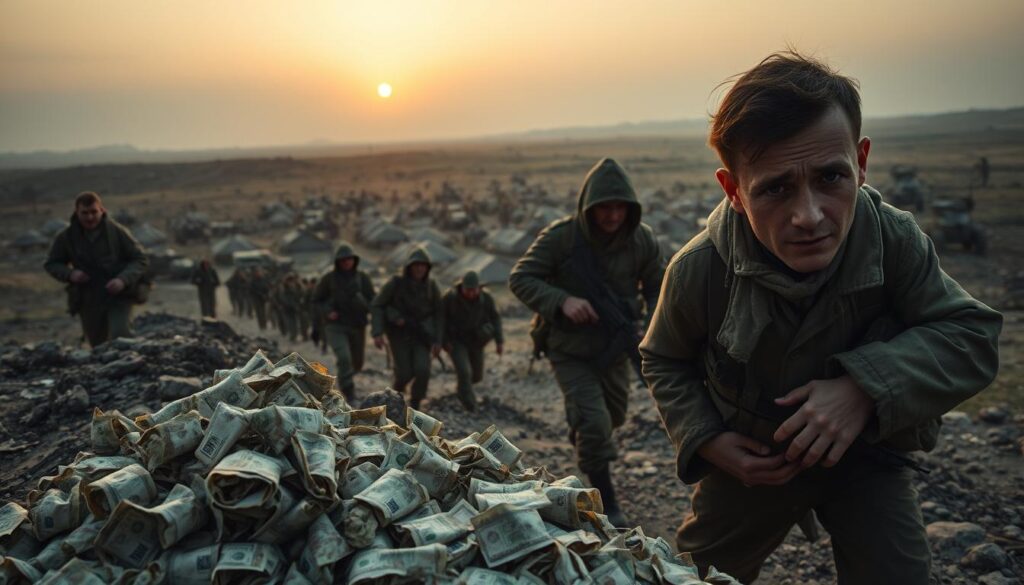
A terse quatrain describes a long war that leaves forces drained and purses empty. Readers and commentators often map that image to Europe’s largest ongoing conflict, highlighting logistics strains and morale issues.
“Through long war all the army exhausted, so that they do not find money for the soldiers; instead of gold or silver, they will come to coin leather, Gallic brass, and the crescent sign of the Moon.”
Monetary metaphors and strained resources
Words like gold, coin, and “coin leather” get read as signs of scarce money. Interpreters see this as a narrative of dwindling funds that can force changes in supply, pay, and strategy.
Gallic brass and diplomatic weight
Gallic brass is commonly taken as a France reference. The brass motif suggests material support or symbolic influence rather than literal metal—France as a backer or broker in any end‑game.
Crescent sign of the Moon and mediation roles
The crescent sign often links to Turkey’s emblem. That tie fuels arguments that Ankara could play a mediation or balancing role if resources push rivals toward talks.
Keep in mind: wars are unpredictable. Resource shortages can nudge parties toward negotiation, or they can harden resolve for more years. Multiple symbolic cues—brass, crescent, and coin—allow flexible, sometimes conflicting readings.
- Mapping risk: tying a quatrain to a specific conflict requires leaps beyond the text.
- Practical point: exhausted army logistics and unpaid soldiers are real pressure points in prolonged war.
- Conclusion: any claim that a de‑escalation will occur in a set year remains speculative and should be weighed with caution.
For related reading on symbolic interpretation and modern claims, see a contextual piece on starseed topics: how to know if you are a Pleiadian.
“The ancient plague will be worse than enemies”: England, Europe, and turmoil versus literal disease
A single quatrain paints a tense picture linking England, unrest, and a returning illness.
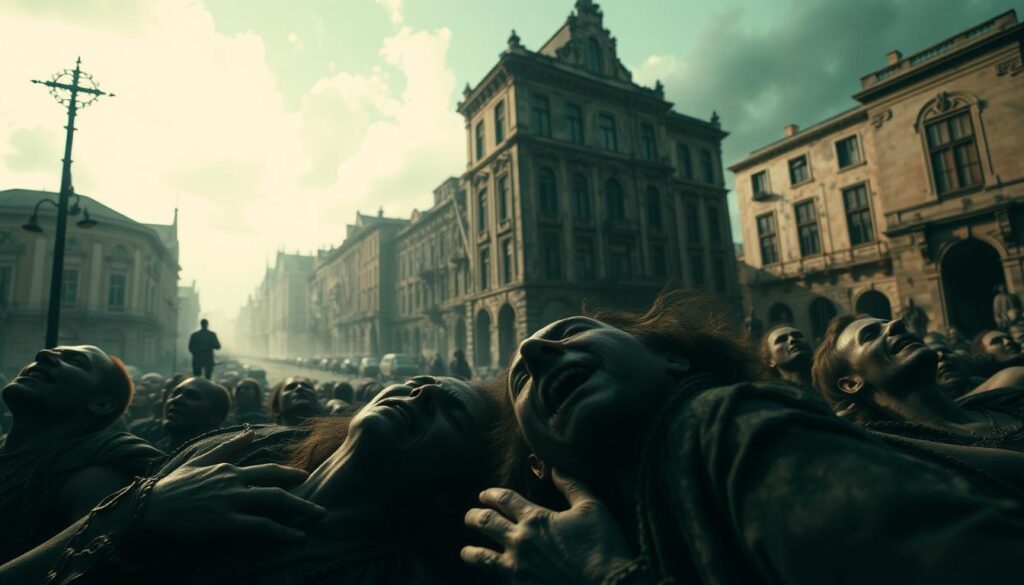
“When those from the lands of Europe / See England set up her throne behind / Her flanks, there will be cruel wars. The ancient plague will be worse than enemies.”
Cruel wars can point to more than battlefield combat. It may describe sharp political fights, culture clashes, or institutional crisis in England rather than open warfare.
Cruel political conflict or literal wars?
Commentators often read cruel wars as intense domestic strife. Parliamentary battles, media clashes, and social protest can all feel like wars to citizens.
Those scenes can produce real policy shifts without traditional military action. That reading keeps the quatrain flexible.
Ancient plague: illness, metaphor, or both?
The phrase ancient plague may refer to resurfacing disease, rising antimicrobial resistance, or a metaphor for social decay.
Readings that say ancient plague worse than enemies amplify fear, yet the verse names no pathogen or timeline.
State of play and cautious context
Health surveillance for this year found no confirmed new plague in the UK by late 2025. That fact tempers alarmist claims that quote plague worse enemies.
England and other lands in Europe monitor outbreaks and death risks closely. Still, poetic lines remain evocative, not diagnostic.
Treat this quatrain as imagery that can describe political conflict or public‑health risk, but avoid mapping it directly onto headlines without evidence. For broader context, see the Nostradamus collection.
“Garden of the world” and the “new city”: Brazil’s Amazon, floods, hollow mountains, and sulfurous waters
A single quatrain ties a lush “garden of the world” to a planned “new city,” and many readers map that image to the Amazon and Brasília. This comparison drives claims linking rivers, floods, and odd geological signs to a dramatic event.

Natural disasters in Brazil: interpreting landscape and urban exposure
Interpreters equate garden world with the Amazon because of its global biodiversity. They read new city as Brasília, a 20th-century planned capital that stands out as a modernist city.
Volcanic rumblings, floods, and sulfurous water readings
Lines about being “plunged into the Tub” become shorthand for catastrophic floods or basin inundation. Mentions of “sulphur” invite volcanic or contamination interpretations.
Scientists note small seismic anomalies near dormant Brazilian volcanoes in recent seasons, but no clear causal chain links those signals to major events at this time.
Monitoring, planning, and separating headlines from verse
Climate extremes raise flood and landslide risk across many Brazilian lands. Yet quatrains are symbolic, not technical forecasts.
City planning, dam management, and basin hydrology shape real outcomes. Environmental agencies use rainfall and seismic time-series to assess risk and issue alerts in real time.
- Mapping: garden world → Amazon; new city → Brasília.
- Risk drivers: heavy rains, deforestation, and infrastructure failure can amplify floods.
- Practical action: rely on monitoring networks and local authorities for event response.
| Element | Quatrain image | Scientific counterpart |
|---|---|---|
| Garden world | Lush, global forest | Amazon Basin — biodiversity, floodplain dynamics |
| New city | Planned capital | Brasília — urban exposure, infrastructure sensitivities |
| Plunged into the Tub | Inundation metaphor | Catastrophic flooding, basin overflow |
| Waters poisoned by sulphur | Contamination/volcanic image | Volcanic gas, contamination, or industrial pollution |
“From the cosmos, a fireball will rise” and the “Aquatic Empire”: asteroid worries, nuclear metaphors, and rising waters
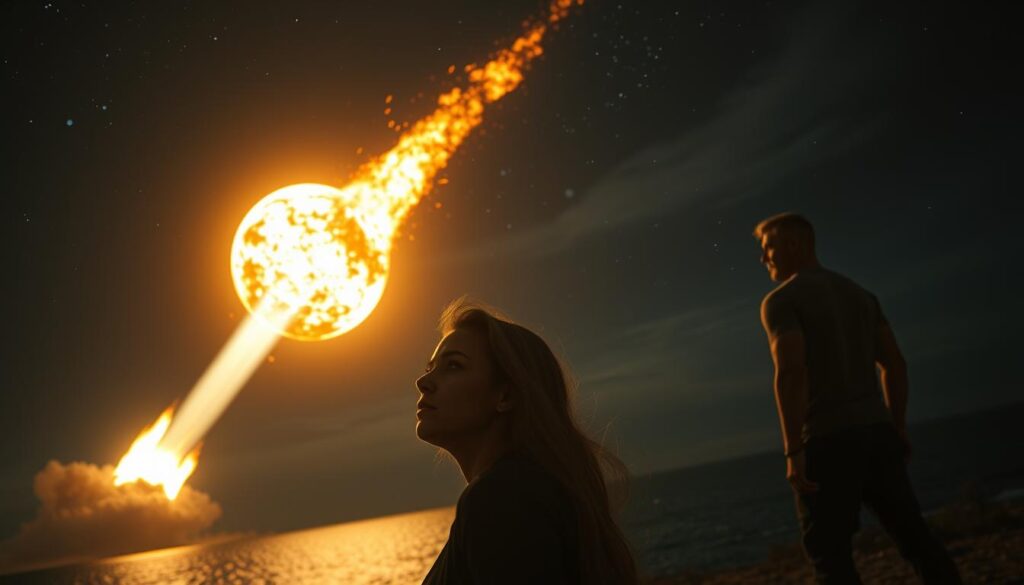
A popular paraphrase about a cosmic fireball blends mythic imagery with modern risk narratives.
That viral line is a tidy summary, not a direct quatrain. Many posts present it as a dated prediction. In reality, it is a modern paraphrase used to stitch together fears.
Asteroid risk and real tracking
NASA’s near‑Earth object program monitors objects and finds no evidence of an impact for this set of years. Official risk dashboards list close approaches, not looming annihilation.
Power metaphors and sky signs
Interpreters debate whether the fireball points to an asteroid, to nuclear power, or to sudden political force. Such metaphors let people fold technical fear into poetic images.
Rivers overflowing and an Aquatic Empire
“Aquatic Empire” gets used to frame floods and sea‑level anxiety. Climate extremes raise real flood risk, but that is different from a prophetic timestamp.
Quick guide: check original text before sharing. Paraphrases and later embellishments spread fast because they feel like a sign.
| Claim | What appears online | Evidence and practical note |
|---|---|---|
| Fireball from sky | Paraphrase framed as imminent end | NASA NEO tracking shows low impact probability; verify with official data |
| Aquatic Empire | Rivers overflowing, coastlines rising | Climate science confirms flood risk; local planning and alerts matter most |
| Cosmic = nuclear | Metaphor linking sky sign to human power | Symbolic reading common; separate metaphors from measurable threats |
Note: comparisons to other seers, such as baba vanga, often follow the same pattern: emotional appeal rather than dated proof. Treat dramatic death imagery and end‑of‑world headlines with caution and check primary sources before sharing.
Papal succession, the City of Seven Hills, and accuracy debates around 2025 prophecies
Claims linking papal transition to a single quatrain often mix literal reading with modern anxieties. Interpreters point to lines like “Through the death of a very old pontiff… a Roman of good age will be elected” and tie them to Rome and leadership shifts.

Why historians stress caution: post‑event pattern‑finding and selective quoting
Short lines invite long readings. Quatrains are brief and symbolic, and readers can retrofit meaning after a change occurs.
“Through the death of a very old pontiff… a Roman of good age will be elected”
Talk of a final pope or a decisive passage is debated. City imagery — especially the City of Seven Hills — encourages sweeping conclusions that may exceed the text.
Popular posts often mix a 16th‑century astrologer with modern mystics, naming baba vanga alongside older quatrains to boost perceived accuracy.
- Death and succession: leadership shifts in Rome become focal points for viral narratives.
- City symbolism: Rome as a motif makes broad claims feel concrete.
- Historian cautions: selective quoting and confirmation bias shape many viral threads across lands europe and beyond.
Bottom line: looking to the future during uncertain years is natural, but drawing fixed conclusions from symbolic poems remains methodologically weak.
Conclusion
Popular threads tie a handful of vivid quatrains to current crises, yet most links rest on broad metaphor rather than fixed dates. Many cited predictions cluster around long war, disease, natural disaster, and a dramatic cosmic ending.
The long war reading suggests pressure toward an eventual end, but ongoing conflict and shifting logistics show timelines remain uncertain. Readers should separate poetic verse from real‑time evidence and follow official monitoring for real risks.
Enjoy interpretations as cultural artifacts, not literal forecasts. Public fascination rises when a city, a leader, or a dramatic sign feels timely, and comparisons to baba vanga join the media mix more than they add proof.
For further context and related predictions, stay curious and cautious: use data to prepare, not panic, and know that choices shape the future and any hopeful or fearful end.
FAQ
Who was Michel de Nostradamus and why are his quatrains still cited for 2025 predictions?
Michel de Nostradamus was a 16th‑century French apothecary and astrologer who published Les Prophéties, a book of quatrains. Modern readers and commentators often project current events onto those lines. His verses are poetic, symbolic, and open to many interpretations, which is why they keep resurfacing in discussions about future years.
How do scholars interpret his references to war, plague, and cosmic signs?
Historians treat those references as ambiguous metaphors rather than precise forecasts. Phrases about long wars, ancient plagues, or a crescent sign of the moon are read through cultural and political lenses. Academic consensus stresses caution: many lines were written to be vague, allowing broad application across centuries.
Are there specific quatrains that mention themes like a long war, exhausted armies, or depleted money?
Yes, several quatrains contain imagery of exhausted soldiers, scarce coin, and regional conflict. Readers often link those passages to contemporary campaigns or economic strain. Still, the quatrains lack dates and clear locations, so direct ties to particular modern conflicts remain speculative.
Do any quatrains point to Britain or England facing cruel wars or political turmoil?
Some interpreters cite verses they believe reference England or its rulers, reading “cruel wars” as political or civil strife. Those readings mix historical context with present concerns; historians note the same language could describe many kinds of upheaval over centuries rather than a specific national fate.
Is there a quatrain that suggests an “ancient plague” worse than enemies?
A few quatrains use imagery of pestilence and recurring disease. Interpreters debate whether this means literal infectious outbreaks, recurring social breakdown, or metaphors for economic or moral collapse. Scientific public‑health assessment remains the reliable source for actual disease risk.
How are natural disasters and environmental warnings handled in his verses about Brazil, floods, or sulfurous waters?
Quatrains mentioning gardens, hollow mountains, or sulfurous waters are often linked to South American events by modern analysts. Those connections are interpretive. Climate scientists and geologists use data and monitoring to assess real environmental threats rather than poetic lines.
Do any verses warn of a cosmic fireball, asteroids, or rising seas linked to an “Aquatic Empire”?
Some translations use fiery or aquatic imagery that readers equate with asteroid strikes or sea‑level rise. Space agencies such as NASA monitor near‑Earth objects and issue evidence‑based risk assessments. Climate and oceanographers track sea changes; poetic alerts do not replace scientific surveillance.
Are predictions about papal succession and the City of Seven Hills credible for modern timelines?
Verses mentioning popes and Rome have fueled speculation about papal succession for centuries. Scholars emphasize that prophetic lines often reflect contemporary religious anxieties from Nostradamus’s era. They rarely provide verifiable timelines for modern ecclesiastical events.
How do historians and skeptics explain the apparent accuracy of some post‑event interpretations?
Historians point to hindsight bias and selective quoting. After an event, readers often match vague quatrains to details and ignore contradictory lines. This pattern‑finding is common with prophetic texts and reduces the strength of claims that the verses predicted specific modern events.
Can quatrains reliably predict geopolitical shifts, such as conflict between France and Turkey or continental wars?
Quatrains contain military imagery and occasional regional references like “Gallic brass” or crescent symbols. Still, their lack of precise dating and symbolic nature mean they cannot reliably forecast geopolitical shifts. Contemporary intelligence and diplomatic analysis are the proper sources for such predictions.
What role do other mystics, like Baba Vanga, play in shaping 2025‑centered narratives?
Figures like Baba Vanga contribute separate prophetic traditions that media and social platforms sometimes weave into the same narratives. Combining multiple prophetic sources amplifies speculation but does not increase predictive accuracy. Rely on vetted experts for risk assessment.
Where should readers look for dependable information on pandemics, wars, and natural disasters?
Trust established institutions: the World Health Organization and national public‑health agencies for disease; the United Nations and reputable think tanks for conflict analysis; and NOAA, NASA, and peer‑reviewed climate science for environmental threats. These organizations use data, models, and peer review.
How can someone separate sensational headlines from grounded analysis when quatrains are cited?
Check primary sources, prefer expert commentary, and watch for unfalsifiable claims. Sensational takes often omit uncertainty or use selective translation. Balanced reporting will cite historians, scientists, and clear evidence rather than relying solely on vague prophetic lines.