

What makes this system steady and simple to learn starts with its fixed structure. A complete tarot deck holds 78 pieces. That steady total splits into 22 Major Arcana and 56 Minor Arcana.
The Major set frames the archetypal lessons and maps the Fool’s journey from fresh start to completion. The Minor set breaks daily life into four elemental suits: Wands, Cups, Swords, and Pentacles.
For beginners, the goal is not to memorize every meaning at once. Learn one card at a time. Let the storylike flow guide your study and offer practical guidance when you pull a card.
Tarot began as 15th-century playing cards but now serves reflection and insight. Start with the basic structure first. Recognizing suits, numbers, and Majors versus Minors speeds learning and deepens each card’s meaning over time.
Key Takeaways
- A full tarot deck contains 78 cards split into Majors and Minors.
- Major Arcana tells the Fool’s journey of core life lessons.
- Minor Arcana covers daily matters across four elemental suits.
- Build familiarity bit by bit; short, regular practice helps.
- Even a single pull can offer clear, timely guidance.
Tarot Deck Structure at a Glance
Start with the numbers: the canonical composition gives every set a familiar backbone. A true tarot deck holds 78 pieces: 22 Major Arcana and 56 Minor Arcana. That split is what helps readers spot themes fast.

The standard 78-card framework
The 56 Minor Arcana break into four suits of 14 each. Each suit contains numbered pips from Ace through Ten plus four court figures: Page, Knight, Queen, King. The 22 Major Arcana act as headline archetypes that mark big shifts and turning points.
Why this structure matters and historic notes
Early Italian playing packs shaped this format over time. A few experiments existed—one 70-piece set appeared in 1457 Ferrara—but the 78 form became dominant. That history explains why modern readers can rely on a steady model across most decks.
How oracle decks differ
Oracle decks vary widely. They often lack suits and fixed counts, so totals and categories differ. Checking the number of cards is a fast way to tell whether you have a tarot deck or another kind of pack.
- Quick audit: Verify 78 pieces to confirm a classic tarot deck.
- Learn the four suits: recognizing them speeds interpretation of recurring elemental themes.
- Use structure as a guide: Major Arcana = big life moments; Minor Arcana = daily details.
For practice, try short pulls and note which arcana cards appear. See related practice tips at Eight of Pentacles guidance to build confidence with cards used in readings.
Major Arcana: The Fool’s Journey and Life’s Big Themes
Think of the Major Arcana as headline scenes in an unfolding life story. These 22 archetypes form the spine that charts growth, challenge, and integration.
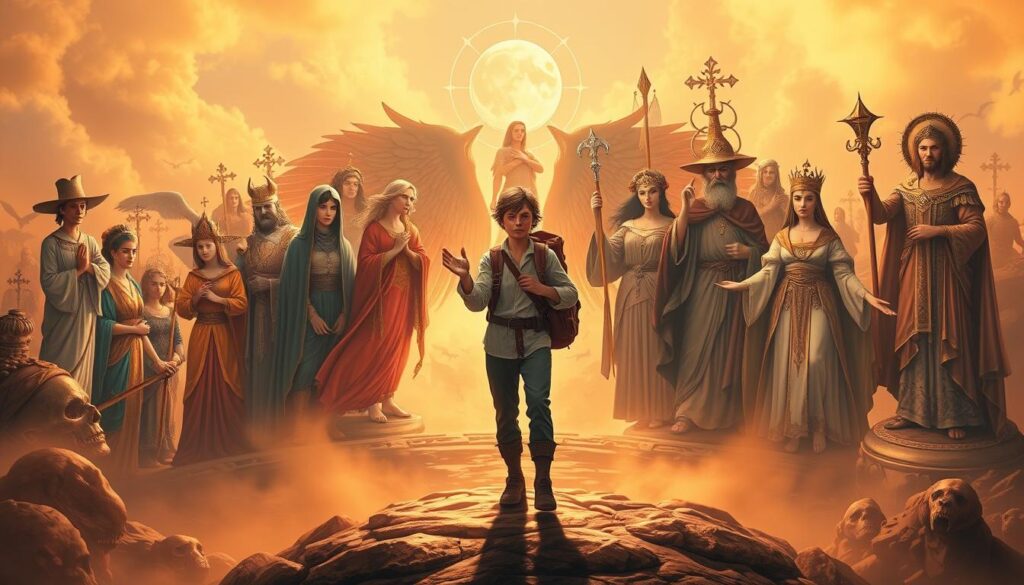
The 22 archetypes from The Fool to The World
Major arcana present major lessons across life. Each image reads like a chapter: The Magician shows focused power, The High Priestess invites inner wisdom, Justice speaks to truth and balance.
New beginnings, change, and completion: sample meanings
The Fool (upright) signals innocence and new beginnings; reversed, it can warn of recklessness.
Death (upright) marks ending and transformation; reversed, it suggests stagnation or delay.
The World (upright) means fulfillment and closure; reversed, it can point to incomplete cycles.
When readings use only Major Arcana for core guidance
Readers sometimes pull only arcana cards to spotlight identity shifts, crossroads, or long-range direction. This method highlights big themes over daily detail.
Tip: Track recurring cards and trust your intuition alongside learned meanings. The Majors often spark personal insight and gentle inspiration.
Minor Arcana: The Four Suits and Everyday Stories
The Minor Arcana tell everyday stories through four elemental suits that mirror daily life. Numbered pips and court figures map practical ebb and flow. They show how small cycles of change unfold from start to finish.
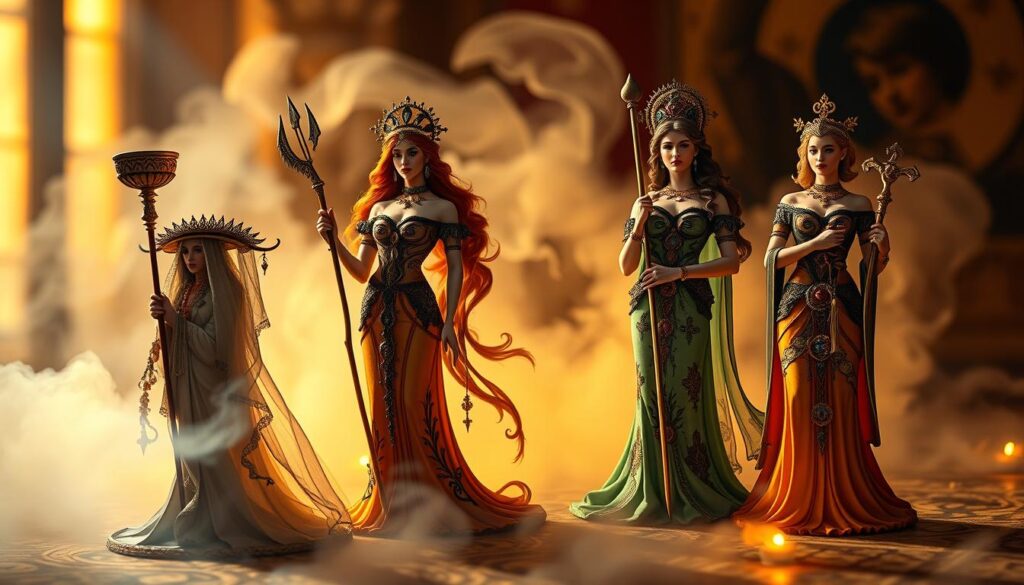
Wands: fire and forward motion
Wands spark creativity, will, and passion. They signal initiative, bold plans, and new energy.
Watch the downside: too much fire brings haste or scattered effort.
Cups: emotion and connection
Cups cover feelings, relationships, intuition, and love. They invite empathy and healing.
Caution: Cups can float into fantasy or avoidance if ungrounded.
Swords: thought, truth, and talk
Swords mark ideas, analysis, truth, and communication. They help clarify intent and reveal conflict.
Balance is key: sharp thought may turn harsh without heart.
Pentacles: earth, work, and resources
Pentacles focus on material life, stability, work, and prosperity. They show practical steps and long-term gain.
Mind the trap: too much focus on gain can feel greedy or rigid.
“Pair suit and number to read nuance: Aces begin a current; tens show a cycle’s completion.”
- Tip: Study the art and track repeating suits to see which area of life needs attention.
Court Cards and Pip Cards: Pages through Kings and Aces through Tens
Court figures and numbered pips work together to map stages, roles, and momentum across each suit.
The 14 pieces in every suit split into ten pip entries (Ace through Ten) and four courts: Page, Knight, Queen, King. Pip entries show a clear progression. They mark starts, tests, and completion along a theme.

Understanding Pages, Knights, Queens, and Kings in readings
Pages and Aces bring fresh starts and curiosity. Mid-numbered pips highlight challenges and growth. Nines and Tens point to maturity or completion.
Court figures can name people or inner roles. Pages learn, Knights move, Queens integrate, Kings direct. Courts also describe style: a Knight of Swords cuts to the point, a Queen of Cups leads with empathy.
- Scan spreads for clusters: many courts suggest group dynamics; many pips show step-by-step progress.
- Ask whether the court represents a person or an attitude to adopt or release; that question unlocks meaning.
| Role | Action | Suit Tone |
|---|---|---|
| Page | Learner, new spark | Page of Wands = experiment |
| Knight | Pursues, pushes | Knight of Cups = follows heart |
| Queen | Holds, integrates | Queen of Swords = clear communicator |
| King | Leads, stabilizes | King of Pentacles = builds lasting stability |
Tip: Across the minor arcana and four suits, this repeated pattern makes learning predictable. For more technique on reading conflict and timing, see Four of Swords guide.
Names, History, and Variations Across Decks
Across time, the same basic structure held firm even as uses shifted from play to reflection. The set began as 15th-century Italian playing packs. Over time the pattern settled: 22 trumps plus four suits of 14 each for a total of 78 pieces.
Early experiments existed. For example, a 1457 Ferrara pack showed 70 pieces. By the Renaissance the 78 form became common and resilient.
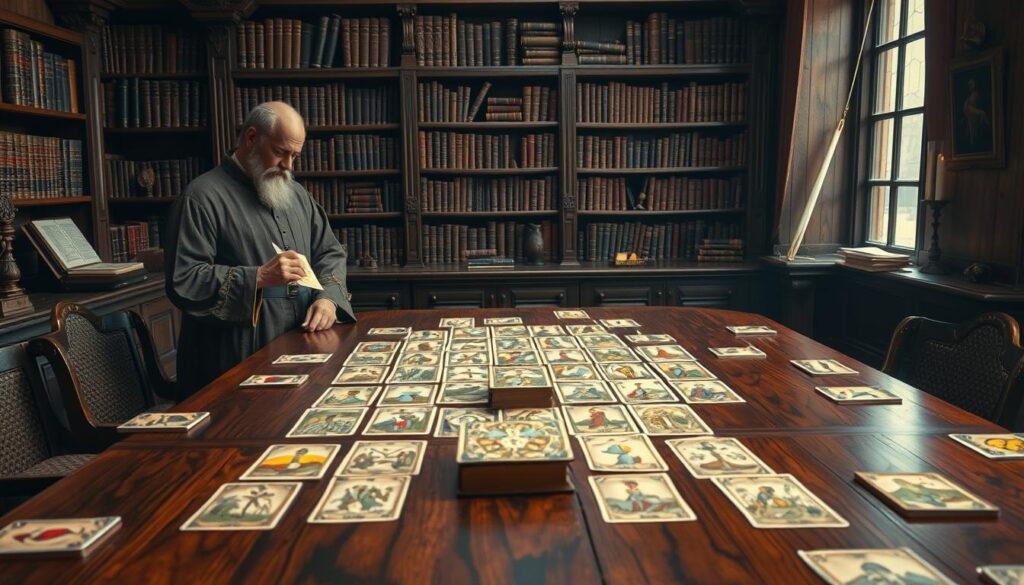
Names, art, and regional shifts
Across regions, suit titles and court names vary. Pentacles may appear as Coins, Pages might read Princess, and suit imagery shifts with local art. Yet the positions and meanings stay equivalent.
The Major Arcana remains a constant thread worldwide. Even when iconography changes, those 22 trumps still mark the core journey and big life themes readers watch for.
- Playful roots: In parts of Europe the pack still serves for playing, not just divination.
- Visual variety: Different art styles help readers learn by comparing two or three decks side by side.
- Stable structure: Despite renaming or small tweaks, the backbone helps translate meanings between decks.
“Knowing where the set came from adds useful context and confidence to present readings.”
For deeper notes on conflict and interpretation, see the Five of Swords guide.
How many card in a tarot deck for beginners: practice, spreads, and intuition
Begin your practice with tiny, regular pulls that teach rhythm and build trust in your instincts. Start with one-card draws each morning to set a focus for the day. Short practice sessions reduce pressure and help your intuition grow.
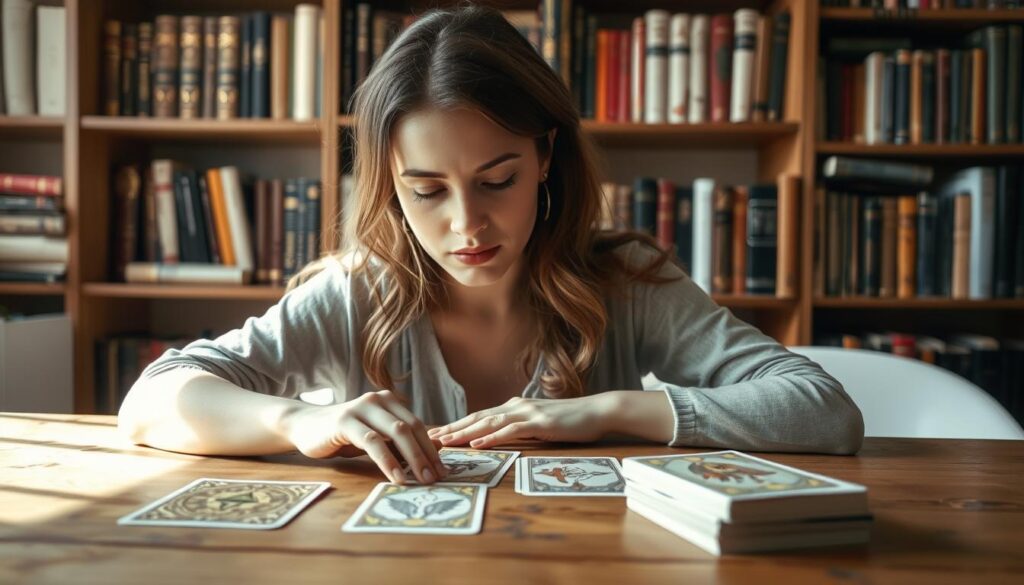
Getting started: single pulls, three-card spreads, and timing your readings
Try a classic three-card layout for quick context: past, present, future. This spread answers a clear question with simple structure.
Tip: Keep timing steady. A calm morning or quiet evening works best for reflective readings.
Reading reversals or not: energy blocks, delays, and perspective shifts
Reversals can flag blocked energy, delays, or inner conflict. They are optional—feel free to flip them upright if that suits your method.
“Short, repeated practice builds skill faster than long, sporadic sessions.”
- Journal each draw: date, spread, deck, first impressions, and the question.
- Blend learned meanings with gut sense for clearer guidance and growth.
- Note repeating suits: many Swords suggest clearer talk; frequent Cups invite love-centered choices.
| Practice | Spread | When | Focus |
|---|---|---|---|
| Single pull | One-card | Daily | Set an intention |
| Short ritual | Three-card | Weekly | Past-present-future |
| Deep read | Expanded spread | As needed | Choices and timing |
| Review | Journal check | Monthly | Track growth |
For more focused practice and notes on pace and patience, see Seven of Pentacles guidance.
Conclusion
,Remember the stable structure: 78 items form the whole, split between big-archetype majors and everyday minors.
Recap: A full tarot deck has 78 cards — 22 majors for sweeping themes and 56 minors for daily nuance. This steady frame helps you learn and trust the system.
Meanings grow clearer with steady practice. Short, focused readings build fluency and sharpen intuition. Let each pull teach you, not overwhelm you.
Art and names may change across decks, but the shared structure keeps readings useful and transferable. For gentle practice, try the Four of Cups guide to refine feeling-based insight.
Look ahead with curiosity: pair knowledge with heart, welcome inspiration and love, and let small pulls shift your life step by step.
FAQ
What is the total number of cards in a standard tarot deck?
A standard deck contains 78 cards split into two main groups: 22 Major Arcana and 56 Minor Arcana. The Major Arcana track major life themes and archetypes, while the Minor Arcana tell everyday stories through four suits.
What distinguishes Major Arcana from other cards?
Major Arcana cards represent big turning points and deep life lessons. They run from The Fool through The World and often signal major shifts, endings, or fresh starts during readings.
Why would a reader use only Major Arcana?
Some readers pull only these archetypes to focus on core guidance and long-term themes. That approach highlights destiny, soul lessons, or major milestones without daily details.
What are the four Minor Arcana suits and their meanings?
The four suits—Wands, Cups, Swords, and Pentacles—map to elements and life areas. Wands reflect creativity and action; Cups cover emotions and relationships; Swords deal with thoughts, truth, and conflict; Pentacles relate to work, stability, and material concerns.
How do court and pip cards function in readings?
Court cards (Pages, Knights, Queens, Kings) often represent people, personalities, or roles. Pips (Aces through Tens) describe situations, developments, and cycles—from new beginnings with Aces to completion with Tens.
How does tarot differ from oracle decks?
Tarot follows a consistent structure and symbolism across the 78 cards, which helps with traditional spreads and study. Oracle decks vary widely in count and themes, offering looser, more intuitive guidance without a fixed system.
What are some common sample meanings from Major Arcana?
Sample themes include The Fool for new beginnings and taking a leap, Death for transformation and endings that lead to renewal, and The World for completion, achievement, and integration.
How should beginners start practicing readings?
Start small: draw a single card daily to build familiarity, use three-card spreads for past-present-future, and track readings in a journal. Focus on intuition and gradual learning rather than memorizing every meaning at once.
Should I read cards upright and reversed?
Reversals can indicate blocked energy, delays, or internalized lessons, but some readers skip them to keep interpretations simpler. Try both methods and choose what feels clearest for your practice.
Where did tarot originate and how have decks changed?
Tarot evolved from 15th-century European playing cards and adapted into a divination tool over centuries. Modern decks vary in art and emphasis, with many artists and publishers—such as Rider–Waite and Thoth—shaping how symbolism appears today.