

Ready to try magic at the table? This friendly, step-by-step guide shows you how to cast your first spells with confidence.
We start simple. You’ll learn what a spell is, which words and gestures matter, and the basic things you need to cast without second-guessing yourself.
Each concept links to how it affects a character or a creature on the field. You’ll see what changes when a spell takes effect and what stays the same.
We also explain where your energy budget comes from and how often you can use a spell. That helps you plan a whole adventuring day with clearer choices.
For a short primer on related systems and tools, check this helpful resource about readings and cards at tarot basics.
Key Takeaways
- Learn the core building blocks: words, gestures, and simple gear.
- Understand how magic changes a character or a creature in play.
- Track your energy so you can plan spells across the day.
- Avoid common beginner pitfalls with easy checkpoints.
- Start with a small list of reliable options for first sessions.
Start here: casting spells basics for new casters
Think of casting as following a precise ritual that channels magic into a predictable result. A spell is a short, listed effect. Each entry shows casting time, range, components, and duration.
Spell components explained: verbal words, somatic gestures, and material tools
Verbal needs audible words, so silence or a gag stops it. Somatic needs at least one free hand for gestures. Material lists objects; a pouch or focus replaces most, but costly or consumed items must be provided.

Casting time, actions, bonus actions, and reactions in play
Most casts use one action. Some use a bonus action, which limits other spell options that turn. Reactions trigger on specific events. Long rituals take minutes and need steady concentration.
| Component | What blocks it | Quick fix |
|---|---|---|
| Verbal | Silence, gag | Choose nonverbal spell |
| Somatic | No free hand | Sheathe or drop an object |
| Material | Costly/consumed item missing | Carry a pouch or buy item |
When a spell targets a creature, pick that being. When it targets a point, mark a precise spot—effects often expand from there. For ritual flavor and ideas about ritual tools and timing, see a short primer on card readings at tarot card meanings.
Tip: Watch your energy and choose the right casting time for the moment.
Beginner spells to learn first
Your first list should focus on repeatable attacks, quick defenses, and everyday utilities.

Simple damage and control
Cantrips are free at will. Pick a small fire burst for scorch damage, a force bolt for steady hits, and a mind-jolt that taxes a hostile mind. These define your baseline each round without costing slots.
Protection and wards
Have one instant shield that raises defense at the right time and a barrier that forms a short-lived abjuration bubble. These protect a character or a group when danger spikes.
Utility and movement
Add a lasting light source, a mage-hand style tool to move objects, and a simple grab-or-tidy trick. These save time and solve many exploration problems.
Stabilize and heal
Include a basic stabilize touch and a small heal. Survivability is the best beginner power; these keep allies in the fight until stronger options arrive.
- Visualize a point or sphere so effects hit foes, not others.
- Mix instant reactions with steady options for flexible play.
How spells work: levels, slots, and scaling power
Spell levels and limited slots are the backbone of how magic performs in play. Every spell has a level from 0 to 9. Level 0 cantrips are free to cast at will and fuel many rounds when your higher options are gone.
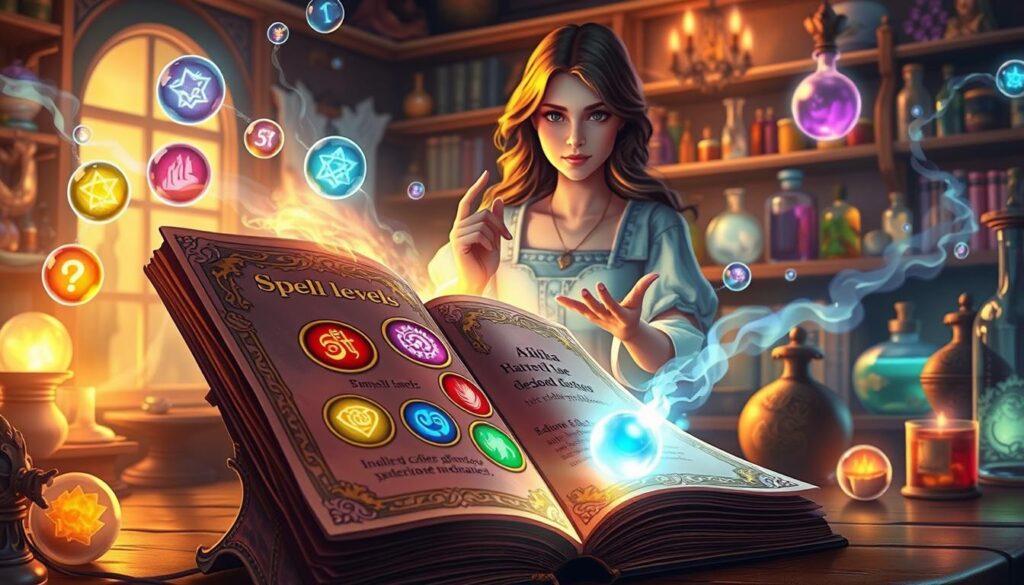
Managing slots: Your character gains a set number of slots that refresh on a long rest. Casting a spell uses a slot of that level or any higher slot you choose to spend. Track this resource so you have the right option at the right point in an adventure.
Upcasting and outcomes
Using a higher slot often increases damage, adds targets, or extends duration. Check each spell entry to see what improves when you upcast.
| Type | Level/Use | Effect of Upcast |
|---|---|---|
| Cantrip | 0 — at will | No slot cost; scales with level for damage |
| Low-level spell | 1–3 | Commonly adds dice or duration when upcast |
| High-level spell | 4–9 | Stronger effects, larger area, or unique gains |
When a spell calls for a saving throw, the DC is 8 + your casting stat modifier + proficiency. Attack rolls add casting stat and proficiency to hit. Also, if you wear armor, be sure you have proficiency so your cast is not penalized.
For tips on timing and focus during longer rituals, see this guide to improving readings and timing: improve psychic readings.
Safety, rules, and ethics when you cast
Prioritize focus and ethics: both the game rules and group consent matter for ongoing effects.
Concentration basics: Many ongoing spells require concentration. Concentration ends if you cast another concentration effect, if you become incapacitated or die, or if you fail a Constitution saving throw after taking damage.
The save DC is 10 or half the damage taken, whichever is higher. If you take several hits, make a separate roll for each source. That makes protecting your position and choosing a safer point to cast very valuable.

Environmental checks and longer casting
Some hazards — crashing waves, winds, or violent upheaval — force a DC 10 Constitution check even without direct damage. Spells with long casting time need uninterrupted attention; ask allies to cover you so a creature can’t break your setup.
Ethics and table safety
Influence effects can remove choice. Using enchantments on people or others without consent crosses clear lines that many groups avoid.
- Be transparent about themes like compulsion or glamour.
- If you wear armor, ensure proficiency or your casting may be hindered.
- Budget energy and time: dropping concentration to start a new spell is a real cost.
For deeper study on responsible practice and related skills, see a short guide on how to become a psychic healer.
Quick-start list of spells by situation
This quick-start list groups reliable options by situation so you can pick a casting plan fast.

Combat and creatures: single-target hits, lines, cones, and sphere effects
Choose a precise attack when one creature is tough: pick a spell that needs an attack roll if your bonus is high. Use saving-throw spells when foes have weak saves.
For groups, use lines to cut straight through ranks, cones to fan out from you, and spheres that bloom from a point to catch several targets.
Defense on the fly: reactions that save your character’s turn
Reactions work between turns. A timed shield or similar reaction can turn a hit into a miss and preserve your next action.
Exploration and objects: light, detection, and moving things at a distance
Use light to banish darkness, detection to find hidden objects, and a mage-hand style effect to move things safely from the far side of a trap.
Social and the mind: enchantments that influence others
Mind-focused magic affects people directly; use calming words and subtle effects ethically and only with group consent.
Downtime rituals: longer casting time, no slot, maximum value
Rituals take extra time (usually +10 minutes), use no slot, and cannot be upcast. You must know or have the spell prepared per class rules to cast it as a ritual. Always check line-of-sight: if you can’t see the chosen point, the origin shifts to the near side of the obstruction.
Remember the core formulas: save DC = 8 + spellcasting modifier + proficiency; attack adds your spellcasting ability + proficiency. For a quick primer on related reading tools, see tarot card reading basics.
Conclusion
With basics in hand, you can match a casting to the scene and act with clear intent. Pick the right magic for the moment, aim at the correct point, and keep your choices simple and deliberate.
,You now see how a spell fits together — from words and gestures to gear and timing — so you can choose what helps your character most. Learn to read entries fast and spot when a small option outperforms a big one.
Default to a cantrip when slots run low and save bigger magic for a key creature or obstacle. Mind concentration and use reactions to protect the team so your point of impact stays effective.
Enjoy the practice. As you cast more, your timing, resource sense, and table communication will improve. For more related guidance, try an online psychic resource to expand ritual ideas.
FAQ
What do beginners need to know before they cast their first spell?
Start with the basics: learn the verbal phrases, hand motions, and any material items required. Understand casting time — whether the effect needs an action, bonus action, reaction, or a longer ritual. Practice simple techniques like pointing and clear enunciation so you can perform reliably under pressure.
How do verbal, somatic, and material components affect a casting?
A verbal line must be spoken clearly; a somatic motion requires a free hand to gesture; a material item must be present unless you have an access trait that removes the need. Missing one component usually prevents successful execution, so prepare a focus item or pouch with common reagents.
What’s the difference between an action, bonus action, and reaction?
An action is the main thing you do on your turn, like launching an attack. A bonus action is an extra limited use ability you can only take when specified. A reaction happens outside your turn in response to a trigger. Knowing these helps you sequence abilities and maximize each round.
Which early effects should new casters learn first?
Pick versatile basics: a reliable single-target strike, a small protection effect, and a utility trick for exploration. These cover combat, defense, and everyday problems — for example, a simple damaging bolt, a short-term shield, and a light or telekinesis-style aid.
How do cantrips differ from higher-level effects?
Cantrips scale automatically as you gain levels and consume no slots. Higher-level effects require limited resources called slots and often get stronger when cast with higher slots. Use cantrips for consistent damage and save slots for critical moments.
What are spell slots and how should I manage them?
Slots are your expendable pool of power that replenish on a long rest or through specific features. Track usage, prioritize situation-critical casts, and lean on cantrips or rituals for routine tasks to stretch your resources across an adventuring day.
When should I upcast a spell for better results?
Upcast when the encounter stakes justify greater impact — to add extra targets, increase damage, or extend duration. Consider resource cost versus benefit: spending a higher-level slot is worth it for clutch moments or when the multiplier scales effectively.
How does concentration work while maintaining an effect?
Concentration requires focus; taking damage forces a saving throw to maintain it. You can only concentrate on one ongoing effect at a time. Avoid risky positioning and use cover or protective abilities to reduce the chance of losing focus.
What immediate defenses can save a character mid-combat?
Reactions and short-duration barriers are key: instant shields, interrupting moves, and forced retreats can flip an exchange. Keep at least one reactive option ready and use positioning to create safe windows for recovery.
Which tools help exploration and object interaction from distance?
Lightweight manipulation and detection effects let you illuminate, inspect, and retrieve items without putting yourself in danger. Carry a small focus and a handful of versatile reagents to handle locks, traps, or dark areas efficiently.
How do mind-influencing effects differ from physical ones?
Mind-affecting techniques target thoughts and emotions and often require saves tied to mental stats. They can be subtle and strong in social scenes but may provoke resistance and ethical concerns. Use them carefully to avoid long-term consequences.
What are rituals and when should I use them?
Rituals take longer to perform but don’t spend a slot. Use them for non-urgent tasks like long-range detection, identifying items, or setting up protective wards during downtime. They deliver high value when you have time and need to conserve slots.
What safety and ethical rules should guide a caster’s choices?
Respect consent when influencing minds, avoid reckless use of destructive effects near civilians, and follow group or campaign guidelines. Prioritize safety for allies and innocents, and use protective measures to limit collateral harm.
How do area shapes like cone, line, and sphere affect targeting?
Shape determines coverage: cones spread outward, lines affect narrow corridors, and spheres center on a point for even distribution. Choose the shape that maximizes impact on foes while minimizing friendly fire.
What’s a quick way to build a useful list of abilities by situation?
Categorize by combat, defense, exploration, social interaction, and downtime. Pick one or two reliable tools per category so you can adapt quickly—damage option for fights, a reaction for defense, a detection tool for exploring, a subtle influence for social, and a ritual for downtime tasks.