

Ingo Swann rose from Telluride, Colorado, to become a central figure in a CIA-funded program that tested human perception. He coined the term remote viewing to describe sensing distant people, places, or events without physical contact.
His work pushed scientists to rethink how consciousness might interact with the physical world. At the Stanford Research Institute in the 1970s, many people studied his claimed clairvoyant feats. These sessions aimed to measure how the mind could reach beyond the body and report on unseen targets.
Swann’s life challenged norms and opened debate about human potential. His unique ability and related abilities still influence modern conversations on mind and reality. For a focused profile and timeline, see the detailed page at Ingo Swann overview.
Key Takeaways
- Swann helped coin the term remote viewing and led field tests in the 1970s.
- His work linked consciousness to measurable effects beyond the body.
- Stanford Research Institute formally investigated his claims.
- Many people remain intrigued by his reported clairvoyant results.
- His legacy shapes ongoing debate on the mind’s potential.
The Life and Origins of Ingo Swann
A childhood episode in 1936 shaped a lifelong path. During a tonsil removal at age three, he later claimed his first out-of-body experience. That memory became a recurring part of his public story.

Years later, in 1972, he took part in a controlled out-of-body test at the American Society for Psychical Research. In that session he tried to describe objects placed on a shelf. These early events fed into his methodical approach to viewing targets at a distance.
Early Out-of-Body Experiences
He credited Scientology auditing with helping him reach the level of Operating Thetan. That training, he said, supported more controlled exteriorization from the body. Such claims feature throughout his book, Penetration, which shares many personal anecdotes.
The Development of Remote Viewing
In the 1970s, researchers Russell Targ and Harold Puthoff formalized protocols with him at the Stanford Research Institute. Their collaborations turned private practice into repeatable experiments that attracted wider interest.
- Milestone: First reported out-of-body event at age three.
- Test: 1972 controlled experiment describing shelf objects.
- Publication: Autobiography detailing his training and story.
| Year | Event | Key People |
|---|---|---|
| 1936 | First claimed out-of-body episode | Family accounts |
| 1972 | Controlled out-of-body test at ASPR | ASPR experimenters |
| 1970s | Formal remote viewing protocols at SRI | Russell Targ, Harold Puthoff |
For more on applied protocols and later work with remote viewing, see this detailed overview at remote viewing overview.
Scientific Investigations into Ingo Swann Psychic Abilities and Consciousness Research
A series of lab experiments recorded surprising magnetometer activity during remote viewing attempts.
On June 6, 1972, under the supervision of Harold Puthoff, tests at the Varian Physics Building measured unusual instrument swings. Dr. Kenneth A. Kress later noted the anomalous magnetometer variations during that visit.
Later studies tracked brain activity during viewing sessions. In 2001, Michael Persinger published findings in The Journal of Neuropsychiatry & Clinical Neurosciences that examined specific neural patterns tied to remote sessions.
Results from the field sparked debate. Some scientists, including Russell Targ, regarded the data as meaningful evidence of psychic functioning. Others called for stricter controls before accepting those claims.
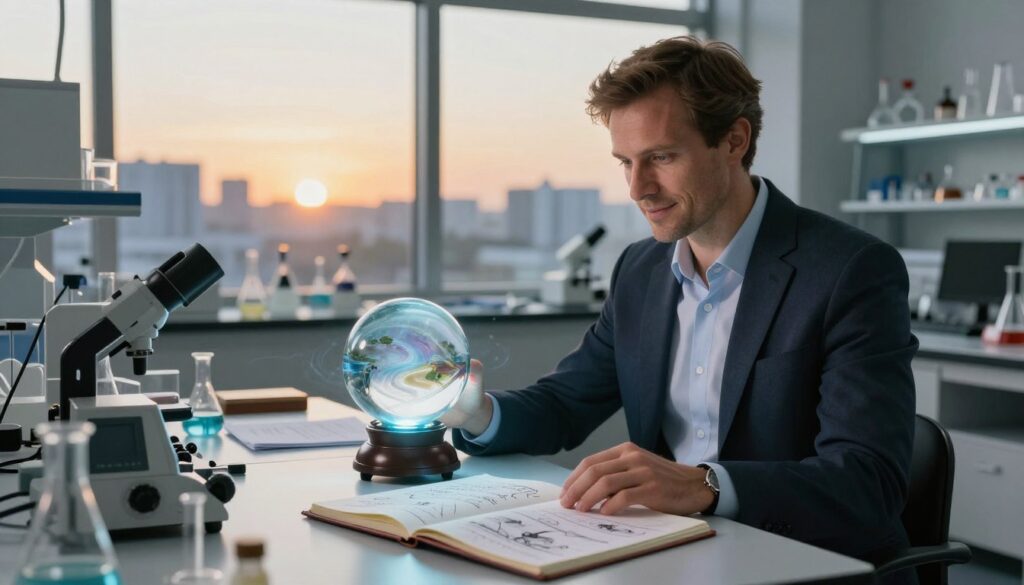
“Laboratory records, instrument traces, and observer notes formed the backbone of early attempts to test claimed extrasensory information.”
- Documented tests: Magnetometer anomalies (June 6, 1972).
- Neurostudies: Published work on brain activity during viewing sessions (2001).
- Firsthand account: The book To Kiss Earth Goodbye outlines many lab interactions.
| Year | Study | Lead | Key Result |
|---|---|---|---|
| 1972 | Magnetometer psychokinesis tests | Harold Puthoff | Instrument anomalies noted by Kenneth A. Kress |
| 2001 | Neuroactivity during viewing | Michael Persinger | Distinct brain patterns correlated with sessions |
| 1970s | Protocol-driven remote viewing | Russell Targ | Reported positive results; debated by peers |
For a wider look at people linked to this field and historic profiles, see a curated list of famous psychics.
The Famous Jupiter Remote Viewing Experiment
A twenty-minute session in April 1973 recorded striking descriptions of a distant planet’s skies. The subject produced vivid notes about bands, crystalline structures, and huge wind currents while attempting to view the target.
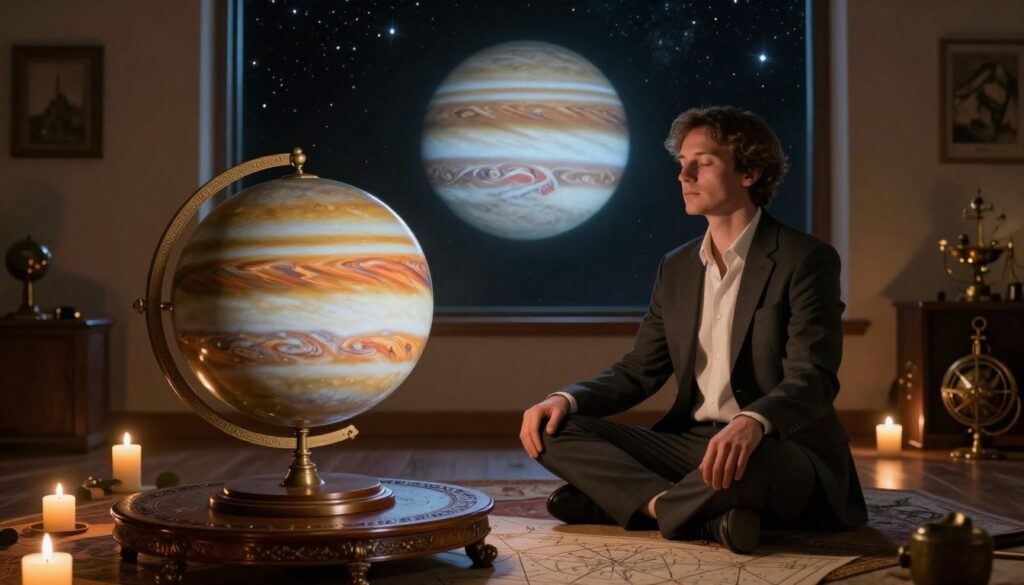
Methodology of the Probe
Researchers set a formal protocol and a blind target. Russell Targ and Harold Puthoff recorded the session to preserve raw transcripts and sketches.
Observers kept strict timing and minimized cues. The session focused solely on sensory reporting without prior planetary data.
Confirming Planetary Features
Years later, probe data offered notable overlaps. Voyager 1’s 1979 flyby matched several broad features the subject described.
Later missions, including Galileo, provided further context. Reports of bands rich in reflective materials aligned with earlier notes about crystalline layers.
Scientific Feedback Data
Feedback compiled roughly 300 pages of scientific and technical material. This ensured context for evaluators comparing session notes to later probe findings.
“The Jupiter session remains an oft-cited example in the field for how time-separated information can be assessed.”
- Session date: April 27, 1973
- Duration: ~20 minutes
- Feedback: ~300 pages of technical material
Exploring the Boundaries of Human Perception
Training methods aim to widen how the mind gathers distant information. Practiced routines give people a way to focus without distractions. These techniques seek to bridge ordinary sensing with reports about remote targets.

Techniques for Expanding Awareness
Controlled Remote Viewing (CRV) uses stepwise protocols to guide visualization. It helps participants record impressions about a distant place or planet without prior data.
Breath-linked focus pairs slow inhalations and exhalations with a single coordinate. This cycle steadies attention and improves the flow of clear information.
- Deep focus: meditative states reduce mental chatter and sharpen awareness.
- Structured steps: break complex perception into repeatable tasks.
- Feedback: comparing notes to a verified target trains accuracy over time.
In his book, Swann suggested the possibility that consciousness might extend into a universal field. Whether as a training tool or an example of expanded reality, these methods offer a practical way for people to explore viewing beyond the body. For signs of related experiences, see signs you are psychic.
Controversies and Skeptical Perspectives
Skeptical voices often focused on protocols and whether experiments allowed easy bias. Critics argued that some sessions led by Russell Targ and Harold Puthoff lacked clear falsifiability, making results hard to test again.
Magician Milbourne Christopher noted in 1983 that the subject was unusually clever, a comment many took as praise mixed with caution about trickery. Authors Arthur Lyons and Marcello Truzzi later questioned the use of such methods in criminal cases.
Between 1972 and 1979, the subject reported working twenty-five criminal cases but counted only three as successful. That low hit rate became a focal point for those urging stricter standards.
Other critics highlighted extraordinary claims—like alleged contact with extraterrestrial minds—as hard to verify. The debate centers less on whether people reported striking impressions and more on whether those impressions constitute reliable evidence.
“Skeptics often demand repeatable, falsifiable tests before accepting unusual claims.”
For a practical look at protocols and modern practice, see a detailed page on remote viewing.
Conclusion: The Lasting Legacy of a Consciousness Pioneer
Across published accounts and lab notes, his legacy prompts fresh questions about the nature of reality.
Ingo Swann remains a pivotal figure whose work in remote viewing challenged how the human mind gathers information beyond the body.
His 1973 probe of the planet Jupiter later found echoes in Voyager 1 data. That match helped shape how many view the link between report and verified detail.
The book To Kiss Earth Goodbye and later publications left a clear trail for readers and students. Those pages invite study of awareness as a practical way to explore the world.
For a practical next step, see this basic development guide to learn simple methods for training focus and reporting clear information.
FAQ
What is the main contribution of Ingo Swann to remote viewing and consciousness studies?
Swann is widely credited with helping to formalize remote viewing protocols used in the 1970s and 1980s. Working with researchers such as Russell Targ and Harold Puthoff at the Stanford Research Institute, he helped develop structured methods to describe distant targets, which influenced later programs and training approaches in the field.
How did his early out-of-body experiences shape his later work?
Early nonordinary experiences led him to explore perceptual events beyond the body. Those episodes motivated systematic testing and collaboration with scientists who wanted repeatable procedures. His personal accounts influenced the design of experiments intended to separate subjective report from controlled observation.
What was the approach used in the famous Jupiter remote viewing experiment?
The team asked Swann to describe Jupiter and its rings before spacecraft imaging. He provided sketches and narrative impressions. Researchers recorded his descriptions under controlled conditions and later compared them to data from Pioneer and other probes to evaluate matches between the sessions and planetary features.
Did his descriptions of Jupiter match later spacecraft findings?
Some elements in his reports were judged by proponents to align with later images and data. Skeptics note that assessments vary and that subjective matching can bias conclusions. The experiment remains debated, with supporters highlighting interesting correlations and critics questioning methodological rigor.
What methods did he use to expand perception and awareness?
He taught visualization techniques, focused attention exercises, and staged remote viewing sessions with clear target protocols. Training emphasized reducing analytic overlay, using blind targets, and recording impressions immediately to preserve initial perceptions.
How did researchers measure the results and reliability of his sessions?
Investigators used scoring systems, blind controls, and independent judges to compare transcripts with potential targets. Statistical analyses were applied to assess whether hits exceeded chance expectation. The rigor of scoring and controls varied across studies, affecting interpretations.
What criticisms have skeptics raised about his work?
Critics point to possible sensory leakage, confirmation bias, and inadequate controls in some studies. They argue that anecdotal reports and post-hoc matching can produce false positives. Peer review and replication issues fueled ongoing debate about the strength of the evidence.
Are there documented training programs based on his techniques?
Yes. Several private instructors and organizations have adapted elements of his protocols into courses and workshops. These programs typically focus on disciplined observation, blind testing, and developing a consistent practice routine to improve descriptive skills.
What role did collaborators like Russell Targ and Harold Puthoff play?
Targ and Puthoff provided institutional support, experimental design, and documentation at SRI. They helped bridge field reports and laboratory methods, publishing papers and reports that brought wider attention to the efforts and influenced later investigations into anomalous perception.
Is there peer-reviewed evidence supporting his claims?
Some peer-reviewed papers discussed anomalous results from remote viewing studies, but the body of literature remains contested. While a few studies report statistically significant findings, the consensus in mainstream science has not settled on a definitive explanation, and replication challenges persist.
How has his legacy influenced modern exploration of awareness and perception?
His work helped popularize systematic approaches to studying nonlocal perception and inspired further inquiry into the relationship between mind and information. Whether one accepts the phenomena or not, his influence persists in training methods, experimental protocols, and public interest in the topic.
Where can I read primary sources about his experiments and methods?
Primary materials include session transcripts, SRI technical reports, and books by researchers involved in the programs. Archives, academic libraries, and specialized collections hold many of these documents for those who want to review original records and experimental protocols.
How should a newcomer critically evaluate claims from this field?
Look for documented protocols, blind controls, independent scoring, and replication attempts. Compare positive reports with critical analyses. Separating anecdote from systematic evidence and examining statistical methods helps form a balanced view.