

This piece compares two paths to the same goal: accessing information about a distant target. One relies on sudden intuitive hits, while the other uses a step-by-step method developed by pioneers like Ingo Swann and physicist Harold Puthoff.
The structured approach, often called controlled remote, helped turn raw talent into repeatable results. Early remote viewers trained to move past bias and tap into impressions that cross time.
We will explore how natural talent differs from disciplined practice. Expect clear examples of how training shapes a viewer’s process and how each method affects accuracy.
Key Takeaways
- Two approaches: spontaneous intuition vs. a formal method.
- Historical roots: pioneers refined practical steps for use by remote viewers.
- Training matters: systematic practice improves consistency.
- Information flow: techniques help bypass subconscious noise.
- Practical focus: the article clarifies strengths and limits of each path.
Understanding the Roots of Intuition and ESP
Many accounts tie sudden intuitive hits to an inner filter that governs what reaches our conscious mind. This barrier helps the brain avoid overload by limiting the flow of nonordinary data into waking awareness.

The Subliminal Barrier
Think of the barrier as a gatekeeper. It lets a few impressions through and blocks the rest. That screening prevents overwhelm and shapes what we call intuitive information.
Accessing the Deeper Self
Research at SRI explored how subconscious processes interact with conscious awareness to enable extra-sensory perception. Many people report spontaneous awareness in dreams or visceral gut sensations when they are not trying to sense.
“A deeper self connects to energetic levels beyond ordinary space, offering impressions in subtle form.”
- The barrier filters vast data so the mind stays functional.
- Deeper consciousness links to impressions independent of physical space.
- With calm focus, talent for accurate perception can be awakened.
| Aspect | What it Does | Practical Sign |
|---|---|---|
| Subliminal Barrier | Filters incoming impressions | Brief flashes or dreams |
| Deeper Self | Connects to energetic information | Strong gut sense |
| Access Tips | Quiet focus, reduce noise | Meditation or calm setting |
Ingo Swann Natural ESP vs Controlled Remote Viewing
A step-by-step protocol let ordinary people learn to gather information on a distant site.
Dr. Hal Puthoff and Ingo Swann worked together to design a method that novices could practice. Their goal was to make perception teachable, not just a lucky talent.
The U.S. program, first code-named Grill Flame, aimed to turn service members into effective remote viewers. Trainers taught a clear sequence so a viewer could focus on a specific target instead of waiting for a random flash.
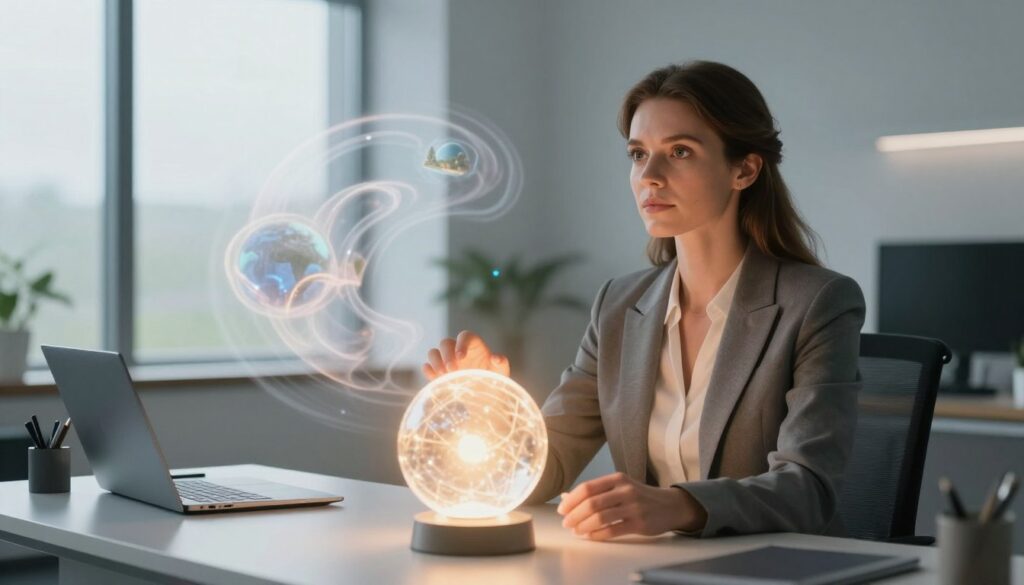
By using coordinates and a fixed protocol, the work reduced personal bias and raised the quality of information gathered. Students learned to guide their consciousness step by step.
“A disciplined protocol lets average people produce results that once seemed reserved for a rare gift.”
- Structured method: repeatable steps for any trainee.
- Practical example: using coordinates to focus awareness on a target.
- Program impact: expanded the pool of remote viewers in the 1980s.
For further background on the training and program, see remote viewing resources.
The Evolution of Military Psychic Research
During the 1970s, the U.S. government quietly explored whether trained people could describe distant targets to aid intelligence work.

The Stanford Research Institute provided a scientific frame for those tests. Researchers at SRI designed protocols and logged results to see if the method held up under scrutiny.
The Role of the Stanford Research Institute
SRI forged the bridge between anecdote and experiment. Teams measured accuracy and refined procedures so a viewer could follow steps rather than rely on rare talent.
Key personnel included researchers like Harold Puthoff and trainers who taught military personnel such as Capt. Tom McNear, Capt. Bill Ray, and Capt. Paul H. Smith.
“What began as curiosity became a structured program to test human ability for intelligence use.”
- Government funding in the 1970s created formal training for remote viewers.
- Trainers such as Lyn Buchanan and Paul Smith helped ordinary people learn the method.
- The CIA declassified program documents in 1995, showing the work was teachable and repeatable.
| Feature | What Happened | Impact |
|---|---|---|
| Research hub | Stanford Research Institute led experiments | Protocol development and data collection |
| Training | Military personnel received structured sessions | Improved accuracy describing targets |
| Declassification | CIA released files in 1995 | Confirmed program results to the public |
For deeper background on protocols and later summaries, see remote viewing resources.
Breaking Down the Stages of Controlled Remote Viewing
A practiced system guides perception from fleeting hints to detailed depiction of a distant target. The method is divided into six stages, each tuned to extract a specific kind of data from the subconscious. Trainers designed the flow so a viewer moves from raw impressions to refined models.

Initial Sensory Impressions
Stage 1 gives a brief glimpse: an outline or emotional tone that points toward the target.
Stage 2 expands that into simple senses — colors, textures, smells, and basic motion. These raw details anchor later work and help separate stray thoughts from relevant signals.
Dimensionality and Sketching
In Stage 3 the viewer assesses form and volume. Sketches often appear here, mapping shapes and scale.
Stage 4 moves into more abstract qualities. Advanced military personnel trained in the program learn to hold complex concepts without jumping to conclusions.
Advanced Data Mining
Stage 5 acts like a data-mining pass. The viewer extracts deep impressions that were deposited earlier in the session.
Stage 6 can culminate in a three-dimensional model or physical reconstruction — a classic example that helps solidify perception of the target.
- System structure: six stages that build on one another.
- Practical aim: separate imagination from the actual signal for better accuracy.
- Training note: instructors such as Lyn Buchanan and Paul Smith emphasized disciplined practice for reliable results.
For hands-on practice that follows this staged approach, try these remote viewing exercises.
Distinguishing Between Psychic Phenomena and Structured Methods
An organized method frames perception so a person can gather consistent information about a distant target.
Spontaneous psychic events often arrive without warning. They feel like flashes, dreams, or a strong gut sense. These are personal and unpredictable.
By contrast, a formal method trains a viewer to follow steps. This helps separate internal noise from real information about a target. Training turns chance impressions into usable data.
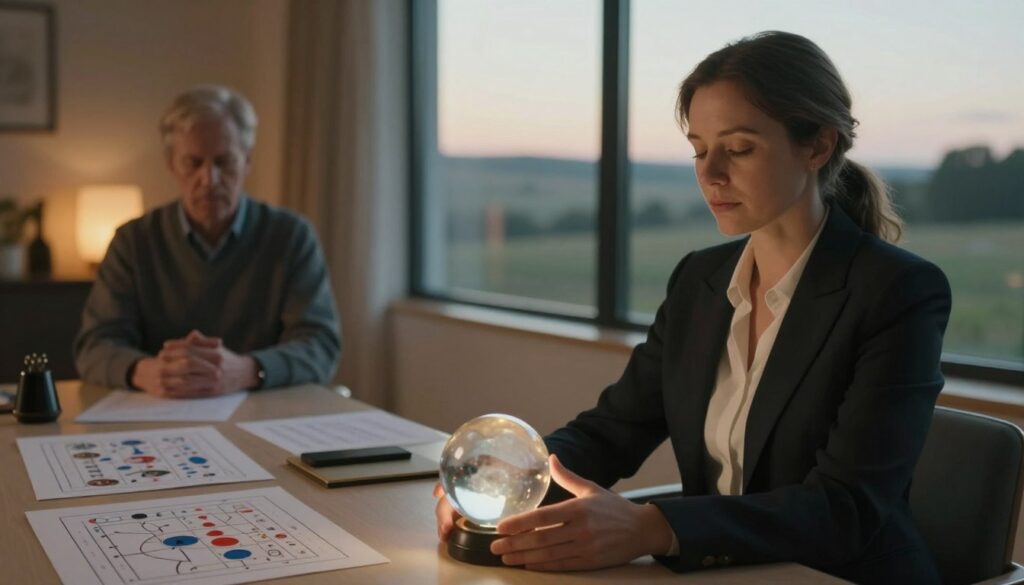
Research since the 1970s showed that many people can learn the skill. Military and government programs favored this system because it offered repeatable results for intelligence work.
“A taught system lets a person remain conscious and in control while reporting details about distant events.”
- The method holds attention on a specific target over time.
- It reduces imagination and clarifies perception.
- For portraits of famous practitioners and context, see notable psychic profiles.
Conclusion
The decades of research show that disciplined practice can turn fleeting impressions into usable reports. Ingo Swann’s early work helped shape a formal program that made this possible for many people.
Consistency matters: a trained viewer learns steps to sort signal from noise. That process strengthens accuracy and trust in remote viewing as a skill.
Whether you rely on sudden insight or stepwise training, the journey rewards patience. Beginners and seasoned viewers alike gain fresh perspective on consciousness and perception.
Explore further signs of innate ability at signs you are psychic to decide how you might begin your own practice.
FAQ
What is the main difference between Ingo Swann’s natural ESP and structured remote viewing?
Swann promoted a spontaneous, intuitive form of perception that arises without formal protocols. Structured remote viewing, developed later by researchers and military practitioners, uses step-by-step methods to reduce noise and improve repeatability. The two approaches share goals—gathering information beyond ordinary senses—but differ in training, documentation, and controls.
How did researchers describe the roots of human intuition and extrasensory perception?
Many investigators trace intuition to subconscious pattern recognition and a low-level sensory filtering process often called the subliminal barrier. That barrier normally blocks noisy impressions. Sometimes it thins, letting intuitive hits through. Research explores how awareness, relaxed attention, and focused intent can increase access to those deeper signals.
What is the subliminal barrier and why does it matter?
The subliminal barrier is a conceptual filter that separates conscious awareness from faint, emerging impressions. It matters because its strength affects how often someone experiences clear intuitive information. Training and controlled protocols aim to lower that barrier momentarily to capture usable data while keeping bias low.
Can anyone access deeper intuitive states with practice?
Many people can improve sensitivity with disciplined practice. Techniques include sensory reduction, meditation, and repeated trial-and-error under feedback. While not everyone reaches the same level, consistent training often increases accuracy and confidence in reporting subtle impressions.
How did military research evolve in the study of psychic phenomena?
From the 1970s onward, multiple programs explored anomalous cognition for intelligence tasks. Teams moved from open-ended experiments to controlled protocols to produce more reliable results. Emphasis shifted toward training, standardized reporting, and evaluating outcomes against known targets to determine operational value.
What role did the Stanford Research Institute play in this field?
The Stanford Research Institute (SRI) carried out foundational experiments that tested whether individuals could describe distant or hidden targets. Investigators such as Harold Puthoff helped design controlled studies that compared spontaneous impressions with results obtained under strict conditions, helping set standards for later programs.
What are the typical stages in a structured remote viewing session?
Sessions commonly begin with relaxed focus and initial sensory impressions. Viewers then refine those impressions into dimensional sketches or descriptions. Advanced stages involve querying for specific details, cross-checking, and integrating corroborating data. Each stage aims to reduce ambiguity and improve verifiable hits.
What happens during the initial sensory impression stage?
In the first stage, the viewer notes fleeting shapes, colors, textures, and emotional tones. These raw impressions are recorded quickly to avoid analytic overlay. The goal is to capture immediate, sensory-like data before the mind imposes familiar labels.
How does sketching and dimensionality help in the process?
Sketching translates impressions into spatial relationships, giving form to otherwise vague sensations. Noting size, orientation, and relative positions helps the viewer and analyst cross-check details against the actual target and reduces reliance on speculative narrative.
What is meant by advanced data mining in this context?
Advanced data mining refers to the analytical phase where impressions are compared with databases, imagery, or intel to extract verifiable matches. This phase uses corroboration, statistical checks, and sometimes collaboration among multiple viewers to validate findings.
How do practitioners distinguish between genuine anomalous perception and ordinary intuition or guesswork?
Distinction relies on controls, blind testing, and repeatable successes that exceed chance. Protocols minimize feedback, use randomized targets, and apply independent scoring. When multiple trained individuals produce consistent, verifiable details under strict conditions, researchers treat the results as stronger evidence than casual intuition.
Are there ethical or operational concerns when using these methods for intelligence work?
Yes. Concerns include ensuring informed consent, preventing overreliance on unverified reports, and integrating anomalous data with traditional intelligence cautiously. Military and government programs typically weigh potential benefits against risks and validate findings with conventional sources before action.