
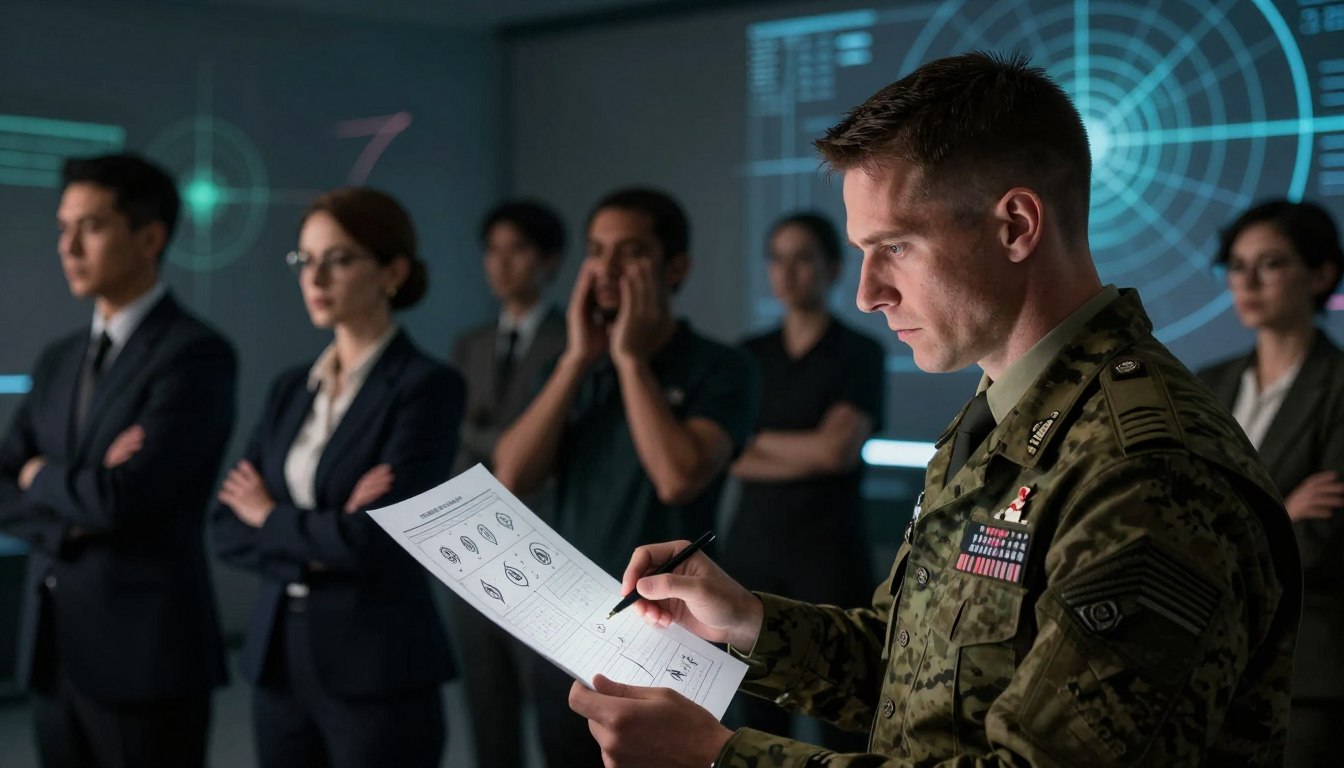
This short guide opens a window into a strange Cold War chapter. It looks at how intelligence agencies pursued unusual methods to gain an edge. Readers will get a clear, factual view of how the effort moved from labs to field missions.
The government invested time and money to test human perception for covert uses. Declassified files reveal experiments, results, and internal debates about value and ethics. These records help us weigh claims against documented findings.
Later sections will trace outcomes, controversies, and long-term influence on science and policy. For a focused case study, see the material linked to the Stargate inquiry at Stargate Project details.
Key Takeaways
- Cold War-era tests blended science with covert goals.
- Declassified documents provide clearer, sometimes surprising, facts.
- Results influenced later research and policy debates.
- Ethical questions followed public release of records.
- The topic remains a mix of proven data and ongoing myth.
The Origins of the History of the US Military Psychic Spying Program
A mix of fear and curiosity drove early efforts to measure unusual human abilities. During the cold war, officials worried the soviet union might gain an edge through unexplained mental phenomena. That anxiety pushed funding toward formal inquiry.
The Cold War Context
SRI Labs in Menlo Park became a central hub where scientists tried to quantify remote viewing and viewing outcomes. Researchers wanted usable intelligence from sources beyond normal senses.
Ancient Roots of Psychic Faculty
Scholars noted earlier accounts, like Patanjali’s Yoga Sutras, which framed long-standing interest in human powers and the potential of the mind over time.
J.B. Rhine’s ESP work and a 1970 book by Sheila Ostrander and Lynn Schroeder helped spur the u.s. government to act. Over the years, many people took part in research that aimed to turn enigmatic phenomena into reliable information.

For related profiles and modern perspectives, see a list of famous psychics.
Scientific Foundations and Laboratory Investigations
Systematic research began with clear, repeatable tests to move claims toward measurable results. J.B. Rhine at Duke used Zener cards to study telepathic perception and build an early protocol for scoring hits and misses.
As methods matured, teams stopped with simple card guessing. They used complex targets like natural scenes from magazines to reduce chance matches and sharpen assessment.
Laboratory experiments focused on whether a viewer could describe a distant site with no prior clues. By the 1980s, studies evolved into coordinate remote viewing, where participants concentrated on latitude and longitude and tried to let the mind find a location.
Scientists documented these phenomena over years, keeping careful logs and statistical scoring. Each successful trial added information and helped shape the rigorous work needed to test non‑sensory claims.
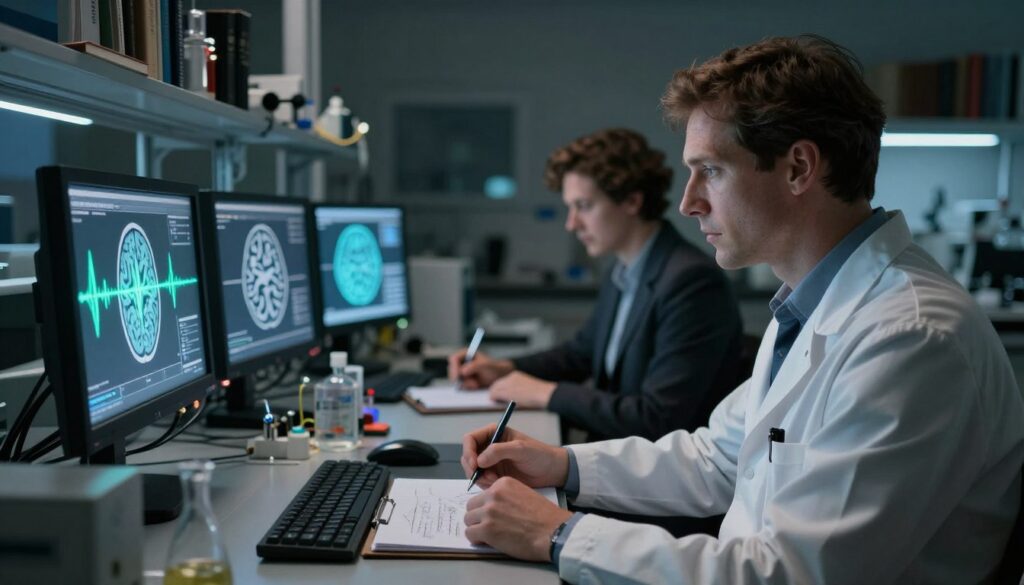
- Protocols moved from cards to natural scenes to coordinates.
- Controlled settings aimed to eliminate error and bias.
- Repeated experiments produced data to evaluate practical value.
Notable Operational Assignments and Successes
Field work produced several high-profile cases where trained viewers supplied clear, actionable intelligence.
The Soviet Submarine Discovery
In 1979, Joe McMoneagle described a large building that turned out to be linked to a massive submarine effort.
He had viewed a site far from water and noted construction features that matched later imagery. Satellite photos later confirmed many of those details.
Locating Hostages in Lebanon
On multiple occasions, intelligence agency officers received reports from viewers that narrowed an area for rescue planning.
Officials credited some tips with improving situational maps and guiding follow-up surveillance. These outcomes linked remote viewing with national security actions.
Precognitive Predictions
Pat Price’s 1974 description of a complex at Rinconada Park showed a viewer could access information miles away.
Over the years, the project produced instances where satellite checks and on-the-ground checks matched viewer reports.
| Case | Year | Outcome | Verification |
|---|---|---|---|
| Joe McMoneagle – submarine site | 1979 | Building details reported | Satellite imagery |
| Rinconada Park complex | 1974 | Remote description of area | Field checks |
| Hostage location tips | 1970s–1980s | Actionable leads for agents | Intelligence follow-up |
- These assignments showed trained viewers could add useful information to other sources.
- Intelligence agency officials often reacted with surprise at exact matches.
- Over years, satellite and human checks helped validate several claims.
For a focused look at operational records and related accounts, see a detailed write-up about CIA psychic spies.
The Role of Remote Viewing in Intelligence Gathering
Remote viewing became a tactical asset when analysts needed details without sending teams into harm’s way. Units used trained viewers to gather information about an area or a specific building when access was impossible or too risky.
By focusing the mind on coordinates, a viewer could describe interiors, layout, and key objects. Researchers then cross‑checked these descriptions against imagery and human sources.
That process let analysts fold remote viewing results into broader intelligence reports. Those reports shaped decisions and helped prioritize field operations during tense Cold War episodes.
- Cost effective: It reduced the need for costly deployments when other methods were blocked.
- Complementary: Viewer data often filled gaps left by satellites and signals collection.
- Research value: Each verified success pushed study into human perception and cognitive limits.
For more on related methods and ongoing discussion, see a primer on psionics research.
Government Oversight and the Shift to Fort Meade
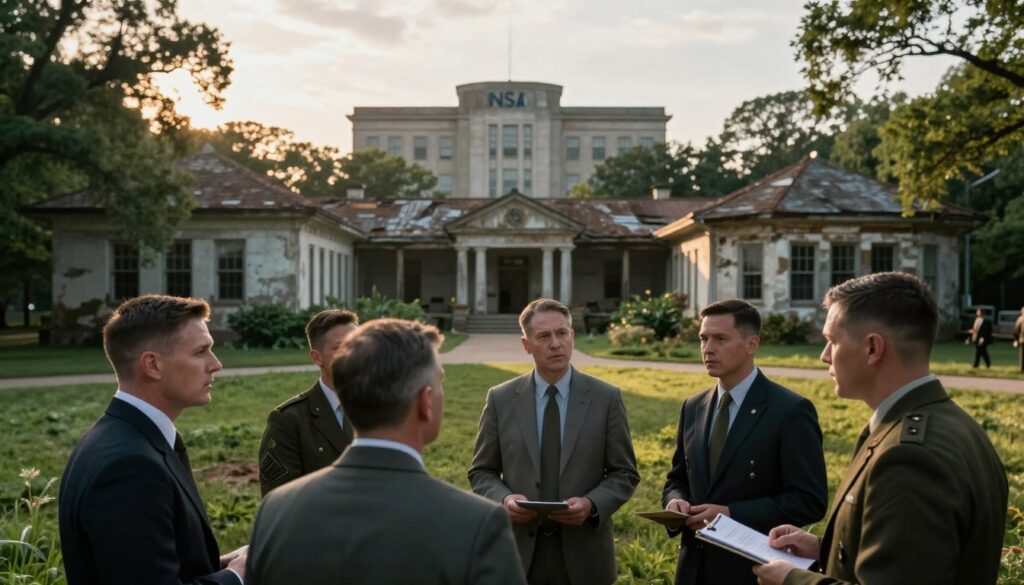
Officials relocated operations to Fort Meade, where longer-term support reshaped daily work. That move gave the effort steady funding and formal oversight that had been inconsistent in earlier years.
In the late 1970s, the Defense Intelligence Agency took responsibility and provided near-continuous financing for almost two decades. This made it possible to expand research into remote viewing and to systematize training for each viewer.
Operating inside a secure building at Fort Meade allowed the intelligence agency to keep methods and personnel protected. Leaders likened the capability to a new kind of radar, which led to tighter protocols and standardized lesson plans.
Congressional backers accepted periodic briefings and funding requests. Over the years, the program’s name became linked with the government’s broader efforts to explore human potential for national security.
| Aspect | Detail | Impact |
|---|---|---|
| Oversight | Defense Intelligence Agency | Consistent funding, formal structure |
| Location | Fort Meade building | Secure operations, secrecy maintained |
| Focus | Viewer training and methods | Standardized protocols, research growth |
The Official Declassification and Program Termination
When the files went public in 1995, they showed long-term investment in nontraditional intelligence tools. The CIA acknowledged that for years the government funded experiments into remote viewing and other unusual perception work.
The final report said some experiments hinted at value, but most results were too vague for reliable action. Analysts found that viewer reports often lacked the clear details needed for field operations.
Still, the effort left a lasting legacy. Work at Fort Meade and Menlo Park influenced later research into human perception and operational tradecraft. Many former agents and remote viewers continued to argue that their powers produced meaningful information.
Declassification also revealed monitoring tied to the soviet union and other global areas during the cold war. Even after official closure, related studies appeared, such as a 2014 Office of Naval Research inquiry into intuition.
For an insider take on methods and claims, see a firsthand account of a clairvoyant method: clairvoyant method.
Modern Parallels in Artificial Intelligence Infrastructure
Tech leaders and policymakers reused a well-known name in 2025 to frame a national push for large-scale AI infrastructure. This new effort echoes early efforts that sought unusual human abilities, but it focuses on data centers, energy, and massive compute.
The Stargate Name Legacy
The 2025 Stargate Project borrows that historic name to draw a symbolic link between past curiosity and current ambition. Where once a viewer sat in a secure room to describe a distant site, today engineers design a building to host racks, cooling, and power for AGI research.
Infrastructure and AGI Ambitions
Planners say the project will create resilient grids, satellite links, and secure rooms for developers and agents who manage sensitive models.
- Scale: Data centers that run continuous training and inference workloads.
- Redundancy: Energy and satellite connectivity to keep systems live for years.
- Risk: Critics compare this large bet to past research that had mixed returns.
| Feature | Purpose | Parallel to Past |
|---|---|---|
| Data centers | Host AGI model training | Secure room for viewer work |
| Energy grids | Ensure continuous operation | Long-term funding and building security |
| Satellite links | Global data transfer | Surveillance and verification roles |
For more on earlier efforts and how names carry meanings forward, read this overview on psychic spies.
Conclusion
Across decades, many people who worked at Fort Meade as remote viewers left a complex legacy that still sparks debate.
Research pushed the limits of the mind and tested claims about unusual phenomena and hidden powers. Results varied, and teams often disagreed on what mattered most.
Still, this story shaped how the world views experimental work and modern tech efforts. Lessons from those years echo in current projects and in how we study psychic phenomena and advanced intelligence.
For a firsthand take on a notable practitioner, read this psychic warrior profile for more context.
FAQ
What was the program commonly called and when did it run?
The effort became widely known by the media name “Stargate.” It ran from the 1970s through the mid-1990s and involved multiple projects, labs, and contractors across Army, Air Force, and Defense Intelligence Agency funding.
Why did intelligence agencies pursue remote viewing during the Cold War?
Agencies feared Soviet advances in unconventional collection. Leaders in the CIA and Army believed perceived psychic phenomena might yield unique leads on missiles, bases, and naval movements. That urgency drove early investment and covert experiments.
Who conducted the laboratory research and field tests?
Academic groups, private parapsychology labs, and military units ran experiments. Institutions in Menlo Park and university laboratories worked alongside Army research units. Civilian contractors often recruited experienced viewers to support operational tasking.
Were any operational successes documented?
Several case files describe useful leads. A cited episode involved reports about a Soviet submarine’s location that matched other intelligence. Other examples include reportable contributions to searches and hostage inquiries, though results varied and rarely stood alone.
Did remote viewing ever help locate hostages in Lebanon?
Some remote viewers provided information tied to Lebanon hostage searches. Those inputs were treated as one source among many and did not replace traditional tradecraft. Declassified records show mixed accuracy and limited operational impact.
What controls governed these activities and where did oversight shift?
Early oversight came through military research channels and CIA management. Over time, funding and responsibility moved toward the Defense Intelligence Agency, with centralized work located at Fort Meade to better align with national security priorities.
Why did the government end the program and declassify materials?
Reviews found inconsistent replicability and limited intelligence value versus cost. By the mid-1990s, senior analysts recommended termination. Selected files were later declassified, allowing scholars and journalists to examine methods and claims.
How did media coverage shape public perception of remote viewing?
Press reports and books amplified dramatic anecdotes and the “psychic spies” label. Popular accounts often focused on sensational episodes, which raised public curiosity but sometimes overstated operational effectiveness.
Are any elements of that research used today in modern intelligence work?
While direct psychic methods are no longer funded, some analytical lessons—rigorous testing, blind protocols, and cross-discipline review—remain relevant. Interest in human factors and unconventional signals persists alongside advanced technical collection like satellites and signals intelligence.
What is the Stargate legacy in technology and culture?
Stargate lives on as a cultural reference and a cautionary case study in evaluating extraordinary claims. The name also appears in discussions about how intelligence programs manage fringe science, and it occasionally surfaces in debates about AI, perception, and new collection tools.
Where can I find declassified records and reliable research on this topic?
Major depositories include the U.S. National Archives and CIA reading rooms, which host released reports and memos. Academic journals in parapsychology and intelligence studies also analyze experiments and methodology for those seeking primary documents.
Did any well-known scientists take part in experiments?
Several respected researchers in psychology and parapsychology consulted or ran controlled studies. Their contributions focused on protocol design, statistical analysis, and efforts to separate chance from signal in test results.
How should one evaluate claims about precognitive predictions tied to the program?
Treat such claims skeptically. Many predictions were vague or assessed after events occurred. Robust evaluation relies on pre-registered protocols, blinded testing, and reproducible outcomes—standards that were unevenly applied in many cases.