
Controlled remote viewing is a structured approach to extrasensory perception that trains a person to gather information about a distant target without using physical senses. This practice asks the mind to set aside assumptions and tune into raw impressions. Practitioners treat it like a discipline: steady training, repeated sessions, and quiet focus build accuracy and confidence.
Scientists and spiritual seekers both test whether the human mind can access data beyond normal perception. Skeptics call these phenomena unproven, while supporters call it a repeatable skill. Many remote viewers use meditation to clear distractions before a session. This helps separate fleeting thoughts from genuine information about the world.
Learning CRV means learning to tell raw sensory impressions apart from the analytical overlay that can distort results. With patience and a systematic approach, this ability becomes a reliable skill rather than guesswork. If you want hands-on drills, see practical exercises at remote viewing exercises.
Key Takeaways
- CRV is a structured practice to access information beyond physical senses.
- Consistent training and meditation improve focus and accuracy.
- Distinguishing raw impressions from analysis is essential.
- Practitioners debate the scientific status of the phenomena.
- Patience and routine turn this ability into a repeatable skill.
Understanding the Basics of Remote Viewing
Put simply, the technique guides the human mind to collect information about a place beyond ordinary senses.
Defining the ability
The term refers to a trainable skill refined at the Stanford Research Institute so it can yield repeatable results. Trained practitioners learn to describe tangible features—geography, structures, and objects—rather than relying on vague symbolism.
The difference from clairvoyance is clear: clairvoyance often appears spontaneous and unstructured. Viewing uses a disciplined approach so a person reports raw data rather than immediate interpretation.
The role of consciousness
Many proponents argue consciousness is not confined to the body. This idea supports the claim that the mind can access non-local information about a target.
- Focus on raw sensory impressions to avoid naming errors.
- Balance awareness of both your physical place and the target site.
- Train to separate perception from analysis to improve accuracy.
Understanding this concept helps a beginner grasp how the ability functions and why structure matters in collecting reliable information.
Historical Origins and the Stargate Project
What began as lab work at the Stanford Research Institute in the early 1970s led to formal tests of perception beyond ordinary senses. Physicists Russell Targ and Harold Puthoff ran experiments that shaped public interest in remote viewing.
Ingo Swann helped name the method and took part in protocols that later drew funding from the CIA and the Department of Defense. That support became the Stargate Project, a decades-long effort to see if the human mind could deliver usable intelligence.
Military teams trained for more than 20 years. Their tasks included sketching layouts of foreign facilities and locating lost aircraft. Classified testing produced intriguing data, though critics pointed to weak controls and vague results.
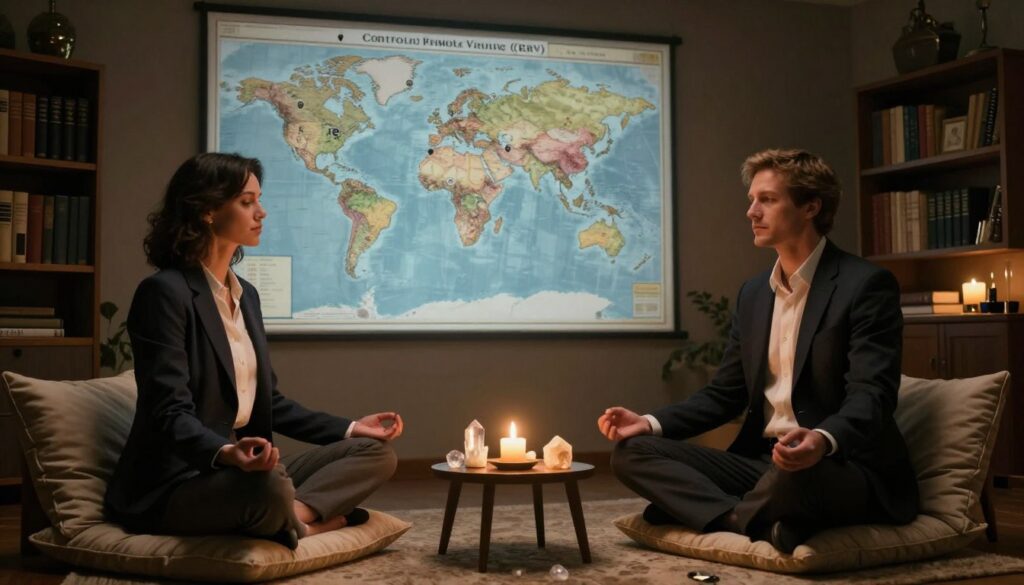
The debate mixes science and mystery. Some researchers argue consciousness links to a non-local web of information across time space. Others see the work as unproven. Still, the history helps newcomers grasp the level of training and the serious interest intelligence agencies once showed in this concept.
| Year | Key Figures | Purpose | Outcome |
|---|---|---|---|
| Early 1970s | Russell Targ, Harold Puthoff | Test nonlocal perception | Published lab results; raised questions |
| 1978–1995 | Ingo Swann, military personnel | Support intelligence tasks | Classified reports; mixed data |
| Post-declassification | Researchers, public | Study and debate history | Ongoing curiosity; critical review |
To read a focused account of this program, see the Stargate Project history.
Core Principles of the Controlled Remote Viewing Protocol for Beginners
Blind conditions protect the accuracy of the process. A viewer must not know the target ahead of time. This prevents the mind from layering educated guesses onto raw impressions.
The Importance of Blinding
When the person is blind to the target, the data recorded stays cleaner. The monitor keeps information sealed and only gives step cues.
“Blind tests reduce bias and help turn impressions into verifiable data.”
Managing Mental Noise
Mental noise is the tendency to fill gaps. A five-step routine helps clear that interference before the session begins.
- Brief relaxation and grounding.
- Simple ideogram to open contact.
- Describe immediate sensations, not stories.
Describing Versus Naming
Focus on textures, colors, and temperatures instead of labels. Record perceptions in real time so later analysis can compare notes to actual objects or locations.
| Step | Purpose | Outcome |
|---|---|---|
| Ideogram | Initial signal line | Spontaneous form |
| Sensory report | Collect raw data | Descriptive impressions |
| Record & review | Preserve session | Verify accuracy |
Essential Mental Preparation and Focus
Before any session, quieting the day’s noise helps the mind tune into subtle impressions.
Create a calm area. Turn off distractions and dim lights so your thoughts slow.
Use deep breathing or short meditation to steady attention. Even five minutes sharpens concentration.

Set a clear intent about the target, but keep your thoughts neutral. Neutrality prevents early filtering.
Relax the body. Tension blocks delicate inputs and short-circuits the process.
Treat this as training: regular sessions in the same area build mental discipline and expand the skill over time.
“A calm, focused state opens access to impressions the everyday mind misses.”
- Quiet environment reduces external noise.
- Breath and meditation improve concentration.
- Consistent practice grows detail and accuracy.
| Technique | Purpose | Benefit |
|---|---|---|
| Breathing exercises | Center attention | Faster access to a calm state |
| Short meditation | Quiet mental chatter | Stronger focus on the target |
| Dedicated practice area | Reduce distractions | Consistent training results |
| Body relaxation | Remove physical tension | Clearer sensory impressions |
To learn complementary energy techniques, see a guided approach to send healing energy that pairs well with mental training.
The Step by Step Viewing Process
A clear sequence helps a person move from first contact to useful feedback. Start with a brief grounding, then open contact with an ideogram and note immediate impressions. Record shapes, textures, temperatures, and any spatial cues on paper as they appear.

The Feedback Loop
Feedback is the most critical step. After the session, compare notes to the actual target so the mind learns which signals were accurate.
- Record raw sensory data in real time (no naming).
- Sketch lines and angles—forms often beat labels.
- A monitor offers neutral cues to keep focus without revealing the target.
- Review and mark hits and misses to sharpen future perception.
- Repeat the five steps to train the brain to find the signal line.
“Consistent feedback teaches the brain to recognize subtle signals, improving accuracy over time.”
| Step | What to record | Outcome |
|---|---|---|
| Ideogram | Spontaneous mark or form | Initial contact cue |
| Sensory report | Shapes, textures, temperatures | Objective data on paper |
| Sketching | Angles, lines, spatial form | Visual anchors often more accurate than names |
| Feedback | Compare notes to target | Reinforced signal recognition |
To pair this training with complementary energy work, see a guide on send healing energy that fits well with focused practice.
Distinguishing Remote Viewing from Other Psychic Practices
Unlike many psychic arts, this method uses repeatable steps to turn impressions into testable information.
The main contrast is structure. Clairvoyance often arrives as a spontaneous insight. This practice trains someone to gather clear, verifiable data through disciplined steps.
It also differs from out-of-body experiences. Practitioners remain aware of their physical location while reporting what they sense elsewhere. That dual awareness helps keep reports anchored and useful.

Reports rely on description and sketches rather than open-ended interpretation. Textures, shapes, and layout give concrete clues you can check later.
Many learners find this routine sharpens their intuition and boosts confidence when making decisions. The aim is not psychic perfection.
“The goal is to maximize reliable information through disciplined, intentional methods.”
In short, this approach treats perception as a skill that can be trained. With steady practice the ability to access non-local information becomes more consistent and measurable.
Common Myths and Realities of the Practice
Stories of instant talent make the ability sound magical, yet disciplined training shapes reliable results.
One common myth says only gifted psychics can do remote viewing. In truth, programs at the Stanford Research Institute and the Stargate Project show the process was tested under controlled conditions over decades. That history supports the idea that training improves performance.
The practice is not infallible. Even an experienced viewer may record vague or conflicting data in a session. Expect partial impressions rather than full, omniscient access to a target.
Science often labels the work a pseudoscience because no clear mechanism explains the phenomena. Still, studies produced intriguing results that merit careful analysis rather than wholesale dismissal.
“Understanding limits helps a beginner keep a balanced and practical approach to the work.”
It is not dangerous to the mind when done with sensible guidance and simple meditation. The 12 principles—especially blinding, feedback, and real-time recording—help distinguish this concept from other psychic arts.
| Myth | Reality | Practical Tip |
|---|---|---|
| Only gifted people can succeed | Training improves results | Follow structured steps and feedback |
| Sessions give full answers | Often partial impressions | Record raw data; review later |
| Practice harms consciousness | Comparable to meditation | Use safe, paced training |
For broader context on mental skills and perception, see a related guide to developing intuitive abilities at psychic powers.
Spiritual and Personal Growth Benefits
Many practitioners say that steady sessions change how they sense the world and themselves.
Regular practice can deepen a connection to the wider universe and increase awareness of how things relate across time and space.
Developing Intuition and Awareness
Training strengthens the human mind to notice subtle patterns in daily life. This often leads to sharper intuition and clearer decision making.
The meditative state used during sessions brings deep relaxation. That calm reduces stress and improves emotional balance.

Working through impressions helps a person identify self-imposed limits. Over time, viewers build patience, resilience, and broader perspective on capabilities.
“The process of recording and reviewing impressions teaches the mind to spot patterns beyond ordinary senses.”
| Benefit | What to expect | Practical result |
|---|---|---|
| Stronger intuition | Regular sessions and feedback | More confident choices |
| Emotional balance | Meditation and calm states | Reduced stress, clearer focus |
| Self-awareness | Reviewing hits and misses | Better understanding of limits and growth |
Conclusion
The mix of history, science, and mystery makes remote viewing a compelling path to test how the mind gathers subtle information.
With steady practice, the process shapes raw impressions into useful data. Over time you gain better understanding of when intuition speaks and when analysis interferes.
This method lets you explore reality and your own self through disciplined steps, feedback, and patient time spent training the senses. The practice supports both personal growth and careful inquiry.
If you want guided next steps to learn applied techniques, see how to become a psychic detective and develop focused skill in collecting information.
Keep patience, record results, and treat each session as data. That is how accuracy and confidence grow.
FAQ
What is Controlled Remote Viewing (CRV) and how does it differ from other methods?
CRV is a structured method used to gather impressions about a distant target using trained mental procedures and standardized steps. It relies on disciplined protocols, staged feedback, and recordable results, which sets it apart from informal psychic techniques like mediumship or clairvoyance. CRV emphasizes description over interpretation, helping the viewer separate raw perception from assumptions.
How does the mind access information beyond normal sensory input?
Practitioners describe a shift in consciousness that reduces reliance on physical senses and invites subtle impressions—visuals, sounds, textures, or emotions—about a target. Training helps filter mental noise and attention drift, allowing clearer perception. Scientific research into perception and consciousness, while not conclusive, suggests the brain can process information in ways that ordinary awareness does not fully capture.
Is there historical evidence for this practice being used in government or research?
Yes. During the Cold War, U.S. research programs, notably the Stargate Project, explored intelligence applications of trained viewers. Investigations at institutions like SRI International and the Stanford Research Institute produced reports on experiments and operational use. While results varied, these programs helped formalize training and methodology.
What are the core principles that guide a proper viewing session?
Key principles include blinding the viewer to target details to reduce bias, keeping sessions stepwise and time-limited, and focusing on raw descriptors rather than names or judgments. Viewers learn to record spontaneous impressions and use feedback loops to refine accuracy. Consistent protocol and documentation help evaluate performance objectively.
Why is blinding important, and how is it implemented?
Blinding prevents the viewer from being influenced by expectations or external hints. It can be simple—using target codes or sealed envelopes—or more formal, with independent tasking and delayed feedback. Proper blinding keeps the data clean and supports honest assessment of a viewer’s abilities.
How do practitioners handle distracting thoughts and mental noise?
Techniques include brief meditative practices, breathwork, grounding exercises, and using neutral prompts to anchor attention. Training also teaches viewers to note intrusive thoughts without judging them, then return focus to sensory impressions. Regular practice strengthens the ability to maintain clarity during sessions.
What does “describing versus naming” mean in practice?
Describing means reporting sensory impressions—shapes, textures, colors, sounds—without assigning labels or functions. Naming jumps to conclusions (for example, calling a shape “a car” rather than describing wheels and metal). Sticking to descriptions reduces error and helps analysts verify matches with the target.
How should someone prepare mentally before a session?
Short, calming routines help: sit comfortably, breathe slowly for a few minutes, and clear immediate concerns. Light physical stretching or a brief walk can ground the body. The goal is to enter a relaxed, alert state where spontaneous perceptions can surface without forced thinking.
What are the typical steps in a viewing session?
Sessions usually begin with a clean tasking or target identifier, a mental center-down or grounding phase, and an open period for free-form impressions. Viewers then move into structured sketches and sensory labeling. Sessions end with documentation and, when available, feedback to compare impressions with the target.
How does feedback improve skill development?
Feedback closes the learning loop. When viewers compare their impressions to the actual target, they learn which cues were reliable and which were misinterpreted. Regular, honest feedback helps refine attention, adjust descriptive habits, and increase accuracy over time.
How is this practice different from other psychic or intuitive methods?
The main difference is structure. This method uses stepwise protocols, blind tasking, and objective documentation. Other approaches may rely more on personal intuition, symbolic interpretation, or channeled information, with less emphasis on repeatable procedures and verifiable outcomes.
What common myths should newcomers be aware of?
Myths include the idea that success requires special bloodlines, mystical rituals, or extraordinary innate powers. In reality, disciplined training, practice, and consistent feedback play the largest roles. Another myth is instant accuracy; most practitioners improve gradually with training.
Can practicing this method support personal or spiritual growth?
Many people report increased awareness, better intuition, and greater mental discipline through regular practice. Exercises that build focused attention and honest self-observation can transfer to everyday decision-making, stress reduction, and creative problem-solving.
How much practice does it take to see results?
Progress varies. Some beginners notice clearer impressions within weeks, while most see steady gains after months of regular practice and feedback. Consistent short sessions often outperform sporadic long ones; aim for focused, repeatable work and objective review.
Are there ethical or safety considerations to keep in mind?
Yes. Respect privacy and avoid intrusive tasking that targets living people without consent. Maintain mental well-being—stop if sessions cause distress—and approach results with humility. Ethical practice and clear boundaries preserve trust and integrity in the work.