

Energy healing refers to a wellness approach that aims to support overall health by working with subtle forces said to flow through the body. Practitioners often describe sessions as a way to restore balance and improve the body’s self-regulating capacity, without promising cures.
Sessions typically feel gentle and calming. Many people seek this practice for stress support, better sleep, and improved quality of life. It often sits alongside medical care or therapy rather than replacing them.
This guide previews core principles like balance and flow, explains what usually happens during a session, and summarizes current research and safety notes. We separate tradition and lived experience from scientific findings and flag when to consult a healthcare professional.
Across many cultures and years, these practices evolved and now appear in mainstream wellness spaces. If you want a deeper, practical overview, visit this ultimate guide.
Key Takeaways
- Supports health: Aims to help balance the body’s systems and ease stress.
- Complementary use: Commonly used alongside medical care and therapy.
- Varied evidence: Scientific results differ by modality; approach claims with curiosity.
- Practical goals: Many pursue it for relaxation and quality-of-life gains.
- Safety first: This guide highlights when to seek medical advice and how to choose a practitioner.
Energy healing explained: a modern definition rooted in ancient practices
Across spas and apps, old practices are meeting new language that centers the whole person. This framing considers the body, mind, and spirit together, which appeals to people who feel stuck, burned out, or chronically stressed.
Traditional systems like classical Chinese medicine have long described subtle flow through and around the body. Today, wellness talk borrows terms such as nervous system regulation and reset to explain similar aims without overstating scientific certainty.
The United States has seen a visible shift: Reiki, sound baths, and “clearing” sessions appear in spas, therapy practices, and on platforms like TikTok. Apps such as Alo Moves adding a Reiki series helped push these practices into mainstream listings and class feeds.
Interest tends to spike during high-stress times; many services market themselves as gentle resets or calming experiences. Over the past few decades, clinicians and wellness leaders began using the umbrella term energy medicine to describe a broad variety of approaches adapted for Western contexts.
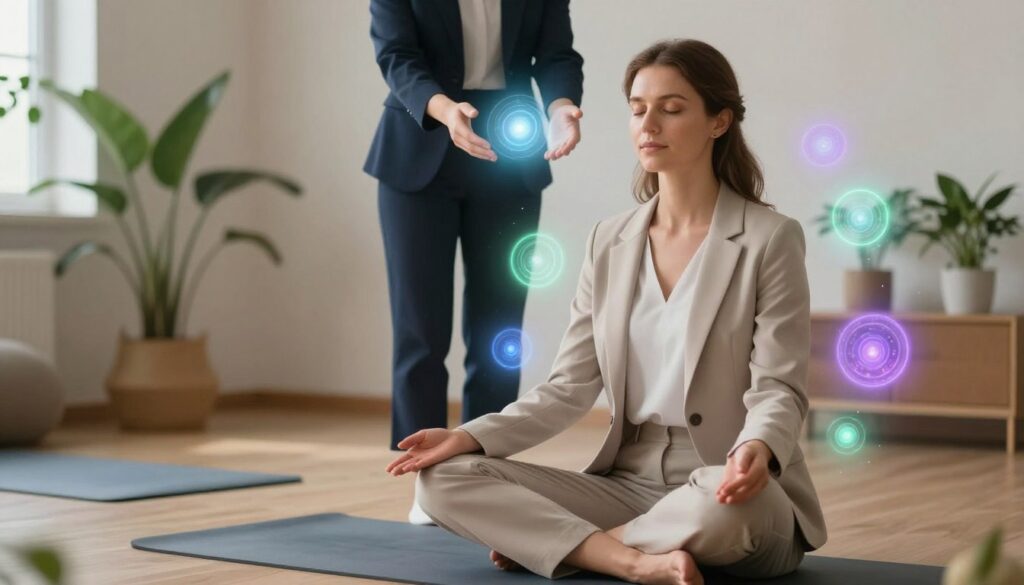
Next, we’ll move from cultural context to session basics—how practitioners describe flow, balance, and the steps they use to guide a session. For practical steps you can try, see this brief guide.
What is an energy healing and how does it work?
Practitioners typically describe a session as a blend of focused attention and gentle touch aimed at bringing the client back into balance. They may work with hands on or slightly above the body to guide comfort and calm.
Channeling healing energy through the hands to restore energy balance
A common explanation says practitioners channel healing energy through their hands toward the client to support energy balance. Sessions often begin with grounding and a brief check-in. Then the practitioner scans for tense spots and uses intentional hand placements to encourage relaxation and perceived flow.
The “biofield” concept: a field that surrounds and permeates living bodies
Biofield refers to a proposed, massless field that surrounds and permeates the body. It functions as a model some use to describe sensations and patterns during a session, though it remains a hypothesis rather than a mainstream medical model.
What “blockages” and “flow” mean in common language
Terms like “blockages” or “stagnant flow” often point to tension, overwhelm, or emotional holding patterns. Many people report outcomes such as calm, clarity, or release, which are subjective shifts rather than claims to treat disease.

For practical tips on sending focused intention, see this short guide: how to send healing energy to.
Core principles of healing energy: balance, flow, and the body’s natural ability
Many traditions frame core practice around helping the body settle into balance and natural rhythms. Practitioners often describe this return to homeostasis as calming the nervous system and easing tension.
Homeostasis and the “rest and digest” relaxation response
Rest and digest means slowing heartbeat, easing breathing, and letting muscles relax. Small studies suggest such shifts match reported calm after sessions and may link to heart rate variability changes.
Life force language across traditions
Classical Chinese medicine names that flow Qi through meridians. Ancient Sanskrit texts speak of prana and chakras. These terms point to a similar idea: a life force that supports function and well-being.
Maps: chakras and meridians
Chakras and meridians act as maps practitioners use to guide touch, needles, or attention. They offer a practical way to describe body energy and where to focus during a session.
Intention, attention, and breath in the process
Simple tools—focused intention, steady attention, and paced breath—help people notice sensations and shift toward calmer states. These steps support perceived flow and deeper relaxation.

| Concept | Tradition | Practical role |
|---|---|---|
| Homeostasis / balance | Modern physiology | Supports calm, reduced stress responses |
| Qi / prana (life force) | Chinese medicine / Hindu texts | Framework for circulation and vitality |
| Chakras / meridians | South Asian / East Asian systems | Maps guiding hands, needles, or focused attention |
Note: Many people report meaningful shifts, yet science continues to study mechanisms and outcomes can vary by person and practitioner ability.
Common forms of energy healing you can try
This quick rundown highlights familiar modalities and how they differ by touch, movement, or non-touch methods.

Reiki
Reiki combines “rei” (higher power) and “ki” (life force). Sessions often use gentle hands-on or hands-off placements. People describe them as restful and soothing.
Acupuncture
Rooted in traditional Chinese medicine, acupuncture uses very thin needles at acupressure points to rebalance flow. It’s a structured treatment often chosen for pain and symptom support.
Qigong
Qigong pairs slow movement with breath to train qi circulation. It’s a self-practice many use to improve sleep, lower blood pressure, and reduce pain over time.
Pranic healing & Therapeutic Touch
Both are non-touch methods that scan the aura or field and clear perceived imbalances. Sessions focus on removing stagnant patterns and bringing in “fresh” energy.
Emotional Freedom Technique (EFT)
EFT pairs focused emotions with tapping on specific points. Think of it as a blend of acupressure mapping and exposure-style work aimed at emotional release.
Polarity Therapy, Quantum Touch, and Reflexology
Polarity Therapy uses gentle pressure, movement, and lifestyle shifts for balance. Quantum Touch mixes touch with breath and focused attention, often used for acute pain changes.
Reflexology applies pressure on hands, feet, and ears along mapped pathways to support relaxation and stress relief.
For a deeper overview of options and training, see this energy healing resource.
Benefits people report: stress relief, better sleep, and improved quality of life
Many clients describe deep relaxation during sessions and a lasting sense of calm afterward. Reports often mention clearer thinking, better sleep patterns, and small shifts in daily mood.

Relaxation and a deep sense of peace
Relaxation tends to lead the list of reported benefits. People say their nervous system feels calmer, breathing comes easier, and they leave feeling lighter.
Support for stress, anxiety, and emotional release
Many report less overwhelm and lower stress during busy seasons of life. Sessions sometimes trigger tears, laughter, or clear insights that pair well with talk therapy.
Relation to pain relief and symptom easing
Some link balanced states to reduced pain or fewer symptoms. Responses vary, so this should be seen as complementary care rather than a replacement for medical treatment.
Self-discovery, sleep, and quality of life
People often gain better sleep, clearer values, and a stronger sense of purpose. For many, this work fits into a broader wellness system alongside movement, mindfulness, and medical care.
What research says about energy healing in the present day
Recent trials and systematic reviews give a clearer picture of which practices have stronger support and which need more study.
Where evidence is strongest: Clinical trials show acupuncture and Reiki are the most studied. These approaches have multiple randomized trials and meta-analyses that report small to moderate effects on some health outcomes.

Reiki and clinical reviews
Reviews, including a Frontiers in Psychology analysis, suggest limited Reiki studies may outperform placebo for anxiety, depression, and burnout. Results are promising but rely on few trials, so replication is essential.
Why success rates are hard to pin down
Small samples, varied practitioner technique, difficulty blinding, and different outcome measures reduce confidence in pooled success rates.
“Many studies report relaxation-linked physiology, yet mechanisms remain under active investigation.”
| Focus | Evidence level | Notes |
|---|---|---|
| Acupuncture | Moderate | Multiple RCTs for pain and some health outcomes |
| Reiki | Low to moderate | Shows promise for anxiety and stress; needs larger trials |
| Other modalities | Limited | Few high-quality trials; hard to generalize |
What scientists still study: biofield hypotheses, heart rate variability, and parasympathetic markers that might explain reported calm.
Practical takeaway: If you want an evidence-informed start, try modalities with more published trials and keep a simple log of your symptoms and sleep to track effects over time.
Risks, safety, and smart boundaries with energy therapy
Before trying any modality, it helps to know the likely risks and how to set clear limits with a practitioner.
Why most approaches are low-risk: Sessions are typically non-invasive, gentle, and time-limited. Many people report calm or mild emotional shifts rather than physical harm. Still, “low-risk” does not mean right for every person.

Use as a complement, not a replacement
Complementary care should add to medical treatment, not replace diagnosis, medication, or evidence-based plans. Always keep your primary clinician informed about new treatments you try.
Red flags and practical boundaries
- Avoid practitioners who promise cures for serious conditions or pressure you to stop medications.
- Decline anyone who discourages medical follow-up or makes absolute claims.
- Trust clear intake forms, consent conversations, and transparent training information.
Common aftereffects and when to call a provider
Some clients notice fatigue, emotional release, or mild headache after sessions. Rest, hydrate, and journal changes. If new or worsening symptoms, pregnancy concerns, recent surgery, severe anxiety, or active trauma arise, contact your healthcare or mental health team promptly.
Share your full care picture: Tell providers about therapy, medications, and other treatments so care stays safe and coordinated.
What to expect in an energy healing session
Expect a simple flow: check-in, intention-setting, a guided session, and a brief debrief. This structure helps the practitioner explain their process and your goals before any work begins.
Intake and intention-setting
The session usually starts with a short intake. The practitioner asks about current symptoms, goals, and relevant medical notes.
Clients often set one or two clear aims—better sleep, less stress, or calmer breathing—so the session stays focused and safe.
Hands-on vs. hands-off and scanning
Some practitioners place hands lightly on the body; others hover or use no touch. Both styles include a form of scanning, where the practitioner notices tension, warmth, or subtle cues to guide placement.
Common sensations
- Tingling or warmth
- Heaviness or lightness
- Emotional release or deep calm
- Brief lightheadedness or pulsing
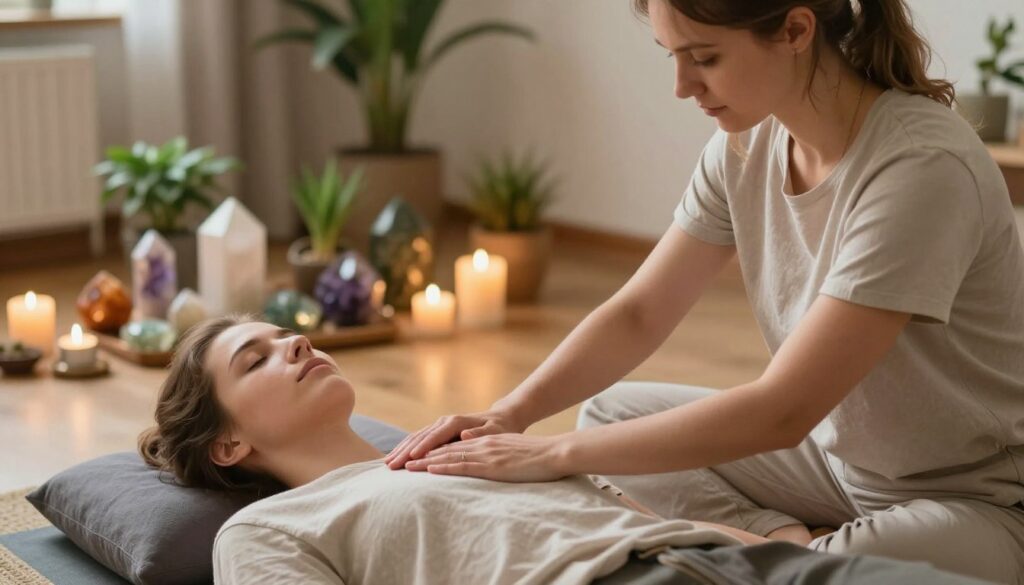
Elements, tools, and integration
Sessions may include breathwork, sound bowls, crystals, or gentle supportive techniques. Afterward, practitioners usually offer hydration, rest, journaling, and short movement to help integration.
Tip: Expect a short debrief where the practitioner shares observations and suggests pacing for future visits.
Choosing the right practitioner and approach if you’re skeptical
Look for practical signs: transparent training, clear session flow, and respect for medical care. A good fit makes sessions feel safe and useful, even for people who begin skeptical.

Questions to ask before booking
- Training and certifications — where they studied, how many years in practice.
- Which modalities they use and what a typical session includes.
- How they handle consent, boundaries, and referrals to medical care.
- Whether they welcome skepticism and explain realistic goals.
Evaluating claims like a smart consumer
Avoid anyone who promises cures, pressures you to stop medicine, or uses fear-based language.
Prefer clear scope: stress support, relaxation, or coping strategies, and open talk about limits and evidence.
Fitting this into your wellness system
Use sessions alongside talk therapy and basic self-care. Pace visits, track outcomes, and pair work with sleep, movement, and diet.
For training queries and paths, see this how to become a psychic healer.
Conclusion
In short, this guide summarizes mainstream aims, common reports, and safe next steps for people curious about these practices.
Practices aim to support balance and gentle flow so the body can settle into a calmer state. Many people report better sleep, less stress, and a stronger sense of well-being, though results vary by person and session.
Research is strongest for acupuncture and Reiki; other approaches need larger trials. Treat these methods as complementary care, not a replacement for medical or mental health treatment.
Try one small step: book a single session, learn basic qigong, or ask your provider about acupuncture. Track changes in sleep, mood, and daily function. For a focused primer, see this scalar energy overview.
FAQ
What is an energy healing: definition and principles?
Energy healing refers to a set of practices that aim to restore balance in the body’s subtle field or life force. Rooted in traditions such as Chinese medicine and Ayurvedic thought, it uses touch, intention, breath, or movement to support relaxation, circulation of qi or prana, and the body’s natural ability to return to homeostasis. Practitioners often describe working with chakras, meridians, or a biofield to reduce stress and support overall health.
How is energy healing explained in modern terms and why is it popular now?
Today many clinicians and wellness centers frame these methods as complementary approaches that promote relaxation, stress management, and improved quality of life. Interest has grown in the United States because people seek nonpharmacologic options for anxiety, chronic pain, and burnout, and because practices like acupuncture and mindfulness-based qigong have gained clinical recognition.
How does a typical session work and how do practitioners channel healing energy?
Sessions begin with intake and intention-setting. Practitioners may use hands-on touch, hands-off hovering, breathwork, or gentle movement to scan and influence the field around the body. They aim to clear blockages and restore flow, often guiding the client through relaxation that triggers a parasympathetic “rest and digest” response.
What is the biofield concept and how does it relate to symptoms?
The biofield is a proposed energetic field that surrounds and permeates living bodies. In practice, imbalances in that field are linked to symptoms like pain, fatigue, or anxiety. Working with the field seeks to shift patterns that sustain those symptoms and support symptom easing and emotional release.
What do "blockages" and "flow" mean in common practice language?
“Blockages” describe places where life force or circulation of qi/prana feels restricted. “Flow” refers to unimpeded movement of energy that supports comfort, mobility, and emotional ease. Practitioners use breath, attention, and gentle techniques to encourage flow and reduce tension.
What core principles guide these methods: balance, flow, and the body’s natural ability?
Core ideas include restoring balance across body and mind, enhancing circulation of life force, and supporting the body’s self-regulation. Techniques trigger relaxation, support immune and digestive function indirectly, and facilitate emotional processing as part of healing.
How do chakras, meridians, qi, and prana fit into this system?
Chakras are energy centers mapped along the spine; meridians are channels used in acupuncture and acupressure. Qi (Chinese) and prana (Sanskrit) name the vital force many traditions reference. Practitioners use these maps to guide where to focus attention, touch, or breathwork.
Which forms of practice can I try and how do they differ?
Common options include Reiki (hands-on or hands-off), acupuncture and acupressure (needle or pressure points), qigong (movement and breath), pranic healing (non-touch aura clearing), therapeutic touch, Emotional Freedom Technique (tapping), polarity therapy, Quantum Touch, and reflexology. Each uses different tools and degrees of contact to influence the body’s systems and promote relaxation.
What benefits do people report after sessions?
Many clients report deep relaxation, reduced stress and anxiety, better sleep, eased pain or tension, and increased clarity or emotional release. Some describe spiritual insights or a stronger sense of balance in daily life. Results vary by person and condition.
What does research say about effectiveness and evidence?
Evidence is strongest for acupuncture in pain management and for some benefits of Reiki around anxiety and stress. Systematic reviews note potential benefits but also highlight limited high-quality trials. Scientists continue studying physiological mechanisms, biofield hypotheses, and how these practices influence nervous and immune systems.
Are these therapies safe and what boundaries should I set?
Most modalities are low-risk and noninvasive when delivered by trained practitioners. Use them as complementary care, not as a replacement for medical treatment. Ask your healthcare provider when you have serious or progressive symptoms, and avoid practitioners who promise cures or discourage standard care.
What sensations or aftereffects should I expect during and after a session?
Common sensations include warmth, tingling, heaviness, emotional release, or deep calm. After a session, people often feel relaxed, tired, or refreshed; hydration, rest, gentle movement, and journaling help integration. If new or worsening symptoms arise, contact your healthcare provider.
How should I choose a practitioner if I’m skeptical?
Look for clear training, transparent session structure, and realistic claims. Ask about modalities they use, experience with your condition, and client references. Combine energy work with evidence-based treatments like talk therapy or medical care to create a balanced wellness plan.
When should I consult my primary care provider or mental health team?
Seek medical or psychiatric advice for worsening pain, new neurological signs, suicidal thoughts, or concerning physical symptoms. Use energy therapies alongside professional care for chronic conditions, rather than in place of diagnostic testing or prescribed treatment.