

This short guide explains the core idea behind a popular wellness practice. In plain terms, it describes a full-body listening session often called a sound bath. Listeners sit or lie while tones from bowls, gongs, or chimes help promote calm and restorative states for the mind and body.
Vibrations can shift brain waves, reduce stress, and support relaxation through simple breath and focus techniques. Many people use this non-invasive therapy as a drug-free self-care tool during busy, screen-heavy lives. Experiences differ: some feel deeply relaxed; others notice emotions or memories rising, which can be part of a normal process.
This article promises clear, practical info about how sessions feel, common instruments, likely benefits for sleep and anxiety, and what current research reports. It is an informational guide, not medical advice. For more on related practices, see this practical resource.
Key Takeaways
- Sessions often feel like a deep, full-body listening experience.
- Sonic vibrations may ease nervous system arousal and foster calm.
- Tools include singing bowls, gongs, chimes, and voice.
- Use as a complement to medical care, not a replacement.
- Results vary; both relaxation and emotional release are normal.
What Is Sound and Energy Healing?
In modern wellness spaces, practitioners use tuned instruments to create long, calming tones that invite inward focus.
Terms today often overlap. Sound healing serves as the umbrella label for practices that use tones for relaxation. Sound therapy frames those methods more clinically, while a sound bath names the common group or private session format where listeners “bathe” in layered tones.
People use “energy” language because practitioners treat vibration as a force that affects mood and physiology. Much like how fast music lifts mood and slow music soothes, intentional tones guide breath, attention, and body state.
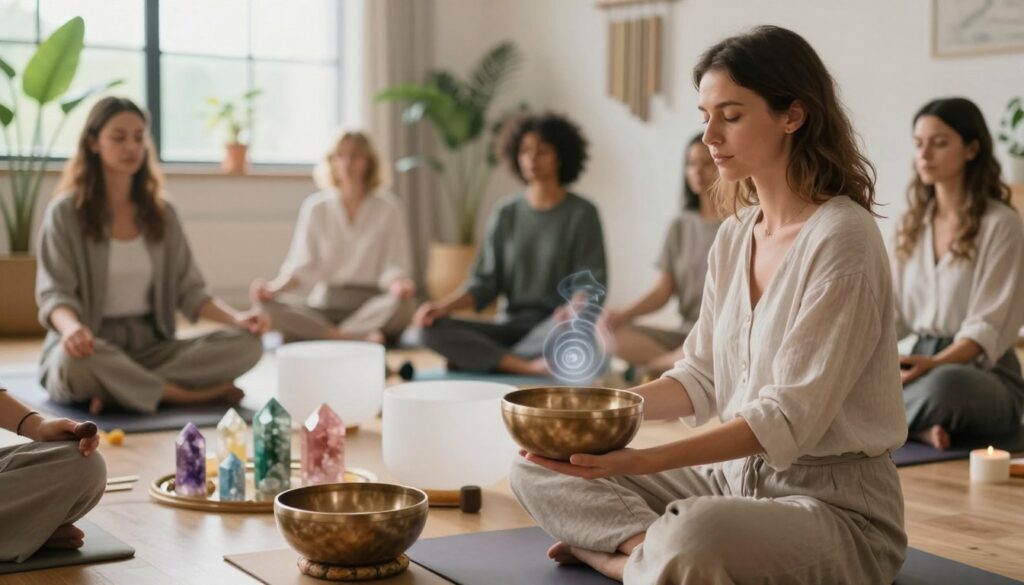
Roots trace to ancient cultures across Egypt, India, and China, yet the practice gained U.S. momentum as a noninvasive self-care way to manage stress and burnout. Sessions now appear in studios, corporate events, clinics, private 1:1 settings, and online.
Choose a style that fits you: some facilitators focus on mindfulness and simple relaxation, while others include chakras or intentional emotional work. Pick the approach that resonates.
How Sound Healing Works in the Body and Mind
Low, steady tones can move through the room and the body, shifting attention from busy thought to calm sensation.
Frequency and physical feeling
Frequency means how fast a vibration repeats each second. Slower tones feel grounding; higher tones feel bright or alert. Strong bowls and gongs create vibrations that travel through air and into tissue, so people often feel pulses across the body, not just hear them.
Brain waves and calmer states
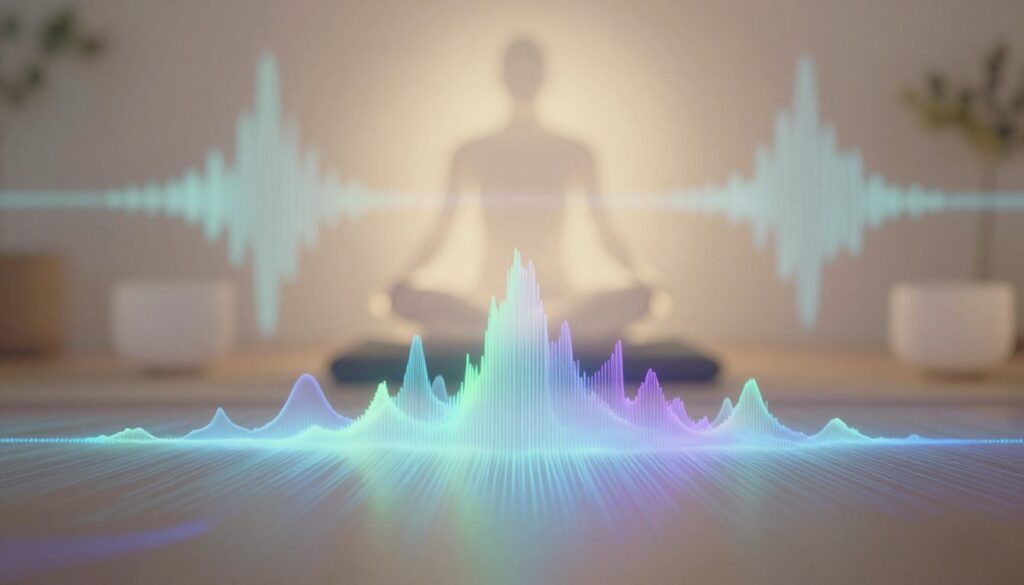
Reviews report shifts from agitated patterns to calmer waveforms. As brain waves slow, listeners commonly move into alpha and theta ranges — a relaxed, near-meditative state that supports rest and reflection.
Nervous system responses
In calmer states, breathing usually slows and deepens. Heart rate and blood pressure can drop, helping the parasympathetic system settle and the whole body feel more regulated.
Entrainment and cymatics
Entrainment means systems sync with steady rhythms. A repeated wave can help the body align with a steadier pace, reducing scattered thought.
Cymatics shows how vibration moves matter — think ripples on water. Those tiny movements travel through air to skin and tissue, creating a full-body reception of tones.
“Many people notice both calm and brief emotional release during sessions; responses vary.”
Note: Explanations mix scientific findings about relaxation responses with holistic language about vibration and subtle fields. Individual reactions differ; for practical tips on sending focused intention, see how to send healing energy.
Types of Sound Healing Sessions You Can Try
Practitioners in the U.S. present a range of session formats, each tuned to different needs and tolerance for volume.
Group baths, private sessions, and guided journeys
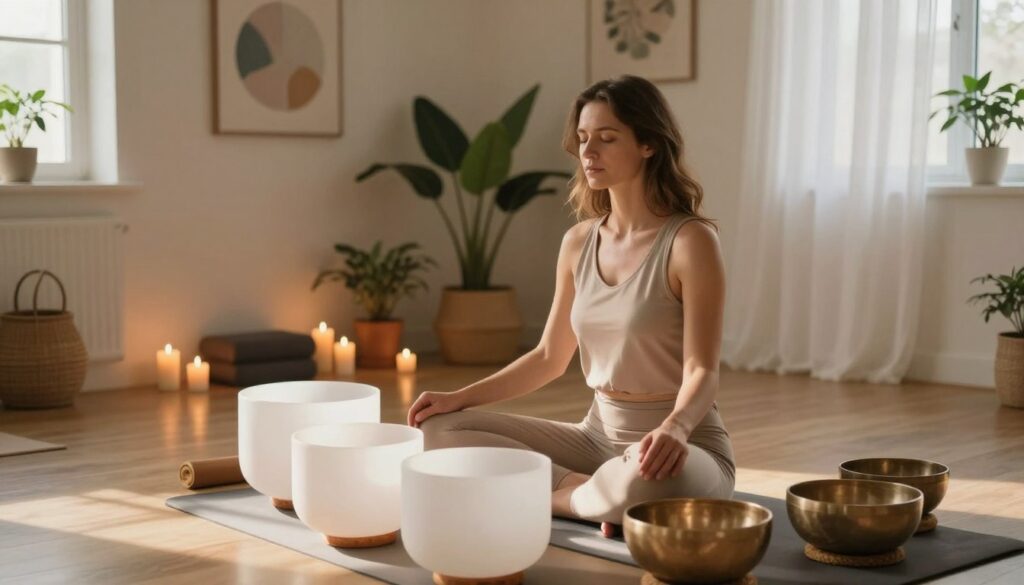
Group sound baths at studios offer a shared meditation setting where participants sit or lie while bowls, chimes, or voice create layered tones.
Private 1:1 healing sessions let a facilitator tailor pacing and intensity for a single person. Sound journeys shift textures and dynamics to lead listeners through a crafted arc.
Gong baths and power sound experiences
Gong baths deliver louder, more enveloping tones. Some people find this cathartic or energizing; others prefer gentler bowls for a first-time healing session.
Integral approaches for targeted support
Integral Sound Healing frames sessions around specific goals like sleep support, stress load reduction, or emotional regulation. Practitioners may include chakra language depending on training.
How to choose: pick by volume sensitivity, comfort with intensity, and the after-state you want—calm, clarity, or creative uplift.
- Try a gentle studio bath after a long day.
- Book one-on-one work for targeted symptoms or deeper focus.
- Opt for a gong if you want a dynamic, powerful experience.
“Many people schedule sessions based on life rhythm—after stress, during a difficult season, or as weekly self-care.”
For practical steps on focused practice and practitioner techniques, see perform energy work.
Instruments Used in Sound Healing (and What They Do)
A session’s instruments shape the room: each tool brings a unique overtone, volume, and tactile pulse.
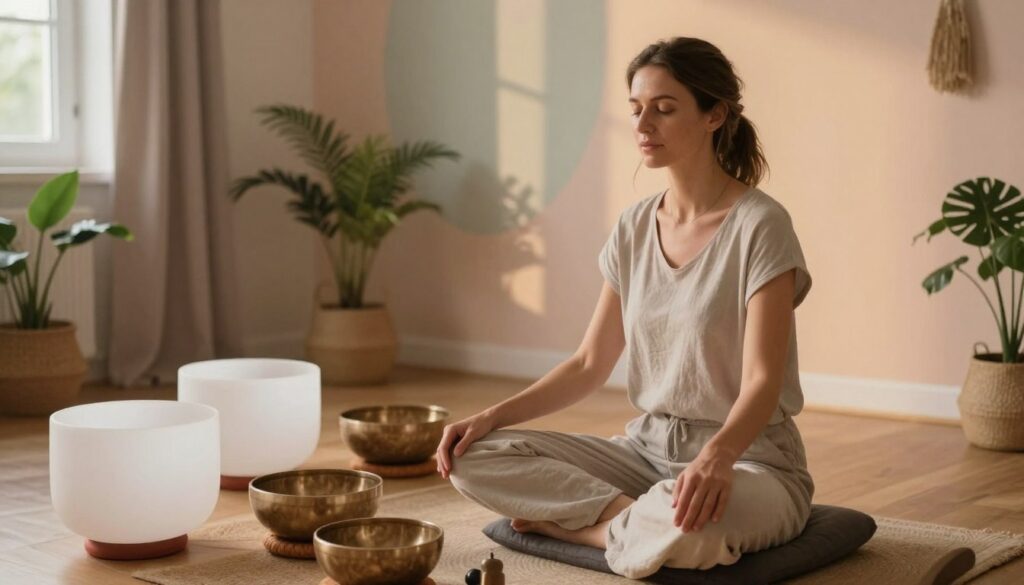
Himalayan singing bowls
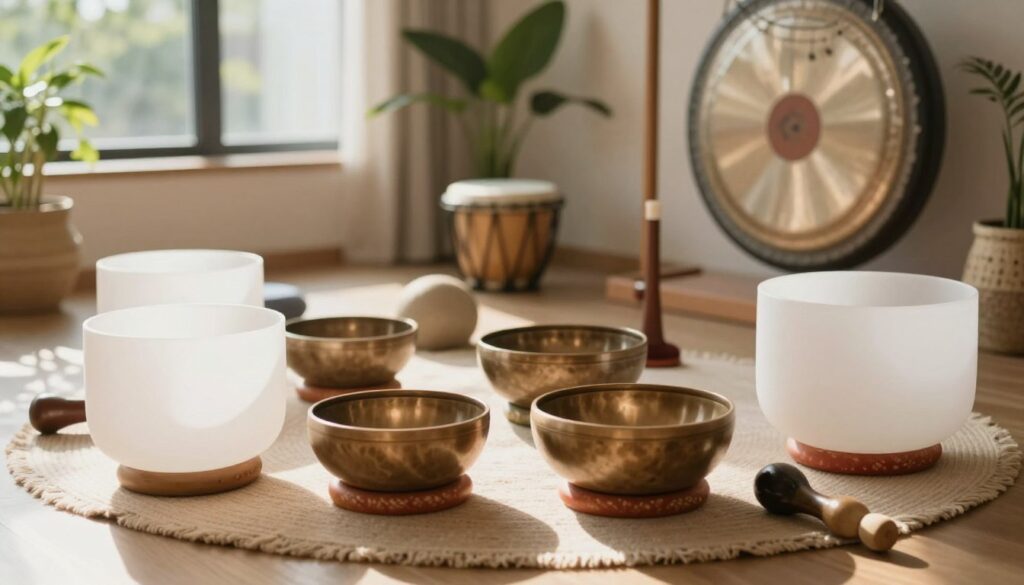
Himalayan singing bowls, often called Tibetan bowls, are metal cups that produce warm, layered tones. Listeners report these bowls as grounding and soothing. They create rich overtones that settle attention and support deep breathing.
Crystal singing bowls
Crystal singing bowls give bright, resonant tones with long sustain. The phrase crystal singing refers to their clear timbre rather than a vocal performance. Practitioners use them when clarity and steady resonance are the goal.
Tuning forks
Tuning forks offer focused vibration for targeted work. A practitioner may place a fork near an area of tension or hold one close to the ear to support calm focus. Their narrow frequency range makes them precise tools.
Gongs, chimes, shruti boxes, and monochords
Gongs deliver vast, powerful washes. Chimes add light, sparkling accents. Shruti boxes supply a steady drone, and monochords create a rich harmonic wash. Together, these instruments form layered textures that guide an immersive session.
Choosing instruments and a practical tip
Practitioners choose by intention (relaxation versus uplift), room size, and group sensitivity. The mix of timbre and volume shapes the listener’s path through calm and energetic moments.
- Tip: If you are sound-sensitive, ask about volume and instrument mix before booking to ensure comfort.
- Many facilitators play intuitively, creating non-rhythmic journeys with highs and lows.
“Different instruments create distinct felt profiles; the right choice supports the client’s goal.”
For a related practical ritual guide, see make a love spell at home.
What to Expect During a Sound Bath or Sound Healing Session
Before a session begins, the room is arranged so your body can settle without fuss. Practitioners usually ask you to remove shoes, pick a mat, and lie down with a blanket or neck cushion for support.
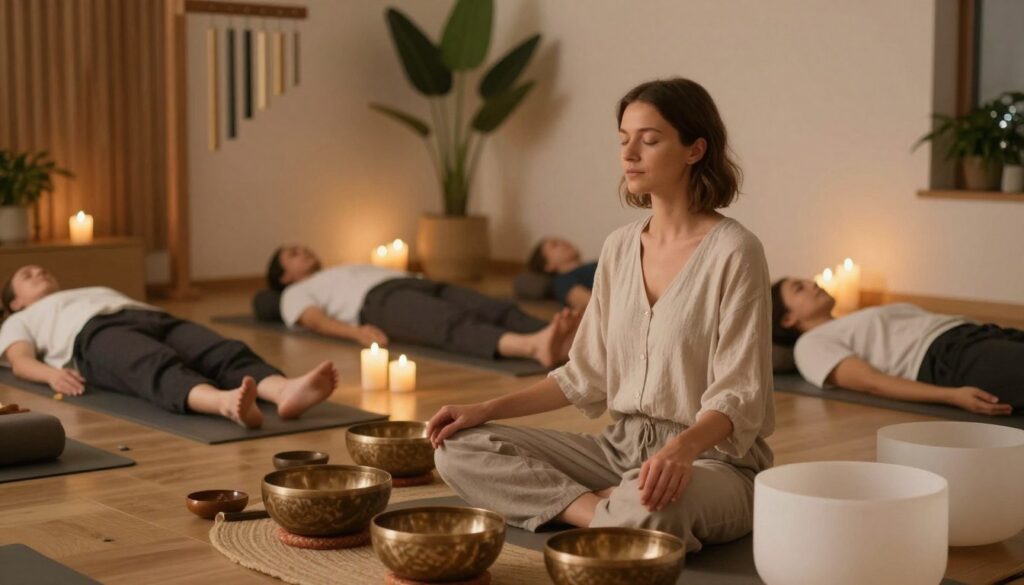
Setting the space
Comfort items often include an eye mask, bolster, and extra blanket. These props help the body relax so the mind can rest.
Guided listening
The facilitator may invite slow breath, offer gentle cues, and remind you that there’s no “right” response. Letting thoughts float by is part of the session’s point.
How the sounds feel
Expect layered tones that drift, pulse, or shimmer—designed for immersion rather than melody. The tones can be felt in the body, not only heard.
Common experiences
People report deep rest, shifts in time perception, vivid imagery, or short naps. Some notice insights or calm clarity after a bath.
Emotional release and practical tips
Lowered defenses can bring up tears, laughter, or sudden memories. This type of release is often cathartic and normal.
- Eat lightly that day and arrive hydrated.
- Plan a 15–30 minute buffer after the session to ground before returning to a busy day.
- If you want guided learning about related practice, see psychic medium classes.
“Crying or strong feelings during a bath can be part of a healthy release.”
Benefits of Sound and Energy Healing for Stress, Anxiety, and Sleep
Short sessions may reset a racing nervous system and make tension feel easier to release.
Mental well-being support
Many people use sound healing for stress relief and to calm anxious looping. Sessions often help steady mood and ease low-level anxiety without medication.
Sleep quality and recovery
As the nervous system downshifts, breathing slows and rest deepens. This can support better sleep and reduce daytime fatigue when used as an evening routine or weekly reset.
Physical comfort
Vibration plus deep relaxation can help the body soften gripping patterns. That may ease tension and offer gentle support for chronic pain without promising cures.
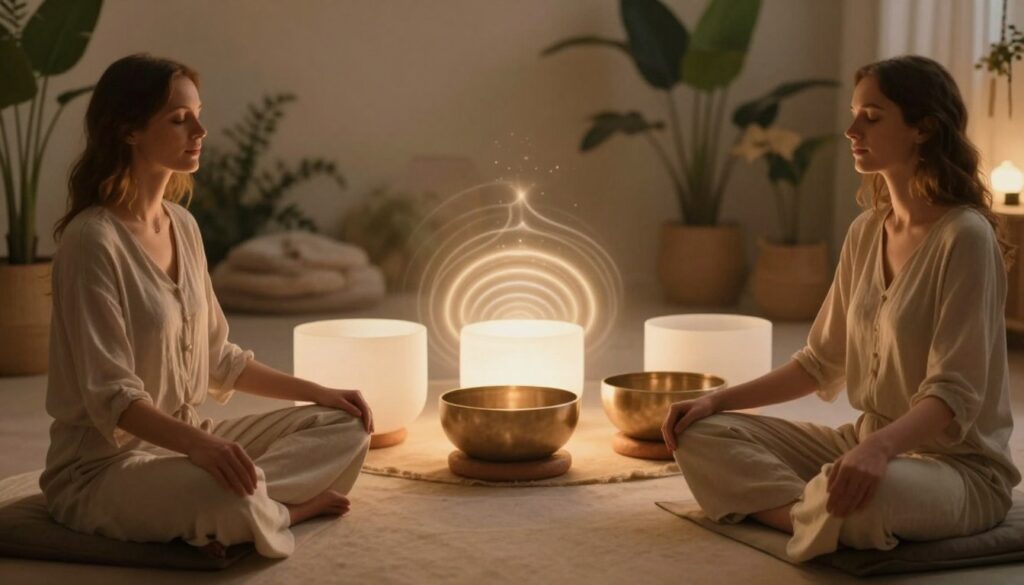
“Deep relaxation is a common outcome; many report lower heart rate and calmer breathing after sessions.”
Use as complementary care: pair this therapy with talk therapy, movement, and medical plans for stress-related symptoms.
| Benefit | Typical effect | How to track |
|---|---|---|
| Stress relief | Lowered arousal, calmer days | Daily stress rating (1–10) across 4 sessions |
| Anxiety easing | Less rumination | Note frequency of anxious episodes per week |
| Sleep support | Faster sleep onset, less fatigue | Track sleep hours and restfulness for two weeks |
| Physical comfort | Reduced muscle tension | Journal pain/tension levels before and after sessions |
Tip: judge progress over several sessions instead of one. Small, steady shifts often reveal the true healing power.
What the Research and Evidence Say (and What’s Still Emerging)
Recent reviews show measurable shifts in brain activity after guided tone sessions, often toward calmer electrical patterns.
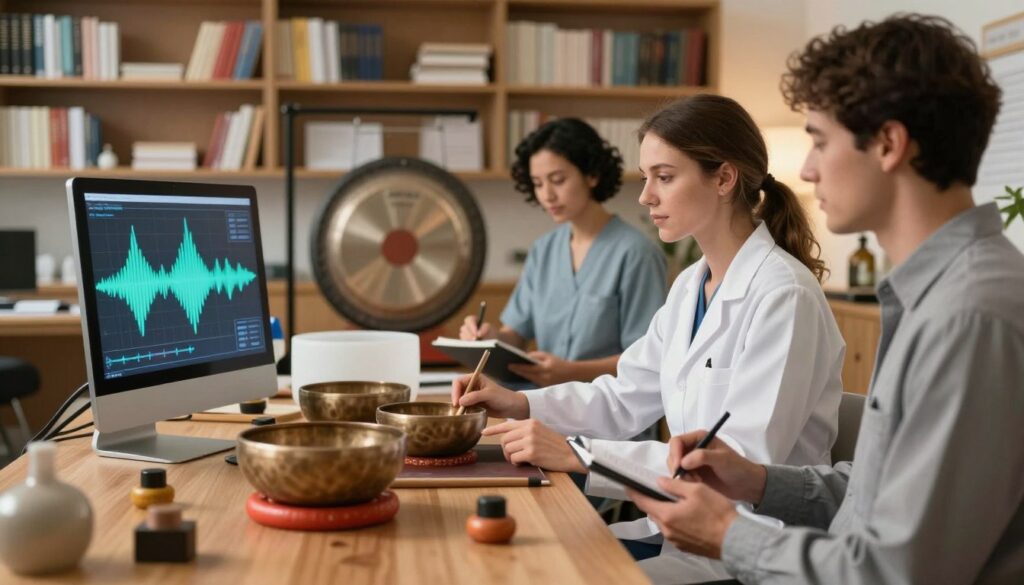
Calming brain waves and relaxation responses
A 2020 review found that tone-based interventions can move agitated waves into alpha and theta ranges. Breathing slows, heart rate dips, and blood pressure often lowers after sessions.
Conditions most often supported
Researchers and practitioners list supportive outcomes for stress, anxiety, mood, sleep/fatigue, chronic pain, cognition and memory, plus general well-being.
“Findings are promising, but study size and methods vary; caution in interpretation remains.”
Evidence-informed yet emerging: trials show consistent relaxation effects, but designs differ. That limits wide, causal claims.
- Treat results as supportive, not curative.
- Use sessions alongside lifestyle care, mental health work, and medical advice when needed.
- Try a first session as an experiment: note baseline sleep and stress, then observe changes for 24–48 hours.
| Area | Typical outcome | How to measure |
|---|---|---|
| Stress | Lowered arousal | Daily stress scale |
| Sleep | Faster fall-asleep, more rest | Sleep hours, restfulness score |
| Pain | Reduced muscle tension | Pain rating journal |
For guided learning and related resources, see practical energy work.
Who Sound Healing Is For and How to Choose a Qualified Practitioner
Many people try tone-based sessions for simple stress relief or curious self-care, not only for specific medical complaints. Quiet seekers, busy professionals, beginners, and those who find silent meditation hard all report benefit. You don’t need a problem to fix to join a session.
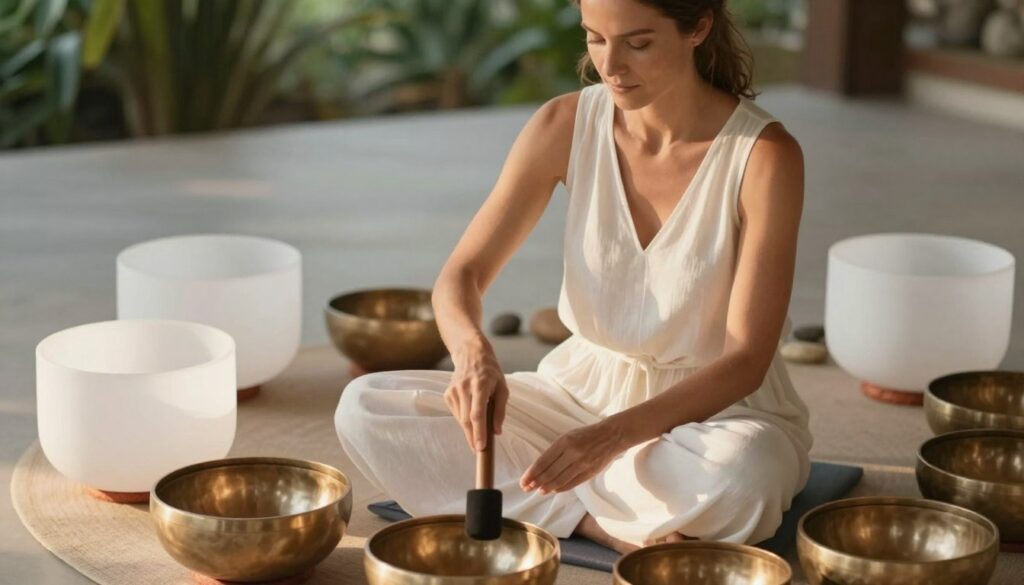
Signs a practitioner feels qualified
Look for clear training history, transparent session structure, and consent-first practices. A good practitioner adapts volume and timing to your comfort and explains what to expect.
Questions to ask before booking
- Which instruments do you use?
- How loud will the session be?
- Is this mostly a group bath or a more interactive format?
- Do you include intention setting, breathwork, or chakra-focused language?
Choosing between offering types
Pick gentle bowls for restful sessions and gong-heavy work for a dramatic experience. Private sessions let facilitators tailor pace. Group sessions offer shared energy and a lower cost.
In-person vs. online
In-person gives full-bodied acoustics and shared space. Online offers convenience and repeatable content; good speakers or headphones and a quiet room make it work. Try both to find fit.
“If a practitioner’s style feels too intense or unsafe, it’s okay to try someone else; comfort matters.”
Safety, Contraindications, and Best Practices for a Positive Experience
Safety matters: even gentle tone work affects the nervous system, so plan each session with care. Comfort, consent, and moderation help most people have a positive experience.
When to check with your healthcare provider
If you manage a serious medical condition, seizures, major mental health symptoms, or recent surgery, check with a clinician before booking. Ask about any implants, inner-ear concerns, or medications that might alter reactions.
Pregnancy and other contraindications
Many facilitators advise caution in the first and third trimesters. Discuss plans with both your prenatal provider and the practitioner before attending.
How to stay comfortable
Wear soft loungewear and bring layers. An eye mask or small pillow helps support the neck. Choose a lying or supported seated position your body can hold without strain.
If you are sound-sensitive, bring earplugs or request a quieter spot. You may step outside at any time if needed.
After a session: simple aftercare
Hydrate, move gently, and give yourself time to ground. Try light stretching, a short barefoot walk, or a warm cup of tea. Many people notice shifts for 24–48 hours, so plan a calm remainder of the day.
Tip: explore options and find a qualified practitioner. For related guidance, see practical psychic healing resources.
Conclusion
An immersive listening practice uses tuned instruments to guide attention, calm the nervous system, and invite reflective rest.
, In short, sound healing offers a calming, restorative path that can be felt in the body and can steady the mind. Sessions range from gentle bowls to fuller, gong-driven washes; outcomes span deep rest to brief emotional release.
Practical next steps: choose a gentle session if you are new, ask practitioners about training and volume, and plan aftercare like hydration and quiet downtime. Try one simple bath, note sleep and mood changes, then adjust your plan.
Balanced view: treat this practice as a supportive self-care tool. For medical concerns or serious symptoms, consult a licensed healthcare provider before booking.
FAQ
What does sound and energy healing involve?
This approach uses tones, instruments, and vocal resonance to support relaxation, nervous system balance, and emotional release. Practitioners use bowls, gongs, tuning forks, chimes, or voice work in guided sessions that combine listening with breath and mindfulness cues.
How do vibrations affect the body and mind?
Vibrational waves travel through air and tissue, producing tactile sensations and shifting brain activity toward calmer alpha and theta states. That entrainment can slow breathing, lower heart rate, and promote a deep sense of rest.
What types of sessions are available?
Options include group sound baths, private healing sessions, gong baths, guided sound journeys, and focused tuning-fork work. Some offerings emphasize powerful gong or drum tones, while others center on crystal singing bowls for a purer, resonant pitch.
Which instruments are commonly used and why?
Himalayan and Tibetan singing bowls, crystal singing bowls, gongs, tuning forks, chimes, shruti boxes, and monochords are common. Each creates distinct frequencies and overtones; practitioners select tools based on desired intensity, frequency range, and therapeutic intent.
What should I expect during a sound bath?
Sessions usually take place lying down with mats, blankets, and eye masks. The practitioner guides breath and attention while playing instruments. People often experience deep relaxation, altered time perception, imagery, or emotional release rather than a typical musical concert.
Can sessions help with stress, anxiety, or sleep problems?
Many people report reduced stress, calmer mood, and improved sleep after sessions. Vibrational work supports nervous system recovery and can ease tension, which may help with chronic discomfort and fatigue when used alongside conventional care.
What does research say about these methods?
Studies show shifts in brain-wave patterns and relaxation responses after vibrational sessions, though larger clinical trials are still developing. Evidence supports short-term reductions in stress markers and subjective anxiety for many participants.
Who benefits from vibrational therapies?
People of varied ages and backgrounds attend sessions—those seeking stress relief, enhanced meditation, emotional processing, or gentle physical support. Sessions can be adapted for beginners through experienced meditators.
How do I choose a qualified practitioner?
Ask about training, session style, instruments used, and experience with specific goals. Look for clear communication, professional boundaries, and client testimonials. Many practitioners offer shorter intro sessions to gauge fit.
Are there any safety concerns or contraindications?
Check with your healthcare provider for recent surgeries, implanted devices, or seizure conditions. Pregnant people should seek practitioners with prenatal experience. Loud gongs or intense vibrations may be unsuitable for some medical situations.
How should I prepare for a session and what to do afterward?
Wear comfortable layers, bring water, and arrive with an open, relaxed attitude. After a session, hydrate, rest if possible, and allow time for integration—journaling or gentle movement can help process insights.
What’s the difference between crystal singing bowls and metal singing bowls?
Crystal bowls produce clear, sustained tones that emphasize specific pitch frequencies, while metal bowls yield complex overtones and a warmer timbre. Each offers different tactile and auditory experiences suited to varied session intentions.
Are online sound sessions effective?
Virtual sessions can support relaxation and guided listening, though in-person work provides fuller tactile resonance from large instruments like gongs. Quality audio setup and clear instruction make remote sessions a good option for many people.
Can vibrational work be combined with other therapies?
Yes. Many clients pair sessions with massage, psychotherapy, yoga, or acupuncture. Always inform each provider about concurrent treatments to ensure a coordinated, safe approach.