

Quick, clear context: This introduction explains how analysts read cryptic quatrains and how to separate dramatic claims from evidence. Michel de Nostredame wrote Les Prophéties in the 1500s; its symbolic quatrains invite many meanings.
We review the big themes people discuss today — the “fireball from the heavens,” long wars and resource strain, climate and water risks, and political turmoil in English-speaking nations. We pair each theme with historical context, language notes, and data such as NASA’s current sky-risk updates.
Our approach is trend analysis. We track how ideas spread on social media and why readers connect with them. Historians warn against retrofitting events to verses, and experts remind readers to prefer evidence over panic.
For a year-by-year look at verses and interpretations, see a detailed timeline at this resource. This guide aims to offer balanced insight so you can judge claims about events and the world with calm clarity.
Key Takeaways
- Les Prophéties uses symbolic quatrains, not precise calendars.
- Experts caution against retrofitting verses to modern events.
- We compare popular themes to data from NASA and policy surveys.
- Trend analysis shows why these ideas spread on social media today.
- Read this guide to weigh dramatic language against verifiable facts.
User Intent and Why 2025 Predictions Are Trending
People turn to old verses when modern headlines make the future feel uncertain. Searches for predictions 2025 often come from readers who want to know if the end of the year brings real danger or just drama.
Short social posts and viral videos supercharge interest today. Creators frame quatrains as countdowns, and that format feels urgent. Personal shares from friends spread faster than long reports.
Key concerns include war risks, money stability, and personal safety as news cycles speed up and crisis fatigue grows.
- Many users want quick clarity about the last days of the year and whether to prepare.
- Viral posts add exact dates even when original verses give none.
- Experts urge readers to pause and verify lines against manuscripts and data.

| User Intent | Social Driver | Expert Caution |
|---|---|---|
| Check whether the year-end risks are real | Short videos and bold captions | No original quatrain links to exact days |
| Seek guidance on safety during uncertain years | Personal posts feel persuasive | Historians warn against retrospective dating |
| Understand war and economic signals | Hashtags and graphics amplify reach | Verify claims with primary text and data |
Nostradamus in Context: The Seer, the Book, and the Quatrains
Small, symbolic verses invite big interpretations across centuries and cultures. Les Prophéties is a compact book of short stanzas that reward many readings rather than offer clear timelines.
The 1555 volume is organized into “centuries” filled with quatrains. Each quatrain is four lines long and often mixes archaic French with Latin and Greek. That patchwork makes direct translation tricky.
The language, coded metaphors, and historical allusions let readers link lines to different years and events. Scholars note this deliberate vagueness encourages flexible readings.
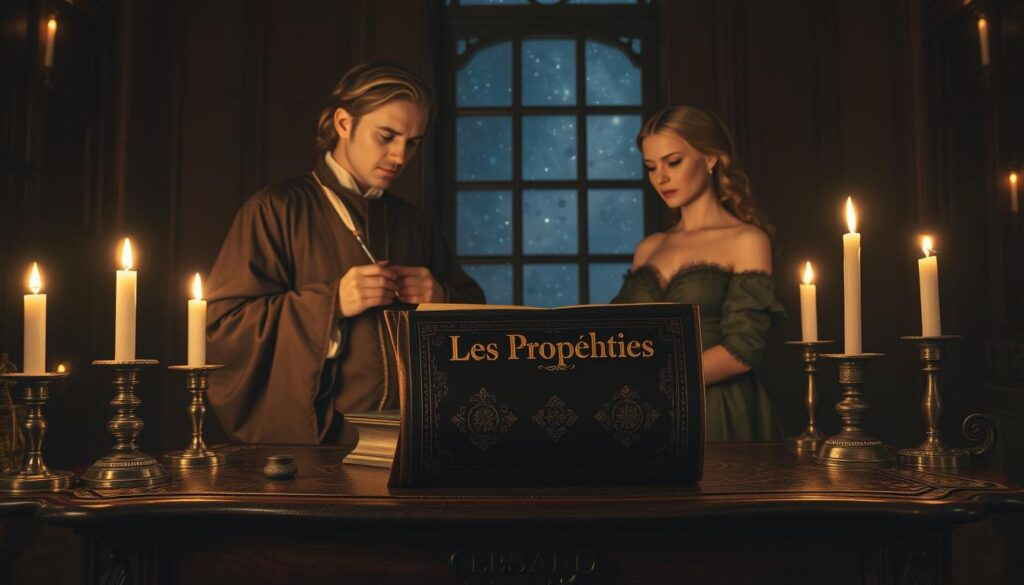
Les Prophéties: structure, language, and why interpretations vary
Structure matters: the book groups quatrains into centuries, not calendars. This means short, symbolic lines can be applied across many years without fixed dates.
The mix of a physician, astrologer, and reputed seer shaped the tone. He wrote during plague and political turmoil, so images of war and disease reflect his era as much as any future event.
Astrologer, physician, reputed seer: how a 16th‑century figure shapes today’s world
As an astrologer and healer, this man blended sky-watching, medical notes, and poetic divination. That blend explains why modern readers find both literal and metaphorical meanings in the verses.
- Poetic form: invites metaphor and modern mapping.
- Historical lens: 16th-century strife colors many images.
- Scholarly caution: few quatrains include dates, so tying one to a single year is risky.
| Feature | Why it matters | Reader impact |
|---|---|---|
| Centuries and quatrains | Non‑dated grouping | Verses apply to many years |
| Archaic language mix | Ambiguous terms and metaphors | Multiple translations possible |
| Author’s roles | Physician + astrologer + seer | Blend of science, sky, and symbolism |
| Historical context | Plague and conflict in Europe | Imagery rooted in 16th‑century fears |
How to use this section: Treat the verses as cultural mirrors. If you want a year-by-year reading and interpretations, see an annotated timeline at this resource.
what nostradamus predicted for 2025: the major themes people cite today
A few lines of old verse can spark big modern debates. Short quatrains are flexible, so readers map them onto current fears about a dramatic end of a year.
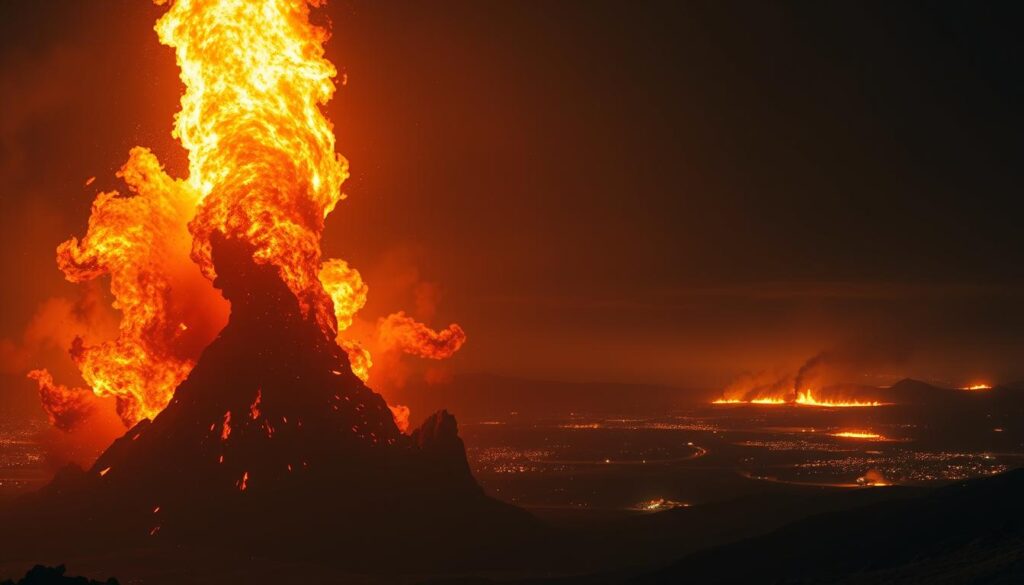
“Fireball from the heavens”: asteroid, atomic bomb, or metaphor
Headline verse: a fireball image is linked to an asteroid, nuclear blast, or social upheaval.
Interpreters favor each reading for different reasons: orbital risks, Cold War echoes, or symbolic rapid change. No quatrain names a specific date, so firm claims rest on modern framing.
Wars and resources: coin leather and shifting power
Lines about long war and token coinage get tied to current wars, supply strain, and regional actors. Analysts note links to morale and money but warn against direct mapping from metaphor to modern geopolitics.
Plague and upheaval: cruel wars and ancient pestilence
Verses mentioning cruel wars and an ancient plague feed anxieties about royal conflict and disease cycles. Public health memories make those lines feel timely, though they remain elastic texts.
| Theme | Common modern reading | Interpretive risk |
|---|---|---|
| Fireball | Asteroid / bomb / metaphor | Vague timing; retrofitting |
| Long war & coin leather | Resource strain; regional shifts | Symbolic items ≠ direct country names |
| Plague & cruel wars | Public health worries; royal unrest | Broad imagery across eras |
| World’s garden / Aquatic Empire | Climate disaster; maritime rise | Metaphor vs literal reading |
Bottom line: these readings draw on short, elastic quatrains. Treat any single year-specific claim as a hypothesis, not a dated commitment in the text.
Fireball From the Sky: Parsing the Asteroid and “Cosmic” Prophecies
A single vivid line about a “heavenly blaze” can travel from a dusty page to a viral headline overnight.
How that happens: a short quatrain image, a bold caption, and repeated shares compress context. Over time, readers start to treat the verse as a prediction of a specific end‑of‑year event or day.
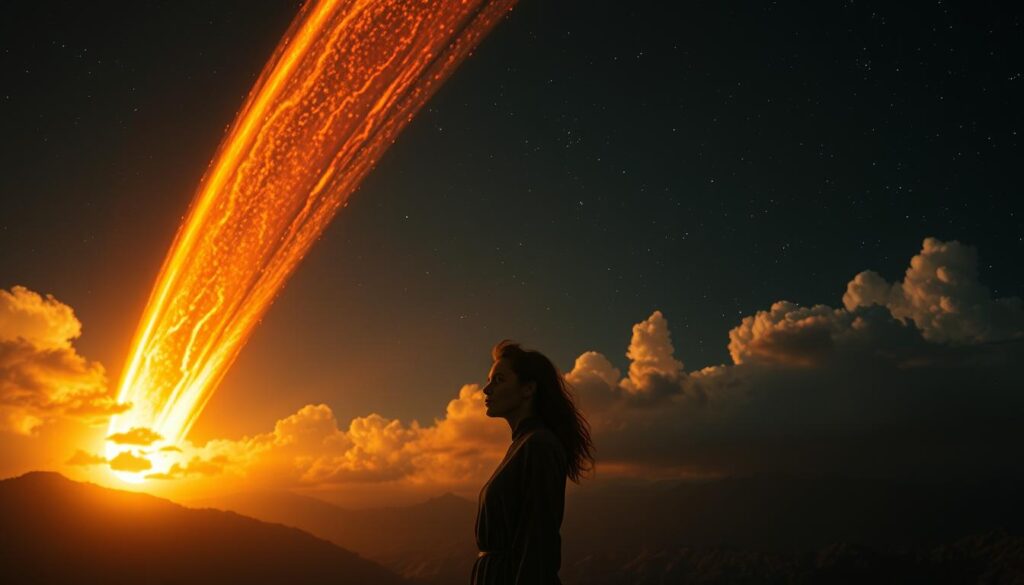
From quatrain to headline
Social packaging simplifies ambiguous words into urgent claims. Editors and creators frame a metaphor as a calendar warning. That process turns symbolism into a near‑term forecast.
Expert reality check
“Scholars note terms like ‘feu céleste’ admit multiple readings.”
Translation choices drive debate: one reading supports an asteroid impact while another sees political or spiritual upheaval. NASA reports no known asteroids or comets on a collision course in this year, which reduces odds of a real strike.
- Treat literal asteroid claims cautiously.
- Recognize fireball language often signals transformation, not a scheduled impact.
- See a detailed timeline at this timeline.
Bottom line: these quatrains comfort imagination but do not schedule disasters. Absent verifiable space data, the safest reading emphasizes symbolic change over a literal celestial strike.
War, Conflict, and Power Shifts: Interpreting Mars, “Three Fires,” and the West’s “Fading Light”
References to a ruling Mars and three fires have a natural resonance with today’s hot spots and alliance strains.
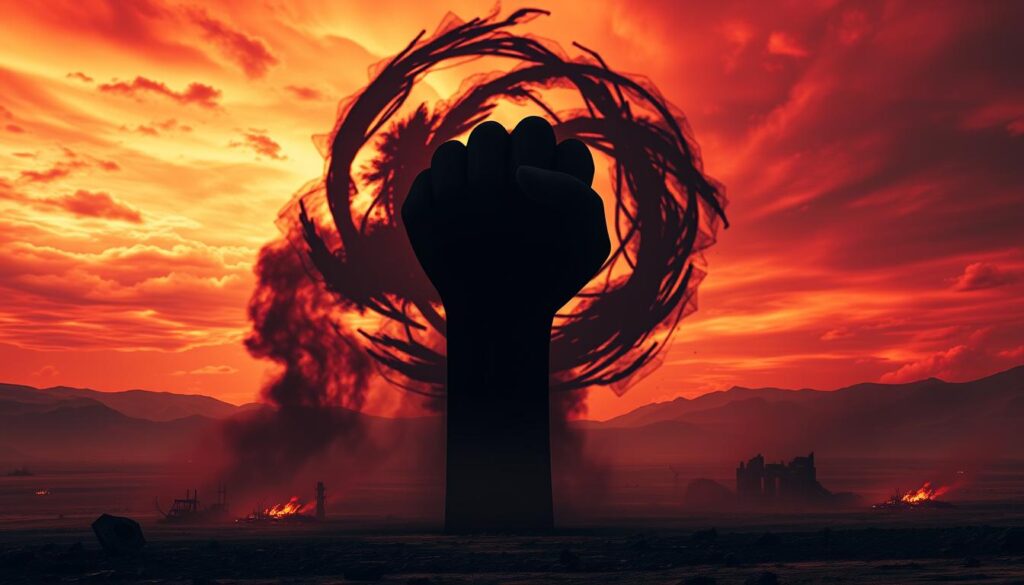
Modern analysts link those images to tensions in eastern Europe, NATO–Russia frictions, and the Taiwan Strait. Surveys from the Atlantic Council and RAND place up to a 30% risk of a major global conflict by 2026, which helps explain why readers map ancient lines onto present threats.
Modern risk landscape
Why the mapping happens: martial symbols in short quatrains invite quick nation assignments. The Mars image becomes shorthand for rising military pressure. The “three fires” line is read as multiple fronts or flashpoints rather than a precise timetable.
Resources, money, and morale
Another verse—“Instead of gold or silver… coin leather”—is used to discuss supply strain, shifting funding, and dwindling morale in long war campaigns.
- Analytic scenarios speak in years and probabilities; poetic lines offer loose signs.
- Money and gold metaphors resonate because funding, sanctions, and aid are real constraints.
- Treat such quatrains as prompts to study drivers of conflict, not as fixed calendar claims.
Learn how symbolism shapes modern readings and keep analysis grounded in data rather than dramatic leaps.
Climate, Water, and the “World’s Garden”: Disasters, Plagues, and the Aquatic Empire

When quatrains mention sulfurous flows, listeners often link the verse to major environmental disasters.
Readers map the “world’s garden” to places like the Amazon and to broader climate stress where water quality and extreme weather intersect.
Amazon and sulfurous waters
Why the link forms: recent floods, fires, and polluted rivers make a single line feel like a modern sign of damage. That mapping is plausible as metaphor, not a dated forecast.
Plague and disease cycles
Lines about pestilence tap public anxiety. Mentions of plague prompt readers to think about disease cycles and health readiness across years and days.
Aquatic empire and sea symbolism
“Aquatic empire” sparks talk about sea power, trade routes, and sea-level rise rather than literal Atlantis. The rise language often reads as political and environmental metaphor.
- Use these quatrains as prompts to study climate adaptation and water infrastructure.
- Treat poetic disaster motifs as cues, not precise calendars.
| Theme | Common reading | Caution |
|---|---|---|
| World’s garden | Amazon damage; global climate | Metaphor, not dated proof |
| Sulfurous waters | Polluted rivers; floods | Vague location and timing |
| Aquatic empire | Sea power; sea‑level rise | Symbolic, not literal empire |
Practical note: use these images to drive preparedness and policy interest. For contextual reading and deeper sources, see an annotated guide at this resource.
Why These Prophecies Stick: Social Media, Psychology, and “Today’s” Lens
Platforms reward fast, dramatic takes, and that shapes how people read prophecy today.
Short clips and bold captions turn symbolic lines into bite-sized predictions. Hashtags like #Nostradamus2025 and #Endof2025 have drawn millions of views on TikTok and X, amplifying each claim.
Why this spreads: viewers seek patterns in uncertain times, so repeated clips make a claim feel truer. When many others echo a dramatic event, it gains social weight fast.
The engagement economy also nudges participation. Creators add dates, captions, and graphics, becoming co‑authors of modern meanings. That participatory loop blurs reporting and storytelling.
Be skeptical: check whether a verse actually names a time or place, or whether interpreters appended that detail later. Compare translations and look for source citations before accepting a viral prediction.
- Predictions mix real risks—war, climate, markets—with symbolic language.
- Prophecies survive because they fit identity and emotion, not because they pinpoint a calendar event.
For a careful annotated guide and timeline, see a related prophecies resource that helps separate dramatic claims from evidence.
Conclusion
Quatrains act as prompts for discussion about risk, not as sealed forecasts of a single year. Les Prophéties is a poetic book by a 16th‑century astrologer and seer, and its lines invite multiple readings across years.
Historians note the man behind the verses did not assign modern dates, so treat any single-date claim as retrospective. Analysts assess war and conflict over scenarios and decades, not by one quatrain.
On the space front, current data does not support an end‑of‑year asteroid event, reducing that specific fear. Images of gold, scarce resources, and other signs read best as metaphors about power and long change.
Use these themes to spark practical talk about preparedness and policy. Keep curiosity high and skepticism healthy: read multiple translations, check sources, and weigh claims against data. For an adjacent perspective on modern clairvoyant methods, see a related clairvoyant secrets.
FAQ
Who was the 16th‑century seer behind Les Prophéties?
Michel de Nostredame, a French apothecary and astrologer, wrote Les Prophéties in the 1550s. His quatrains mix poetic imagery, astrology, and historical references, which is why scholars and journalists offer many differing readings of the same lines.
How reliable are quatrain interpretations as forecasts of modern events?
Quatrains are short, symbolic, and ambiguous. Historians caution against using them as precise forecasts. Translators and commentators often retrofit verses to contemporary headlines, so critical context and cross‑checking with primary sources matter.
Do any quatrains explicitly mention asteroids or cosmic fireballs?
The texts use images of fire, stars, and the heavens, but they rarely describe modern scientific concepts. Phrases that sound like an asteroid or meteor often serve as metaphors for political turmoil, war, or social upheaval rather than literal astronomical events.
Are claims linking the quatrains to current wars credible?
Linking quatrains to specific conflicts requires leaps of interpretation. Contemporary readers project modern geopolitics onto vague lines. Academic analysis relies on historical context, language studies, and caution about retrofitting verses to ongoing crises.
Could the quatrains refer to disease outbreaks or plagues today?
References to pestilence and plague appear in several verses. Historically, such images captured recurring pandemics and social distress. Modern readers may see parallels with recent epidemics, but the texts do not provide medical detail or predictive timelines.
How do experts assess the idea of resources, money, and shifting power in the prophecies?
Many lines about coins, metals, and scarcity reflect economic disruption common in Renaissance writing. Analysts interpret these as themes about fiscal instability and power shifts rather than specific forecasts of which nation will gain or lose gold.
Are social media trends amplifying certain prophecies for dramatic effect?
Yes. Platforms condense and sensationalize quatrains, often detaching lines from historical context. Hashtags and viral posts can magnify fear and create the impression of imminent events despite weak textual links.
How do historians and astronomers respond to claims of a predicted 2025 asteroid impact?
Professional astronomers, including teams at NASA and other space agencies, monitor near‑Earth objects and publish risk assessments. No reputable agency has confirmed a predicted impact tied to quatrain readings. Historians emphasize metaphorical interpretation, while scientists rely on tracked orbital data.
What role does translation play in varying readings of the book?
Translation shapes meaning. Early French, Latin, and later English renderings introduce choices about tone and word sense. Small lexical differences can lead to divergent interpretations, which is why multiple translations and scholarly commentary improve accuracy.
Can the prophecies be useful for understanding public fears today?
Yes. Even when not literal, the quatrains reveal how societies process anxiety about war, disease, climate, and leadership. They act as a mirror for collective concerns, offering material for cultural analysis and media commentary.
Should people prepare differently because of prophetic claims online?
Practical preparation should follow credible guidance from emergency management, public health, and scientific agencies. Prophetic claims can motivate awareness, but tangible actions—like following official advisories on disaster readiness—are more reliable than symbolic readings.
Where can I find reputable translations and scholarly work on the quatrains?
Look for academic editions and commentaries published by university presses and established historians of early modern France. Libraries, university websites, and catalogues from Cambridge, Oxford, or Princeton often list vetted translations and critical studies.