

The Judgement tarot acts as a late-stage checkpoint in the major arcana. It asks you to pause, reflect, and answer a clear call to align choices with your higher self.
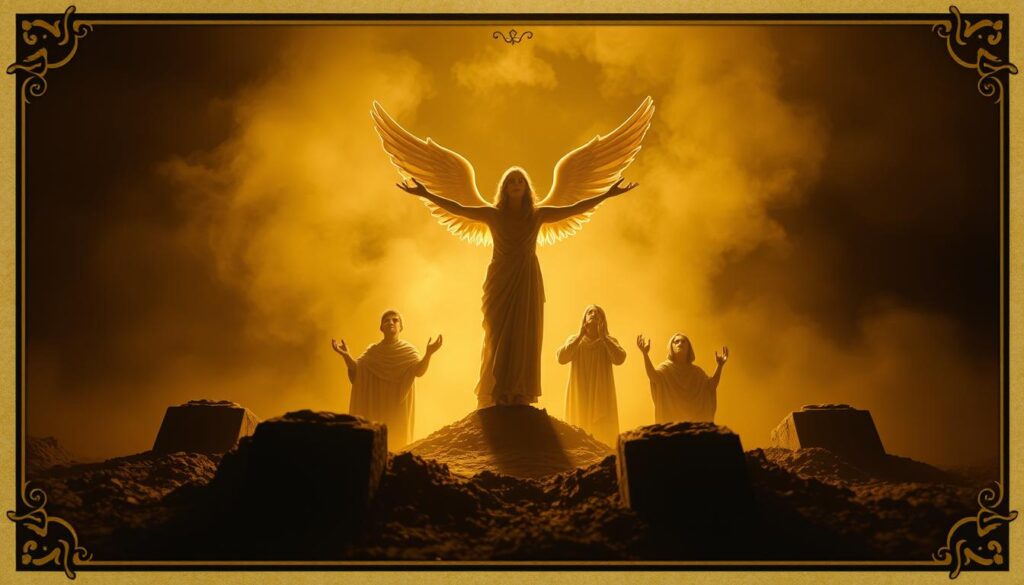
The classic image shows an angel’s trumpet, a banner with a cross, and figures rising from coffins. This scene signals an unavoidable turning point. The card’s Pluto link echoes how endings create space for new beginnings.
In plain terms: this card highlights awakening and renewed purpose. It urges actions based on accountability, renewal, and a stronger sense of direction in daily life.
What follows in this guide will translate symbolic meanings into practical steps for love, career, and money. You’ll get upright and reversed meanings, spread ideas, timing notes, and reading tips to unlock potential and make timely, values-based changes.
For hands-on practice with focused study, see a related reading on the Eight of Pentacles.
Key Takeaways
- Late-stage checkpoint: prompts honest self-reflection and change.
- Powerful imagery: trumpet, banner, and rising figures show finality and hope.
- Action-oriented: supports accountability and timely choices.
- Practical focus: meanings translate into everyday decisions.
- Transformative period: Pluto ties the card to endings and fresh starts.
Why the Judgement card matters now: a friendly how-to starting point
When this card appears, it often signals a timely wake-up call to act with both heart and reason. This is your how-to entry: assess past experiences and choose the way that matches your values, not just the easy route.
You may find small adjustments in love, work, and daily habits create outsized results when intuition pairs with order. Make a short self-check: list recent actions, note where mistakes taught lessons, and mark where you feel pulled to take responsibility for others.
Start by carving out time for quiet reflection. Identify one practical step for your career, one for a relationship, and one tiny change in routine this week.
- Simple method: name three past experiences, write one insight from each, and pick one action per insight.
- Speak with compassion—one brave conversation at work or home plus a realistic timeline moves things forward.
- Use body cues and a quick pros/cons list to balance head and heart when the card suggests a pivotal move.
Remember: early wins build momentum. Start small today to create a steady, sustainable path in life and career. For another focused reading, try this related reading.
Judgement card symbolism and major arcana context
A messenger’s cry breaks the lull, asking each person to answer a deeper summons toward purpose. The imagery on this card links sound, sight, and community to a clear moment of awakening.

Angel and trumpet: the call, awakening, and higher self
The central figure is Archangel Gabriel blowing a trumpet. He acts as the messenger archetype, a prompt that moves the self beyond old limits.
Art and music are shown as catalysts—small, artful signals that create a real shift in awareness and action.
Flag and cross: connection to the divine and big-life decisions
The trumpet bears a flag with a cross. This symbol ties the card also to sacred accountability and important choices that affect everyday life.
Humans and coffins: release from the past and renewal
Six mirrored figures—man, woman, and child—stand nude and unashamed. Coffins open from the outside, suggesting outside prompts free people to rise and heal.
Blue mountains and the Fool’s journey: nearing the end, ready for a new start
Blue peaks echo the Fool and sit closer than in other scenes. They give a clear sense that one chapter is ending and a wiser new part is about to begin.
- Practical sense: watch for external nudges that open your “coffins.”
- Make a map: name which prompts call you, which connections matter, and which endings feel near.
- Major arcana context: this card frames a climactic awakening before integration and closure.
Judgement tarot upright meaning & how to read it
This upright card often marks a clear moment to stop, take stock, and choose a clearer path forward.
Core upright themes: self-evaluation, reckoning, purpose, and renewal. This is a timely reckoning: pause for honest review, integrate lessons, and pick the way that fits your values.

Love and relationships
In matters of love, this card urges honest conversations and small changes that create big results. Past actions surface as lessons. Make one actionable change this week—listen, apologize, or set a clear boundary.
Career and calling
At work, accountability restores trust and can rekindle purpose. Assess role fit, own mistakes, and ask for feedback. A shift in duties or mindset can unlock new potential.
Finances
Review past experiences and spending habits. Align purchases with values, update routines, and let go of scarcity thinking so money supports what matters most.
Feelings and actions
Expect a pull toward your higher self and a strong urge to act. Practical steps: journal lessons, meditate for clarity, seek feedback, and release one unhelpful habit.
- Quick checklist: name three lessons, pick two actions, schedule one reflection moment, and commit to one forward-moving conversation.
- Timing tip: act when clarity peaks and record insights to keep momentum through this period of change.
Judgement reversed: overcoming self-doubt and hearing the call
When reversed, the card can show harsh self-talk and missed chances. This is a practical moment: name the pattern, then choose one small step to shift it.

Common reversals
You may find the inner critic loud, lessons from the past unintegrated, and denial blocking progress. These patterns stall momentum and dim confidence.
Love, career, and finances
In love, notice blame cycles and avoidance. Take one honest action: apologize, set a boundary, or listen without defending.
At work, swap self-blame for clear ownership and a practical fix. Ask for feedback to rebuild trust with others.
With finances, replace repeating habits with one simple rule and a weekly check to spot triggers.
From judgment to self-forgiveness
Try a 10-minute meditation, a written reframe of your inner critic, and one micro-commitment you can complete today. Schedule two check-ins this week—personal and with a trusted person—to stay accountable.
Hear the call: remove one distraction, act on the single change that matters within 24 hours, and turn reflection into steady progress.
How to read the Judgement card in your tarot spreads
Start your reading by mapping events that led you to this moment of clarity.
Use a clear order so the cards tell a story you can act on.
A step-by-step reading order
- Past: name past actions and consequences.
- Present: define the awakening or clarity that shows now.
- Future: pick one path aligned with purpose and plan one next action.
Spread ideas for decisions and calling
Try a crossroads decision spread when choices feel equal. Lay out option A, option B, and a clarifying card that shows order and timing.
Run a purpose/calling spread to align work or life roles. Ask which strength to amplify, which lesson to carry, and one practical step to start this week.

Tools for clarity
Journal with prompts like “What truth is rising now?” and “What am I ready to release?”
Use short meditations to hear the call beneath noise. Invite trusted others to share perspective and hold you accountable.
Timing and correspondences
Pluto links the card to deep transformation. Act when inner certainty and practical conditions align. Often the call grows louder if ignored.
| Focus | Quick question | Practical step | Applies to |
|---|---|---|---|
| Past actions | What led here? | List 3 consequences | love, work |
| Present clarity | What is rising now? | Note one insight | life, purpose |
| Future path | Which path fits purpose? | Choose one next action | work, relationships |
Quick sequence tip: complete the small, unlocking action first. Then schedule two follow-ups to track progress.
For guided practice and extra tools, see a focused guide on exploring clairvoyant abilities for ways to sharpen your reading and inner guidance.
Comparing Judgement with related cards for deeper understanding
Seeing related cards side by side reveals how their endings and calls differ. A quick comparison helps you choose the right response and timing for change.

Judgement vs. Death: endings, renewal, and finality
Contrast: Death often signals a clean end that clears space. Judgement asks you to integrate past lessons and rise with new awareness.
Sense of finality: Death reshapes the path decisively. Judgement evaluates life choices and prompts a response that honors what you learned.
Judgement vs. Justice: intuition-and-intellect decisions vs. logic
Difference: Justice uses rules, balance, and evidence. Judgement blends intuition with intellect and points toward a purpose-driven action.
In career decisions, Justice weighs policy and fairness. Judgement focuses on which actions match your calling and wiring from past lessons.
- Reading tip: if both appear, read sequence—Death often closes what must end; Judgement follows as an invitation to rise and connect.
- Time cue: prioritize closure first; then use Judgement to choose the next right step and clarify your path.
For focused clarity on decisive insight, see the practical Ace of Swords guidance to sharpen timing and action.
Conclusion
This is a moment to gather what you’ve learned and move forward with a calm, determined heart. The judgement tarot card asks you to integrate past lessons into choices that honor who you are now.
Close the loop: write one clear insight, pick one small action, and name one support person to contact. Sharing struggles in a kind group often creates real freedom.
Pluto’s theme reminds us timing and depth matter. Revisit spreads and tools from this guide when you need to recalibrate. Trust your growth, share it with someone you trust, and keep listening for the next note of awakening.
For a short related study, try the Four of Cups study to compare how people respond to call and change.
FAQ
What does the Judgement tarot card represent in a reading?
This Major Arcana card signals a moment of awakening and self-evaluation. It asks you to review past actions, hear an inner call, and decide whether to change course. Expect themes of renewal, accountability, and a clearer sense of purpose.
How do I interpret the card when it appears upright?
Upright, it points to honest reflection and a chance to realign with your higher self. Look for opportunities to forgive, finish unfinished business, and choose a path that matches your values and long-term goals.
What meanings arise when the card is reversed?
Reversed, the message often involves self-doubt, denial, or repeating old patterns. It can highlight an inner critic or reluctance to accept responsibility. Work on self-forgiveness and small practical steps to break cycles.
How does this card relate to love and relationships?
In relationships, it prompts honest conversations about lessons learned and whether to move forward together. It can mean repair through accountability or realizing a relationship no longer serves your growth.
What does the card suggest about career and calling?
It encourages assessment of your work life: are you aligned with purpose or just following routine? The card can signal a calling, a need for accountability, or a pivot toward more meaningful work.
Can the card indicate timing for decisions or change?
Yes. This card often appears when you’re nearing the end of a cycle and ready to make a decisive move. Use timing cues in your spread, personal intuition, and practical markers to choose the right moment.
What symbols should I focus on to deepen my interpretation?
Key symbols include an angelic call (awakening and higher self), flags or crosses (spiritual connection and decisions), and figures rising from coffins (release from the past). These images clarify themes of transformation and renewal.
How can I use the card in a spread for clarity?
Place it near cards that show past influences, current blocks, or future outcomes. Try a crossroads spread or a purpose-focused layout. Pair it with journaling prompts and meditation to sharpen insight.
Which cards pair well for comparison to refine meaning?
Compare it with cards like Death (endings and rebirth) and Justice (balance and consequence). That contrast helps distinguish spiritual reckoning from legal or practical resolution.
What practical steps should I take after seeing this card?
Start with honest self-review, note lessons from your past, and choose one concrete action—apologize, set a boundary, or update your goals. Small, consistent steps turn reflection into progress.