

This piece cuts straight to the question: do readings predict a fixed future, or do they work as a mirror that helps people gain insight and clarity now?
Many professional readers frame the practice as a diagnostic tool. They use spreads from a 78-deck, often the Rider-Waite, to highlight patterns and likely paths.
Fiongal Greenlaw calls a session “like a mirror,” advising seekers to take what’s helpful and leave what isn’t. Costs vary — short slots can be under £5, while longer consultations climb higher.
This introduction takes a balanced way through the debate. Expect expert views, firsthand notes, and practical tips on questions, rapport, and how virtual reading sessions can still feel meaningful.
Learn how professionals build skill and to make readings useful rather than merely mysterious.
Key Takeaways
- Readings are best seen as a reflective practice, not a fixed prediction.
- Clear questions and rapport improve the usefulness of a session.
- Decks like Rider-Waite and 3–7 card spreads give practical structure.
- Virtual sessions can match in-person value when both parties stay present.
- The felt accuracy depends on the reader’s skill and the querent’s openness.
An editorial look at tarot, accuracy, and why people care
Many writers suggest the chase for certainty overshadows what readings actually offer. In a complex world, wanting firm answers makes sense. People search for steadiness when choices feel heavy.
Rather than proof, readers value reflection and resonance. Skilled sellers of meaning interpret each card with breadth so messages fit different life contexts. Lindsay Mack and others favour open, inclusive language that honours varied experience.

Good readings help the mind connect dots. They illuminate patterns and options instead of insisting on a single outcome.
“Take what lands, release what doesn’t,” many seasoned readers advise.
- Accuracy in this sense means relevance to someone’s lived reality.
- Readers and querents co-create meaning; tone and empathy matter.
- Editorially, the most responsible stance weighs insight over guarantees.
For practical skill-building, explore methods that develop technique and craft, such as this short guide on the Eight of Pentacles. Keep an open mind, pair it with healthy scepticism, and use readings as tools for choice and clarity.
Are Tarot Cards Accurate?
Experienced readers usually say the work is about surfacing patterns and near-term possibilities, not certainties. Practitioners like Fiongal Greenlaw call a session mirror work; the point is to show present tendencies you might have missed.

What experts and seasoned readers actually say
Most professionals frame readings as a diagnostic tool. They use Rider‑Waite decks and small spreads (three to seven) to map themes, not to proclaim fixed predictions. Accuracy in practice means the reading makes sense to the querent and points to likely patterns.
Personal experiences: resonance versus hitting the bullseye
Clients report two common outcomes: a reading sometimes lands with sharp detail, and other times it resonates broadly. Both can be useful. Resonance helps people notice patterns over weeks and months.
Our editorial stance: useful guidance over definitive predictions
We value clarity and practical insight. A strong session supports choice and fresh thinking. Skepticism is healthy; responsible readers avoid overclaiming and focus on possibilities and agency.
- Clear questions improve the quality of insight.
- Virtual or in‑person sessions feel accurate when rapport is strong.
- Judge a reader by care and guidance, not by hit rate.
For more on developing vision and related skills, see this guide to clairvoyant abilities.
What tarot is—and isn’t: insights, patterns, and the limits of prediction
Think of a reading as a snapshot that highlights what’s helping or holding you back right now. It’s a practical tool for clarity and not a script that fixes the future.
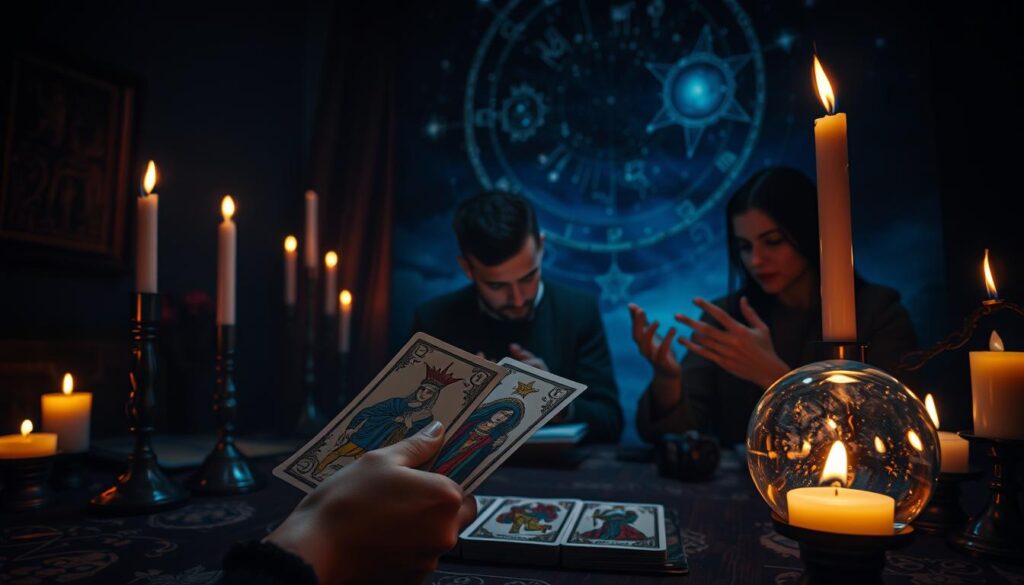
Tarot as a diagnostic mirror
A spread reflects present dynamics. Readers often liken the process to an X‑ray for a decision. The layout shows forces supporting you and those that block progress.
Likely outcomes, not a fixed future
Readings point to possible outcomes based on current patterns and choices. They do not predict future events with guaranteed precision.
- Meanings invite interpretation; context matters.
- The Rider‑Waite deck popularized clear imagery that helps map a path forward.
- Focused questions sharpen understanding and make insights more useful.
- Treat guidance as input for decisions, not as commands to follow.
“Use insights to widen options, not to close them.”
For a practical example of how a single image can shift meaning, see the Five of Swords guide.
What drives accuracy in tarot readings
Several practical factors shape how useful a reading feels to a client. Skill, presence, and the question itself steer what appears in a spread.

Reader skill, experience, and symbolic ability
Experienced readers draw on deep knowledge of the deck and many past sessions. That experience helps them synthesize meanings into clear, grounded guidance.
Intuition, energy, and the connection
Intuition supplements technique. Many clients report stronger insights when they feel a respectful, focused connection with the tarot reader.
“Calm attention and good pacing make a reading feel relevant.”
Clarity of question and the querent’s mindset
Specific prompts sharpen focus. A centered querent who breathes and names their aim usually gets more actionable insight.
Spreads and structure
Simple formats work well: one-card pulls spotlight the essence, three-card spreads map situation–action–outcome, and the Celtic Cross reveals layered aspects. Outcomes are directional; choices change the path.
- Signs of a seasoned reader: thoughtful pacing, sensitive delivery, clear explanations.
- Take notes—returns later often deepen understanding.
Online vs in-person tarot readings: does the medium matter?
Digital platforms widen access, yet they also change how subtle cues travel between reader and client.

Pros, cons, and expectations for virtual sessions
Pros: Flexible scheduling, a wider pool of readers, and options for video, voice, or chat make sessions easy to fit into life.
Cons: Low-quality services may use automated answers. Text-only formats lose body language. Tech glitches can interrupt flow.
Why rapport and presence influence perceived accuracy
Connection matters. Readers like Fiongal Greenlaw talk about an “energetic exchange” that needs openness from both sides.
When a reader shows calm focus and explains method, a querent feels seen. That sense of being understood boosts the value of the reading.
- Prepare a quiet space and clear intention to help the mind focus.
- Vet profiles, reviews, and whether the reader draws on-camera.
- Start with a short session to test fit, then extend if the experience feels aligned.
“A skilled reader can translate their ability across mediums; what matters most is clarity and care.”
From prediction to reflection: the editorial case for relevance and resonance
Good readings shift the focus from predicting events to opening up options you can act on. This editorial stance values possibilities and agency over finality.

Reading possibilities, not certainties—building insight and agency
Reflection deepens insight. Try journaling after a session. Revisiting notes helps you see which messages hold as life unfolds.
Small framing changes matter. Ask, “What’s the best path forward?” rather than, “What will happen?” This keeps decisions in your hands.
“A message that fits your life today often matters more than a flashy prediction.”
- Notice what lands in your body and mind — that sense guides intuition.
- Take one small action from the reading and track the result.
- Check back with the spread after a few weeks to reassess your path.
| Focus | What it gives | How to use it | When to revisit |
|---|---|---|---|
| Possibilities | Options and routes | Choose one small step | 2–4 weeks |
| Reflection | Deeper personal sense | Journal and note reactions | As situations change |
| Resonance | What feels true now | Trust what lands; discard what doesn’t | When clarity fades |
Measure success by calmer decisions, clearer insight, and steady progress — not by a scoreboard of predictions.
How skeptics and believers can both get value from tarot readings

Treat a session as a focused conversation. Aim for clarity, not a debate about proof. This keeps the exchange useful for any querent.
Start with one or two goals for life, love, or work. That helps the reader tailor insights to the most relevant aspects of your situation.
Do a quick rapport check: ask whether the reader’s tone feels respectful and collaborative. If it doesn’t fit, pause and try a different person.
Ask for clarification and practical steps during the reading. Requesting actionable advice helps turn vague themes into decisions you can test.
- Frame love, relationships, or career questions so they point to next moves, not vague outcomes.
- Take notes and review them after a few weeks to see what truly helped your choices.
- Welcome healthy scepticism — judge the session by its usefulness and clarity.
Respect ethical boundaries. A reliable reader will avoid giving medical, legal, or financial directives and focus on perspective and agency.
Finally, trust your sense of fit. Pause or end a session that feels off. Value shows up as better understanding and steadier decisions, whatever you believe.
Conclusion
, The best readings spot recurring themes in your life and turn them into practical next steps.
Use a spread as a mirror—it highlights patterns, not a fixed future. A familiar deck like Rider‑Waite helps readers name meanings and offer clear insights. Accuracy here means a reading that makes sense to the querent and supports thoughtful choices.
Look for skill, calm presence, and a clear question. Whether online or in person, value shows up in resonance, useful steps, and steady follow‑through. Revisit notes after a few weeks and see what changed. For an example of how a single image can shift meaning, check the Four of Cups guide.
FAQ
Are tarot cards accurate in predicting the future?
No tool can guarantee a fixed future. Readings highlight likely outcomes based on current choices and patterns. Skilled readers translate symbols into practical insight, helping people weigh options rather than promise absolute predictions.
What do experts say about the accuracy of tarot readings?
Seasoned practitioners and researchers emphasize context, experience, and interpretation. Accuracy often depends on the reader’s knowledge of the deck, their ability to connect with the querent, and how clearly the question is framed.
How does personal resonance differ from a “hit” in a reading?
Resonance means a card or message feels meaningful to the querent’s situation. A “hit” implies a precise event was foretold. Most useful readings create resonance that sparks reflection and better decisions rather than exact event forecasting.
Can tarot act as a diagnostic mirror for my life?
Yes. Readings often reveal patterns, blind spots, and emotional dynamics. That reflective quality gives people clarity on relationships, goals, and obstacles, making tarot a useful tool for self-understanding.
Do choices change the outcomes shown in a reading?
Absolutely. Readings present tendencies and possibilities. When someone takes different actions or adopts a new mindset, outcomes shift. The cards map potentials at a moment in time, not an immutable destiny.
What factors most influence the reliability of a reading?
Reliability hinges on reader skill, experience, and the connection between reader and querent. Clear questions, an open mindset, and well-chosen spreads also improve the clarity and usefulness of the messages.
How important is intuition in a reading?
Intuition helps a reader synthesize symbolism, imagery, and the querent’s energy into practical meaning. It works alongside knowledge of card meanings and experience to produce relevant guidance.
Which spreads tend to give clearer insights?
Simple layouts like one-card pulls and three-card spreads work well for focused questions. The Celtic Cross and other multi-card spreads reveal complex dynamics and timelines, but they require more skill to interpret accurately.
Do online readings differ from in-person sessions?
The medium can influence rapport and presence. Video calls and chat can work well, especially with experienced readers who maintain focus and clear communication. In-person sessions may feel more intimate and allow for stronger nonverbal cues.
Can skeptics still get value from readings?
Yes. Skeptics often find value in the reflective process, practical advice, and decision-making prompts readings provide. Even without belief in the mystical, the exercise can reveal choices and behaviors worth considering.
How should I choose a reader to increase the chance of a useful session?
Look for a reader with good reviews, clear communication, and a style that resonates with you. Ask about their experience, how they handle ethics and confidentiality, and whether they offer a sample or short introductory reading.
What should I ask during a session to get the best results?
Ask specific, open-ended questions about options, timing, or personal growth rather than yes/no predictions. Clarity helps the reader focus the spread and deliver actionable insight.
Can tarot replace therapy or professional advice?
No. Readings can complement therapy or coaching by offering perspective and reflection, but they are not a substitute for medical, legal, or mental-health professionals when those services are needed.