

Don’t panic. Though its name alarms many, this mysterious symbol often signals end and renewal rather than literal loss. It asks you to release what no longer serves and step toward fresh purpose.
Upright, the image points to transformation, brave transition, and clearing away stale ties so growth can begin.
Reversed tends to show resistance, stuck patterns, and delay. Context matters: spread position and nearby cards shape the practical guidance you receive.
This guide treats the subject like a helpful map. You’ll find clear meanings for love, career, and finances, plus tips on timing and reading signals. Use focused practice to apply insight and move forward with confidence. For related study on steady skill building, see Eight of Pentacles interpretation.
Key Takeaways
- The image favors change and purposeful endings over literal loss.
- Upright: transformation and new beginnings.
- Reversed: resistance and repeated patterns.
- Context and nearby cards shape clear, actionable guidance.
- Accepting the shift lets life energy move toward fresh goals.
Death in Tarot Today: Myths, Meaning, and Why It Isn’t About Literal Death

Let go to let in. Upright meaning often signals a major phase ending so a new one can begin. It asks you to close one door to open another and to welcome change as a cleansing, transformational force.
Fear can make transition feel threatening. Still, this card rarely foretells physical demise; instead, it highlights cycles, endings, and fresh beginnings. That shift helps release unhealthy attachments and invites renewal.
Clinging to the past creates resistance and stagnation. When you resist needed endings, discomfort grows. Allowing purposeful closure prunes what blocks growth so energy and opportunities return.
- Endings here are constructive, not destructive.
- Setbacks become catalysts for meaningful turning points.
- Often follows a pause of reflection, then clear action.
Ask: What is complete for me? and What am I ready to begin? Acceptance, not force, speeds movement through discomfort. For a look at the pause that often comes before action, see four of swords recovery phase.
Card Imagery and Symbolism: White Horse, Black Flag, and the Armor-Clad Skeleton
Symbols on this scene act like signposts for change and help ground your reading.

The white horse and purification
The white horse shows cleansing and renewal. Its color signals purity and the removal of what no longer serves.
The steady horse gait also hints at progress. Even slow steps move you away from old patterns toward new ground.
The black flag with white pattern
The black flag bears a white emblem that links endings to fresh starts. A flag flying high makes closure visible.
Read this as evidence: endings often announce a seed for what follows.
The armored skeleton
The skeleton in armor blends inevitability with protection. Change cannot be stopped, yet resilience helps you pass through it.
Armor here is strength and preparation. It suggests boundaries and inner power during upheaval.
Figures of every class on the ground
Figures lying below—king and pauper alike—remind us transformation spares no one.
This description trains intuition to weigh imagery alongside spread position for richer readings. Try journaling which image resonates most now and note insights.
- White horse: purification and steady motion.
- Black flag: visible endings that contain beginnings.
- Armored skeleton: inevitability, protection, and power.
- Ground figures: universal transformation.
For a related study on heartbreak and clarity, see three of swords.
Upright Death: Transformation, Endings, and Moving Forward
Seeing this card upright invites decisive change and a move toward fresh purpose.

Core meaning
Upright death signals a major phase finishing so a new path can begin.
Close one door to open another. This is about transformation, endings, and clear beginnings.
Love and relationships
In love, embrace change or release what no longer grows. Couples can choose shared renewal.
Singles shed outdated beliefs and open to healthier patterns.
Career and work
At work, take decisive action on transitions or risk being pushed by events. Seek roles that align with values.
Finances and resources
If money shifts, reassess values and reset budgets. Practical planning creates stability after loss.
Feelings and actions
Emotionally, a person may sense the end of old patterns and feel ready to move forward.
Act by decluttering schedules, ending draining commitments, and trying new experiments.
- Try this: list three habits to retire and three small experiments to test in 30 days.
- Visualize your next chapter; clarity about beginnings eases fear about past endings.
Death Reversed: Resistance, Stagnancy, and Repeating Patterns
A reversed image can show an unwillingness to move forward, trapping a person between chapters.
Core reversed meaning: Fear of change keeps energy stalled. This resistance magnifies discomfort and produces repeating patterns that block fresh starts.

Love and relationships
In relationships, clinging to comfort or duty keeps growth on hold. Couples may avoid hard talks. Singles repeat familiar, unhealthy cycles unless they name them and step away.
Career and finances
At work, staying in an unfulfilling role prolongs stagnation. Watch for defensiveness, impostor feelings, or repeating choices that limit progress.
With finances, resisting needed cuts or changes keeps money habits stuck. Update budgets, accept lessons, and plan small adjustments.
Feelings and actions
Emotionally, a person may feel torn—wanting change but fearing loss. That ambivalence is normal.
“Name one attachment. Set a date. Take a small, nonnegotiable step.”
| Area | Signs Reversed | First Action |
|---|---|---|
| Love | Repeat patterns, comfort over growth | Journal one boundary to try |
| Career | Staying where underpaid or stuck | List one skill to develop |
| Finances | Denial of necessary cuts | Adjust one recurring expense |
- Ask: “What am I clinging to?”
- Set three small release steps and share them with a friend for accountability.
- Draw a clarifying card to name the first belief to let go of in readings.
Reading the Death Card in Context: Tarot Spreads, Timing, and Transition
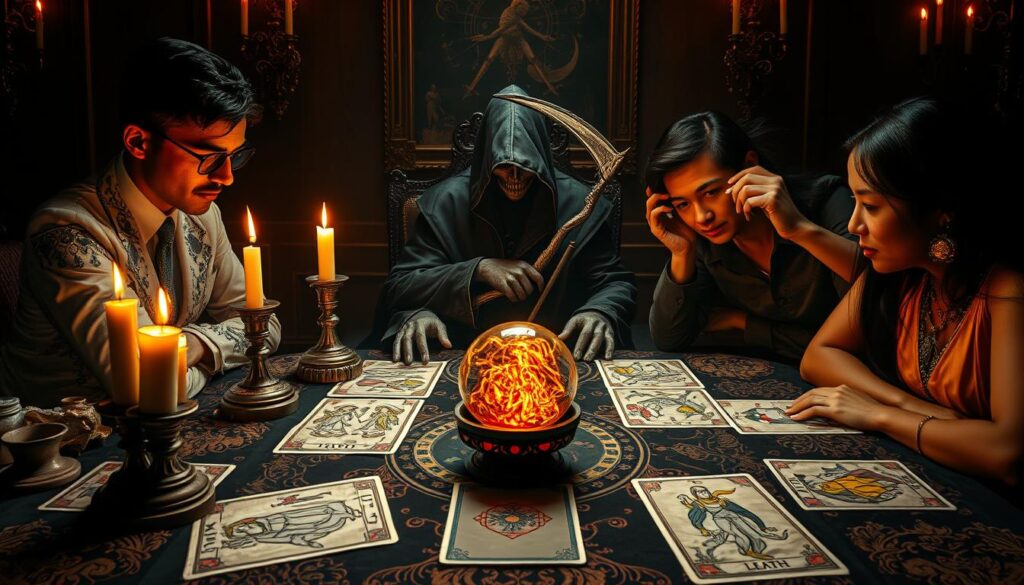
Reading a spread changes a card’s tone more than any single image can. Position shifts meaning: past placement shows endings already underway, present signals active transition, and future hints at closure on the horizon.
Position and neighbors
Nearby cards shape tone. The Tower can bring abrupt upheaval and fast changes, while supportive suits ease the shift and highlight new opportunities.
Draw clarifiers for “what to let go” and “what begins next” to turn insight into steps.
From The Hanged Man to action
Often this sequence follows a pause. The Hanged Man asks for reflection; then decisive change arrives. Read timing as a process, not an instant.
Breaking patterns and practical steps
Use this moment to end repeating loops. Journal attachments, run a small ritual (declutter, write and release), and map changes in phases: announce, prepare, act.
- Past: name what has finished.
- Present: list one small action for today.
- Future: set a weekly check to track new routines.
“Track readings and outcomes to sharpen timing and pattern recognition.”
For steady practice on timing and steady work, see a useful seven of pentacles study.
what does the tarot card death mean

In love: This signal often asks couples to evolve through honest talks and new agreements or to part respectfully so healthier relationships can start.
Singles get permission to release old beliefs about attraction. Let go of patterns that block growth to welcome more aligned partners and experiences.
In career
Close one door to pursue work that fits your values. Update your resume, reach out to networks, and try small experiments to test new paths.
In finances
Major shifts may prompt a reality check. Trim expenses, reset savings goals, and align your spending with what matters now.
- Move forward by drawing boundaries with time and energy.
- Recognize beginnings disguised as endings; a closed door frees attention for new opportunities.
- Map resources and gaps, then plan the next right step instead of solving everything at once.
- Track small wins to build momentum and confidence through change.
“Use this guidance to turn discomfort into clarity and steady action.”
For deeper reading on endings that lead to steady skill building, see ten of swords.
From Deck to Deck: How Different Tarot Traditions Portray Death
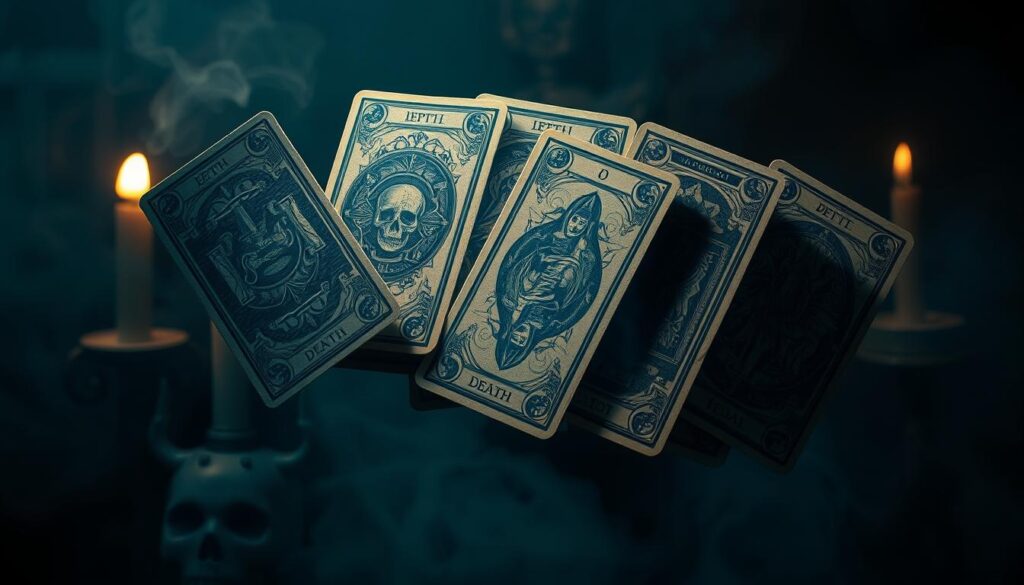
Shared motifs travel between systems, helping readers anchor meaning amid style changes.
Classic motifs across tarot decks: shared symbols and subtle shifts
Skeleton, armor, white horse, and banner recur in most portrayals. These symbols point to inevitability, purification, and equalizing power across spreads.
Art choices shift tone. Some artists paint a solemn scene that feels final. Others use light, new-growth hues to highlight renewal and inner power.
Scan for recurring elements such as horse, banner, or armor to ground interpretation when exploring unfamiliar decks. That quick check keeps readings consistent and confident.
- Consistent imagery supports steady tarot card meanings across styles.
- Color palette and scenery alter mood from intimidating to empowering.
- Note how softened scenes focus on rebirth while stark art dramatizes closure.
Tip: Keep brief notes on how each deck treats this archetype. Over time, you will read cards tarot across systems with clearer insight and steadier skill. For related strategy on conflict and clarity, see Five of Swords study.
Conclusion
Death tarot asks you to let go of worn habits so new life can start. Endings free energy for fresh work, love, and goals.
Embrace change in small, steady steps. Name one fear, pick one doable action today, and track tiny wins over time. Momentum breaks resistance and shifts patterns.
In readings, ask two clear questions: “What is complete?” and “What supports the new?” Use answers to plan practical next moves for career, finances, and relationships.
Across any deck, familiar symbols—horse, banner, armor—remind you that transformation happens in time. Treat this image as an ally and ride change with purpose. For balance after loss, see a short study on healing in Five of Cups.
FAQ
How should I interpret Death in a reading?
See it as a sign of transformation and endings that open space for new beginnings. Focus on what must finish so something healthier can start. Read surrounding cards for specifics on timing and area of life.
Is Death a literal sign of physical death?
No. Most traditions treat this card as symbolic. It signals major life shifts—career moves, relationship changes, inner evolution—rather than literal mortality.
What does the white horse symbolize here?
The white horse represents purification and forward momentum. It shows that change clears old energy, making way for renewal and clearer direction.
Why is the flag often black with a white pattern?
The black flag denotes endings; the white motif hints at new beginnings. Together they express the paradox: loss contains seeds of renewal.
What does the armored skeleton mean?
The skeleton stands for inevitability and truth stripped bare. Armor suggests resilience: transformation can feel raw but also empowering and protective when faced honestly.
How do figures of different classes on the ground affect meaning?
They show that change impacts everyone, regardless of status. The card emphasizes universal cycles and encourages acceptance across life’s roles.
What is the core upright meaning?
Upright, it points to a major phase ending so a new path can begin. Actively release what no longer serves and make room for fresh growth.
How does upright influence love and relationships?
It asks you to embrace change or release relationships that block growth. Sometimes a breakup clears space for healthier connections.
What does upright mean for career?
Expect transitions: role shifts, new opportunities, or decisive endings. It encourages action and letting go of outdated work patterns.
How about finances when upright?
Financial endings may occur, but they create a chance to rebuild values and money habits. Adaptability is key.
What feelings accompany upright Death?
People often sense closure, relief, or bittersweet recognition that an era has ended and change is needed.
Which actions fit an upright reading?
Declutter, set boundaries, and begin practical steps toward change. Rituals of release can help mark transitions.
What does reversed Death indicate?
Reversed, it signals resistance to change, stagnancy, or repeating unhealthy patterns. Fear keeps you stuck instead of moving forward.
How does reversed affect relationships?
It often shows clinging to comfort or avoidance of necessary confrontations, preventing growth for both partners.
What does reversed mean for career?
Staying in failing roles or avoiding necessary moves. It warns against letting fear block professional progress.
How about finances when reversed?
Resistance to adapting spending or saving habits. It can mean missed chances to restructure money systems constructively.
What feelings accompany reversed Death?
Hesitation, anxiety, and a sense of being trapped. These emotions often point to inner work that can free you.
Which actions help with reversed Death?
Identify attachments, practice small releases, and seek support to begin letting go. Gradual steps break cycles more safely.
How does context change the message of this card?
Neighboring cards and spread position specify where and how transformation unfolds. A supportive spread eases change; challenging cards show friction points.
What about sequences like The Hanged Man to Death?
That pair suggests a pause followed by decisive action. Reflection prepares you to move, then Death signals the active ending and next phase.
How can I use Death to break patterns?
Treat it as a prompt to identify cycles, set intentions for release, and take concrete steps—therapy, new routines, or boundary work—to shift momentum.
In love, what practical advice does this card give?
Reassess whether relationship patterns support growth. If not, choose honest conversations or endings that free both people to evolve.
In career, what practical action is recommended?
Audit skills and values, then close doors that drain you. Pursue roles aligned with purpose and be open to retraining if needed.
In finances, what should I focus on?
Rethink priorities and create a plan for rebuilding. Letting go of unsustainable habits makes space for long-term stability.
Do different decks change its meaning?
Yes. While classic symbols persist, artists and traditions like Rider–Waite, Thoth, or Marseille add nuance. Compare decks to broaden interpretation.
Can the card point to a person in a reading?
Sometimes. It may describe someone who triggers transformation—tough but necessary—or a major influence that pushes endings and growth.