

Tarot is less about fixed prophecy and more about clear, practical reflection. Contemporary readers like Jen Cownie and Fiona Lensvelt frame the system as a secular storytelling tool that invites insight and choice.
The standard deck holds 78 symbolic images that mirror human experience. Each card prompts questions and sparks dialogue between a reader and the querent.
A reading acts as a guided conversation. A skilled reader interprets imagery to help people weigh options, sort emotions from facts, and plan near-term steps rather than predict a set future.
The power of the deck rests in meaning-making: it helps surface patterns, reframe obstacles, and reclaim personal agency over time. With steady practice, interpretations deepen and confidence grows.
Key Takeaways
- Tarot offers symbolic prompts for self-reflection and decision-making.
- A reading is a guided exchange, not a literal forecast of the future.
- Deck imagery builds a coherent story to clarify complex situations.
- Commonly alarming symbols represent themes and transitions, not doom.
- Learning is cumulative—regular practice strengthens interpretation skills.
What tarot cards do: guidance, reflection, and story over fortune-telling
A reading frames life events as a narrative, using imagery and positions to surface motives and options. Skilled readers turn symbols into prompts that tap a person’s mind and intuition, helping reveal practical trade-offs.
How it supports self-reflection and decision-making
A session lays out a coherent story of a situation so you can spot patterns and consider change. Reversed placements often flag resistance or delays, which becomes actionable feedback rather than a harsh verdict.
Why popular culture gets future-predicting wrong
Media love fixed outcomes, but readings highlight potentials and influences, not destiny. For example, a single card can shift: the High Priestess might urge quiet intuition in one spread, or calm objectivity in another.
- Ask open questions and let a tarot reader organize the moving parts into usable insight.
- Guidance is collaborative: the reader interprets symbols and the querent supplies context.
- Many people leave with clearer options and a calmer way forward.
For a practical primer on practice and craft, check this exercise in applied meaning.
Understanding the tarot deck: Major Arcana, Minor Arcana, and the four suits
A full tarot deck maps life at two scales: broad arcs and daily rhythms. The set contains 78 cards. Twenty-two Major Arcana track major life themes and long-term change. They are often read as the Fool’s Journey, a sequence of growth from innocence to wisdom.
Major Arcana: big life themes and the Fool’s Journey
The Major Arcana highlights archetypal moments—beginnings, tests, revelations, and renewal. These images signal shifts in purpose or identity. A reader uses them to spot turning points in a life story.
Minor Arcana: everyday experiences through wands, cups, swords, and pentacles
The 56 Minor Arcana divide into four suits. Wands show how you apply energy and take action. Cups reveal feelings and relationships. Swords point to thoughts and conflict. Pentacles focus on work, money, and the body.
Card imagery and symbolism as a language of meanings
Each card is a compact story. The art and repeated symbols—suns, paths, water—create flexible meanings that shift with the question and spread position. Illustrated minors, common in Rider-Waite-Smith style decks, give strong visual clues that speed learning and help build coherent narratives.
For a focused look at emotional themes in readings, see this interpretation of the Four of Cups.
How a tarot reading works: spreads, positions, and context
A reading begins with a clear intention and a deliberate shuffle to set the session’s tone. Hold the question in mind, breathe, and let the shuffle settle thoughts. This links the querent’s focus to the cards that follow.
From shuffling to spread: building a reading with intention
Lay the chosen spread so each position acts like a labeled chapter: past, challenge, advice. Treat placements as context clues that shape meaning for the situation.
Common spreads: three-card and the Celtic Cross
The three-card spread gives quick clarity (situation-action-outcome). The Celtic Cross maps influences, support, and likely trajectory for deeper exploration.
Upright vs. reversed and interpreting interactions
Upright often shows flow; reversed can signal delay, resistance, or inner work. Readers watch how neighboring cards change a single card’s tone. Major Arcana weight suggests larger forces at play.
| Stage | Focus | Example |
|---|---|---|
| Shuffle | Intent toward question | Hold the question clearly |
| Layout | Spread positions | Three-card or Celtic Cross |
| Interpret | Interactions & meaning | Look for repeats in suit, number, theme |
| Action | Clear options | Reader offers compassionate words to guide work |
For practice and applied meaning, try a focused exercise in spread practice on this spread practice. Good readings synthesize symbols into useful insight the querent can act on immediately.
What do tarot cards do in real life? Practical uses in day-to-day situations
A short spread often turns a fuzzy situation into a small, workable plan.

Pulling three images can map a situation, name feelings, and suggest a next step. A simple three-card draw — situation, action, outcome — helps people move from overwhelm to one clear choice.
Seeing patterns over time
Repeated suits or numbers point to habits in relationships, work, or personal goals. Noting these repeats highlights areas where small changes create steady momentum.
- Turn confusion into a plan with a short spread.
- Name the feeling you find — that frees energy for action.
- Use readings before big talks or career moves to align choices with values.
| Use | Example | Benefit |
|---|---|---|
| Quick check-in | Three-card draw | Immediate focus for the day |
| Relationship review | Sequence of suits | Spot repeating patterns |
| Major decision | Deeper spread | Clearer next steps and boundaries |
Practical readings are small course corrections, not grand forecasts. They validate intuition and turn tough moments into useful momentum.
Choosing your first tarot deck and getting comfortable with the art
Picking your first deck shapes how quickly you learn symbols and build confidence.
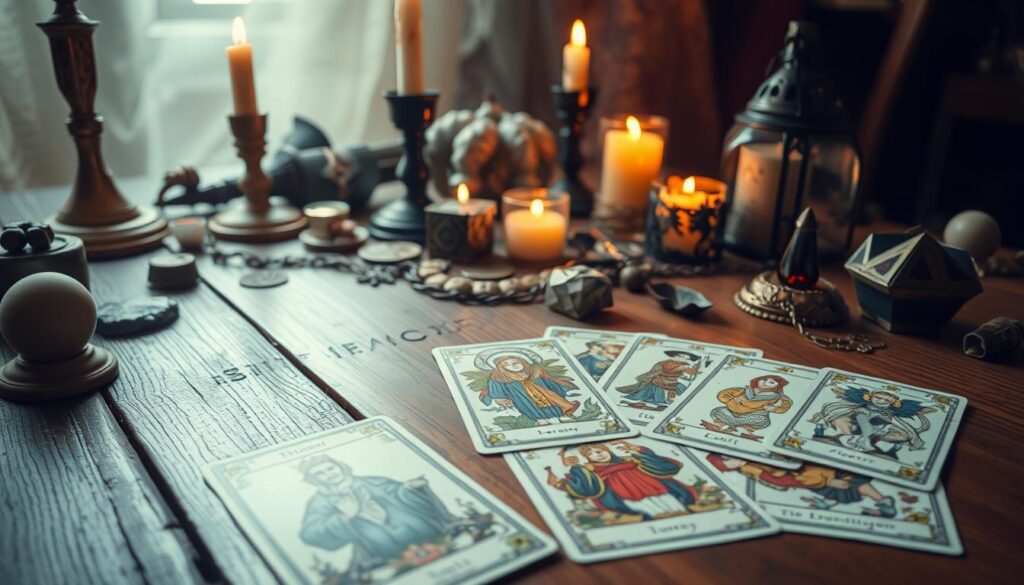
Start with a 78-card tarot deck that has fully illustrated minors. Fully drawn scenes help memory, so the suit of wands and cups jump out as themes, not abstract symbols.
Why Rider‑Waite‑Smith is a solid starter
The Rider‑Waite‑Smith structure is the common baseline for many readers and guides. It’s affordable, widely available, and its art gives clear cues you can map to meaning quickly.
Finding a deck that resonates: art, inclusivity, and personal connection
Choose art that makes you want to study. Fan a few cards and notice if scenes spark immediate impressions. That instant reaction is a good sign the deck fits.
Confirm the box says “tarot” and includes 78 illustrated cards. Avoid oracle packs or pip-only minors when you’re learning a consistent system. Over time, collectors add decks for mood or theme, but one clear system speeds learning.
- Pick decks whose imagery matches your values and people you read for.
- Support creators from diverse backgrounds for more relevant symbolism.
- Practice daily with one deck to build steady meaning and fluency.
| Feature | Why it matters | Action |
|---|---|---|
| Fully illustrated minors | Visual scenes aid recall and storytelling | Choose RWS-style or illustrated modern decks |
| 78-card set | Keeps learning consistent across sources | Verify box contents before buying |
| Inclusive art | Helps readers and querents feel represented | Support BIPOC or queer creators when possible |
For an example of emotional nuance in a suit, see a focused look at the Page of Cups. A single well-chosen deck will speed your study and make practice feel natural over time.
How to learn to read tarot cards with confidence
Start by learning card meanings, then practice weaving them into short, clear stories. Begin with core suit themes and the Major Arcana beats. This builds a mental map that helps you link images into a single narrative.

Learn the meanings, then practice building a coherent story
Study keywords for each card and suit. Pull small spreads and say the story out loud. This trains memory and your spoken flow.
Practice interactions—watch how numbers, suits, and positions change a card’s tone. Over time, patterns will feel intuitive rather than forced.
Prepare for readings: journaling questions, mindset, and reader etiquette
Set an intention, write the question, and shuffle while holding that focus. Bring a notebook to record first impressions and final takeaways.
- Journal daily: note a card, your quick read, and any results.
- Clarify etiquette when reading for others: consent, time limits, and boundaries.
- Frame meaning as guidance—empowerment, not commands.
| Step | Action | Benefit |
|---|---|---|
| Study | Learn core meanings and suit themes | Faster recall and clearer stories |
| Practice | Short spreads; read aloud | Confidence and verbal fluency |
| Record | Notebook: impressions and outcomes | Track accuracy and refine meaning |
| Prepare | Set intention and clarify etiquette | Trust and ethical readings |
“Confidence grows through repetition and reflective notes.”
Mix study with hands-on reps: draw a card a day and run a few three-card reads each week. For a next step in professional skill, explore how to become a paid psychic as a practical resource.
Ethics, expectations, and the role of the tarot reader
Consent, privacy, and scope form the backbone of professional readings. Before a session, a reader should confirm consent and explain limits: topics that need licensed help—medical, legal, or financial—are off-limits. This protects both the person and the process.
The reader’s role is facilitation. Skilled tarot readers translate imagery into usable meaning and keep focus on the querent’s needs. Clear words and calm delivery help the mind organize options without adding alarm.
Set expectations up front: timing, format, rescheduling, refunds, and whether notes will be taken. Agreeing on limits makes the session feel safe and collaborative for everyone involved.

- Boundaries: obtain consent and respect privacy.
- Scope: avoid directives that belong to licensed professionals.
- Power: keep decision-making with the querent, not the reader.
- Inclusivity: match imagery and language to the querent’s experience.
- Aftercare: allow debrief time for questions and next steps.
“A reading should illuminate choices and support autonomy, not impose outcomes.”
Readers should also practice self-care and ongoing learning to sustain clarity and integrity. For an ethical case study on handling pause and rest in a session, see this Four of Swords interpretation.
Conclusion
,
A steady practice of short spreads builds fluency and practical confidence quickly. Treat the system as a tool for meaning and gentle clarity. Learn the Major Arcana, study suits like wands and cups, then run simple three-card reads each morning.
Keep agency: a reader helps map options, but the person chooses next steps. Hard moments and intense cards can offer useful energy and new perspective over time.
Write daily notes, try small examples, and revisit one deck until images feel familiar. For an emotional example, see the Six of Cups interpretation.
There’s no single right way—consistent, ethical practice turns symbols into clear, supportive insight when you need them most.
FAQ
What can a tarot reading offer me?
A reading offers guidance and reflection. It helps reveal patterns, clarify emotions, and suggest possible actions. Readers use card imagery and spreads to shape a narrative that supports decision-making rather than issuing fixed predictions.
How does a reading support self-reflection and choice?
By prompting honest questions and highlighting influences you might miss, a session encourages insight. The process engages intuition and reason: you notice feelings, weigh options, and identify practical next steps grounded in your situation.
Is the practice about predicting the future?
No. Popular culture often frames it as fortune-telling, but skilled readers focus on context, timing, and potential outcomes. Emphasis stays on meaning, free will, and how present choices shape what comes next.
What are the Major Arcana and why do they matter?
Major Arcana cards mark major life themes—identity shifts, turning points, spiritual lessons. They map a journey of growth and often signal influential forces or long-term changes in a spread.
What do the Minor Arcana reveal about daily life?
Minor Arcana cards reflect everyday events, moods, and challenges. Divided into wands, cups, swords, and pentacles, they describe energy, feelings, thoughts, and material concerns in practical terms.
How important is card imagery and symbolism?
Extremely. Pictures, colors, and symbols form a visual language readers interpret alongside traditional meanings. That language sparks associations that lead to a coherent story about the querent’s situation.
What happens during a typical reading from start to finish?
A session begins with intention—shuffling and focusing on a question—then a spread places cards into positions that carry specific meanings. The reader connects positions, imagery, and timing to form actionable insights.
Which spreads do readers use most often?
Two common layouts are the three-card spread for past-present-future or situation-advice-outcome, and the Celtic Cross for deeper, multi-layered context. Choice depends on the question and time available.
Do reversed cards change meanings?
Reversals can signal blockages, delays, or internalized energy. Some readers prefer upright-only interpretations, while others use reversals as nuance. Interaction between cards matters most for a clear message.
How can a reading help with tough life moments?
Readings provide perspective and practical next steps when you feel stuck. They validate emotions, point out options you might ignore, and encourage action rooted in self-awareness.
Can readings reveal patterns in relationships and work?
Yes. Cards often highlight recurring dynamics—communication issues, boundary needs, or career themes—helping you spot trends and plan deliberate changes.
Which deck should a beginner choose?
Rider-Waite-Smith is a reliable starter because of clear, widely taught imagery. It pairs well with many learning resources and makes grasping card meanings easier.
How do I pick a deck that fits me?
Choose art and representation that resonate. Consider diversity, style, and how the imagery makes you feel. A personal connection speeds learning and deepens intuition.
What’s the best way to learn reading confidently?
Learn core meanings, then practice storytelling. Daily pulls, journaling interpretations, and reading for friends build fluency. Focus on card relationships and clear phrasing.
How should I prepare for a session, whether as reader or client?
Set a clear question, journal relevant thoughts, and create a calm space. Respectful etiquette—honesty from the querent and clear boundaries from the reader—yields the best results.
What ethical standards should readers follow?
Responsible readers avoid medical, legal, and financial guarantees. They prioritize consent, confidentiality, and empowerment, offering options instead of fear, and referring to professionals when needed.