

Michel de Nostredame was born in Saint-Rémy-de-Provence in December 1503 and died in Salon-de-Provence on July 1 or 2, 1566.
His life blended medicine and mysticism. He worked as a physician and apothecary, treated plague outbreaks, and served courts across France.
Nostredame became famous for Les Prophéties, a 1555 book of 942 quatrains that offered veiled prophecies and predictions.
As a French astrologer and writer, he left verses people still link to later world events.
This article maps the key years and major events that shaped his career, explains why his quatrains endured, and guides readers through reliable sources and a clear timeline.
For a focused profile and source notes, see this concise guide on Nostradamus.
Key Takeaways
- Nostredame lived from 1503 to 1566 and combined healing with astrology.
- He treated plague sufferers and published popular almanacs before 1555.
- Les Prophéties is the book that made his name and sparked debate.
- Readers still connect his quatrains to later events around the world.
- The article provides a timeline, context, and primary sources for clarity.
Quick Answer: When and Where Nostradamus Lived
Records place his baptism in December 1503 in Saint-Rémy-de-Provence, and his final days in Salon-de-Provence in July 1566.
Birth and origins
He was born on either December 14 or 21, 1503 and baptized Michel. These southern Provence roots framed a career split between medicine and popular forecasting.
Death and final arrangements
He died on July 1 or 2, 1566 after years of severe gout that turned into edema. Near the end of his days he wrote a will leaving property and 3,444 crowns to family.

- Quick facts: Born December 1503 in Saint-Rémy; died early July 1566 in Salon.
- The year and place mark a life in the French Renaissance and early Reformation.
- As a french astrologer, physician, and apothecary, his almanacs and quatrains built a public reputation.
- The burial site moved; remains now rest in the Collégiale Saint-Laurent in Salon-de-Provence.
- This short timeline helps any reader tie later claims to verifiable dates and records.
For a detailed chronology of predictions and dates, see a focused list of prophecies here: Nostradamus predictions by year.
Early Life and Family Background in Renaissance France
Provence offered Michel a mixed heritage: Jewish roots that became Catholic practice, practical occupations, and ties to the educated classes. His childhood shaped a cautious public voice and a broad social network.
From Jewish roots to Catholic conversion in Provence
Michel’s paternal grandfather, Cresquas, converted around 1459–60 and took the given name Pierre along with the surname Nostredame. That conversion helped the family remain in the region as religious tensions grew across Europe.
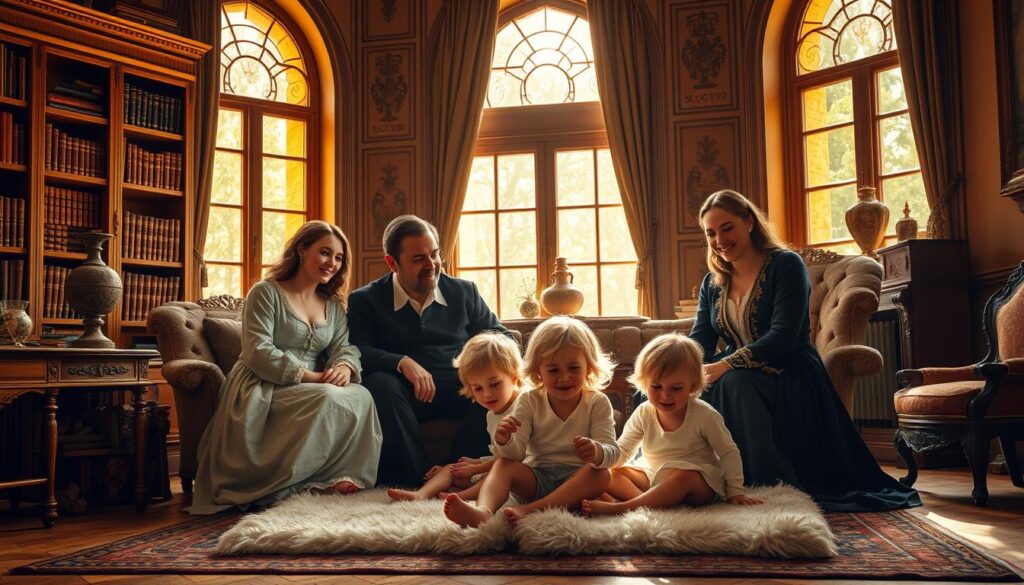
Parents, name, and siblings: the Nostredame family
His father Jaume (Jacques) worked as a notary. His mother Reynière descended from a line that included a physician. Such links gave Michel early access to books and remedies.
- He was baptized Michel and later used a Latinized surname for publication.
- His household included several brothers and other children, such as Jean, Pierre, Hector, and Antoine.
- In the 1530s he faced an accusation tied to religious speech in Agen and was later acquitted of alleged heresy.
These years rooted his public identity and influenced how he spoke to people across a changing world.
Education and Training: Avignon to the University of Montpellier
At about age 14 he left home to study the classical arts at Avignon, a formative step toward his medical and astrological work.

Studies in grammar, rhetoric, logic, and early astrology
He studied the trivium—grammar, rhetoric, and logic—which also exposed him to early astronomy and basic astrology. The school closed because of plague, pushing him into hands‑on learning.
Apothecary work, expulsion issues, and medical practice
Travel and apothecary work followed. He gathered herbal knowledge and returned to seek a medical degree at university montpellier in 1529.
Montpellier scholars enforced statutes and expelled him for practicing a manual trade; the expulsion appears in Register S 2 folio 87. Publishers later used his name with the title “Doctor” despite that record.
Herbal remedies and the path toward medicine
He mixed remedies like rose pills and urged clean water and hygiene. These methods improved outcomes in outbreaks and helped his practice grow.
- Early liberal‑arts study gave him tools for writing and reason.
- Years of fieldwork and apothecary work built practical skill.
- Clients later sought him as a healer and occasional astrologer, sometimes supplying birth data for charts.
Plague Years: Physician, Apothecary, and Public Health
Across Marseille, Salon, and Aix his work put him at the center of epidemic response. He aided physician Louis Serre in Marseille after 1545 and then treated patients in Salon‑de‑Provence and Aix‑en‑Provence.
Practical remedies mattered most. He promoted hygiene, clean water, and his rose pills alongside herbal compounds. Contemporary accounts show mixed effectiveness—some measures helped, others reflected the limits of 16th‑century medicine.

Treatment and community response
People sought any help they could during outbreaks. As an apothecary and physician he mixed bedside care with remedy‑making, earning a regional reputation through years of travel.
Limits and practices
Common procedures like bloodletting persisted even as his hygiene advice reduced obvious contagion risks. Public health remained primitive by modern standards.
Personal loss and public duty
His first wife and two children likely died of plague in 1534. That family death influenced his approach to care and the urgency he felt in helping others.
“He combined herbal skill with practical hygiene and long hours among the sick.”
| Role | Place | Impact |
|---|---|---|
| Assistant to Louis Serre | Marseille | Heightened regional response |
| Practicing apothecary | Salon, Aix | Mixed clinical results; strong local trust |
| Public health advocate | Provence | Promoted hygiene and rose pills |
Summary: Those years of plague shaped his reputation and tied family tragedy to public service. The time he spent treating people helped define his later authority in both medicine and popular writing.
From Medicine to the Stars: Astrology, Almanacs, and Predictions
After years of treating plague victims, he turned much of his attention to printed forecasts that spoke to a wider public. This shift moved his work from clinics into shops and courts across France.
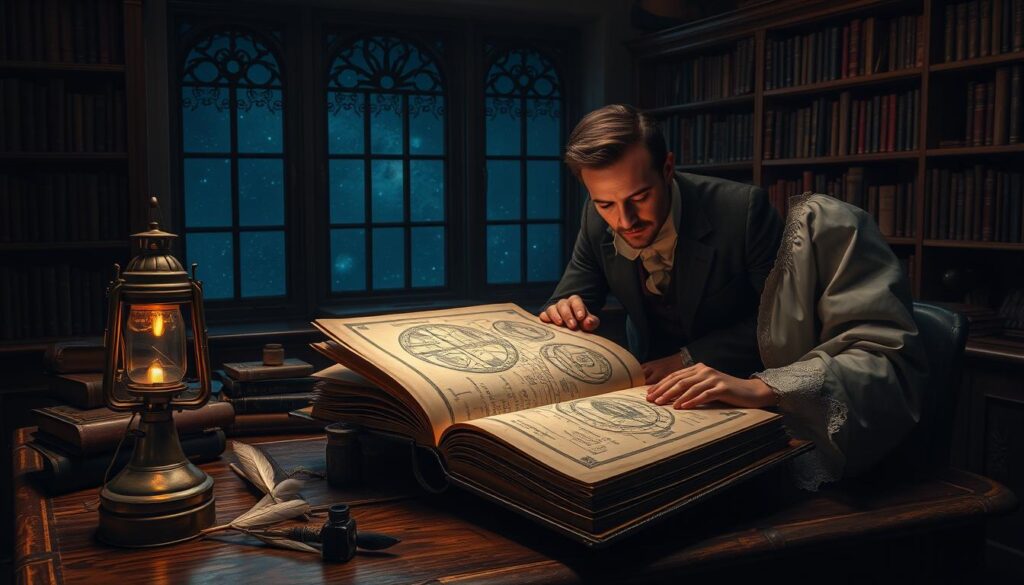
The rise of a French astrologer through annual almanacs
He issued his first almanacs for 1550 and kept publishing them each year. Those pamphlets included calendars, weather notes, and thousands of short prognostications that readers used for planning.
Clients, horoscopes, and practice at the time
Nobles and local leaders began asking for horoscopes and advice. Clients often supplied natal data and trusted his interpretations as a working astrologer.
“The almanacs turned celestial observation into daily guidance for people across the realm.”
| Feature | Detail | Impact |
|---|---|---|
| First almanac | 1550 | Annual sales and growing readership |
| Content | Calendars, weather, short forecasts | Practical use for farming and commerce |
| Client practice | Horoscopes from supplied birth data | Patronage from nobles and towns |
Calculation tools of the era sometimes led to errors when he worked from published tables. Still, public interest in celestial guidance rose during times of unrest and plague.
These yearly guides paved the way for his later quatrains and helped him become a household name in a world eager for meaning and guidance.
For modern lists and later forecasts, see a focused collection of predictions.
Les Prophéties: Quatrains, Books, and How Nostradamus Wrote
Les Prophéties turned annual almanacs into a single, influential book of short forecasts. It collected hundreds of quatrains grouped into numbered centuries and left many readers debating meaning across time.
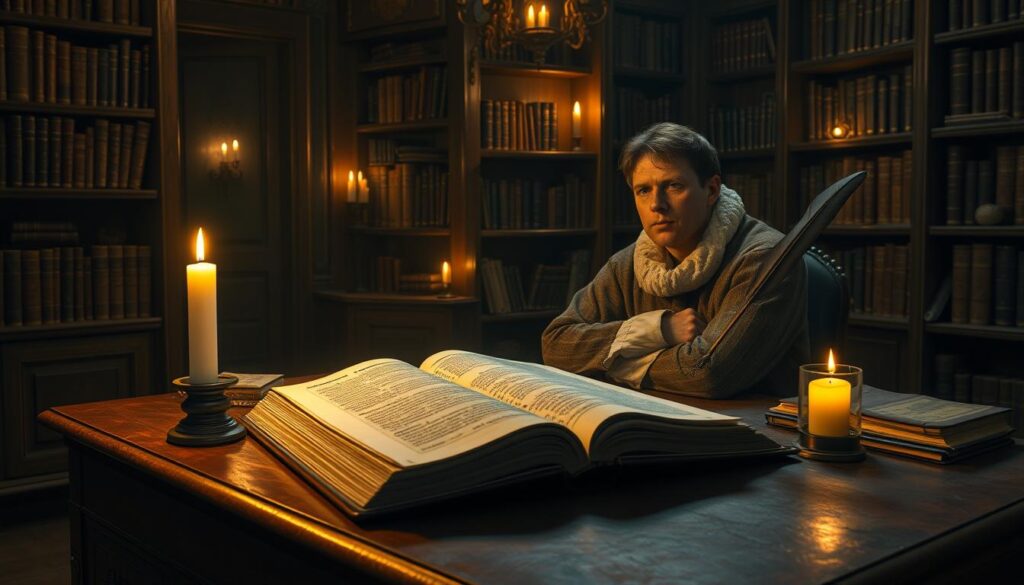
Structure and language
The quatrains use terse lines and mixed tongues—French with Latin, Greek, Italian, and Provençal—to obscure clear sense. That style and inverted syntax force readers to puzzle over verses and attach events to metaphors.
Sources and craft
He drew on classical historians, medieval chronicles, Richard Roussat, and the Mirabilis Liber. Research shows a blend of comparative horoscopy, historical analogy, and possible bibliomancy as drafting methods.
Printing and variants
Early printing practices caused variant spellings and punctuation. As a result, no two editions match exactly and some Centuries remain incomplete in surviving copies.
- Legacy: The book cemented his name and spread a new kind of public prophecy.
- Scholars: debate sources and methods; others add layers of interpretation.
“The quatrains invite active reading, letting later readers map metaphors to their own events.”
Court Connections: Catherine de’ Medici, Charles IX, and Royal Interest
Catherine de’ Medici took notice of his almanacs and summoned him to Paris after the 1555 volume circulated in elite circles.
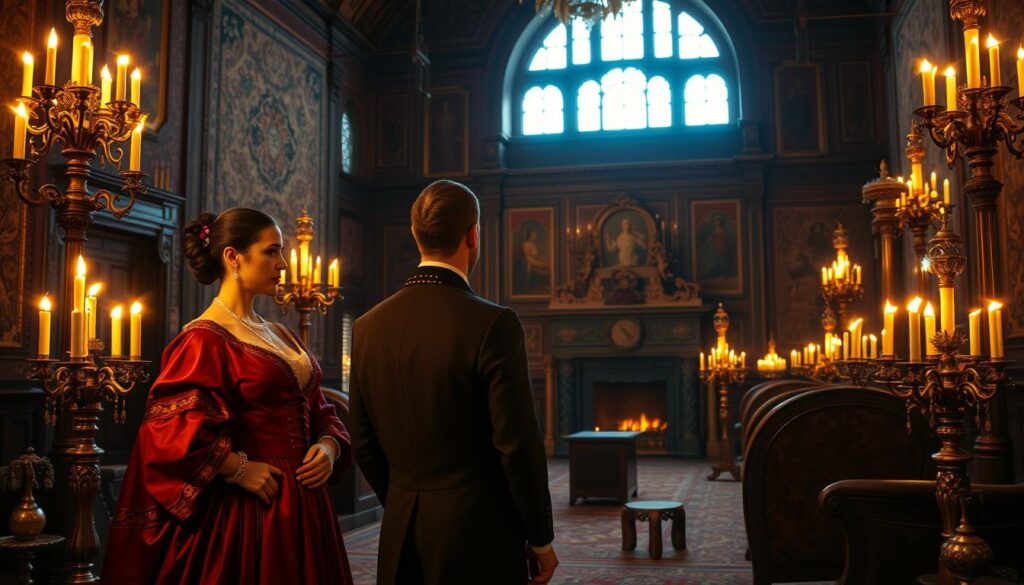
Predictions that caught the court’s attention
Some short forecasts and quatrains hinted at dangers to the crown. That raised concern in a court eager to anticipate key events.
Titles, visits, and the role of counselor and physician
He traveled to Paris in mid‑1556 to explain prophecies and to cast horoscopes for the queen’s children. Serving the royal household increased his public rise.
Later he received formal appointment as Counselor and Physician‑in‑Ordinary to her son, King Charles IX. That title linked medical care with political counsel.
“Court culture prized practical insight; prophecies were treated as tools for planning and protection.”
- Royal attention helped spread his reputation among elites.
- Casting horoscopes tied his work directly to dynastic concerns.
- Publishing rules remained strict—he faced brief imprisonment in 1561 over an almanac published without episcopal permission.
| Year | Action | Impact |
|---|---|---|
| 1555 | Publication of Les Prophéties | Court interest and summons |
| 1556 | Visit to Paris | Formal service to royal household |
| 1561 | Imprisonment briefly | Publishing penalty despite royal favor |
For a closer look at specific verses consulted by nobles, see this concise quatrain guide.
Belief, Skepticism, and the “Nostradamus Predicted” Debate
Readers have long argued about whether specific lines match real events. That debate mixes admiration, doubt, and cultural needs for meaning during crises.

Notable attributions and popular claims
Admirers tie verses to the execution of an English king and the Great Fire of London. Supporters also link later upheavals—like revolutions and famous leaders—to certain quatrains.
Academic critiques and translation issues
Scholars note the quatrains are vague and open to many fits. Misreadings and mistranslations make firm matches unreliable.
Research finds reliance on older texts and literary devices rather than clear foresight.
Propaganda, culture, and why interest persists
Propaganda has used these lines — Joseph Goebbels drew on them in WWII. Extremist groups have done the same to influence people.
Why does it matter today? In times of conflict, people search for patterns. Ambiguous prophecies invite projection and keep the debate alive.
“One text, many possible events — the openness of the verses fuels both belief and critique.”
- Admirers assert precise predictions for major events.
- Critics point to vagueness, selective quoting, and source borrowing.
- Popular culture recycles verses because ambiguity invites participation.
Final Years, Health, and Death: Gout, Will, and Tomb
The last year of his life was marked by limited mobility and careful legal planning for those he left behind.
Chronic gout had worsened and progressed into edema by 1566, making daily movement painful and slow. This visible decline ended most public activity and focused attention at home.
In late June he drafted a detailed will that distributed property and 3,444 crowns to family under specific conditions. Preparing his affairs shows a practical mind facing the end of public work and planning for household needs.
On July 1 he told his secretary he would not be found alive at sunrise. He died that night and was discovered near his bed and bench, a moment that added to his posthumous mystique.
“He faced death directly, tying medical decline to deliberate provision for kin.”
- Gout limited his final motions and foreshadowed the age-related decline typical of the period.
- The will protected family finances and provided clear instructions for heirs.
- Initial burial took place in a Franciscan chapel in Salon; remains were later re‑entombed in the Collégiale Saint‑Laurent.
This close, practical portrait of his life emphasizes the human side of a public figure and offers a tangible place for modern visitors to connect with his story. For related research materials, see research materials.
When did Nostradamus live: Timeline, Years, and Key Events
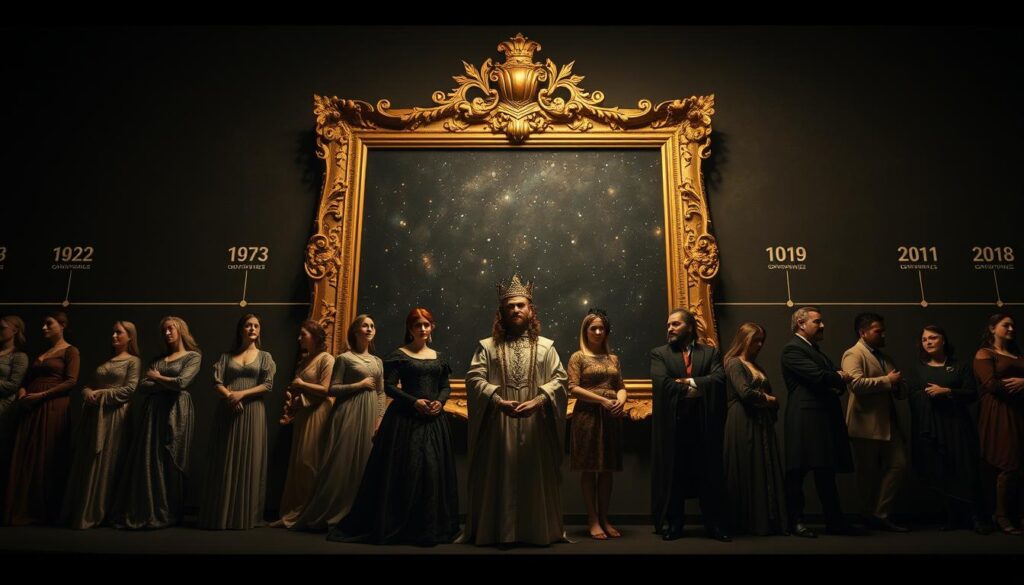
This compact timeline highlights the key years that shaped his education, family life, and public role. It shows how local service and printed work built a reputation that reached the court.
1503–1534: Student years, marriage, and plague tragedies
1503: Born in Saint‑Rémy. Around 1517 he studied in Avignon and in 1529 entered Montpellier before being expelled.
1531: He married in Agen. By 1534 his first wife and two children had likely died in plague, a personal loss that shaped his later choices.
1545–1555: Healing work, almanacs, and the making of a seer
1545–1547: He assisted in Marseille and practiced in Salon and Aix. In 1547 he remarried Anne Ponsarde and the household grew.
1550 marks the first almanac. These annual pamphlets widened his audience and led to the famous book of quatrains.
1555–1566: Les Prophéties, court favor, and the end of life
1555: Les Prophéties appeared and the quatrains spread across France. Mid‑1556 he visited Paris and later served at court.
1561 brought a brief publishing dispute. By 1566 worsening gout ended public work and led to his death, closing a sequence of events that echo across centuries.
Conclusion
A single life blended hands‑on medicine with public prognostication, shaping both patients and readers alike.
As a practicing physician he treated plague and built trust after an expelled episode at university montpellier. Family tragedy — the loss of his first wife and two children — shaped his outlook and fueled later writing.
His almanacs and the 1555 book of quatrains moved practice into print, mixing practical advice with poetic prophecy. That mix helped his rise at court and ensured the nostradamus prophecies stayed part of public debate across centuries.
Takeaway: approach any prediction or claim that “nostradamus predicted” a modern event with care. The verses invite mapping to the future, but verification needs context and sources.
FAQ
When and where was he born and when did he die?
Born in Saint-Rémy-de-Provence in December 1503, he died in Salon-de-Provence in July 1566.
What is known about his family background and religious roots?
He came from the Nostredame family of Provence. The family had Jewish ancestry but converted to Catholicism generations earlier; parents and siblings lived locally and influenced his early life.
Where did he study and what training did he receive?
He studied grammar, rhetoric and logic in Provence, then pursued medical training and apothecary work. He attended the University of Montpellier, where he studied medicine before returning to practice.
How did his work as an apothecary affect his medical career?
Apprenticeship as an apothecary taught him herbal remedies and compound preparation. That practical experience shaped his later plague treatments and informed his books on remedies and hygiene.
What role did he play during plague outbreaks?
He treated patients in Marseille, Salon-de-Provence and Aix, promoted hygiene measures of the time, and developed remedies such as the so-called rose pills. He saved some patients but also suffered personal loss when his first wife and two children died of the plague.
How did he move from medicine into astrology and publishing?
He began publishing annual almanacs that mixed practical advice, weather predictions and horoscopes. Popular demand for these almanacs expanded his reputation and led him to offer charts and astrological counsel.
What is Les Prophéties and how is it structured?
Les Prophéties is a collection of quatrains grouped into “centuries.” The verses are often obscure, mixing French, Latin and references to historical events, which makes interpretation difficult and open to debate.
How did he compose his quatrains—what were his sources and methods?
He used a blend of historical knowledge, astrological technique, and literary methods. Scholars point to classical sources, comparative horoscopy and sometimes cryptic or allegorical phrasing rather than literal forecasting.
Did he have connections to the royal court?
Yes. Catherine de’ Medici and Charles IX showed interest in his work. He gained court favor as an advisor and physician, which increased his visibility and influence during his later years.
Which famous events are later attributed to his predictions?
Many attributions are retrospective. Popular claims link his quatrains to events like the Great Fire of London or the rise and fall of leaders, but historians warn that many links rely on loose interpretation and translation choices.
What do scholars say about accuracy and vagueness in his verses?
Academic critics argue the quatrains are intentionally vague, allowing broad fitting to many events. Mistranslations, selective reading, and propaganda in popular culture have amplified specific claims of accuracy.
What health issues troubled him in later life?
In his final years he suffered from ailments including gout. He wrote a will and was buried in Salon-de-Provence, where his tomb still attracts visitors.
What are the key years and phases of his life?
Major phases include 1503–1534 (education, marriage, plague losses), 1545–1555 (apothecary work, almanacs and rising fame), and 1555–1566 (publication of Les Prophéties, court ties, final years).
Did he leave descendants or a family legacy?
He had children from a second marriage; his name and writings influenced later astrologers and popular culture. His almanacs and quatrains remain subjects of study and debate.
Are his works available today and how should readers approach them?
Many editions and translations of his almanacs and Les Prophéties exist. Readers should approach them with historical context in mind, recognizing translation issues and the period’s blending of medicine, astrology and literature.
What practical remedies did he recommend during the plague?
He promoted hygiene measures of the era, herbal compounds, and the so-called rose pills. While some practices helped with infection control, many reflect 16th‑century medical limits rather than modern germ theory.
How did printing and editions affect the text of his prophecies?
Early printing quirks, variant editions and occasional editorial changes mean quatrains can appear in different forms. That variation contributes to divergent interpretations over time.