

What is this practice? It is a ritual that channels intention into simple, symbolic acts to invite care into your life. Think of a honey jar that holds two names on white paper, folded toward you, sealed with honey and rose. This raises focus and helps you follow through with kind actions.
Full moon work uses clear desire, a pink candle, and moonlight to charge your aim. You might speak affirmations like “I am worthy of love,” then safely burn the paper. These methods are not backed by science; outcomes depend on free will, timing, and your effort.
How this guide helps: You will learn practical steps to cast spell respectfully, when to work with lunar phases, simple cleansing with water rose or salt, and how to spot subtle shifts. Expect gradual change. Each ritual is one mindful step alongside honest conversation, self-care, and steady choices that shape your relationship over time.
Key Takeaways
- Rituals like the honey jar or full moon candle work help focus your intention.
- No scientific proof; success links to free will, timing, and honest action.
- Keep ethics central: respect boundaries and mutual well-being.
- Simple prep—cleanse with water rose or a warm bath—boosts clarity.
- Use this guide for practical, safe methods and follow-up steps.
- For more related guidance, explore tarot card reading resources.
Defining Love Magic and How It’s Thought to Work
Rituals serve to anchor intention, making hopes feel more concrete through symbolic acts. Practitioners say this focus helps the mind and energy align toward a healthy relationship goal rather than scattering wishful thoughts.

Symbols—candles, written petitions, oils—act as focal points. A flame or folded paper turns abstract desire into something you can hold. Clear words used in petitions guide behavior after the ritual, so your choices mirror your stated aim.
Many time work with the moon to match natural ebb and flow. This is meant to support momentum, not coerce outcomes. Respecting free will matters: invited care holds more stability and kindness than forced attachment.
Practitioners often cleanse space and ground before starting to keep energy gentle and clear. Remember that these methods are not scientifically proven; they are tools to support real-world action and steady self-awareness.
For related guidance on relationship-focused readings, see soulmate readings.
whats a love spell: What People Mean When They Say “Love Spell”
Common practice centers on small, meaningful gestures—inscribing a name, placing it in honey, or lighting a candle.
In everyday terms, this usually means a short, symbolic rite with a written petition on paper and a flame to focus intent. People often fold a piece of paper with a name or two and use that as a concrete anchor for their aim.
Many use these rites to call in new love, rekindle warmth with a current person, or gain clarity about what fits life right now. Outcomes rarely arrive instantly; change tends to unfold over time and through steady action.
Practical elements matter: timing, gentle repetition, and follow‑through in real-world relationship work. Petitions that describe qualities—kindness, respect, patience—keep rituals ethical and rooted in growth.

- Rituals are simple and symbolic, not dramatic shortcuts.
- A candle often serves as a steady focus for meditation.
- Self-care, clear communication, and boundaries shape results as much as ritual details.
Ethics and Intent: Love vs. Control
Ethics shape every ritual step, steering intention toward care rather than coercion.
Set kindness as your baseline. Center consent, mutual growth, and clear boundaries before you write any petition. This keeps your practice grounded and avoids harm.
Positive intention and the “rule of three” mindset
Many practitioners use a simple ethic: what you send out returns. Treat this as a reminder to choose supportive words and actions.
“No practice should override someone’s autonomy; kind aims tend to create kinder outcomes.”
Why manipulating a specific person can backfire
Trying to steer a specific person’s will can break trust and feel empty if it removes real consent. Pushback, regret, or unpredictable outcomes may follow.
- Prefer open intentions that invite aligned connection, not control.
- Pause when attachment clouds your mind; breathe before you act.
- Work on steadiness: journaling, rest, movement, and trusted friends support clear aims.
| Concern | Ethical Response | Practical Tip |
|---|---|---|
| Targeting one person | Respect autonomy | Use open outcomes language |
| Harmful words | Reframe to kindness | Choose supportive phrases |
| Attachment-driven work | Build emotional steadiness | Pause, journal, seek support |
| Unclear intention | Clarify values | Write short, specific aims |

Timing Your Ritual: Full Moon vs. New Moon
Choosing the right moon phase can make your ritual feel more focused and grounded. Use timing as a tool to support clear intention, not to force outcomes. The moon simply offers a rhythm you can match to your aims.

Full moon energy for amplifying attraction and clarity
The full moon is popular for clarifying feelings and amplifying attraction. Write a clear desire, speak short affirmations, light a pink candle, and charge words in moonlight.
Many safely burn the paper afterward and journal any insights under the glow. This practice can sharpen focus and help you notice shifts over days or weeks.
New moon beginnings for fresh love and renewed relationships
The new moon feels like a doorway for beginnings. Set intentions for fresh love or renewal inside a small circle of rose petals with a red or light pink candle.
Keep petitions simple and gentle; return at later moon phases to refine or release your aims.
Days of the week and choosing the right time
Pick a time of day when you won’t be interrupted. Try the same weekday evening across a few weeks to build a calm rhythm without pressure.
Pair steady candle focus with breathwork to keep attention soft. Always use a stable holder, ventilate the room, and handle fire safely no matter the hour.
- Practical tip: Notice when your energy feels clearest across the lunar cycle and favor that moment.
- Repeatable plan: Short, simple rites work best—repeat at peaceful times rather than doing more at once.
Core Tools and Symbols: Candles, Colors, and Scents
Small, deliberate tools give your practice shape and keep your focus steady during an exercise. Choose items that feel meaningful to you. Simple materials help keep rituals clear and repeatable.
Red and pink candle choices
Many pick a red candle to evoke passion and drive. Red cues bold energy and can support intention for attraction.
A pink candle or light pink option signals tenderness and gentle caring. Let the color match the tone you want to call in.

Rose petals, oils, and essential oils
Rose petals and rose oil are classic for romantic themes. Scents like jasmine or vanilla can calm the mind and cue attraction.
Use one small vial of essential oils or a few petals to keep focus without overwhelming the space.
Papers, names, and short petitions
Write names and a short phrase on simple white paper to anchor intent. Fold toward yourself to set direction and keep the words clear.
Tools are symbolic; your presence and follow‑through matter most. Keep items tidy and store them respectfully for easy return visits.
- Minimal set: one candle, a few rose petals, and a simple oil.
- Use a small tray or heatproof plate for candle safety.
- If you prefer unscented work, rely on color, music, or flowers for atmosphere.
Preparing Your Space and Self
Start by treating your space like a small sanctuary: tidy, intentional, and ready for gentle work. These first steps are practical. They set a calm tone and help your energy settle before ritual action.
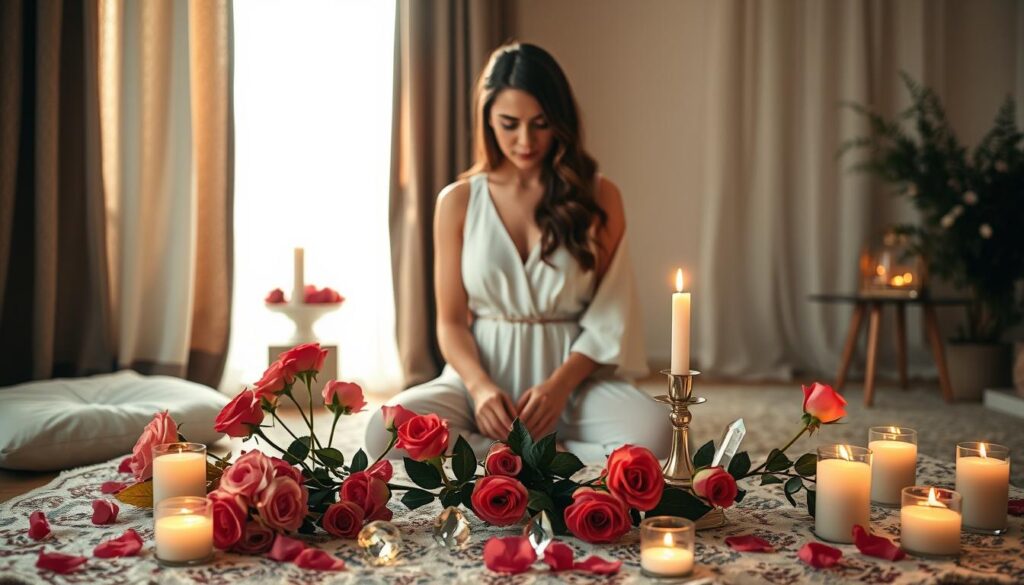
Ritual cleansing bath or shower
Take a warm bath or shower to wash off the day’s rush. Add a few drops of essential oils or infuse the water with water rose aroma to cue calm and care.
Keep the moment simple: breathe slowly, notice your body, and let tension ease. Speak a short self‑blessing naming kindness, honesty, and patience to align your intent with your values.
Creating a safe circle and clearing negativity
Clear surfaces and sweep the floor so your setup feels orderly. If you like, make a salt circle or gently waft incense to mark the area as intentional.
- Dim the light or choose soft lamps so attention stays gentle.
- Make sure your phone is off and pets are elsewhere to avoid interruptions.
- Mind fire safety: use a steady holder, keep water nearby, and ventilate the room.
“Preparation is mostly about mindset; tidy space and steady breath help any ritual feel grounded.”
Set out only what you need so the moment stays uncluttered. Arrive emotionally—place a hand on your heart and notice what love means in your life now. These steps support respectful, safe work and frame your spell as one steady choice among many.
Step-by-Step: Honey Jar Love Spell
A honey jar practice turns written aims into a contained, repeatable symbol you can return to nightly.
Prepare on a clean surface. Use one small piece of white paper. Write your name and the other person’s name kindly and simply.
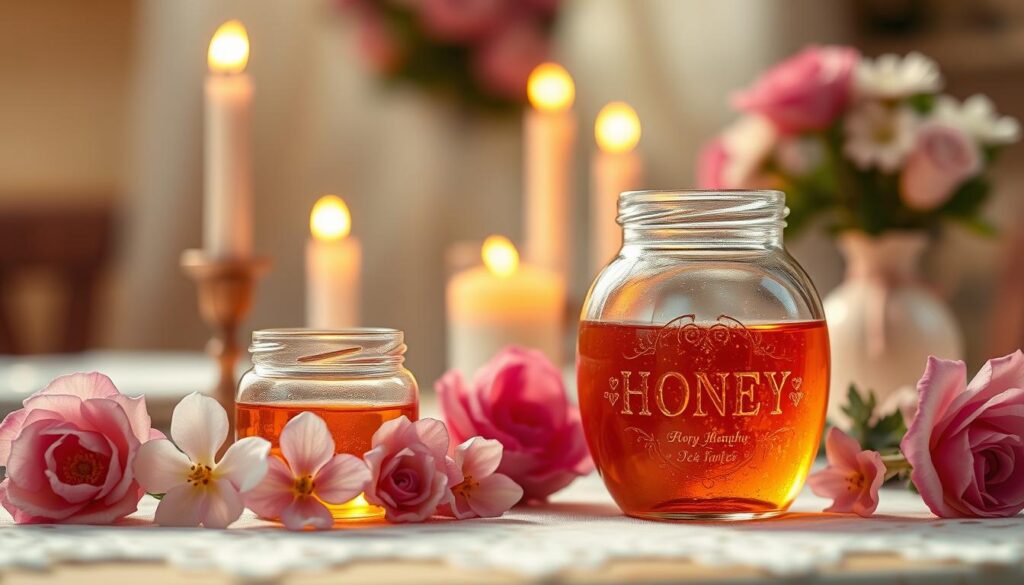
Folding, filling, and scent
Fold the paper toward you three times to draw sweetness in and place it in a clean honey jar. Pour honey slowly until the paper is covered. As you pour, visualize warmth and compassion growing between you.
Add a pinch of rose petals or a tiny dab of rose oil to echo affectionate intention. Keep amounts modest so the jar feels respectful and focused.
Sealing, candle work, and safety
Seal the lid firmly and set the jar on a fireproof plate. Place a small pink or red candle on top. Light it each evening and allow burn for a few minutes across at least three consecutive times.
- Speak a short affirmation that centers mutual care; avoid controlling language.
- Extinguish with a snuffer or gentle pinch; never leave a flame unattended.
- Between sessions, rest your hands on the jar and breathe to stay grounded.
If you bathed beforehand, a hint of water rose on your wrists can help you return to calm focus. Remember: no scientific evidence supports efficacy—this is a mindful ritual to pair with clear communication and steady action.
For related guidance on ritual focus and readings, see this tarot card reading resource.
Step-by-Step: Full Moon Love Spell with a Pink Candle
On a clear night, the full sky can become a quiet stage for setting gentle intentions. This short ritual uses simple tools to help you speak your aim and then release it with care.
Writing your desire and speaking affirmations
Choose a safe, comfortable spot where you can feel the moon’s light or simply sense the moment. On white paper, write one clear desire—name qualities like trust, kindness, and reciprocity.
Read the sentence aloud and follow with short affirmations such as, “I am worthy of love; I welcome mutual care.” Let the words be honest and brief. Breathe evenly and stay present.
Charging in moonlight and releasing safely
Set a pink candle in a firm holder and light it. Hold the petition where moon light can touch it and imagine the page soaking in calm clarity.
- When ready, burn the paper over a fireproof dish to symbolize release. Move slowly and never rush flames.
- Extinguish the candle carefully and wait until ashes are cool before disposing.

“This practice is traditional and mindful; it does not replace honest action or consent.”
Keep your heart open in the days after the ritual and note small shifts in a journal. For related guidance, try a reading at tarot readings.
Step-by-Step: Red Candle Attraction Spell
Simple nightly practice with a red candle can build quiet momentum toward attraction. Use this short ritual to focus intention, practice safety, and support real choices that matter in relationships.

Carving, anointing, and visualization
Choose a stable red candle and gently carve a name or the word “love” near the top to hold focus on care and passion.
Anoint the candle with a drop of rose oil, moving from top toward center to symbolize drawing attraction into your life.
Write a brief paper petition if helpful, centering kindness and mutual respect for the person or an open‑ended connection.
Lighting over several evenings to build momentum
Light the candle each night and allow burn for a short period across three times. Return to the same calm focus every evening and use simple breath cycles—inhale for four, exhale for six—to steady attention.
- Visualize healthy moments: shared laughter, listening, and supportive actions.
- Keep the flame in view at all times; use a snuffer and never leave it unattended.
- Store the candle safely between sessions and note any natural nudges to reach out or set clearer boundaries.
“Let passion be warm and respectful; true attraction grows from consent and steady care.”
Track how this short ritual refines your sense of what a caring connection feels like, and consider pairing practice with clear conversation or guidance from an online psychic when you want extra perspective.
Step-by-Step: New Moon Rose Petal Circle
During the new moon, create a small circle of rose petals to mark a quiet, intentional space for beginnings. This simple container helps you settle and name what you want to invite.
Setting intention inside a circle of petals
On the new moon, lay a ring of petals on a clean surface. Sit inside the circle and breathe until your shoulders relax.
Speak your desire clearly. Say how you hope love shows up—kindness, curiosity, reciprocity—without naming a specific name if you’re calling in new connection.
Holding a red or light pink candle and speaking desire
Hold a red candle or a light pink candle in your hands. Feel the moment and then light the candle in a safe holder.
- Let the flame burn briefly while you focus on gentle next steps.
- Use a snuffer to end the session and tidy petals respectfully.
- Jot one short journal note about what you learned and one action you will take this week.

Note: This ritual is meant to support intention and practical follow-through; it is not scientifically validated.
Working with a Specific Person vs. Calling in New Love
Choosing focus—someone familiar or an open invitation—changes your wording, boundaries, and follow‑through. Your intention guides how you write on paper and how you behave afterward.

Adjusting wording, boundaries, and expectations
If you work toward a specific person, use words that honor consent and healing. Aim for openness, honest dialogue, and repair when needed. Keep language gentle and avoid trying to steer another’s choices.
When calling in new connection, keep petitions open to a partner whose values, timing, and care align with yours. Describe qualities and shared moments instead of naming traits you want to force.
On paper, focus on respect, support, and joy. Short, clear lines help you remember your real goals and act accordingly.
- Spells help you show up differently; they do not guarantee outcomes with any person.
- Accept “not now” or “not this” as useful feedback that protects well‑being.
- Use boundaries as love in action: clear talk, self‑respect, and listening.
- Pause ritual if emotions run high; steady judgment improves choices.
“Ethical petitions invite mutual flourishing; your job is to invite and participate, not to pressure.”
| Focus | Wording | Boundaries | Expectations |
|---|---|---|---|
| Specific person | Consent‑centered, healing phrases | Clear limits; no coercion | Change in you; outcome not guaranteed |
| Calling in new partner | Open qualities, values, timing | Protect your needs; stay selective | Invite alignment; welcome reciprocity |
| Paper notes | Short, descriptive lines | Keep private and respectful | Refine wording after reflection |
Advanced Topics: Binding, Obsession, and Voodoo—Know the Differences
When rituals shift from invitation to restriction, the risks and responsibilities change.

What binding intends and why it’s powerful
Binding generally aims to limit or fix an outcome. Many view this work as potent and ethically complex when it targets one person‘s choices.
Think of it as trying to hold a situation still. That intensity is why experienced practitioners urge caution and clear consent when possible.
Obsession work and ethical concerns
Obsession rituals often promise heightened passion or fixation. These raise serious consent issues.
Inviting strong feeling differs from imposing it. Ethical practice favors healing, clarity, and mutual benefit over manipulation.
Voodoo portrayals vs. practitioner reality
Media often misrepresents voodoo as control-focused. Real traditions are community-rooted and prioritize cultural context and responsibility.
“Claims of guaranteed control are red flags; respect lineage and consent.”
- Research lineages and seek cultural respect before engaging advanced work.
- Energy ethics matter: aim for healing and shared well‑being, not coercion.
- If unsure, strengthen basics—self-reflection, honest talk, and patience.
For professional support or to reduce bias, consider consulting an experienced psychic counselor.
Should You Consult a Professional Spell Caster?
When emotions run hot, a neutral guide may steady choices and surface blind spots. Some services online promise dramatic results, but realistic help focuses on ethics, clear steps, and safety.

When outside help may reduce emotional bias
Consider professional support when feelings swamp your judgment or your actions risk boundaries. An outside view can calm bias and point to healthy next steps for your relationship.
Good practitioners offer follow‑up tools like journaling prompts, check‑ins, and practical actions that tie ritual to everyday life. Progress often unfolds over a week or longer, not instantly.
How to evaluate authenticity and experience
Watch for clear process descriptions, safety practices—especially around candle work—and realistic time lines. Be cautious of any claim that will cast spell to guarantee control or immediate results.
- Ethics: Respect for free will and informed consent is essential.
- Transparency: Clear pricing, scope, and aftercare show professionalism.
- Evidence: Look for consistent testimonials that note care, communication, and boundaries.
- Privacy: Your details should be handled with discretion.
“A practitioner should complement honest conversation and self‑responsibility, not replace them.”
Trust your instincts. You should feel informed, safe, and free to decline. If you choose help, confirm practical safety measures and expect steady, not instant, shifts in love and life.
Writing Strong Intentions and Words for Your Spell
Put a small, honest sentence on paper that names the qualities you want to invite. Keep the line short so it feels clear when you hold it.

Clarity, brevity, and aligning desire with values
Write on one small piece of paper. Use one or two plain sentences that state your intention kindly and precisely.
Focus on shared traits—honesty, respect, reciprocity—rather than fixed outcomes. Phrase it in the present or near future, for example: “I welcome caring, respectful partnership.”
Read your short line aloud. Listen for tone: does it feel compassionate and steady? If the wording spikes anxiety, revise until your body settles.
- Keep it brief and kind; avoid controlling language.
- Use simple, sincere words over flowery phrasing.
- Fold the paper gently and proceed with your ritual.
- Journal dates and petitions to notice patterns and refine wording.
- Pair the statement with one small daily action that reflects the aim.
“Clear, kind words help your choices match your aim; the ritual supports steady action.”
| Step | Why it matters | Practical tip |
|---|---|---|
| Write one sentence | Keeps focus concise | Limit to 8–12 words |
| Use present/near future tense | Anchors intent in action | Try “I welcome…” or “I show up with…” |
| Read aloud | Checks tone and feeling | Revise until calm |
| Journal petitions | Tracks progress and language | Note date and one small next step |
Safety First: Fire, Smoke, and Common-Sense Precautions
Treat every flame as a tool that needs respect and a clear safety plan. Keep setups simple so your ritual stays calm and secure.

Make sure candles sit in stable holders on flat, heatproof surfaces away from curtains, papers, and drafts. Keep a mug of water nearby for quick access.
- Keep flames within your line of sight; never allow burn to continue if you plan to leave or go to sleep.
- Trim wicks and use holders that fit snugly; avoid wobbling or improvised setups that may tip.
- Ventilate lightly if smoke or incense is present and note any sensitivities from pets or household members.
- Use a snuffer or gentle pinch to put out the light; don’t blow hot wax toward hands or surfaces.
- Let ashes cool fully before disposal; clear the area during the day when natural light helps you spot hazards.
- Tie back hair, avoid loose sleeves, and keep matches and lighters out of children’s reach.
- If you use oils, apply sparingly — excess oil can drip and flare — and keep pathways clear for safe movement.
“When in doubt, simplify the ritual to reduce risk—safety supports a calm, focused practice.”
| Risk | Smart Step | Why it matters |
|---|---|---|
| Unstable holder | Use weighted, heatproof base | Prevents tipping and spills |
| Unattended flame | Keep in sight; extinguish before leaving | Reduces fire hazards |
| Smoke sensitivity | Ventilate and limit incense | Protects health of people and pets |
| Hot wax or oil | Use sparing oil and snuffer | Prevents burns and flare-ups |
Follow these steps every day you work with flame. A careful setup keeps your ritual about intention, not emergency, and helps your practice stay safe and steady.
Tracking Results: Signs, Synchronicities, and Timelines
Track subtle changes after ritual to see how your intent moves into daily life. Expect small, practical shifts rather than instant miracles. Keep notes so you can tell steady change from wishful thinking.

What you might notice in days, weeks, and months
First week: notice clearer chats, lighter moods, or tiny nudges toward connection.
Over time: watch for synchronicities — a person reaching out, a song that lands at the right moment, or an invitation that aligns with your aim.
Letting go, patience, and not forcing outcomes
Pay attention to how the process makes feel in your body. Calm, steady openness usually signals alignment more than sudden urgency.
“Give the work time; some seeds need a longer season to take root.”
- Log dates and small choices to spot patterns without over‑reading every cue.
- Avoid forcing outcomes; keep showing up with kindness and clear boundaries.
- If you feel stuck, revise intentions or pause to care for yourself before moving forward.
- Celebrate small gains: respectful talk, clearer limits, or shared laughter matter.
Over months, growth can deepen. Stay flexible — the best result may not look like what you first imagined. True love often blooms where patience, honesty, and mutual choice meet.
Conclusion
Summing up: small, mindful rites can help you show up more honestly in relationships.
Practical options covered include honey jar love and honey jar steps, a full moon pink candle ritual, nightly red candle attraction, and a new moon petal circle for fresh beginnings.
Remember that a love spell or other love spells are symbolic tools, not scientific fixes. Honor free will, consent, and safety: steady holders, attended flames, and patient pacing matter.
Trust the moon as rhythm, not guarantee. Pair ritual with honest talk, clear boundaries, and one kind action toward your partner this week.
Journal takeaways and revisit what felt authentic. For related readings, see the lovers tarot for gentle guidance.
FAQ
What is a love spell and how does it work?
A love spell is a focused ritual that uses intention, symbolic action, and energy to influence attraction or feelings. Practitioners combine tools—candles, words on paper, rose petals, oils, and timing with moon phases—to concentrate intention and encourage shifts in attraction, confidence, or the dynamics of a relationship.
How important is intention and energy when casting?
Intention and personal energy are central. Clear, ethical intent directs the symbolic actions and keeps outcomes aligned with your values. Techniques like breathing, visualization, and simple wording help center energy so the ritual carries focused meaning rather than random actions.
Can I target a specific person ethically?
Targeting a specific person raises ethical concerns because it can interfere with free will. Many practitioners recommend asking for mutual attraction, improved communication, or healing rather than forcing feelings. Framing intentions to honor autonomy reduces risk of negative emotional fallout.
When should I do rituals—full moon or new moon?
Use the full moon to amplify attraction, clarity, and outcomes you want to strengthen. Use the new moon for fresh starts, new relationships, and planting intentions. Choose days and times that feel right—Friday is traditionally linked with romance—but trust intuition.
Which candle colors are best for romantic work?
Red candles support passion and physical attraction. Light pink or pink candles encourage tenderness, compassion, and emotional healing. Pick color based on your desired outcome and combine with oils or anointing for added focus.
What role do rose petals and rose oil play?
Rose petals and rose oil act as scent and symbol for love, attraction, and heart-opening. They enhance sensory focus and help anchor intention when added to a jar, sprinkled around a candle, or used in a ritual bath.
How does the honey jar method work?
The honey jar involves writing a name or intention on paper, folding it toward you, placing it in a jar, and pouring honey over it to “sweeten” the outcome. Add rose petals or a few drops of rose or essential oil, seal the jar, and light a small candle nearby while you state your intention.
What is a full moon pink candle ritual like?
On a full moon night, write a clear desire on paper and charge it in moonlight. Light a light pink candle, speak short affirmations, and visualize the emotion you want. Safely allow the candle to burn or extinguish it and bury or release the paper in a respectful way.
How do I perform a red candle attraction ritual?
Carve a simple word or name into a red candle, anoint it with a few drops of rose or attraction oil, then light it while visualizing the desired outcome. Repeating this over several evenings builds momentum; always practice fire safety and never leave candles unattended.
What is a new moon rose petal circle?
Create a small circle of rose petals on a clean surface. Sit or stand inside it holding a red or light pink candle, set a clear, brief intention, and speak it aloud. The new moon supports new beginnings, so use this ritual to invite fresh connections or reset a relationship.
How should I prepare my space and myself?
Begin with a cleansing shower or ritual bath to clear distractions. Tidy the area, remove negative objects, and create a small safe circle. Light incense or a candle, ground yourself with deep breaths, and keep tools—paper, pen, petals, oils—nearby.
How do names and paper function in spells?
Writing names or intentions on paper anchors the ritual in physical form. Fold the paper toward you if you seek attraction, or outward for release. Use clear, concise wording and avoid ambiguous phrasing to strengthen the focus of the work.
What precautions should I take for safety?
Practice fire safety with candles—use stable holders, keep flammable items away, and never leave candles unattended. Avoid ingesting oils or honey unless specifically intended for food use. If you have allergies, test essential oils and avoid materials that trigger reactions.
How long until I might see results?
Timelines vary. You may notice small signs or synchronicities in days, clearer movement in weeks, and larger shifts over months. Track changes, remain patient, and avoid forcing outcomes. Small, steady rituals often produce healthier, longer-lasting results.
When should I consult a professional practitioner?
Consider professional help if emotions feel overwhelming, if you’re dealing with obsession or binding concerns, or if you want an experienced perspective on ritual safety and ethical choices. Verify credentials, read reviews, and choose someone whose approach aligns with your values.
What about advanced topics like binding or obsession work?
Binding and obsession rituals carry heightened ethical and emotional risks. Binding intends to limit behavior and can harm autonomy; obsession work aims to intensify fixation. Most ethical practitioners recommend alternatives that promote consent, healing, and mutual wellbeing.
How do I write strong intentions and words?
Keep wording clear, brief, and value-aligned. Use the present tense (“I attract a respectful, caring partner”) and avoid vague phrases. Short affirmations and concise statements help energy stay focused and avoid conflicting desires.
Can essential oils and rose oil increase effectiveness?
Scents like rose oil add sensory focus and symbolic resonance. Combine a few drops with carrier oil for anointing candles or add to a ritual bath. Use high-quality essential oils and follow dilution guidelines to prevent skin irritation.
How should I track experiences and outcomes?
Keep a simple journal noting dates, rituals performed, feelings, and any synchronicities. Record phone calls, messages, or personal shifts. Tracking helps you recognize patterns and decide when to adjust wording, timing, or tools.