
Michel de Nostredame began life in Saint-Rémy-de-Provence in 1503. He studied languages, astrology, and medicine in Avignon and Montpellier. His early work during plague years and a famed rose pill earned him public notice and lasting name recognition.
The book Les Prophéties (1555) collected quatrains readers later linked to wars, disasters, and the rise of powers across the sea. Those short verses grew into global fame as people mapped lines onto events in world history.
In this guide, we set the stage by tracing how a 16th-century physician’s medical work led to a reputation for uncanny verse. You will see how ambiguous lines invite many readings across time and even across a year or century. The next parts walk through themes—fire, war, disease, and revolution—so you can follow each claim with context and care.
Key Takeaways
- Nostredame’s medical career helped build his early profile during plague years.
- Les Prophéties contains quatrains tied by readers to major events in world history.
- Ambiguity in the verses supports many interpretations across time and year.
- The article groups famous lines by theme to make exploration simple.
- Separating poetic wording from proof is essential when reviewing any claim.
Nostradamus at a Glance: The Man Behind the Prophecies
Michel de Nostredame was born in Saint-Rémy-de-Provence in December 1503. His early schooling covered Latin, Greek, Hebrew, mathematics, and astrology. These studies shaped the practical scholar who would earn his name across Provence.
From Saint-Rémy to fame: a physician turned prophet
He trained in medicine at Avignon and Montpellier and worked widely during plague outbreaks. His refusal of routine bloodletting and focus on hygiene and fresh air set him apart. Local people praised his methods, and that support helped build regional fame before any book made him a prophet to later readers.

The plague years and the “rose pill” that built his name
During the hard plague years he advised removing corpses from streets, low-fat diets, and better ventilation. He also made a rosehip “rose pill” believed to ease some mild cases. These practical steps became part of the reason people trusted him in a dangerous past full of illness.
His personal life carried sorrow: while on a medical mission he lost his wife and two children in 1534, likely to the very disease he fought. That loss and his mobility deepened local bonds and brought support from prominent patrons.
For a timeline that groups his public work and later writings by year, see this concise guide: timeline by year. These facts help place the man in solid historical context and explain why his medical past became an important part of later legend.
How to Read the Quatrains: Time, Symbols, and Mystery
Reading the quatrains calls for a simple rule: match imagery to context, not to a single year. Les Prophéties is a book of grouped verses, and that grouping shapes how lines reach across time.
Why numbered groups matter
The work is set into numbered centuries. That order frames interpretation and lets one verse apply to many moments. Readers often back-test lines against past events, then extend them forward.
Symbols and flexible language
Animals, elements, and short words like “lion,” “fire,” and “water” act as cues. Those cues invite multiple readings and resist firm fact checks. Translation choices change tone and meaning too.
| Symbol | Common Meaning | Why it shifts |
|---|---|---|
| Lion | Power, kings | Used for many leaders across eras |
| Fire | Destruction, war | Applies to battles, accidents, or rhetoric |
| Water | Change, flood | Can mean emotion, ship, or literal flood |
Practical tip: treat each verse as poetic language first, then test historical links as a second step. For a deeper look at the book and its reception, see this concise guide: Les Prophéties overview.
Balance curiosity with a fact-first mindset to avoid reading a single line as a nailed-down prediction.
What Were Nostradamus Predictions? A Friendly List of the Most Cited
Quick guide: below is a short, friendly list of the most-cited quatrains and how readers tie them to past events in history.
- Fire in a city: Many quatrains mention blazing scenes. Interpreters link these to famous urban blazes across time, though the verse rarely names a specific city.
- Death of a king: References to a fallen king capture public imagination. Some readings point to famous royal accidents, but the text often stays symbolic.
- Plague and illness: Short lines about pestilence echo real outbreaks. These lines fit broad moments when disease shaped societies.
- Great wars and upheaval: Verses about chaos map to many global conflicts. Readers connect the wording to different events, so fits vary by interpreter.
Note: some items have stronger documentary links, while others rest on loose matches. This list is a starting part for deeper reading, not a final verdict.
The “Young Lion” and a King’s Death: The Tale of Henry II
A single quatrain that mentions a young lion has long been tied to a famous French joust in 1559.

The famous jousting accident and the lion motif
On June 30, 1559, King Henry II joined a tournament that ended in a tragic wound. A lance pierced his visor, and the injury led to the death of the French king weeks later.
Enthusiasts link the quatrain’s animal image to this episode. The phrase young lion feels specific, so many map the line to those dramatic courtly events.
But the wording lacks names and a clear year. That gap lets other readings stand. Scholars note the same verse has been applied to different figures across history.
- Why it sticks: vivid animal imagery makes a scene memorable.
- Why it slips: no proper names or dates appear in the verse.
- Balanced view: the match is suggestive, not definitive.
Fire in the City: Attributions to the Great Fire and Other Blazes
Flaming lines in several quatrains often draw readers toward famous urban infernos. London’s 1666 Great Fire tops many lists, but similar verses get tied to later city disasters across the past.
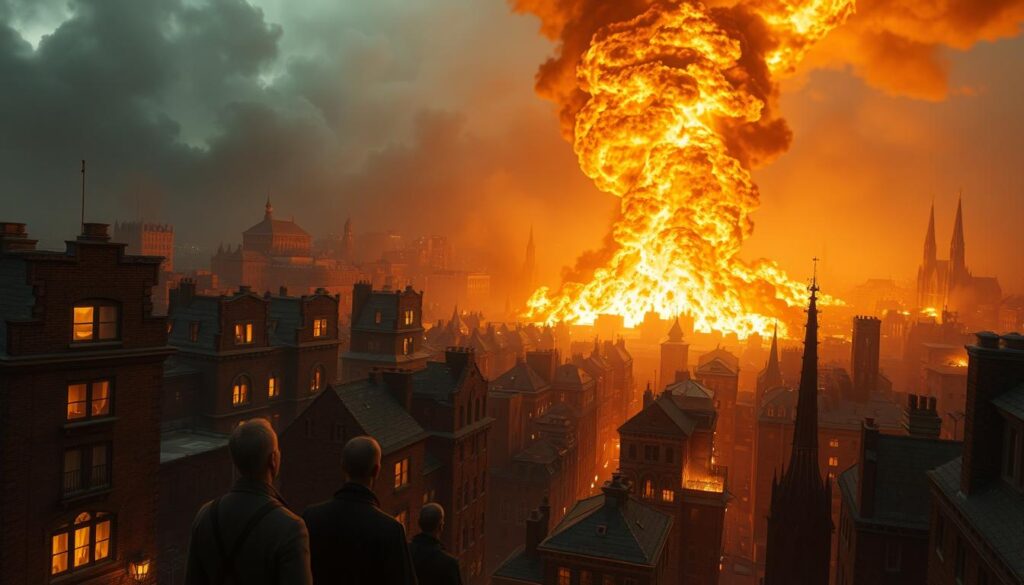
London in flames became a natural match because the scale and aftermath fit the dramatic language. Yet the quatrains rarely supply dates or proper names, so interpreters must weigh timing, translation choices, and the described scale before assigning a specific city.
How lines stretch across events
Broad references to a city and simple words like “fire” allow one verse to fit many moments. That flexibility makes the same lines useful when new blazes hit cities decades or centuries later.
- Why the match sticks: major fires leave lasting cultural memory.
- What is often missing: direct names, clear timing, or unique details.
- Quick checklist: match of scale, language specificity, and contemporary records.
For a closer look at specific quatrains and their uses, see this concise quatrain guide. The result is a friendly reminder: vivid verse attracts attribution, but solid evidence is the true test.
Revolution Foretold: Verses Linked to the French Revolution
Some quatrains speak in broad strokes—rulers toppled, people rising—which makes them easy to connect to revolution. Interpreters often point to language about a fallen king, mass unrest, and sudden death as a near match for events around 1789.
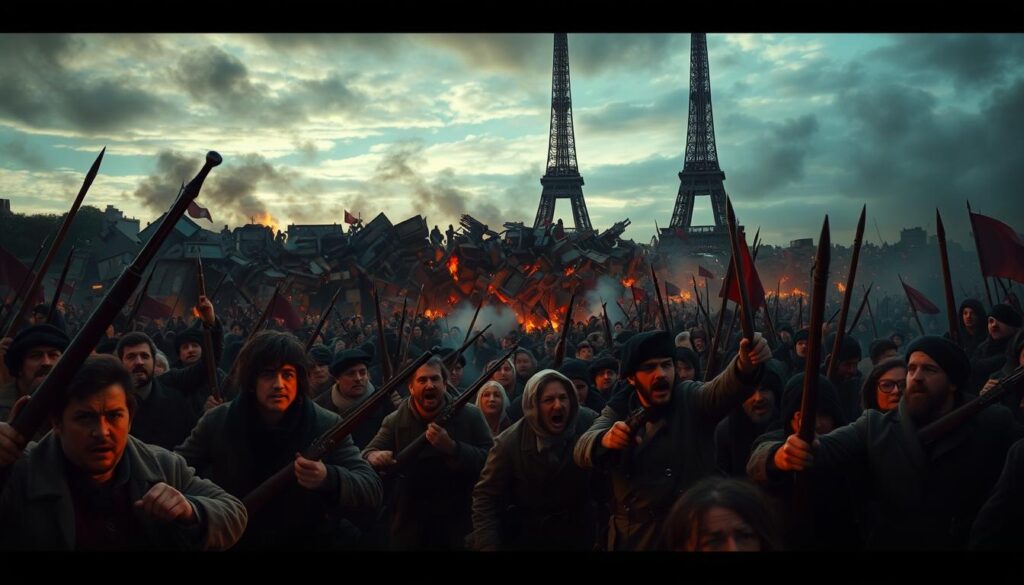
People, kings, and upheaval in the “centuries”
The structure of the centuries encourages broad reading. Grouped verses use general images—crowds, broken thrones, and flames—that can map onto many social ruptures.
Because the lines lack dates and names, readers rely on context. That makes the french revolution a natural candidate: it features clear upheaval, visible rulers, and lasting change.
Fact vs interpretation: where history and prophecy meet
Distinguish documented history from later interpretive fits. The verses describe drama but do not record events with archival detail.
Enthusiasts match tone and imagery to the french revolution, yet that match is often retrospective. Cultural memory and political narratives shape which lines gain attention over time.
- Why readers link them: shared imagery and cultural salience.
- What to watch for: lack of names, flexible wording, and later retellings.
- Balanced view: evocative language invites ties, but firm proof is limited.
For a recent look at modern interpretations, see this recent look at modern interpretations.
Wars Across the World: Quatrains Tied to Global Conflicts
Many interpreters read battle imagery as references to major armed clashes across ages. They link short lines to campaigns in Europe and to fighting that reached distant cities.
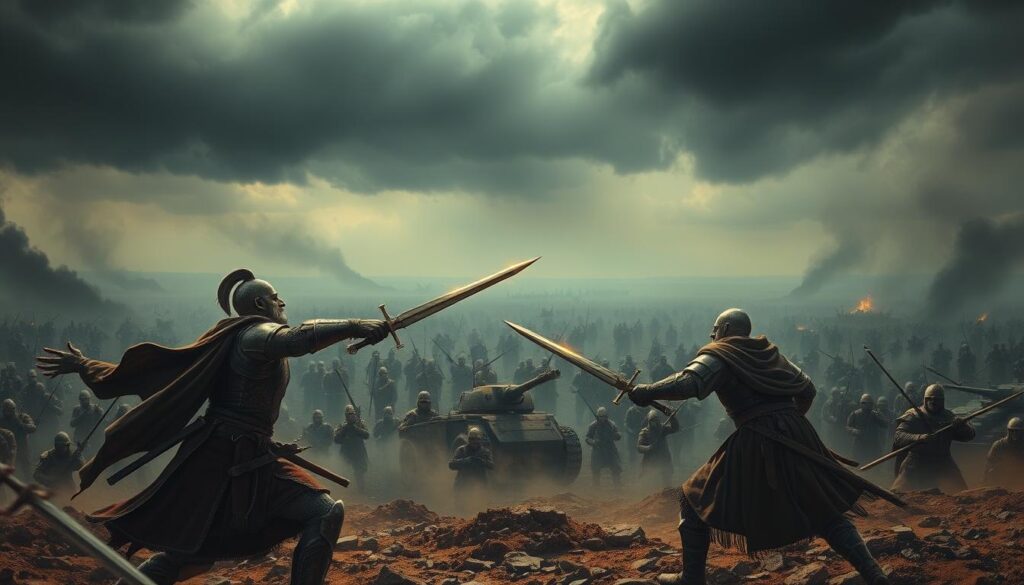
“Iron birds” and modern warfare
Iron birds is a phrase often cited as a symbolic match for aircraft. Readers point to this language to anchor a quatrain to twentieth-century air power.
Why this matters: wartime innovation and the rise of new weapons make old images feel modern in hindsight.
From Europe to distant cities: expanding theaters of war
Lines about armies, smoke, and moving fronts get applied to many events across the years. The same verse can fit early continental battles or later global campaigns.
That flexibility helps explain why claims spread: one evocative line can map onto multiple events without naming a date or place.
| Phrase | Common Read | Typical Limits |
|---|---|---|
| Iron birds | Aircraft, bombing raids | No date; open to many eras |
| Armies moving | Invasion, mass mobilization | Broad image; fits many wars |
| Cities in smoke | Urban bombardment or fire | Unclear location; retrospective fit |
Quick guide: treat martial quatrains as poetic imagery first, then test links to specific years or events. Even strong correlations remain interpretive unless tied to clear, dated references.
Plague, Death, and Years of Sorrow: Disease in the Prophecies
Hands-on care during epidemics gave his life and lines a heavy focus on illness and loss. He favored cleanliness, fresh air, and simple diets over the harsher treatments common in his era.
His rosehips-based “rose pill” and hygiene steps stand out as practical measures. These actions shaped how later readers linked quatrains to outbreaks across long spans of time.
The personal cost was sharp: in 1534 he lost his wife and children, likely to plague. That private grief gives disease imagery an emotional weight when people study the prophecies.

Interpreters often map broad references to pestilence onto many events. Because verses lack dates or places, a single line can fit different outbreaks over the years.
- Firsthand care explains recurring mentions of plague in readings.
- Simple public-health steps contrast with the era’s usual methods.
- Emotional loss helps explain why disease themes persist in memory.
This view keeps claims cautious: disease lines draw attention, but they rarely pin to a single, dated event. The human cost, though, remains a clear reason those verses echo through later crises and public debate about illness and death.
America in the Verses: A Land Across the Sea
Some quatrains point to a distant shore, and readers argue those lines hint at a rising power across the Atlantic.
Interpreters highlight phrases like “land across the sea” or “new world” as possible markers. Many map that language to the united states and its later role on the global stage.

New World hints and the rise of a global leader
Enthusiasts read maritime imagery and exploration motifs in the book as early clues. They link ships, distant shores, and the idea of a dominant nation to America’s swift rise.
That reading often treats a line as a loose prophecy rather than a dated forecast. Translators and context matter a lot. Different renderings tilt the meaning toward or away from a modern nation.
“Lines about shores and long voyages make it easy to see a distant power becoming a leader in the world.”
| Phrase | Common Reading | Limit |
|---|---|---|
| “Land across the sea” | New World, colonial expansion | No names or dates |
| “Ships and banners” | Maritime power, trade dominance | Broad; fits many eras |
| “A great leader from afar” | Rise of a national leader | Open to many figures |
In short, the verses allow a friendly, even-handed reading that casts the united states as a possible match. Yet careful readers separate evocative language from a hard, single prediction.
The United States and Civil Unrest: “Brother Against Brother”
Lines about brothers at odds and cities in flames have long been read as mirrors for internal American strife. Readers trace such verses from the Civil War to modern days and ask how well poetic language fits political ruptures in the united states.

Historic division and today’s polarized climate
Interpreters point to phrases like “brother against brother” when linking a quatrain to major domestic events. Those lines resonate with people during protests, riots, and open political conflict.
How readers map lines to events: they compare imagery to documented unrest, then test timing and context. Often the match leans on cultural memory more than specific detail.
- Leaders and institutions get pulled into readings when public anger focuses on authority.
- Selective memory makes high-profile unrest seem more typical than it is.
- Same verses can apply to other nations, so caution matters.
| Phrase | Common use | Limit |
|---|---|---|
| “Brother against brother” | Internal civil strife | Vague timing |
| “Fire and chaos” | City unrest or riots | Fits many eras |
| “A great falling leader” | Leaders blamed or removed | Not a dated prediction |
Quick checklist: ask if the verse names dates, cites places, or adds details before treating it as a firm prophecy. For wider context and related readings, see a guide to starseed types at starseed type — Pleiadian.
Economic Downturns: “Great Wealth Turning to Dust”
Passages that mention vanished wealth often surface after bank failures and stock-market crashes.

From past panics to modern market crashes
Readers link lines about “gold losing its value” to events such as the Great Depression and the 2008 crash. Many examples point to moments when savings and markets collapsed across the years.
The united states often features in those readings because of its central role in global finance. Major policy shocks and bank runs make the country a natural focus for interpretation.
Interpreters contrast cyclical market behavior with the idea that a single year will settle a verse. Markets rise and fall repeatedly, so a broad metaphor can fit many episodes.
| Verse Image | Historical Matches | Why it fits |
|---|---|---|
| “Wealth turning to dust” | 1929 crash, 2008 crisis | Wide metaphor; fits many collapses |
| “Gold losing value” | Periods of inflation, currency shifts | Symbolic of lost purchasing power |
| “Fortune scattered” | Bank runs, sudden defaults | Matches rapid loss across markets |
People read future-oriented warnings into these lines, especially after a shock. Confirmation bias makes a broad image feel like a precise prediction once a crash happens.
“Look for named events, dates, or clear context before treating poetic lines as hard economic forecasts.”
Quick checklist: ask if the verse names a place or date, compare to documented market data, and weigh whether the link rests on mood or on concrete fact. That helps separate poetic warning from tidy storytelling.
Water Rising, Cities Threatened: Disasters and the Environment
References to swelling rivers and distant fires get mapped to contemporary headlines about floods and western wildfires. Interpreters point to simple images—rising water, threatened towns, and flames in the west—and link them to events people see in the media today.
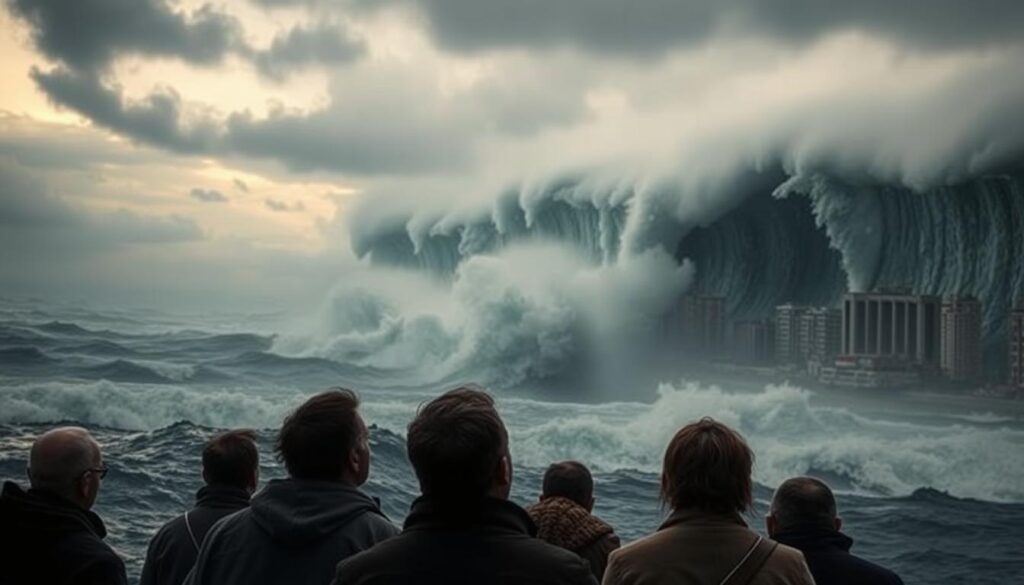
Fires in the West, floods in coastal cities
How lines are read: verses about water and heat are used to discuss coastal flooding and wildfire risk. Readers map broad imagery to specific episodes like roaring western fire seasons or storm-driven inundation of port cities.
Why multiple cities fit: vague wording lets one verse apply to many places. That means the same line can describe several coastal cities or different fire seasons without naming a date.
- People use these lines to frame personal safety and public policy conversations.
- Technology and forecasts shape which environmental lines resurface during crisis.
- Evocative language can spur preparedness even when it is not a precise forecast.
“Vivid imagery often prompts action, but careful evidence matters more than a poetic match.”
Voices Around the World: Technology, Power, and the Digital Age
Lines about distant voices and iron machines often get read as hints toward global communication networks. Interpreters link such imagery to broadcasting, satellites, the internet, and now artificial intelligence.

From printing presses to AI, the same poetic words take on new life as each era gains tools to spread sound and text further. The united states is often cast as a central part of that rise because of its tech leadership over the years.
From printing to AI: the expanding reach of words
Scholars and others compare early radio and television to later networks. They show how one verse can fit multiple inventions without naming a single device.
- Readers map “voices heard around the world” to radio, satellite, and the internet.
- References to “iron machines” get reused for both engines and modern servers or AI systems.
- Different groups assign the same lines to different technologies, showing creativity and limits.
How to judge a tech-themed link: ask if the verse names timing or adds clear detail, or if the match rests on mood. That helps separate hindsight from a plausible signal about the future.
“Each generation reinterprets verses to match its own future-facing anxieties and hopes.”
For a practical angle on using modern voice work, see a guide on how to become a paid psychic and consider how new platforms change who hears and who leads.
Prophet or Poet? Sorting Facts, Fame, and Interpretation
Readers still ask whether to treat the verses as artful poetry or as the work of a genuine prophet. This short guide weighs biographical facts against the long trail of later claims.

How his name and book shaped centuries of prediction
His public name first rose from practical work during the plague years. Hands-on care and local trust created an early reputation that later fed wider fame.
Personal loss — including the death of his wife and children — adds emotional weight to readings of the prophecies. That past helps explain why some readers treat his lines as urgent warnings rather than casual verse.
Why ambiguity fuels enduring prophecy debates
Vague images let each generation remap lines onto new events. That flexibility keeps debate alive: poetic language invites many fits, while factual links remain scarce.
- Biographical anchor: known medical work grounds the story.
- Textual openness: short, symbolic lines resist a single reading.
- Cultural lens: current events shape which lines gain attention.
“Appreciate the craft, respect the history, and stay mindful of limits when you test verse against fact.”
Conclusion
Conclusion
Over years the quatrains have acted as mirrors, not calendars: readers bend images to fit new crises across time. His medical work and personal loss shaped the name that later tied the verses to disaster and death.
Keep a balanced view. Treat the lines as poetic prompts, then test any claim against textual detail and historical fit. Ask: does the verse name a place or a clear year? Does evidence back the match?
Quick checklist: check textual details, compare to documented history, and separate metaphor from match. For more on the collected prophecies and modern readings, follow the linked guide.
FAQ
Who was Michel de Nostredame and why is he famous?
Michel de Nostredame, known as Nostradamus, was a 16th-century French physician and apothecary who published Les Prophéties, a collection of quatrains. His blend of medical experience, interest in astrology, and poetic verses earned him lasting fame as a prophetic figure.
How are the quatrains organized and why are they called “centuries”?
The book groups quatrains into sets called centuries (groups of 100 verses). This structure helped readers and interpreters locate passages and allowed later commentators to map verses onto events across many years and centuries.
Can the quatrains be dated precisely to specific years or events?
Most quatrains lack precise dates, so linking them to exact years requires interpretation. Scholars and enthusiasts use historical context, symbolic clues, and linguistic analysis to suggest connections, but certainty is rare.
What do symbols like lions, fire, and water usually mean in his verses?
Symbols often carry layered meanings: lions may signify rulers or courage, fire can indicate conflict or large urban fires, and water might represent floods or naval events. Interpretations vary with context and translator choices.
Which verses are most often connected to the death of Henry II, the “young lion” story?
A famous quatrain describing a young lion and a duel is commonly tied to Henry II’s fatal jousting accident in 1559. Supporters cite vivid imagery in the verse; critics point out ambiguous wording and retrospective fitting.
Did Nostradamus predict the Great Fire of London or other city fires?
Some quatrains contain fiery imagery that readers have linked to major blazes like the Great Fire of London. Those links rely on metaphor and broad language, so they remain debated rather than definitive.
Are there quatrains that seem to describe revolution and social upheaval?
Yes. Several verses mention kings, people rising, and upheaval. Interpreters have applied them to events such as the French Revolution, though matching a quatrain to a specific revolution depends on reading and historical framing.
Do any quatrains reference modern warfare or technology, like “iron birds”?
Later readers have suggested phrases could hint at airplanes or advanced weapons. These readings are retrospective and often symbolic; the original text uses allegory, so claims about precise modern technologies are speculative.
Are there quatrains about plagues or widespread disease?
Disease and mortality appear in several quatrains. Given Nostradame’s background treating plague victims, his verses reflect attention to epidemics, which readers have connected to various outbreaks across history.
Did any verses mention a land across the sea that might refer to America?
Some quatrains include references to distant lands or “new worlds.” Interpreters point to these as possible hints at the Americas or global shifts in power, though the language is often vague and open to multiple readings.
Are there passages that commentators tie to the United States or civil unrest there?
A few quatrains discussing division and “brother against brother” have been applied to American civil strife. Such associations are interpretive and depend on readers mapping symbolic wording onto modern events.
Did he foresee economic collapse or market turmoil?
Verses about wealth turning to dust or nations losing riches have been linked to economic crises. These metaphors fit many historical downturns, but they do not predict technical economic details or exact timing.
Are environmental disasters like floods and rising waters present in the quatrains?
Imagery of water, drowning, and threatened cities appears in the collection. Readers sometimes connect these to floods, coastal threats, or climate-related events, but specific predictions are not explicit.
How do experts decide whether a quatrain really predicts a specific event?
Scholars weigh language, contemporaneous references, original French, and historical context. They avoid retrofitting vague verses to events without clear textual support. Reliable claims typically rest on close linguistic and historical analysis.
Is Nostradamus considered a true prophet or more a poetic commentator?
Opinions split. Some view him as prophetic, citing uncanny matches to later events. Others see him as a skilled poet whose ambiguous imagery invites many interpretations. Many historians place him between folklore and literature rather than a scientific prophet.
Why do his quatrains keep attracting attention today?
The quatrains’ ambiguity, dramatic imagery, and historical reputation fuel ongoing interest. In times of uncertainty, people seek patterns and meaning, and Nostradame’s verses provide a flexible canvas for those searches.
Where can I read Les Prophéties in a reputable translation?
Major academic presses and university libraries offer reliable translations with critical notes. Look for editions that include the original French, scholarly commentary, and historical annotations to aid understanding.