
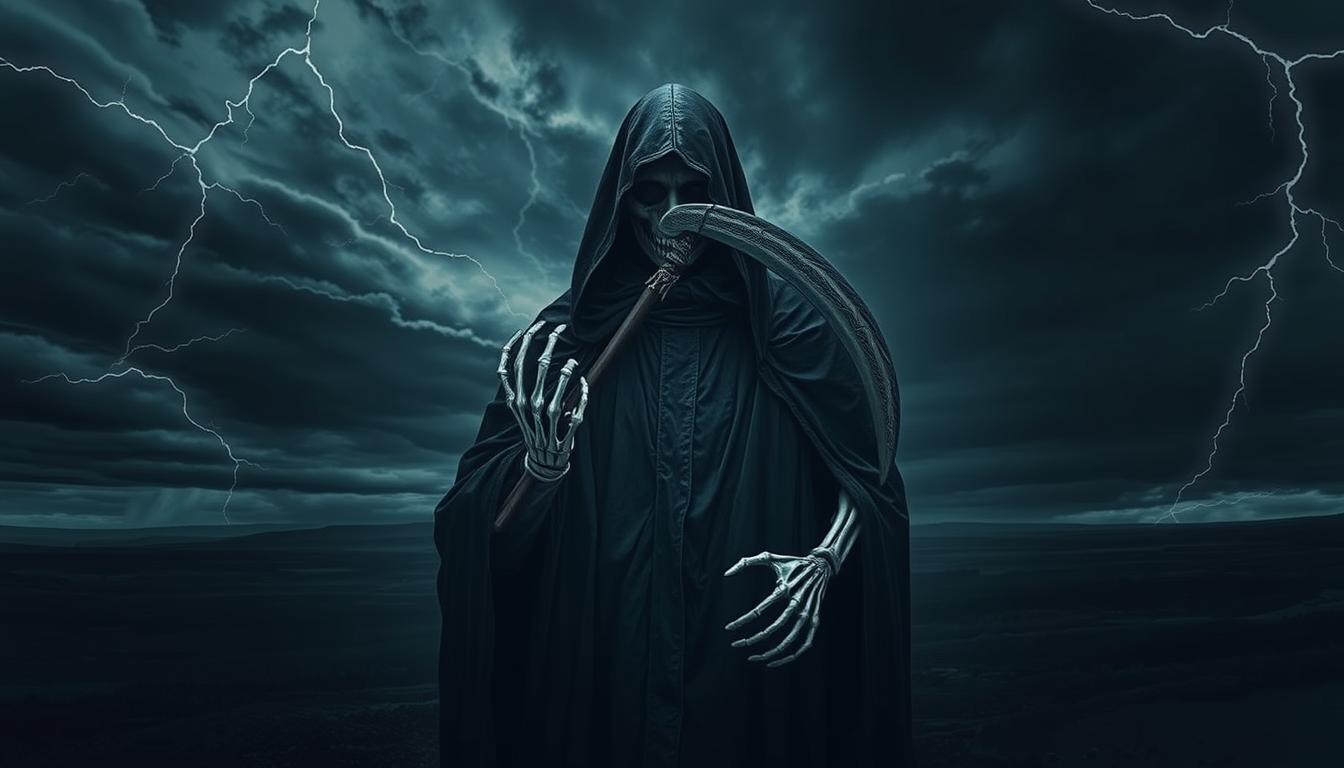
The 13th card in the Major Arcana is Death, a powerful archetype that points to an end and a fresh start in life rather than literal mortality.
This guide will unpack symbolism, upright and reversed meanings, and how this image shows up in a reading when you face change or seek renewal.
Fear often greets the name, but deeper study shows themes of transformation, release, and purposeful endings that open doors to new paths.
We will explore visuals you may spot: a skeletal figure in armor, a white horse, a black banner with a white rose, a rising sun, a river, a bridge, and fallen figures — each detail tells an idea about letting go and moving forward.
Practical takeaways will help you spot patterns, reset priorities, and use this energy in relationships, work, money, and personal growth.
For a related look at emotional shifts in readings, see this Three of Swords resource for context.
Key Takeaways
- Death signals transition and the close of one chapter to allow another.
- Upright themes: release, renewal, and constructive transformation.
- Reversed themes: fear of change, stagnation, repeating patterns.
- Imagery—horse, banner, sun, bridge—carries symbolic cues to interpret.
- Practical use: identify timing to let go and reset priorities.
- Meaning shifts by context: relationships, career, money, and energy.
Meet the 13th Major Arcana: Death, Change, and Renewal
Meet a Major Arcana figure whose presence marks endings that create room for fresh starts. Quick answer: the death card sits as number thirteen in many decks and follows The Hanged Man.
This placement matters. After a pause of reflection, this card signals a shift from hold to action. It points to necessary endings and a broad transition across life areas.
Where it sits and why that matters
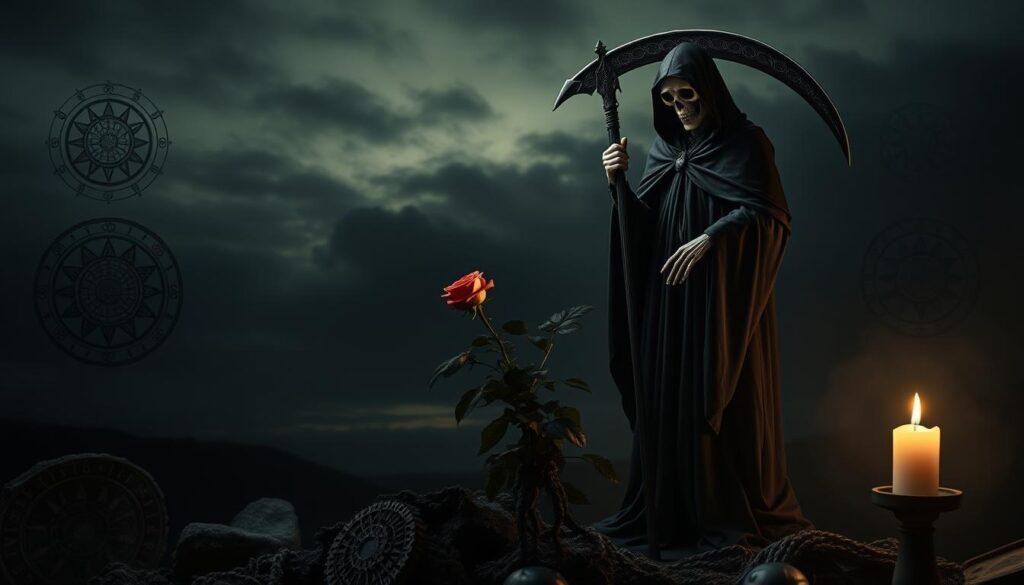
The major arcana sequence frames growth stages. Number thirteen anchors cycles, not doom. Classic symbolism shows a skeleton in armor on a white horse, carrying a black banner with a white rose. That contrast suggests purity amid inevitable change.
| Feature | Meaning | Signals |
|---|---|---|
| Placement | After suspension (The Hanged Man) | Move from pause to action |
| Number | Thirteen as cycle | Clearing space for new growth |
| Imagery | Skeleton, horse, white rose | Inevitability, purity, renewal |
Understanding this name helps readers spot sweeping changes and plan how to release what no longer serves. For related insight on timing and emotional shifts, see Four of Swords resource.
what is the 13th tarot card: Meaning, number, and place in the tarot deck
When XIII appears, it signals a major phase closing and an invitation to begin again.
Death as XIII represents necessary closure that lets a new chapter start. Its core meaning centers on transformation and the courage to release the past.
The number XIII in the Major Arcana marks cyclical change. In the deck’s narrative arc, it follows reflection and moves energy from inner insight into outward transition.
Practical implications are clear: when this tarot card appears, expect endings that clear space for healthier routines, roles, or relationships. These shifts feel intense but often create momentum toward better alignment.
“Endings are not punishments; they are signposts pointing toward growth.”
If you see repeating endings across other cards, your reading likely highlights a season of change and transformation that calls for letting go.
- Define: Death as necessary closure
- Place: follows suspension, moves to action
- Outcome: release old patterns, open new possibilities
Death Card Symbolism: From Skeleton and Armor to the White Horse
Look closely at each emblem on this scene; each one maps a part of life that must change.
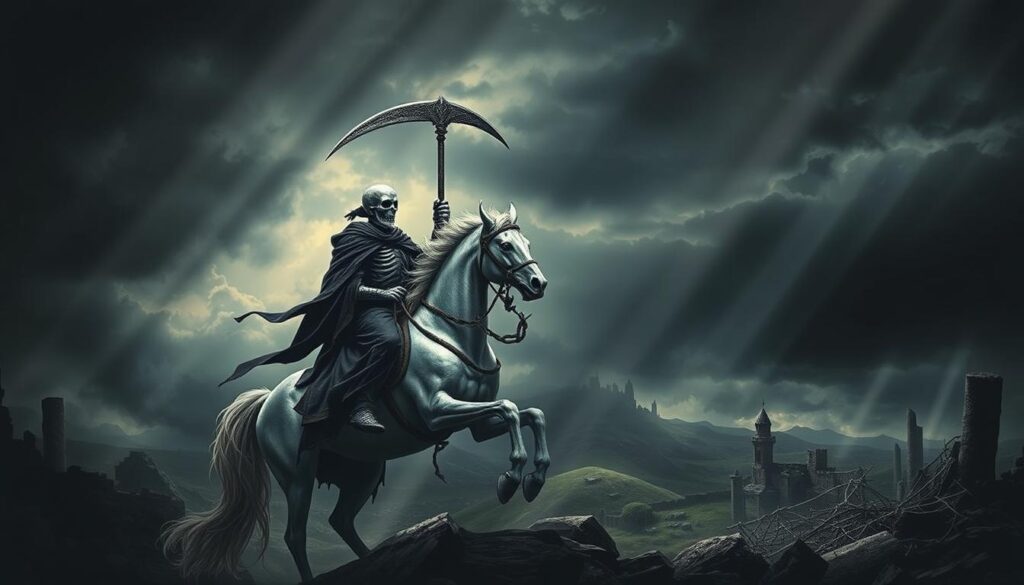
The skeleton: transformation stripped to essentials
The skeleton removes layers until only essentials remain.
This symbol signals radical simplification before rebuilding.
Armor: invincibility and impartial nature
Armor shows that transformation arrives regardless of status.
Its message: no one can hide from needed endings.
The white horse: purity, progress, and passage
A mounted figure moves through scenes of life and loss.
The white horse adds a note of purity and spiritual passage during transition.
The black banner with the white rose: ending and rebirth promise
The dark flag marks closure while the rose promises clarity after loss.
Together they balance finality with hopeful renewal.
The rising sun: renewal, hope, and cycle
Sunrise reminds readers that endings loop back into beginnings.
Fallen figures: universality of change
King, child, maiden, and bishop lie before this rider.
They signify that change meets all classes of people and roles.
River and bridge: continuity and smooth transition
Water and crossing points suggest steady movement, not abrupt cutoffs.
The number 13: transformation and new beginnings
The number emphasizes deep change and the chance to start anew.
Practical read: when this card appears, note which symbol stands out most. That emblem often highlights where transformation will occur.
| Symbol | Core meaning | Reading cue |
|---|---|---|
| Skeleton | Essential truth and renewal | Strip back habits; rebuild basics |
| Armor | Impartial force of change | Accept what cannot be stopped |
| White horse | Purity and forward motion | Move with clarity and purpose |
| Banner & rose | Endings plus promise of rebirth | Release with hope for new growth |
| Sun, river, bridge | Renewal and smooth passage | Trust cycles; find calm crossing |
For related guidance on emotional shifts after endings, see this Ten of Swords resource.
Upright Death Meaning: Embrace Change, Transformation, and New Beginnings
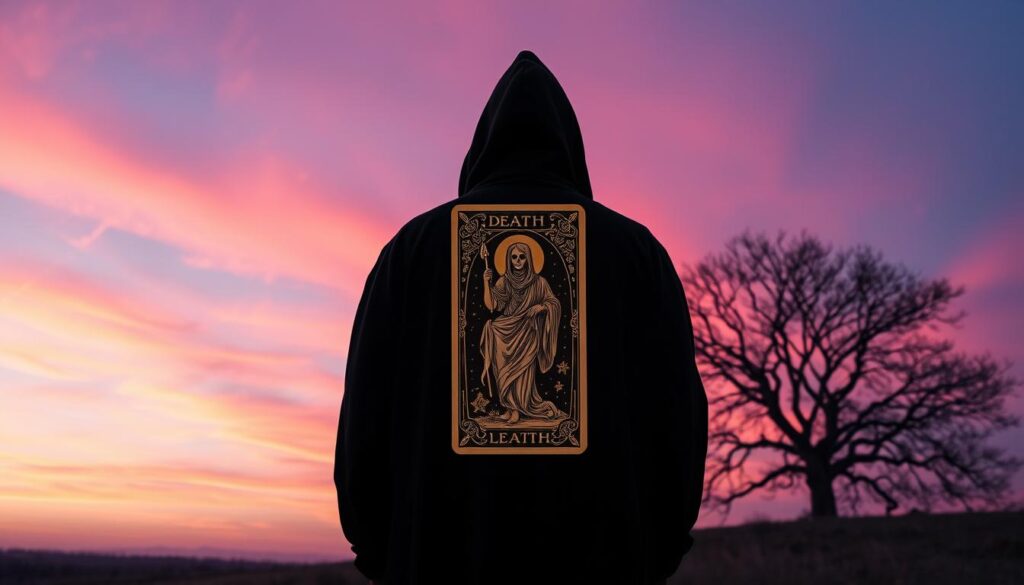
Upright presence points to decisive endings that free space for fresh energy and renewed direction. This placement asks you to embrace change as a positive reset rather than a loss.
Core upright themes
Endings, transition, and letting go drive growth. Transformation clears clutter and restores useful energy for new goals.
Love and relationships
Relationships may evolve or end so healthier bonds can form. Singles shed limiting beliefs and open to healthier beginnings.
Career and calling
When apathy peaks, timing favors decisive change. Leaving stale roles often creates momentum toward work that fits values.
Money and values
Financial shifts can feel tight at first. Use lessons from loss to redesign budgets and ways you value time and resources.
Feelings and actions
Release attachments with small steps: declutter, update routines, and try one brave move. Emotional relief and clarity usually follow.
- Action: ask, “Which ending am I avoiding?”
- Tip: move in stages and give yourself time to recalibrate.
- Context: supportive cards reveal which life area closes first.
“Trust that this upright energy rebuilds confidence, relationships, and purpose.”
For a practical reading on skill and focus during change, see this resource on practice and craft.
Reversed Death Meaning: Resisting Change, Stagnation, and Renewal Delayed
In reverse, this image often highlights stalled transition and energy drained by clinging to past patterns.

Core reversed themes
Resistance keeps momentum low. Repeating habits or old scripts stop growth and prolong endings.
Love and relationships
Fear can bind partners to stale dynamics. Singles may replay past patterns rather than open to fresh intimacy.
Career
Staying in unhealthy roles or avoiding needed change stalls progress. Defensiveness and self-sabotage cost time and promise.
Money
Refusing to adapt spending or learn new lessons deepens strain. Renewal often starts with one honest budget shift.
From resistance to renewal
- Journal what you fear to end and why.
- Set a micro-deadline and take one concrete step this week.
- Move gently: small wins rebuild confidence and energy.
“Reversed death isn’t a dead end; it nudges you to release past weight and reclaim time for renewal.”
For practical reflection on growth after holding patterns, see Seven of Pentacles guidance.
Beyond the Name: Why the “Death” Card Signals Life, Transition, and Growth
Folks often misread dramatic art for literal fate; in practice this emblem tends to map life transitions and fresh starts. Many people fear an ending, yet readings emphasize release, rebirth, and regained energy.
Common misconceptions vs. true meaning in readings
Misconception: some assume a prediction of fatal outcomes. Reality: most spreads point to closure that opens room for renewal. Readings across relationships, work, and health show how endings clear space for alignment.
How it compares across decks
Deck artwork varies, but core symbols repeat. A skeleton in armor, white horse, black banner with a white rose, and a rising sun keep showing up. Those symbols act like a common language that signals impartial change and rebirth.
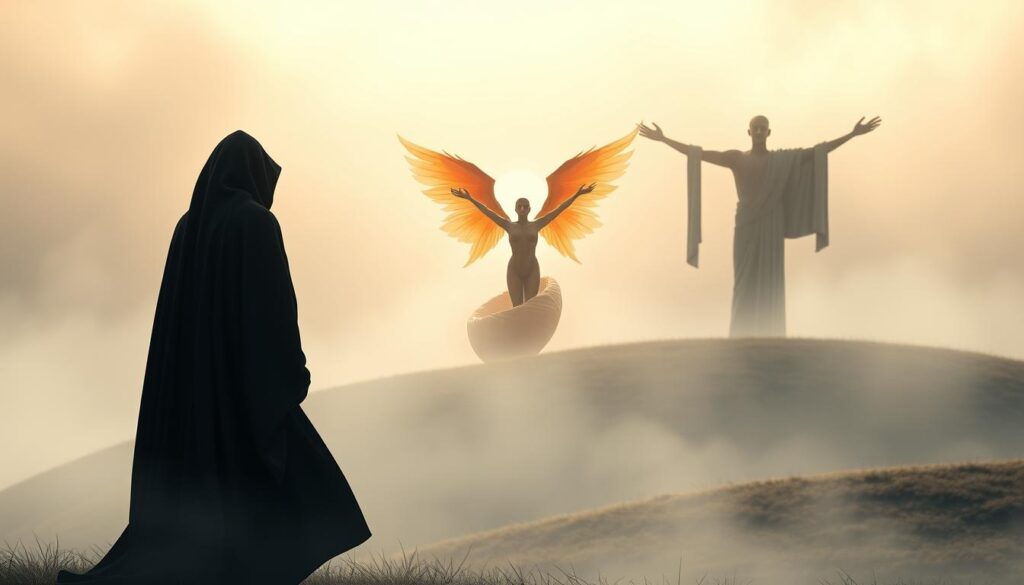
Notice which symbol grabs your eye first during a reading. That detail often points to the specific life layer shifting for you. When this image pairs with The Tower or The Hanged Man, expect broader systems change rather than a small tweak.
“Endings create space; use that space to redesign habits that nourish life.”
- Dispel literal fear: focus on transformation and rebirth.
- Compare decks: symbols guide consistent interpretation.
- Practical tip: flag the most striking symbol to target action.
For a related look at emotional movement during transitions, see Six of Swords guidance.
Conclusion
A clear ending often becomes the hinge that opens a whole new chapter. Read this as a simple takeaway: the death card marks purposeful ends that help life realign with fresh momentum.
Embrace change when it arrives. Small, steady choices turn abrupt shifts into intentional beginnings and calmer transitions.
See transformation as cooperation. Symbols like the white rose and rising sun remind you that renewal and rebirth follow an end in time. These meanings point toward practical resets for values, routines, and ties that no longer fit.
Try one tiny release today — a short boundary, a cleared task, a trimmed habit. Honor the past, then set it down. Endings here are not final; they guide you toward new beginnings with purpose and calm.
FAQ
Which Major Arcana piece sits at number 13 and what does it mean?
The Major Arcana at position 13 represents dramatic endings that lead to fresh starts. It points to transformation, the shedding of old patterns, and necessary change rather than literal death. In readings it urges release and renewal.
Why does that image show a skeleton in armor on a white horse?
The skeleton symbolizes transformation stripped to essentials. Armor suggests impartiality and inevitability. The white horse signals purity, forward motion, and spiritual passage. Together they convey that endings carry the seed of new beginnings.
What do the black banner and white rose represent?
The black banner stands for endings and the reality of change. The white rose represents hope, rebirth, and purity of intention after loss. The pairing balances finality with the promise of renewal.
How should upright interpretations be read in love and relationships?
Upright readings indicate major shifts: relationships may transform, one chapter may close, or growth can occur through letting go. It can mean evolution within a partnership or the start of a new emotional path after a breakup.
What does upright mean for career and money?
In career contexts this energy signals endings that open doors—job changes, role shifts, or new callings. For finances it can mean reassessing values, releasing unsustainable habits, and reallocating resources for future stability.
What does the reversed position suggest?
Reversed placement often points to resistance: fear of change, stagnation, or delayed transformation. It can mean clinging to the past, repeating patterns, or avoiding necessary endings that would allow growth.
How does the card affect emotional life and actions when reversed?
Emotionally, it highlights reluctance to move on, denial, or unresolved grief. Action-wise it warns against inaction and urges practical steps: set boundaries, seek support, and create rituals to release what no longer serves.
Are fallen figures like the king and child meaningful?
Yes. Fallen figures represent the universality of change: status, age, and role cannot prevent transformation. Their presence reminds readers that endings affect everyone, regardless of power or innocence.
What does the rising sun and river imagery add to readings?
The rising sun symbolizes renewal and hope after transition. Rivers and bridges highlight continuity and movement—life flows on, and passage from one state to another is possible and natural.
Is the number associated with superstition, or does it carry symbolic weight?
While some view the number with superstition, in symbolism it denotes transformation and new beginnings. It emphasizes that endings often clear the way for important life shifts and opportunities for rebirth.
How does this image vary across popular decks like the Rider–Waite and Thoth?
Decks differ in tone and detail. Rider–Waite highlights a procession of figures and clear symbolic elements like the white rose. Thoth emphasizes phoenix-like rebirth and alchemical transformation. Each deck frames the same core theme—change—in its own visual language.
How can someone work with this energy in daily life?
Embrace rituals of release, declutter, journal about endings, and set intentions for new starts. Seek therapy or coaching if needed. Small practical steps—clearing space, making plans, and honoring closure—support healthy transitions.
Does this symbol predict doom or new opportunity in love readings?
It rarely predicts doom. More often it signals an important turning point—either a needed ending that leads to growth or a transformation within the relationship that opens new possibilities.