

Justice stands as Major Arcana XI in many Rider‑Waite‑Smith inspired decks. This symbol points to truth, balance, fairness, and clear consequences for actions.
In an upright spread, Justice calls for accountability and ethical choices. The scales show balance, the double‑edged sword brings clarity, and the crowned square hints at structured thought.
Reversed, Justice can warn of bias, denial, or avoiding responsibility. In practical readings, this card offers insight about timing, consequences, and how others or conscience shape a situation.
Quick guide: look at placement, question, and surrounding symbols to turn this number into usable guidance for work, love, or money decisions today.
Key Takeaways
- Justice (Major Arcana XI) highlights truth, balance, and fair outcomes.
- Scales and sword offer concrete symbols for clarity and consequence.
- Upright suggests accountability; reversed points to bias or avoidance.
- Context, spread position, and timing shape useful interpretations.
- Apply lessons to real decisions for clearer insight and integrity.
Quick Answer: In most modern tarot readings, the 11th Major Arcana card is Justice
Many modern readers place Justice at XI in Rider‑Waite‑Smith lineage decks. That placement ties this Major Arcana entry to firm ideas: law, impartial order, and clear truth based on facts, not gossip.
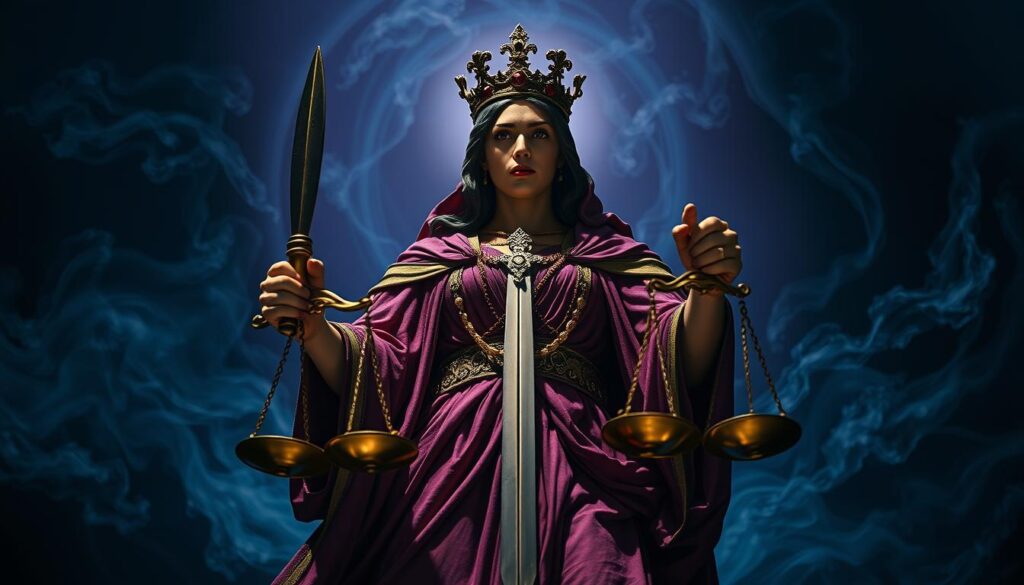
Look for a seated figure holding scales in the left hand and a double‑edged sword in the right. A crown marked with a square, gray pillars, purple robes, and a white shoe peeking from beneath a red cloak are quick visual checks.
- Quick takeaway: XI signals fair judgment and outcomes shaped by past choices.
- When pulled in a spread, expect decisions founded on evidence and measured order today.
- For deeper study, see an interpretation of technique in this tarot deck guide.
“Justice asks for honesty, measured thought, and acceptance of consequences.”
Justice in the Major Arcana: placement, balance, and law
Justice sits near the middle of the sequence to emphasize balance, law, and measured judgment. In the Rider‑Waite‑Smith system by Pamela Colman Smith and A.E. Waite, Justice occupies XI while Strength sits at VIII. That placement anchors themes of fairness and objective review at a pivotal moment in the major arcana.
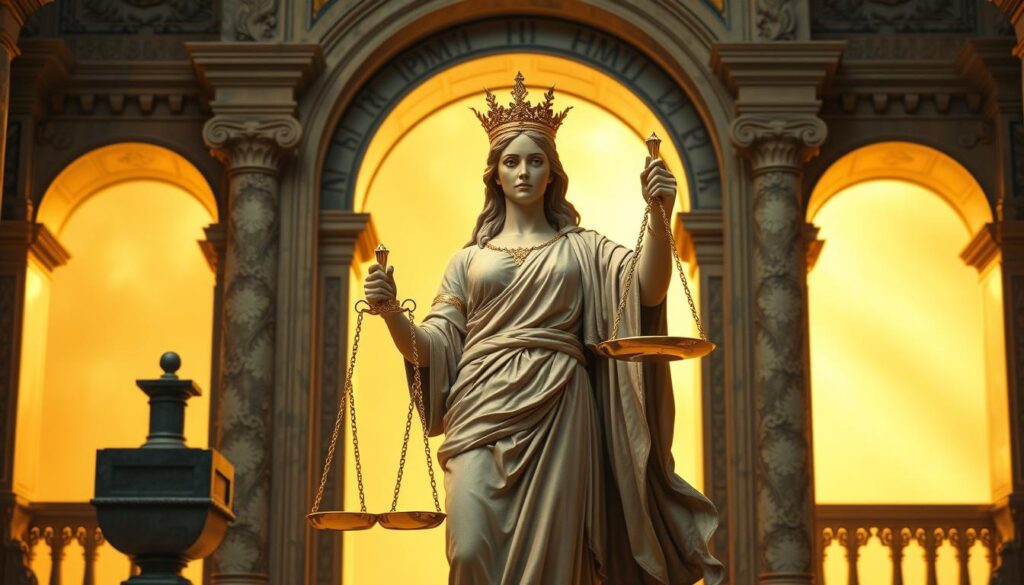
Why Justice takes XI in RWS
The RWS decision pairs Justice with legal order and clear consequence. Placing this card near the center helps readers spot when ethical questions require firm, balanced thinking.
Strength vs. Justice: order differences across decks
Some historical and modern non‑RWS decks swap the number, putting strength at XI and justice at VIII. That shift changes narrative flow but not core meanings. Strength still signals inner courage; justice still stands for law, truth, and measured outcome.
- Practical tip: learn to translate number swaps so readings stay consistent across decks.
- If you want context on timing and recovery, learn more about timing and recovery.
Justice card imagery and symbols: scales, sword, crown, pillars, and the white shoe
Every emblem on Justice points toward fairness, clarity, and steady order. These visual cues help a reader spot core meanings fast. The simple backdrop keeps focus on each item.
Scales in the left hand: scales weigh evidence, signaling balance and accountability. They ask you to compare action and outcome with calm logic.
Double‑edged sword in the right hand: the sword brings truth and decisive clarity. It cuts through doubt and calls for firm, fair action.

Crown and square: the square under the crown stands for structured thought and integrity. It marks authority guided by order.
Pillars and purple robes: pillars show strength and stability while purple robes add dignity and compassion.
White shoe: the white shoe peeking under the cloak reminds us outcomes arise from prior acts. Justice does not act at random.
| Symbol | Placement | Core meaning |
|---|---|---|
| Scales | Left hand | Balance, weighing evidence |
| Sword | Right hand | Truth, decisive clarity |
| Crown & square | Head | Order, integrity |
| Pillars / white shoe | Background / foot | Stability, purity of outcome |
For deeper technique on using a blade symbol in readings, see the Ace of Swords guide for related insight into truth and clarity.
Upright Justice meaning: truth, fairness, and consequences
When Justice stands upright, clear consequences follow actions taken with integrity or without it. This reading points to fair judgment based on facts and past behavior. It asks you to own choices and accept outcomes with grace.
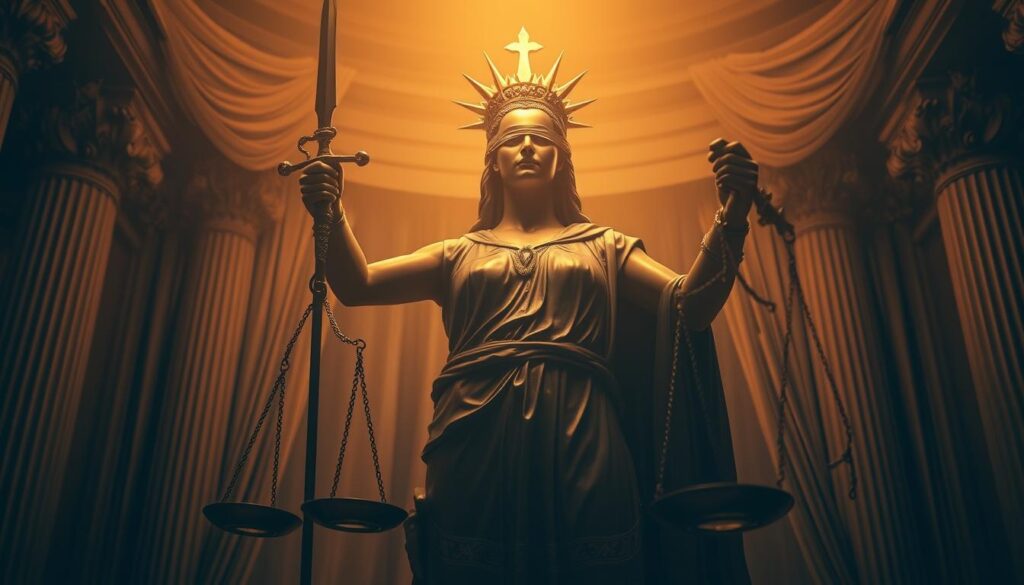
Core themes: honesty, integrity, and being called to account
Honesty matters now. Upright Justice urges fact‑based decisions and steady responsibility. If you acted with integrity, results likely favor you. If not, repair and make amends.
Love and relationships
In love, fairness and reciprocity steer growth. Treat others with clear respect, speak honestly, and seek compromise when needed.
Work and career
At work, ethical choices and transparency build trust. Taking responsibility—even for mistakes—opens doors and strengthens reputation.
Money and resources
Keep finances balanced. Clean dealings and equal give‑and‑take prevent later disputes and support long‑term stability.
Justice as feelings and actions
This card signals level‑headed choices and value‑aligned behavior. As an action step, speak plainly, write agreements, and follow through with your own hands.
- Quick takeaway: Upright, the justice card rewards integrity and asks for honest repair when needed.
- Expect decisions or judgments to land soon; align choices with truth to ease consequences.
“Fair outcomes reflect clear actions; prepare by acting with integrity today.”
For a related look at timing and effort in readings, see a concise guide on steady progress and patience.
Reversed Justice meaning: denial, bias, and avoiding responsibility
Flipped, Justice can show denial, blame‑shifting, and a resistance to honest repair. This position warns that facts may be ignored and bias might steer outcomes away from fairness.
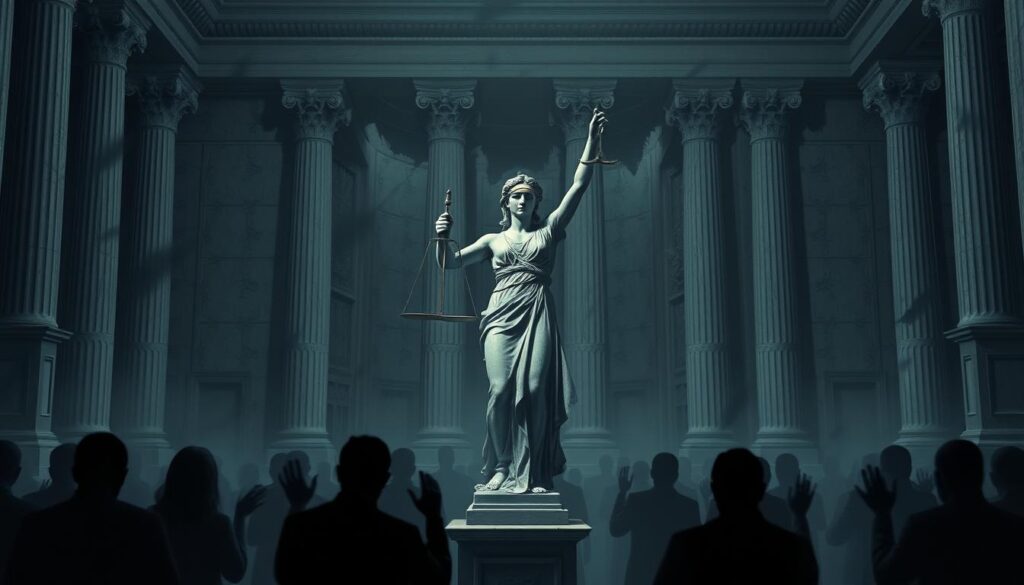
Core themes: unfairness, dishonesty, and imbalance often appear. Expect confusion around responsibility and possible disputes in formal matters.
Love and relationships
Unrealistic expectations and quick blame harm trust. Admit errors, ask for facts, and offer calm compromise to rebuild fairness.
Work and career
At work, unfair systems or attempts to dodge accountability can crop up. Keep records, act with integrity, and correct course quickly to limit fallout.
Money and resources
Avoid untrustworthy deals and own any shortfalls. Small repayments and clear terms restore balance over time and prevent larger consequences.
Reversed feelings and actions
Emotions may fuel an inner critic. Pause, gather facts, tell truth, then make specific repairs. This process restores credibility and steadies decisions.
- Short remedy: reassess, admit mistakes, source missing facts, then make amends.
- For related relationship insight, see ten of cups.
“Fairness returns when people choose truth and steady action over denial.”
Numerology of XI: what the number 11 reveals about Justice
Master number eleven blends reflection and sharp intuition, guiding careful decisions. In numerology, eleven carries duality, a mirror‑like quality that highlights both sides of any issue.
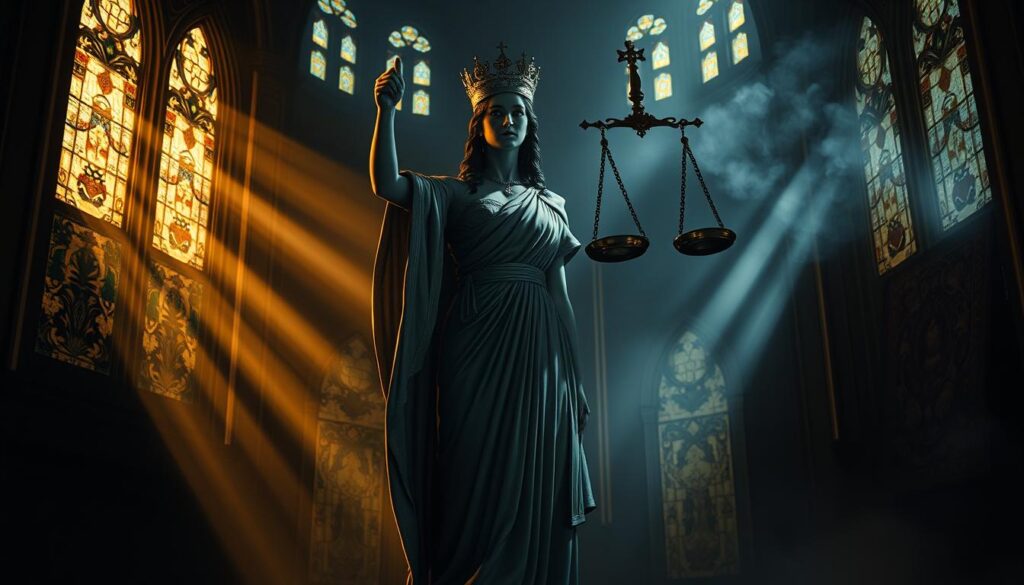
For Justice, XI adds depth to balance. It asks you to mix inner insight with clear facts. That mix helps form fair outcomes for self and others.
As a station in the major arcana, this number marks a turning point. It signals when truth and accountability shape what comes next.
Duality, balance, and heightened intuition in decision-making
XI asks readers to pause, review, and integrate subtle dynamics—not just surface data. Use both reason and instinct when judging a situation.
- See both sides clearly and weigh inner guidance with evidence.
- Honor fairness for yourself while protecting others.
- Follow a cycle: review, integrate, decide, then move forward.
| Aspect | Numerology effect | Practical prompt |
|---|---|---|
| Duality | Mirror view of issues | List pros and cons, then sense which choice feels aligned |
| Heightened intuition | Amplified inner guidance | Pause for a quiet check before acting |
| Ethical outcome | Balanced, fair result | Choose actions that respect self and others |
In readings, XI can point to moments when inner guidance matches ethical standards. For related emotional balance and gentle leadership, see a short guide on king of cups guide.
How to read the Justice card today: practical guidance for real‑life situations
When Justice appears in a spread, treat it as a prompt to gather facts and build a fair process. Start by slowing down and listing what you know. Then note gaps that need clear answers.

Pulling Justice in a spread: questions to ask
Use short, direct queries. Ask: What evidence is missing? Where must I take ownership? Which outcome treats others fairly?
Timing, decisions, and consequences
Often this card points to a decision phase. Expect results that stick. Record agreements and follow through to avoid future disputes.
- When you read tarot and Justice appears, frame a card reading around facts, fair process, and one clear next action.
- Pair scales and sword symbols with practical steps: weigh pros, then sign or document a choice.
- If the situation involves contracts or boundaries, use clear terms and transparent communication.
| Role in spread | Practical prompt | Suggested action |
|---|---|---|
| Advice | Follow fair process | List facts; plan one step |
| Outcome | Decision with impact | Document agreement; set review |
| Crossing card | Integrity test | Check motives; gather proof |
“Aim for clarity, own your part, then act with steady follow-through.”
For a focused reading on emotions and pause, try a companion spread linked at focused pause and review.
Conclusion
Justice returns a steady reminder: fair process shapes long-term outcomes for self and others.
As Major Arcana XI, this justice card ties truth to law, balance, and the clear weigh of scales and sword. Upright it urges accountability; reversed it flags bias and repair.
Across any deck or spread, use its symbols to regain clarity. Pick one accountable action, share it, then follow through. That small step often changes life, work, and love outcomes.
Final note: let justice guide your next decision. Act with integrity and accept consequences with calm responsibility.
FAQ
Which Major Arcana piece appears at XI in many modern decks?
In most contemporary Rider‑Waite‑style systems, Justice holds the XI position, representing balance, fairness, and legal order.
Why does Justice show scales and a sword?
The scales symbolize equality and cause‑and‑effect, while the sword stands for truth, clarity, and decisive action when sorting right from wrong.
How does Justice differ from Strength in some decks?
Some historic and modern decks swap their order, placing Strength at XI and Justice at VIII. That swap shifts thematic emphasis: one path spotlights inner courage, the other centers civic or legal balance.
What do the crown and square shapes mean on the panel?
The crown and square suggest structured judgment, integrity, and a commitment to sound, orderly choices rooted in clear principles.
How should I interpret Justice upright in a reading?
Upright Justice points to honesty, accountability, fair outcomes, and a call to accept consequences or restore balance in a situation.
What does reversed Justice suggest about a relationship?
When reversed, expectations may be skewed, blame may circulate, and fairness can feel absent — prompting a need for honest conversation and boundary resetting.
How does Justice show up for career and money matters?
In work readings, Justice signals ethical decision‑making, contracts, or reputation issues. Financially, it warns to keep dealings transparent and balanced.
What numerology does XI add to Justice’s meaning?
The number 11 carries duality and heightened intuition, amplifying Justice’s focus on balance while inviting deeper insight in decision processes.
Which questions help when pulling Justice in a spread?
Ask who holds responsibility, what must be balanced, which facts need gathering, and what fair outcome looks like for everyone involved.
Does Justice indicate timing or consequences?
Justice often points to outcomes tied to prior actions. It can signal that consequences or legalities are unfolding and that clear, timely choices matter now.
What does the white shoe detail symbolize on the figure?
A white shoe implies purity of intent and moral clarity, reinforcing the theme of acting from integrity rather than impulse.
How can I apply Justice’s message to everyday life?
Use it as a prompt to weigh options fairly, own mistakes, seek mediation when needed, and align actions with your values to restore harmony.
Are there common misunderstandings about this Major Arcana?
Yes. People often view it as purely legal; it also covers personal ethics, relational balance, and inner accountability beyond courts or contracts.