

Welcome to a friendly, modern guide that walks you through the full 78-card deck and helps bring clarity to your readings. This intro outlines how the Major Arcana shows big life lessons while the Minor Arcana maps daily choices and people.
The suits connect to elements for quick context: Wands/Fire for action and will, Cups/Water for feelings and bonds, Swords/Air for thought and conflict, Pentacles/Earth for work and security. The Majors follow the Fool’s Journey from innocence to fulfillment, a spiritual thread you can track in any spread.
Expect clear upright and reversed interpretations, plus links to love, work, and practical choices. You’ll also find sections on spreads, deck care, and asking sharper questions so insights feel useful right away.
This guide suits beginners and advancing readers. It aims to build confidence and help you read with calm and clarity.
Key Takeaways
- The 78-card deck splits into Major and Minor Arcana for big lessons and daily life.
- Elemental suits give fast context in a reading.
- The Fool’s Journey frames personal growth across the Majors.
- Upright and reversed notes offer balanced interpretation.
- Practical sections cover spreads, deck cleansing, and better questions.
Ultimate Guide Overview: How Tarot Readings Reveal Meaning Today
Good spreads act like mirrors, showing subconscious patterns and practical next steps.
Major arcana highlights sweeping life lessons and fate. It sets the foundation for long-term themes that shape choices.
Minor arcana maps the daily moves, people, and influences you meet. These smaller pulls show how the big themes unfold in real time.
Suits add precise layers. Swords (Air) point to ideas, logic, and conflict. Cups focus on feelings and bonds. Wands signal creativity and enterprise. Pentacles point to money, security, and values.
- Repeated patterns across spreads flag trends to notice and act on.
- Context — your question, position, and neighboring pulls — directs interpretation.
- Upright and reversed forms show strengths and blocks in the moment.
- Use a journal to track readings and refine your sense of meaning over time.
| Layer | Focus | Real-time cue |
|---|---|---|
| Major arcana | Big life lessons | Shows long-term themes |
| Minor arcana | Daily events & people | Highlights current influences |
| Suits (example) | Swords → ideas; Cups → emotions | Clarifies mental vs emotional drivers |
Blend classic notes with intuition to make readings useful rather than fixed. For a focused look on mental themes, see this concise four of swords guide to calm and clarity.
What each tarot card means
Look at symbols, numbers, and elements as a small story that points to action or insight.

Combine imagery, element, number, and archetype to read a clear message. The major arcana often marks big turning points. Minors fill in the daily details and faces you meet.
Upright readings usually show momentum or gifts. Reversed pulls can flag blocks, delays, or a prompt to change course.
- Scan suits first: wands = energy, cups = feeling, swords = mind, pentacles = material life.
- Spot repeated symbols like water or mountains; they deepen the interpretation.
- Learn a few keywords per card to speed up your practice.
Keep a journal to link draws with real outcomes. Over time, your notes become a living dictionary that blends traditional meaning with personal insight.
Tarot is a dialogue: let the image meet your intuition and the spread’s context to shape a precise reading.
The Tarot Deck at a Glance: Major Arcana and Minor Arcana
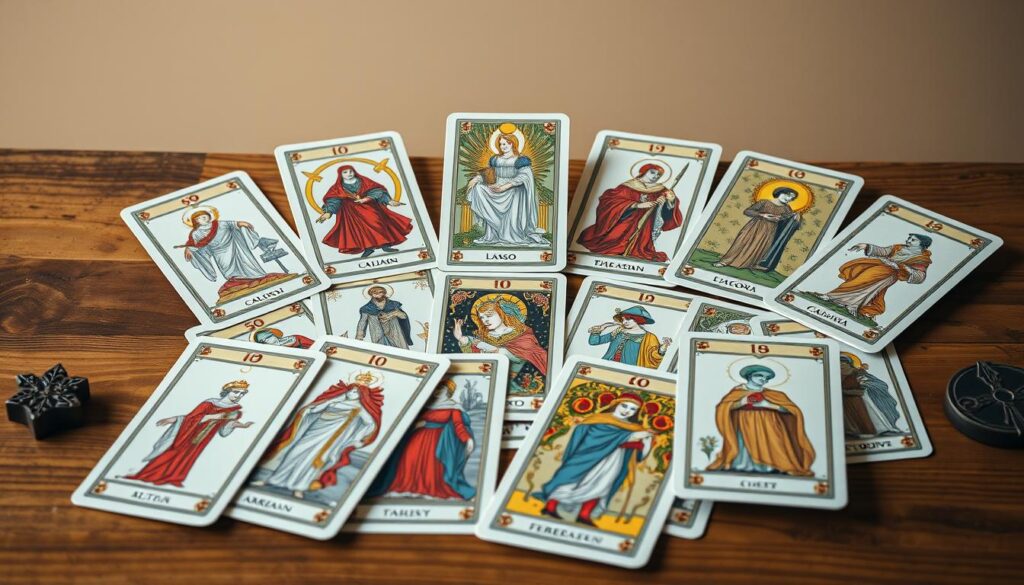
Recognizing the deck’s structure turns scattered pulls into a coherent story. The full deck has 78 pieces: 22 in the major arcana (0–21) and 56 in the minor arcana. That split gives immediate context in a reading.
Major Arcana: Big lessons and turning points
The 22 majors point to major life lessons and big shifts. They often mark a turning point or a fate theme that steers a reading.
When a major shows up, pay attention to long-term influence.
Minor Arcana: Daily life, people, and feelings
The 56 minors break into four suits—Wands (Fire), Cups (Water), Swords (Air), Pentacles (Earth). Each suit frames the likely domain and gives practical meaning to a pull.
- Quick map: 78 total, 22 majors, 56 minors.
- Court pieces represent people, roles, or parts of self.
- Majors steer focus; minors add color, tempo, and detail.
- Repeated suits often show where energy concentrates now.
- Beginners benefit from learning a few keywords per suit to build a strong base.
The Fool’s Journey: Understanding the Major Arcana
Follow the Fool’s journey as it traces a path from naive beginnings to full mastery and completion.

The sequence maps life stages and offers upright examples you can use in readings. The Fool opens with new beginnings, then the Magician brings willpower and creation.
The Magician to The Empress
The Magician shows decisive action; the High Priestess offers inner knowing. The Empress brings nurturing abundance while the Emperor provides steady structure and sovereignty.
Choices, Tradition, and Control
The Hierophant reflects tradition and values. The Lovers highlight partnership choices before the Chariot arrives with direction and control.
Middle Tests and Integration
Strength, the Hermit, and Wheel of Fortune guide courage, introspection, and cycles. Justice and the Hanged Man press for truth and necessary surrender.
Shadow, Renewal, Completion
Death, Temperance, and shadow figures like the Devil and Tower push transformation. The Star, Moon, and Sun move from hope through illusion to clarity. Judgement awakens, and The World completes the narrative.
| Stage | Theme | Quick cue |
|---|---|---|
| Beginning | Innocence & will | Fool → Magician |
| Inner & outer | Intuition & abundance | High Priestess → Empress |
| Trial to completion | Tests, reckoning, wholeness | Wheel of Fortune → World |
Tip: Study pairs like Magician–Priestess and Emperor–Hierophant to deepen meaning and recall. For practical study, see this focused guide on skill work with the Eight of Pentacles: skill and practice.
Minor Arcana Deep Dive: Suits, Elements, and Everyday Stories
Minor suits translate the deck’s big themes into everyday scenes you can use. They show how a life lesson plays out in daily choices, people, and moments.

Fire of Wands: Passion, action, creativity
Wands spark drive and momentum. Expect impulses to start projects, take risks, or push for growth.
Water of Cups: Emotions, relationships, intuition
Cups map feelings and bonds. They point to emotional currents, close ties, and inner knowing that guide choices.
Air of Swords: Ideas, logic, conflict, clarity
Swords reveal thought patterns and communication. They flag decisions, debates, and places where clarity or repair is needed.
Earth of Pentacles: Work, security, material life
Pentacles focus on resources, health, and stability. They show practical steps to improve work, money, or daily routines.
How to use suit focus: Notice if one suit appears often. A spread heavy in Swords usually signals mental strain or choices. Lots of Wands asks for action. Cups highlight relationships and feelings; Pentacles ask you to attend to material needs.
| Suit | Element | Everyday cue |
|---|---|---|
| Wands | Fire | Starting projects; burst of energy |
| Cups | Water | Emotional shifts; close ties |
| Swords | Air | Decisions; communication tensions |
| Pentacles | Earth | Work, health, finances |
Tip: Check suit dominance before deep reading. That quick scan helps you synthesize meaning fast and see how feelings lead to thought, then to action, and finally shape material outcomes.
Suit of Wands: Energy, Willpower, and Taking Action

The fire of Wands signals a push to begin, lead, or reinvent with energy.
At best, this suit fuels passion, creativity, and focused initiative. At worst, it brings recklessness, impatience, or scattered effort.
From Ace to Ten: Planning, ambition, and momentum
Use this arc as a progress map: the ace ignites potential, twos plan, and threes expand effort.
By the four you seek stability; fives test your mettle; sixes reward wins; sevens defend ground; eights speed up progress; nines call for grit; tens weigh you down with responsibility.
- Green lights for action: lots of Wands signal energized timelines and rapid progress.
- Quick read: pair Wands with Pentacles to ground results and sustain gains.
- Upright vs reversed: upright shows momentum; reversed flags misfires or impulsive steps.
- Page presence: a Page often brings fresh messages, learning through enthusiasm, and new offers.
| Position | Arc focus | Quick cue |
|---|---|---|
| Ace–Three | Initiate & grow | Startups, ideas, expansion |
| Four–Six | Stabilize & succeed | Structure, recognition |
| Seven–Ten | Defend, accelerate, complete | Perseverance, burden, culmination |
Practical tip: Treat Wands pulls as prompts to set deadlines and measurable milestones. Align passion with purpose so energy turns into lasting results.
Suit of Cups: Feelings, Intuition, and Relationships
Cups point straight to the heart’s weather: tides of longing, comfort, and inner knowing.
This suit highlights the heart space — love, close bonds, and emotional truth. In readings it signals how people connect, where healing can happen, and which feelings need attention.

The Ace through Ten show a flow from openings to fulfillment. The Ace brings fresh emotion or a new bond. Mid-range pulls show development, tests, and growing intimacy. By Ten you often see lasting comfort or emotional completion.
The Page arrives as a gentle message: dreams, creative vulnerability, or a shy offer of connection. Upright Cups stress compassion and closeness; reversed pulls warn of blocks, avoidance, or getting lost in fantasy.
“Notice water, vessels, and the moon — they amplify intuitive signals and emotional detail.”
- Read surrounding suits: Wands can turn feeling into action; Swords may overthink emotion; Pentacles ground feelings into practical change.
- When Cups echo Empress energy, expect nurturing, receptivity, and emotional abundance.
- Set boundaries and practice self-care if many Cups appear together; heart work can be intense.
Practical tip: Use readings for relationship check-ins, apologies, or heart-led decisions. Journal repeats and patterns to build a clear emotional reference over time.
Suit of Swords: Thought, Communication, and Choices
Swords govern the mind’s terrain, where ideas meet language and decisions form.

Air energy in this suit brings clarity and ambition. It also carries a sharp edge, so kindness matters when speaking truth.
Double-edged truths: Using intellect with compassion
Storyline (Ace–Ten): fresh insight, strategy, debate, conflict, and release. Readings that lean here ask for analysis and clear steps.
Upright pulls point to honest speech and problem-solving; reversed pulls warn of confusion, harshness, or mental strain. Favor precise questions, active listening, and avoid assumptions.
- Mixes: Swords + Cups invite compassionate dialogue; Swords + Wands call for bold action.
- When many swords appear, use a problem-solving spread and set firm boundaries with integrity.
- Affirmations help reframe sharp self-talk: “I choose clarity with care.”
Balance head and heart to restore control and honor accountability. For a focused look at insight and honest starts, see this guide to the Ace of Swords.
Suit of Pentacles: Stability, Resources, and the Material World
When Pentacles appear, the question often points to resources, routines, and building security.
Pentacles align with Earth, so this suit centers on the material realm: money, home, health, and steady progress.
Upright Pentacles favor steady work, skill growth, and practical plans that compound over time. Reversed pulls warn of scarcity thinking, poor priorities, or financial disarray.
- Read Pentacles as time, energy, and attention as well as dollars.
- Pair with Wands for new business launches or with Swords for clearer negotiation.
- Many Pentacles may mean you need tighter boundaries around money or time.
| Stage | Focus | Quick cue |
|---|---|---|
| Ace–Three | Opportunity & planning | New resources; small investments |
| Four–Seven | Building systems | Budgeting; steady routines |
| Eight–Ten | Mastery & legacy | Wealth, generosity, community |
Practical tip: Use Pentacles pulls to review budgets and routines. Slow, steady moves often create lasting material meaning and true security.
For a focused read on holding patterns, see the Four of Pentacles guide for extra context in your tarot practice.
Court Cards Explained: Page, Knight, Queen, King
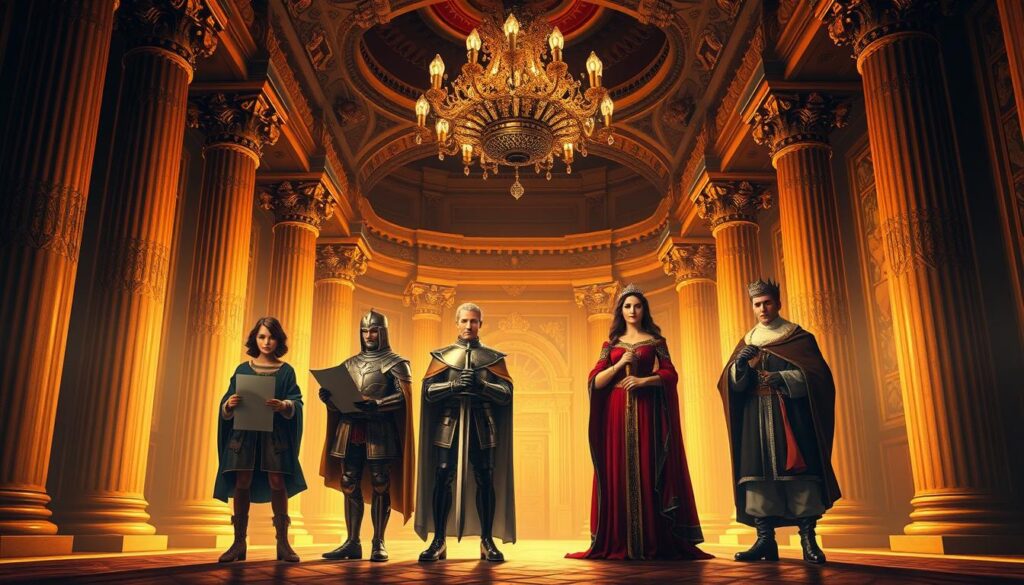
Think of courts as living roles: learners, movers, nurturers, and leaders that color a spread’s energy.
Pages: learning, messages, beginnings
Pages usually signal new study, a fresh offer, or a message arriving. They point to curiosity and learning more than final skill.
In work readings, a Page can show training, an entry-level task, or a prompt to pick up a skill. Treat it as an invitation to practice.
Knights: movement, pursuit, and action
Knights bring momentum. Their pace depends on the suit — a Knight of swords rushes to speak or decide, while a Knight of Pentacles moves steadily.
Use knights to read timing and style of pursuit: bold, careful, or heart-led.
Queens and Kings: mastery, leadership, and embodiment
Queens show receptive mastery — skilled, empathetic, and internally tuned.
Kings act with directive leadership and authority inside their domain. Both represent mature expression of the suit’s energy.
“Court faces can be people in your life or roles you need to play.”
- People vs process: courts may point to another person or a role you must embody.
- Work context: mentors, managers, collaborators, or the next growth edge often show up as courts.
- Tip: journal recurring courts to track who appears and why.
- Use a three-card spread (role needed / obstacle / action) to see which court energy will resolve a situation fast.
| Court | Style | Work cue |
|---|---|---|
| Page | Learner, message | Training, new task |
| Knight | Doer, pursuit | Drive, timing |
| Queen & King | Mature, lead | Mentor, manager |
Numbers in Tarot: How Numerology Shapes Meanings
Numerical patterns add a clear backbone to reading flows and timing. Numbers bring a steady language that works across suits. They help you read progress, tests, and completion without heavy guesswork.
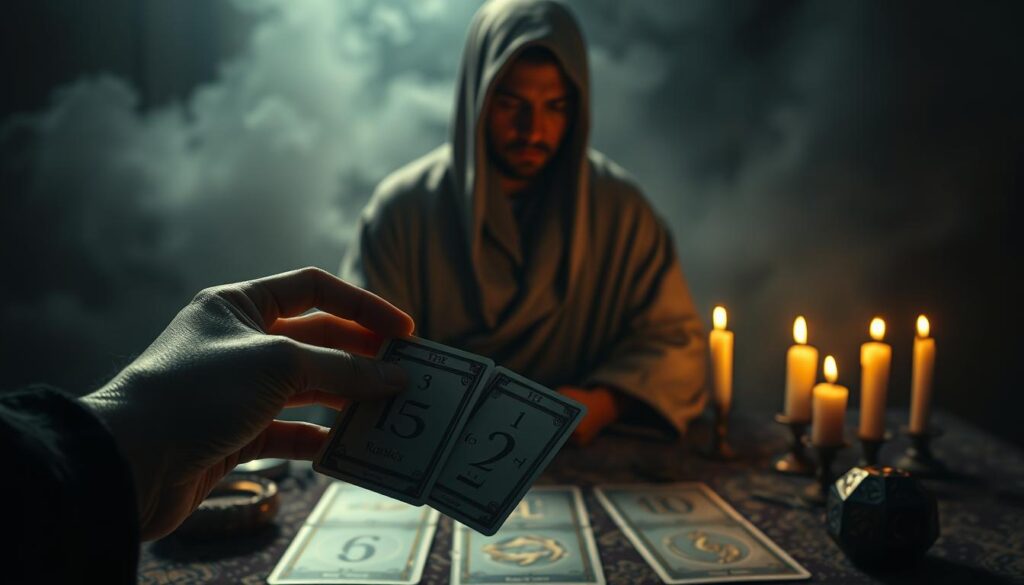
Aces to Tens: New starts, growth, challenges, completion
Aces mark sparks and potential. Twos show choices or balance. Threes point to growth or outside influence.
Fours offer structure and rest. Fives bring friction or a needed shift. Sixes restore harmony and easing.
Sevens test resolve; eights speed things up. Nines signal near completion. Tens finish cycles and carry legacy forward.
Use numbers to cross-check readings. Match a number’s stage with the suit to form a quick, reliable interpretation. For example, wands with an eight suggests fast momentum; cups at a six implies emotional healing.
- Repeating numbers amplify that stage in a spread.
- Memorize number anchors to speed up learning and practical reading.
- Journal your responses to each number to build personal associations.
| Number | Core idea | Suit example |
|---|---|---|
| Ace | Beginning, potential | Wands: spark of action |
| Five | Conflict, shift | Swords: debate or rupture |
| Ten | Culmination, legacy | Pentacles: finished work or reward |
Cross-check numeric cues when you want clarity. A quick look at numbers makes readings faster and more dependable. For repeating synchronicities and number patterns in life, you can explore related insight on angel numbers and pattern meaning.
Reversals and Real-life Context: Restoring or Losing Control
Reversals add a layer of nuance, signaling where energy may be stalled or ready for repair.

Reading upright versus reversed gives balanced guidance. Upright images show active momentum. Reversed pulls reveal blocks, delays, or internalized patterns.
Examples: The Fool reversed can warn of reckless moves. The Magician reversed may point to illusion or trickery. The Devil reversed often signals release and restoring control, while the Tower reversed can mean a delayed upheaval.
- Reversals aren’t simply bad — they show where energy is stuck or shifting.
- Ask: “What would restore control or alignment here?” to turn insight into action.
- Read reversals lightly at first; focus on core meaning before layering nuance.
| Type | Typical cue | Practical action |
|---|---|---|
| Upright | Momentum & clarity | Follow through; set goals |
| Reversed | Blocks, delays, inner work | Set boundaries; seek support |
| Mixed | Behind-the-scenes shifts | Monitor timing; adjust strategy |
Some readers skip reversals and use imagery and context for the same insight. Choose the method that gives you clear, compassionate guidance in your reading practice.
History and Origins: From Tarocchi to Modern Tarot
Tarot finds its roots in Renaissance Italy, where painted decks mixed play with prestige and local craft.
Scholars trace the rise of the early deck to 15th-century Italian courts. Wealthy families commissioned ornate sets like the Visconti-Sforza decks (c.1418–1425).
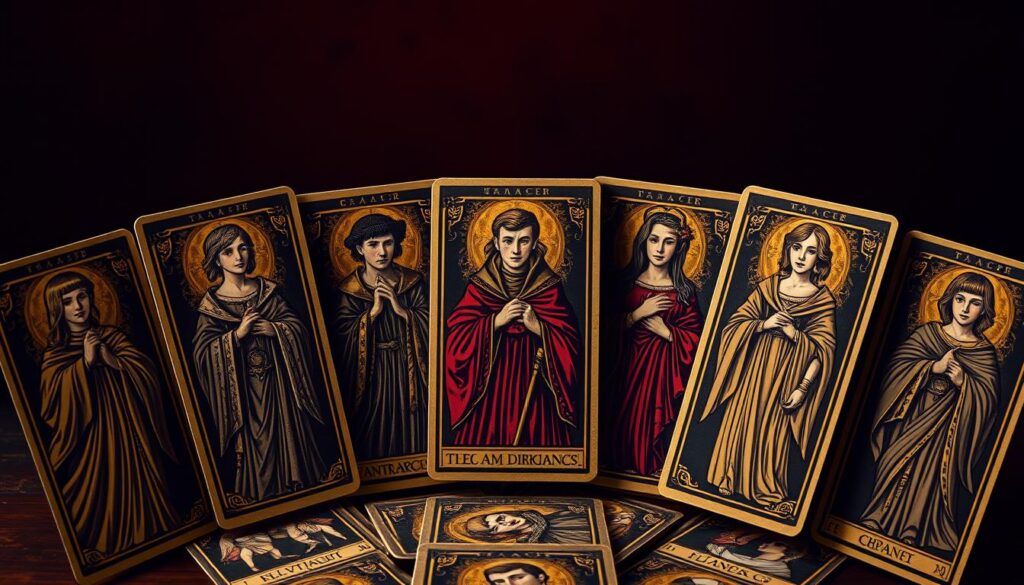
Those early “trump” pieces became the major arcana and carried deep archetypal imagery. Over time the 78-card format solidified as the standard.
Debate continues about original use—some argue it began as a game or heirloom. What is clear is the slow shift toward divination and symbolic reading.
Tradition and innovation coexist in modern practice: classic imagery guides intuition, while new decks rework iconography for today.
- Study historical decks to deepen contemporary interpretation.
- Notice how archetypes endure and reshape meaning across cultures.
For a practical historical tie-in, see a focused reading on the Seven of Pentacles and how past imagery informs present practice day by day.
Tarot vs. Oracle Cards: Structure, Flexibility, and Use
A classic 78-piece tarot cards set gives structure, while oracle sets offer playful variety.
Tarot follows a fixed deck: 22 Major pieces and 56 Minor pieces across four suit groups and court figures. That structure makes it a reliable way to build consistent meaning over time.
Oracle decks vary in size and theme. They skip strict rules and favor direct prompts, affirmations, or archetypes. Use them to broaden a reading or to highlight a single theme.
“Use tarot for mapping detail and oracle for a quick tone or affirmation.”
- Start with one system to learn rules and strengthen skill.
- Add an oracle as a companion for fresh perspective or self-care prompts.
- Choose the tool that gives you security and clear guidance in the moment.
| Tool | Structure | Best use |
|---|---|---|
| Tarot cards | 78 fixed | Detailed mapping, study |
| Oracle | Variable | Themes, affirmations |
| Combo | Both | Layered readings |
For an example of layered readings and emotional focus, see the Four of Cups guide.
How to Ask Tarot Questions for Clarity
Begin by centering yourself; a calm start tightens the reading’s focus. Set a short intention aloud or in your mind. This step invites clear connection and helps the spread speak to your highest good.
Set intention and respect free will
Setting intention and respecting free will
State that you seek honest guidance, and remember results show possibilities, not fixed outcomes. The cards reflect energy and options; your choices shape the path forward.
Specific vs. open-ended prompts
Specific vs. open-ended prompts for better readings
Use specific questions when you need a decision. For example, ask about next steps or readiness for a job change. Use open-ended prompts to explore dynamics, such as asking about relationship patterns or growth areas.

- Start with intention — invite messages for your highest good and clear connection.
- Frame questions to empower choices, e.g., “What supports the best outcome?” rather than fear-based queries.
- Use specific prompts for decisions and open prompts to explore context and feeling.
- Try follow-ups: “What am I not seeing?” or “What action best supports me?”
- Journal questions and answers to refine future reading practice.
Check your emotional state before a session; calm attention improves accuracy. Close with gratitude and a short summary of actionable steps to turn insight into practical momentum.
Popular Tarot Spreads for Beginners and Beyond
Begin with a compact layout to find the strong thread in a reading. A clear spread acts as a simple foundation for any question and speeds learning.

Past–Present–Future: a three-card foundation
The left position shows the past. The middle card highlights the present. The right points toward the near future.
Use this spread to keep meanings clean and avoid overlap. Note suit and number patterns across the three pulls.
The Celtic Cross: position meanings and flow
Place cards as follows and read clockwise for depth:
| Position | Focus | Quick cue |
|---|---|---|
| 1 | Central focus | Current issue |
| 2 | Crossing factor | Obstacle or influence |
| 3 | Below | Subconscious root |
| 4 | Left | Past |
| 5 | Above | Higher path / destiny |
| 6 | Right | Near future |
| 7–10 | Side suit | You, environment, hopes/fears, final result |
- Tip: Majors anchor the spread; note them first.
- Use swords-heavy layouts for communication problems.
- Watch for a Wheel Fortune in timing—it often signals a turning cycle.
- Synthesize suits and numbers for a coherent story of action, feeling, and outcome.
Step-by-step: pose a clear question, pull, assign positions, synthesize, then note advice. Practice both spreads to build confident readings and personal style.
Cleansing and Caring for Your Deck
A thoughtful cleaning routine keeps your deck responsive and respectful. Regular upkeep clears leftover energy so readings offer clearer guidance and truer meaning.
Why decks hold energy: physical handling, heavy sessions, and intense emotions can leave traces. Cleansing restores balance and helps you trust the messages during a reading.
Smoke, crystals, and moonlight: simple, sustainable methods
- Gently pass cards through smoke from sustainably harvested sage or palo santo for a quick clear.
- Place clear quartz or selenite nearby to charge a deck; avoid direct contact with delicate inks.
- Set the deck out under moonlight for one night to refresh subtle fields.
| Method | Tool | Quick tip |
|---|---|---|
| Smoke | Sage / Palo Santo | Use a bowl to catch ash |
| Crystals | Clear quartz / Selenite | Keep crystals clean |
| Moonlight | Night sky | Use a cloth or box for security |
Practical care: keep your deck dry, store wrapped in cloth or a box for security, and handle with clean hands. If you feel stuck mid-reading, reset with a shuffle and a deep breath.
Rituals can be personal. Choose methods that resonate, check energy after heavy sessions, and your tarot practice will feel more connected and alive.
Astrology and Tarot: Zodiac Links to Cards and Suits
Zodiac associations give practical flavor and timing clues to a spread. They let you read personality, season, and vibe alongside imagery.

Elemental suit map ties suits to zodiac elements and speeds interpretation:
- Wands — Fire signs: action, starts, visible drive.
- Cups — Water signs: emotions, bonds, inner flow.
- Swords — Air signs: thought, talk, decisions.
- Pentacles — Earth signs: work, resources, routine.
Major arcana and sign links
Many readers use common associations to add seasonal or personality cues. For example, the Emperor channels Aries energy: leadership, boundaries, and decisive action.
Spotlight: The High Priestess pairs sometimes with Gemini’s duality for nuance — inner knowing that holds both sides.
“The World image often includes fixed-sign figures (Taurus, Leo, Scorpio, Aquarius) that remind us of steady completion and wider cycles.”
Use these links to refine life themes and timing. Integrate sun or rising data when a spread pulls a suit-heavy moment, but let the image guide you first.
- Map suits to zodiac elements for timing and people cues.
- Use Major Arcana sign links as supportive color, not strict rules.
- Try adding a quick birth-chart note for clients when a planet or sign repeats.
- Journal repeats when a card aligns with a zodiac season to track patterns.
Use astrology to sharpen, not replace, meaning. Flexible application helps readings stay accurate and personal.
Applying Tarot Card Meanings to Love, Work, and Life
Let the deck’s cues point toward one small action that moves a situation forward. Use readings for practical guidance, not mystery. Start with a clear question and pick one next step from the spread.

Reading for relationships, career decisions, and personal growth
In love readings, focus on Cups to track emotional health and connection. Majors mark turning points like commitment or release.
For work, watch Pentacles for stability and resources. Wands show energy to act, while swords help clarify tough choices and communication.
- Family: Look for Cups and Pentacles to spot care, chores, and shared resources.
- Career: Note practical resources beyond money — time, energy, and support.
- Personal growth: Turn majors into milestones; mark The Lovers, Justice, or The World as key shifts.
“Ask for one simple action from the spread to create momentum today.”
Tip: Start each session with a single focus question and record findings in a journal. That habit builds clarity and deepens the personal meaning you find in your tarot card meanings.
Conclusion
foundation — return here when you need a clear anchor for practice and perspective.
strong. Keep practice simple: cleanse, set intention, pull, interpret, and act. That routine makes readings reliable and personal.
This guide shows how the Major arcana maps big life shifts and the Minor suit pulls map everyday things and people. Use symbols as tools for honest reflection and choice.
Make a habit to learn read tarot with patience. Focus weekly on one suit, one number, or one archetype to deepen skill in a steady way.
Tarot offers meaning, not fate. Spreads illuminate options; your choices write the next chapter of life. Return to the Fool’s Journey for perspective and read with clarity and heart.
FAQ
How do I learn what each tarot card means in a reading?
Start with the Major and Minor Arcana. Study one card at a time, note imagery, keywords, and numerology. Practice simple three-card spreads for past, present, future to build context. Combine intuition with reference books from authors like Rachel Pollack or Mary K. Greer for deeper guidance.
Which cards represent big life lessons versus daily events?
The Major Arcana highlights overarching life themes and spiritual lessons, such as growth, endings, and destiny. The Minor Arcana covers daily situations, feelings, relationships, and work—broken into Wands, Cups, Swords, and Pentacles for action, emotions, thought, and material matters.
What does the Fool’s Journey explain about the Major Arcana?
The Fool’s Journey frames the Major Arcana as a path from innocence to mastery. It traces beginnings (The Fool, The Magician), inner wisdom (High Priestess, The Empress), structure (The Emperor), trials (The Tower, The Devil), and completion (The World), showing personal growth stages.
How do suits like Wands and Cups differ in meaning?
Wands (fire) point to energy, passion, and creative action. Cups (water) reflect feelings, relationships, and intuition. Swords (air) address thinking, decisions, and conflicts. Pentacles (earth) focus on work, security, and material resources.
What role do court cards play in readings?
Court cards—Pages, Knights, Queens, Kings—often represent people, personality traits, or stages of development. Pages indicate learning or messages; Knights show movement or pursuit; Queens and Kings embody mastery and leadership within their suit’s element.
How does numerology affect interpretation?
Numbers add layers: Aces signal new starts, Twos point to choices or balance, Threes suggest growth and collaboration, and Tens often mark completion or major outcomes. Combine number themes with suit meaning for clearer readings.
Should I read cards upright and reversed?
Upright cards show direct energy; reversed positions can signal delays, internalized themes, or blocked aspects. Decide whether to use reversals in your practice and keep notes to understand how they show up consistently in your readings.
How can I phrase questions to get useful guidance?
Be specific and respectful of free will. Ask clear, open-ended questions like “What should I focus on to improve my career?” Avoid yes/no traps when you want nuanced insight. Set intention before shuffling for better clarity.
What are beginner-friendly spreads to practice with?
Try the three-card Past-Present-Future spread to learn card flow. Use a single-card daily draw for bite-size practice. As you gain confidence, explore the Celtic Cross to examine complex situations and timelines.
How do I care for and cleanse my deck?
Store cards in a clean box or silk bag. Use gentle methods like moonlight, smudging with sage, or placing crystals nearby. Handle decks with respect and regular readings to keep energy familiar and focused.
Are tarot and oracle decks interchangeable?
They differ. Tarot follows a fixed 78-card structure with suits and Major Arcana, offering consistent symbolism and depth. Oracle decks vary in size and theme, giving flexible messages. Use either depending on preference and the reading’s goal.
Can astrology help interpret cards?
Yes. Many Major Arcana and suits link to zodiac signs and elements. For example, Strength aligns with Leo, Cups resonate with water signs, and Pentacles connect to Earth. Astrology adds context for timing and personality layers.
How do I apply card meanings to relationships and career choices?
Translate cards to practical themes: Cups reveal emotional needs in relationships; Swords highlight workplace communication or conflict; Pentacles point to financial stability. Combine spread positions, card interactions, and common-sense judgment to form action steps.
Where does tarot come from and is it reliable?
Modern tarot developed from 15th-century European playing cards and evolved into symbolic systems used for divination and self-reflection. Reliability depends on skill, ethical practice, and how you integrate readings into real-life decisions.
How many times should I repeat a keyword when studying meanings?
Focus on varied study methods—imagery, stories, and numerology—rather than repeating a single keyword. Keep summaries short, review regularly, and journal readings to lock in understanding without overreliance on one phrase.