

Short answer: the 16th‑century astrologer never dated the year directly. He wrote hundreds of cryptic quatrains, and modern interpreters often retrofit verses to fit current headlines.
Why 2026 rose to fame is easy to track. A rare total solar eclipse crossing Europe after 27 years sparked fresh links to “darkened suns” and “celestial fire.” Social media trends in late 2025 amplified viral predictions and cinematic theories, pushing fringe readings into mainstream feeds.
This section frames the topic as a mix of history and trend analysis. We lean on experts and reference works to separate documented text from modern speculation. Expect curiosity balanced with skepticism as we trace how prophecies migrate from niche forums to global attention.
Key Takeaways
- He never named the year; retrofitting quatrains is common.
- The European eclipse helped fuel renewed interest in these prophecies.
- Social media and entertainment often magnify speculative predictions.
- Historians note language and manuscript issues that invite loose readings.
- We rely on experts and historical context to sort myth from documented verse.
- For a detailed timeline of claims by year, see nostradamus predictions by year.
Setting the stage: 2026 in focus and why Nostradamus trends in the future
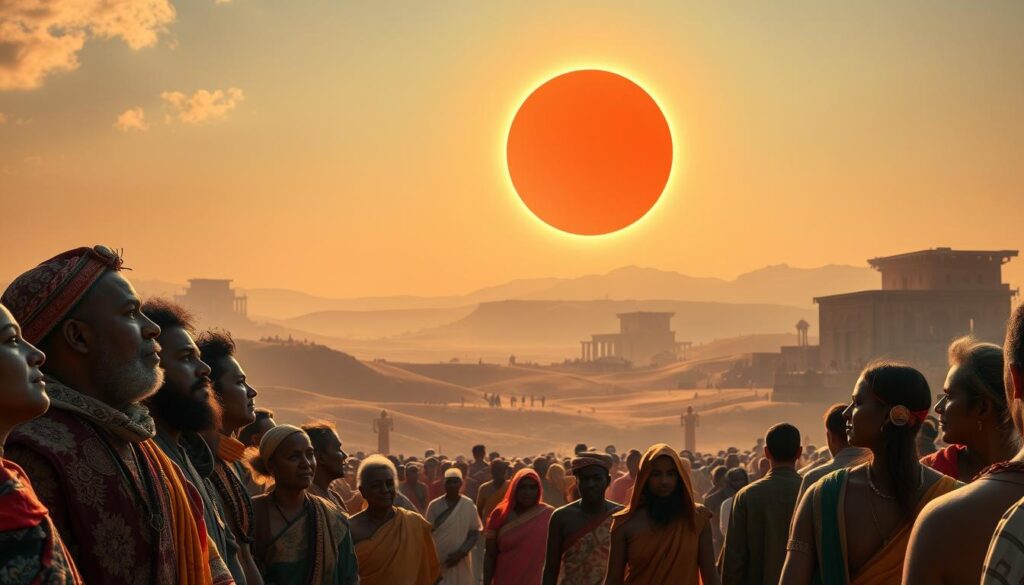
Start by seeing the year as a lens: astronomy, headlines, and social mood shape how verses are read.
Short answer vs. long answer
Short answer: the quatrains carry no explicit calendar date. Scholars agree the original texts do not assign a specific year.
Long answer: a real European total solar eclipse and renewed tensions in the region make the year a natural magnet for modern predictions. Astronomical events invite fresh readings of sky imagery, while ongoing conflict primes audiences to hear “war” and “world war” in vague lines.
Why the year became a focal point
Viral coverage in late 2025 amplified content tying one year to large events. Entertainment media and social feeds then recycled verses alongside headlines, raising interest.
- Concrete event: European eclipse renews celestial metaphors.
- Geopolitics: active tensions invite conflict‑based interpretations.
- Culture: people seek patterns during uncertain years, boosting shares.
| Factor | Effect on readings | Example |
|---|---|---|
| Astronomy | Prompts eclipse imagery to be linked to modern timelines | European total solar eclipse |
| Geopolitical tensions | Encourages war and conflict framing | Regional conflicts cited in viral posts |
| Media amplification | Turns niche interpretations into mass narratives | Late‑2025 social spikes and entertainment pieces |
For a year-by-year timeline of modern claims, see nostradamus predictions 2025.
What did Nostradamus say about 2026?
Modern readers often pin a year to a quatrain by filling gaps the text never intended.
The “seven months, great war” passage and Europe
“Seven months great war, people dead through evil; Rouen, Evreux the King will not fail.” That line resurfaces when European conflict looms. It names 16th‑century French places and gives no date. Readers bridge that gap and project current tensions onto old geography.
Numerology: the I:26 and II:26 temptation
Some match quatrains labeled I:26 or II:26 to a calendar year. Examples cited include images of bees and the Ticino “overflow with blood.” This tidy mapping is a method of interpretation, not a textual link.
Eclipse and sky imagery
Phrases about “celestial fire” or obscured moons are standard astrological motifs. An eclipse invites readers to equate generic sky language with a single astronomical event.
Blood, fire, and city images
Vivid words like blood, fire, and ravaged cities make verses easy to cast as warnings of war or disaster. Ambiguity lets fears fill in missing facts, so predictions gain force even without firm dates.

| Claim | Why it spreads | Reality check |
|---|---|---|
| “Seven months” war | Fits modern European anxieties | No year; local 16th‑century names |
| “26” numerology | Easy mapping to a calendar year | Labels are editorial, not original dating |
| Sky/fire imagery | Feels like eclipse language | Common Renaissance astrological motifs |
For a broader look at labeled predictions, see the Nostradamus resource.
From quatrains to timelines: how 2026 predictions go viral on social media
Viral timelines turn opaque quatrains into bite‑sized headlines that travel fast.
Short videos and loud captions reduced complex verse to a few seconds of panic. By October 2025, content about these predictions dominated TikTok, Twitter, and YouTube. Themes clustered around world war, runaway AI, and a dramatic “cosmic fireball.”
Trend snapshot: World War III, AI dominance, and “cosmic fireball” content
The rise of these themes reflects emotional triggers. Clips promise imminent collapse, so they get clicks and shares. Believers point to roughly 946 attributed prophecies and claim about 70 partial hits. Skeptical experts note this is selective reading, not proof.
The role of amplifiers: Athos Salomé, entertainment media, and influencer ecosystems
Athos Salomé and a few high‑reach creators pushed countdown narratives. Entertainment outlets framed stories as pop culture hooks. Influencers then recycled snippets into timelines and urgent posts that the algorithm favored.
Why ambiguity spreads: endlessly interpretable verses meet algorithmic virality
Ambiguity helps. Vague lines let audiences insert current tensions and fears. Algorithms amplify emotionally charged posts, creating feedback loops that make far‑fetched claims feel plausible.
Culture and psyche: apocalyptic anxiety and the blur between belief and entertainment
During uncertain years, people seek patterns. Apocalyptic frames trade on anxiety and cultural hunger for drama. That mix of entertainment and belief makes predictions powerful, even when the underlying text gives no concrete years or names.

| Platform | Dominant theme | Why it spreads | Reality check |
|---|---|---|---|
| TikTok | Countdowns to world war | Short, urgent clips; trend loops | Quatrains lack explicit dates |
| YouTube | Longer conspiracy deep dives | Algorithm recommends dramatic theory | Selective citation of lines |
| Twitter/X | Flash claims, viral screenshots | Rapid resharing of hot takes | Context often stripped |
| Entertainment outlets | Feature pieces and listicles | Engagement drives coverage | Blur between analysis and promotion |
For a behind‑the‑scenes look at how clairvoyant claims spread, see this brief insider account.
Experts, history, and interpretation: separating prophecy from pattern-seeking
Close study of the originals shows why confident headlines can mislead. Many scholars note that texts were written in Middle French with a little Latin and survive in competing manuscripts. Spelling varies, phrasing is hazy, and that mixture invites flexible interpretation.
What experts emphasize: manuscript variation, language shifts, and editorial labels make quatrains pliable. That pliability helps readers map metaphors onto modern events and modern headlines.
When predictions miss
Retrofitting and confirmation bias explain most claimed hits. A single quatrain can be matched to many events after the fact. When a prediction fails, believers often shift dates or recast the line as a process that unfolds over years.
These patterns mirror cycles seen around Baba Vanga: selective memory, moving timelines, and community reinforcement keep prophecies alive even after clear misses.
A quick skeptical guide
- Check original wording and manuscript notes.
- Ask if the claim was recorded before the events.
- Look for concrete names, places, or dates—not just vague imagery.
For a broader look at labeled claims and scholarly context, see this roundup on nostradamus predictions.
Conclusion
Takeaway: the quatrains contain no explicit calendar date, yet an eclipse and rising global tensions create ready hooks for dramatic predictions and prophecies.
Viral threads linked the year to world war scenarios, AI collapse, and a “cosmic fireball.” These narratives spread fast through influencers and entertainment media, while historians point to retrofitting as a common method of interpretation.
Be critical: examine wording, timing, and sources before sharing claims that use images of blood and fire or promise sweeping conflict. Culture and algorithms amplify anxiety, not evidence.
Enjoy the mystery, but prioritize real‑world risks and verified information. For a related perspective, see this Baba Vanga account.
FAQ
What is the short answer about Nostradamus and 2026?
Nostradamus never pinpointed the year 2026. His quatrains are undated, written in symbolic Middle French, and open to many readings. Modern claims tying specific years to his verses come from interpretation rather than clear authorial dating.
Why do people link his verses to a year like 2026?
Attention spikes when events align with memorable dates. A total solar eclipse crossing parts of Europe in 2026, plus current geopolitical tensions, creates cues people use to attach a year to vague lines about “celestial” events, fires, or conflict.
Which quatrains are commonly cited for a 2026 connection?
Popular examples include verses that mention months, celestial signs, or generic war imagery — sometimes described as “seven months” or references to blood and fire. Readers often force links by matching numbers or words in separate quatrains to a specific year.
How does numerology play into these claims?
Enthusiasts hunt for patterns such as quatrain numbers like I:26 or II:26 and treat them as clues. This numerology encourages retrofitting: matching loose symbols to a chosen year rather than deriving the year from clear text.
What role does the 2026 eclipse play in viral predictions?
Celestial events are dramatic hooks. Phrases that can be read as “darkened skies” or “fire from heaven” are tied to the eclipse, even when the original quatrain does not mention an eclipse. Social posts use the eclipse to boost engagement.
Do quatrains explicitly predict wars or world conflicts in 2026?
No direct statement names 2026 or a specific modern war. Quatrains often include generic warfare imagery, and readers project contemporary conflicts onto those images, creating headlines about world wars or global collapse that aren’t grounded in explicit text.
Why do images of blood and fire appear so often in prophecy claims?
Vivid imagery sells. Metaphors of blood, fire, and falling cities are emotionally charged and easy to map onto many crises. That vagueness makes the verses endlessly adaptable to current events — and prone to sensational interpretation.
How does social media amplify 2026 prophecy narratives?
Algorithms reward engagement. Posts that tie Nostradamus-type lines to a looming year, a famed eclipse, or fears about AI or war spread quickly. Influencers and entertainment outlets sometimes add dramatic context that increases shares and views.
Are there real-world commentators who push these stories?
Yes. Media personalities, independent authors, and some online influencers highlight dramatic readings to attract audiences. While a few historians and translators provide scholarly context, sensational takes dominate feeds because they travel faster.
How do scholars treat Nostradamus’s prophecies?
Academics stress historical context, language issues, and manuscript variants. They show how translations and editorial choices shape meaning and warn against reading quatrains as literal, date-stamped forecasts. Scholarship points to retrofitting and confirmation bias.
What does confirmation bias do to prophecy claims tied to dates?
Confirmation bias makes people remember hits and forget misses. When a news event resembles a vague verse, believers highlight that match and ignore the many times nothing happened. That selective memory sustains cycles of alarm around particular years.
How do comparisons to other seers, like Baba Vanga, affect perceptions?
Comparing Nostradamus to modern figures such as Baba Vanga reinforces a pattern: vague predictions are recycled across cultures. Both cases show how retroactive interpretation and media framing turn ambiguous statements into apparent forecasts.
Could any quatrain realistically predict technological threats like AI or a future global war?
Direct technical details are absent from sixteenth-century quatrains. Readers can metaphorically map modern themes like technology or global conflict onto older imagery, but that is interpretation rather than clear prediction.
How should a reader evaluate viral prophecy claims for 2026 or any year?
Look for original language analysis, check reliable historians or translators, and ask whether a claim depends on retrofitting. Prefer sources that explain manuscript variations and avoid posts that use dramatic headlines without evidence.
Can prophecy culture influence public anxiety about future years?
Absolutely. Repeated exposure to apocalyptic readings can heighten anxiety, shape conversations, and influence behavior. Popular culture, social feeds, and sensational media often amplify fears tied to specific years.
Where can I find responsible translations or commentary?
Seek academic editions and university press translations, plus work by established historians of early modern France. Libraries and scholarly articles provide context on the text, language, and the limits of prophetic interpretation.