
Quick guide: Many modern claims tie old verses to modern events, but the original texts contain no explicit year label. This introduction lays out the essentials so readers can sort the buzz from verifiable facts.
Michel de Nostredame wrote 946 quatrains in Les Propheties. His language mixes Middle French and odd Latinisms, and multiple manuscripts show variant spellings. That history invites wide interpretation.
Interest rose again after an October 2025 social surge. Viral posts linked a rare European total solar eclipse and lines about a seven months, great war to claims of AI takeover, naval clashes, and a “cosmic fireball.” Historians warn about retrofitting: readers often see hits after events unfold.
This article will trace the news cycle, review key facts, and separate direct text from layered interpretations. We will examine viral angles, cite scholarship, and offer a friendly roadmap so readers can judge each claim with care. For background reading, see a detailed overview at Nostradamus resources.
Key Takeaways
- Les Propheties contain 946 quatrains with no dated “2026” verse.
- Modern links to the year often use a 2026 eclipse as a visual hook.
- Language and manuscript variants allow broad readings of prophecies.
- October 2025 social posts amplified war and AI narratives online.
- Historians emphasize confirmation bias and retrofitting in interpretations.
Dateline and Context: Why 2026 Nostradamus Predictions Are Trending Now
Social feeds lit up in October 2025 as creators repackaged old quatrains into dramatic, shareable clips. Short videos on TikTok, Twitter threads, and YouTube shorts pushed a set of viral theories to millions of views in days.

Breaking news angle: Social media surges in October 2025
Breaking news cycles latched on fast. Entertainment outlets noted spikes in engagement as channels posted quick takes tied to global anxiety.
Creators optimized content for trend velocity. Clips favored bold claims and suspense over sourcing, so many pieces read like headlines rather than verified reports.
From quatrains to headlines: How old prophecies fuel new cycles
Short‑form formats act as an accelerant. They reward mystery and ambiguity because those elements drive shares and repeat views.
Real‑world events — geopolitics, AI milestones, and climate headlines — gave these narratives context. That made readers more likely to click and share without checking sources.
- October 2025 anchored the timeline with rapid spikes in views and shares.
- Short content encourages dramatic framing and quick claims.
- Channels push sensational angles to maximize trend momentum.
- Newsroom pickups and social posts created a feedback loop across media.
| Element | Effect on Spread | Reader Impact |
|---|---|---|
| Short‑form clips | Fast circulation, high views | Sense of urgency, low sourcing |
| Headline replication | Cross‑channel amplification | Repetition feels like validation |
| Real‑world events | Context for dramatic claims | Heightened anxiety, quick sharing |
Readers should weigh engagement metrics against sourcing. For a deeper listing of yearly claims and context, see a detailed timeline overview at Nostradamus predictions by year.
What did Nostradamus predict for 2026
Public curiosity grows when celestial events meet dramatic translations. Clear information from manuscripts shows there is no explicit year tag in the original texts. Readers searching for a dated forecast will find only undated quatrains and later editor notes.
The record: no explicit date in the manuscripts
Scholars confirm the books contain many stanzas but no direct years. That basic fact shapes the details of modern claims.
The eclipse temptation and sky imagery
Europe’s total solar eclipse sparked a wave of rechecks. Enthusiasts hunt quatrains with dark suns and celestial fire.
Those motifs are common in Renaissance astrology, so taking them as a timed sign is an interpretive leap. Good analysis separates poetic imagery from evidence.
The “seven months, great war” verse and recurring mentions
Seven months, great war, people dead through evil; Rouen, Évreux the King will not fail.
This often‑quoted line names specific cities and reflects 16th‑century context. It contains war imagery but no date. Periods of European tensions prompt repeated resurfacing of this verse.
- Numerology note: Linking quatrain numbers like “26” to a year is not supported by texts.
- Interpretation guardrail: Ask for sourcing when a claim assigns an exact year to a vague line.
- Takeaway: Many quatrains mention conflict; that alone is not a timed prediction.
Claims and Interpretations Circulating Online: World War, AI, and “Cosmic Fireball”
Creators today pair ancient imagery with modern tensions to sell a compelling story. Viral posts often stitch lines about multiple cities and large-scale conflict into a narrative of imminent world war scenarios.
World War III narratives
Many clips list several cities and theaters of conflict to make a broad claim feel specific. That framing preys on real geopolitical unease and magnifies normal tensions into global dread.
AI dominance fears
Athos Salomé, a high‑visibility psychic, has been cited saying AI will hit a “point of no return.” His comments link to broader tech fears and are repurposed alongside prophecy‑styled content to add urgency.
Psychics and personalities
Mentioning an astrologer or psychic gives viral posts an aura of authority. Yet the original quatrains lack names, dates, or verifiable anchors. That gap lets creators remix material into click‑friendly formats.
- Believers often bundle unrelated events to create neat predictions.
- The “cosmic fireball” phrase is vague enough to mean nuclear blast, meteor, or dramatic sky imagery.
- Short videos and listicles repackage these themes for algorithm spread.
“AI could mimic human reasoning across domains as power shifts to machines,” — public comments attributed to Athos Salomé.
| Narrative | How It Spreads | Reader Effect |
|---|---|---|
| World war scenarios | Multi‑city lists, dramatic clips | Feels comprehensive but lacks sources |
| AI “point of no return” | Psychic quotes, tech fear hooks | Urgency around machines, limited evidence |
| Cosmic fireball | Ambiguous imagery, cross‑fear appeal | Multiple interpretations, wider reach |
Quick tip: Pause before sharing. Ask for full quatrain citations, trustworthy translations, and context. For related coverage that traces yearly claims, see a review of recent predictions 2025.
What Historians and Skeptics Say: Texts, Quatrains, and Facts
Professional scholars stress that language and manuscript variations shape how verses are read today.
Translation pitfalls: Middle French, Latinisms, and multiple manuscripts
Early texts use Middle French and occasional Latin words. Copyists made variant spellings. Small changes shift meaning in a quatrain.
That makes any single line vulnerable to selective reading. Good translators compare many manuscripts and notes.
Retrofitting and confirmation bias: Why predictions seem to “come true”
Historians and scientists note no clear case where a nostradamus prediction named a specific event in advance with verifiable markers.
Often a line is matched to an event after it happens. This retrofitting hides misses and highlights hits.
- Facts: texts lack dates and clear names.
- Interpretation: readers can map vague images to many events over time.
- Tip: compare full translations and scholarly notes before trusting a claim.
| Issue | How it skews readings | What scholars advise |
|---|---|---|
| Variant manuscripts | Different words, altered sense | Use critical editions with notes |
| Vague imagery | Fits many events | Demand precise markers (dates, names) |
| Confirmation bias | Remembers hits, ignores misses | Weigh all quatrains, not isolated lines |
For a careful catalog of claims and context, see a full predictions overview at full predictions overview.
How Media and Social Platforms Amplify Nostradamus Predictions
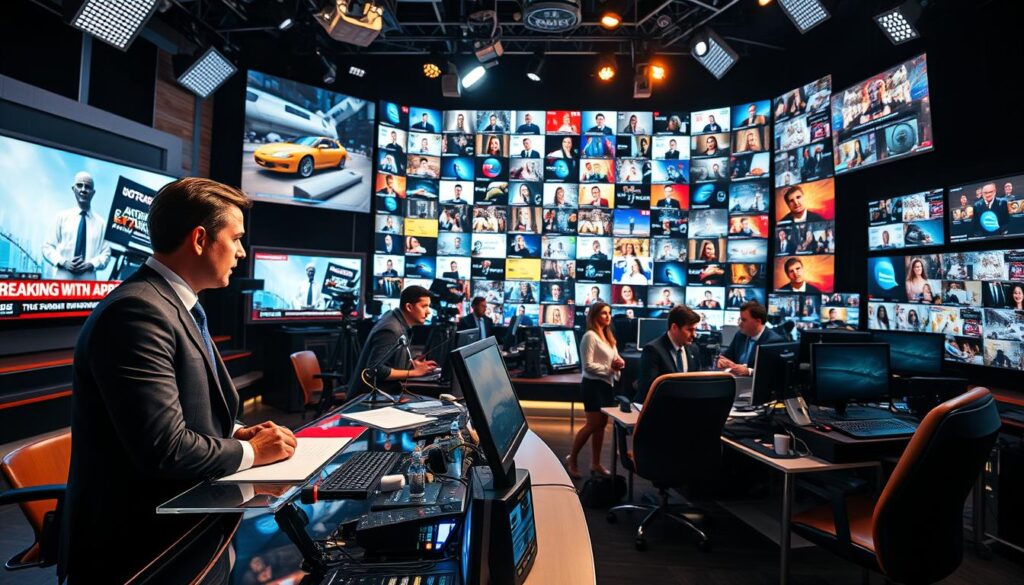
Short-form feeds and fast news cycles shape which stories spread. Online platforms reward eye-catching content that condenses complex texts into quick claims. That incentive pushes creators to favor drama over nuance.
TikTok, YouTube, and the entertainment-news blur
Algorithms boost clips with high engagement, sending them into For You and home feeds. Entertainment outlets often republish those clips as lightweight news pieces.
This blend makes dramatic packaging feel like reporting. Sources and manuscript caveats are often left out, so content reads as more certain than it is.
Readers, believers, and anxiety: When viral content meets real-world fears
People treat world war narratives as both spectacle and warning, especially when daily headlines mention conflict or tech risks. Repeated exposure to apocalyptic claims can raise stress, research shows.
“Frequent exposure to doom‑laden content increases worry and blurs the line between entertainment and fact.”
- Media incentives reward fast, punchy angles over careful sourcing.
- Short content strips editorial context, so claims sound stronger than the evidence.
- Creators iterate on top‑performing formats, repeating the same themes with little new reporting.
- Readers do better when they slow down, check citations, and compare full translations.
Simple habits help: pause before sharing, ask for full quatrain citations, and seek alternate reports. For more on related psychic careers and how claims are shared, see this guide on becoming a paid psychic.
Conclusion
Many viral takes force modern meaning onto old quatrains. The textual record lacks any explicit dated line tied to 2026, and flexible readings fuel sweeping nostradamus predictions instead of firm anchors.
Treat each nostradamus prediction as a starting point for verification. Ask for full translations, compare quatrains in context, and weigh scholar notes before accepting a claim from a high‑traffic channel or a charismatic astrologer.
Believers often stitch familiar lines about cities, attacks, and war into urgent narratives. Entertainment-first content and media packaging can draw huge views but usually omit the details and information needed to judge accuracy.
Enjoy the cultural fascination, but hold conclusions to evidence. For a close look at a key stanza, see this short quatrain guide.
FAQ
What is the headline summary of Nostradamus material tied to 2026?
The popular headline frames recent online chatter about prophecies, eclipse motifs, and war scenarios. Scholars note there’s no single quatrain that explicitly pins an event to 2026; most links come from modern interpretation, news cycles, and viral posts rather than a clear primary-source date.
Why did interest spike in late 2025 around these prophecies?
Social platforms amplified a handful of dramatic readings in October 2025, mixing excerpts of quatrains with trending video formats. The mix of breaking-news style thumbnails, celebrity commentators, and algorithms pushed speculation into mainstream feeds, increasing searches and headlines.
Are there any direct lines in the Centuries that name the year 2026?
No. The surviving manuscripts and printed editions do not contain a direct reference to that specific calendar year. Most claims rely on interpretive timelines, linguistic stretching, or retroactive fitting of events to the text.
How do references to the 2026 total solar eclipse affect interpretation?
Astronomical events like a total solar eclipse become symbolic hooks. Some commentators link sky imagery in quatrains to the 2026 eclipse over Europe, but this is associative — not a textual confirmation — and reflects modern symbolic reading rather than original intent.
What about the line often cited as “seven months, great war”? Does it indicate a European conflict?
That wording comes from one translation among many. Historians caution that translations vary and the phrase can be rendered differently. Efforts to map it to a specific European war or timeline are speculative and often influenced by current geopolitical tensions.
Do any quatrains predict a global war or World War III in that timeframe?
Centuries-themed warnings about large conflicts exist, but none specify a modern-style world war with dates. Excessive linkage to contemporary conflicts reflects confirmation bias, not an evidentiary chain from original manuscripts to present events.
Are claims tying AI takeover or a “cosmic fireball” to these writings credible?
No credible manuscript mentions artificial intelligence or modern technological concepts. Phrases interpreted as “cosmic fireball” typically describe celestial omens in poetic language and are reframed by modern authors to sound like contemporary threats.
How do psychics and self-styled interpreters influence public view?
Media personalities and psychics often present dramatic, personalized readings to attract audiences. This “Living Nostradamus” effect blends showmanship with selective translation, increasing reach but reducing scholarly reliability.
What do historians and textual scholars say about these trends?
Most specialists emphasize translation issues, manuscript variants, and the long history of retrofitting — matching vague lines to later events. They urge careful source work, attention to linguistic context, and skepticism about precision in prophecy claims.
How do translation pitfalls shape different readings?
Middle French, regional Latin, and printing errors create multiple plausible renderings. Small changes in a verb or noun can shift meaning dramatically, so competing translations often lead to divergent modern narratives.
Why does confirmation bias make some lines seem prophetic?
When readers expect to find a match, they emphasize supportive phrases and ignore mismatches. Over time selective citation builds persuasive stories that appear predictive but are the product of human pattern-seeking, not clear forecasting.
In what ways do social platforms magnify these claims?
TikTok, YouTube, and Instagram reward short, sensational claims. Algorithmic boosts, clips from pundits, and trending tags turn nuanced scholarship into bite-sized, often misleading content that reaches millions quickly.
How do viral predictions affect public anxiety and decision-making?
Viral prophecy content can heighten worry, especially when paired with real geopolitical tensions. Misinformation can influence readers, voters, and communities by amplifying fear and distracting from verified reporting.
Where can readers find reliable information about these quatrains?
Trust established academic editions, university translations, and peer-reviewed articles. Libraries, university history departments, and reputable news outlets that consult specialists offer the most accurate context and interpretations.