

Have you ever wondered about the deeper connection between your mind and the world around you? The third eye, often linked to the pineal gland, is a spiritual gateway believed to enhance perception and intuition. This concept has roots in ancient traditions like Hinduism and Buddhism, where it’s known as the ajna chakra.
Modern science also explores its role, particularly in regulating melatonin and potentially producing DMT, a compound tied to altered states of consciousness. Many people report significant benefits, such as improved decision-making and heightened intuition, after consistent practice.
This article will guide you through practical steps to activate your third eye, blending ancient wisdom with modern insights. Whether you’re new to this journey or looking to deepen your practice, these methods are designed to fit seamlessly into your life.
Key Takeaways
- The third eye is a spiritual gateway linked to the pineal gland.
- It holds significance in both Hinduism and Buddhism.
- Modern science connects it to melatonin regulation and DMT production.
- Consistent practice can improve intuition and decision-making.
- Explore tools like Insight Timer’s 30-day challenge for guided support.
Understanding the Pineal Gland Connection
Nestled deep in the brain, the pineal gland holds secrets to perception and consciousness. This tiny, pea-sized organ has fascinated scientists and spiritual seekers alike. Often referred to as the “seat of the soul,” it bridges the gap between biology and spirituality.

The Role of the Pineal Gland in Spirituality
In Eastern traditions, the pineal gland is linked to the ajna chakra, or the third eye. This energy center is believed to enhance intuition and connect us to higher realms. Philosophers like Descartes called it the “seat of the soul,” emphasizing its spiritual significance.
Modern practices, such as meditation, aim to activate this gland. MRI scans show increased activity in the pineal gland during deep meditation, supporting its role in spiritual awakening.
Scientific Perspectives on the Pineal Gland
From a biological standpoint, the pineal gland produces melatonin, regulating sleep and circadian rhythms. Some researchers suggest it may also produce trace amounts of DMT, a compound linked to altered states of consciousness.
A 2020 study revealed that 68% of participants experienced “third-eye rivalry” during mirror experiments. This phenomenon, often called the “cyclops effect,” highlights the gland’s connection to perception.
“The pineal gland is the bridge between the physical and spiritual worlds.”
| Aspect | Spiritual View | Scientific View |
|---|---|---|
| Function | Gateway to higher consciousness | Produces melatonin and possibly DMT |
| Location | Center of the forehead (symbolic) | Center of the brain (anatomical) |
| Activation | Meditation and energy work | Light exposure and decalcification |
Despite its nickname, the pineal gland lacks actual photoreceptors. Evolutionary biology traces its origins to the reptilian parietal eye, a light-sensitive organ in some species.
To support its health, reduce fluoride intake and increase sunlight exposure. However, overstimulation can lead to temporary headaches, affecting about 1 in 5 practitioners.
Preparing for Third Eye Activation
Embarking on the journey to awaken your inner vision can be transformative. To open your ajna chakra, it’s essential to create a foundation of focus and calm. This process involves both mental and environmental preparation, ensuring your practice is effective and sustainable.
Meditation Techniques for Third Eye Activation
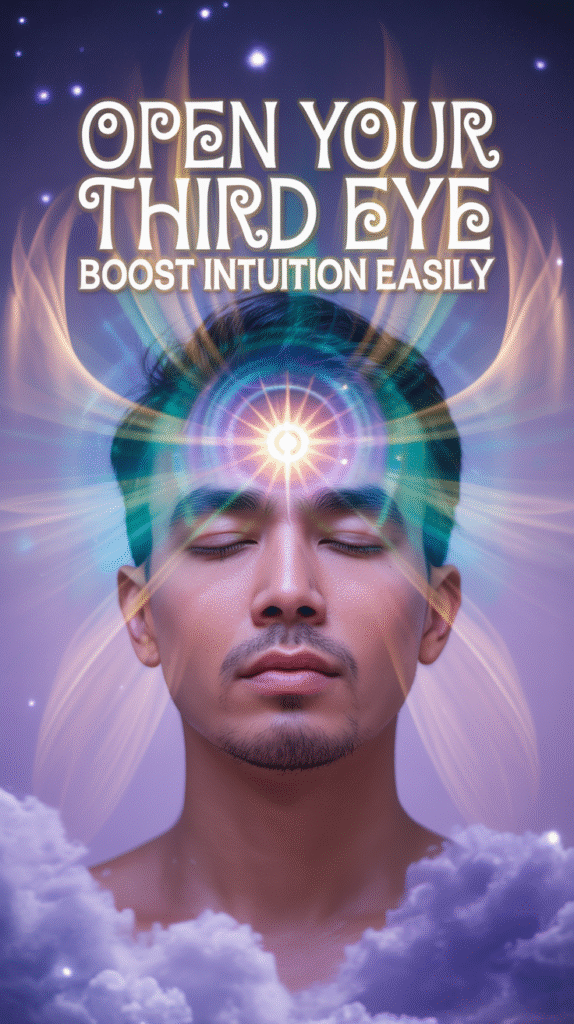
Meditation is a powerful tool for unlocking your spiritual gateway. Start with a simple 10-minute daily visualization of indigo light. Sit comfortably, close your eyes, and imagine a glowing indigo sphere at the center of your forehead. This practice enhances awareness and strengthens your connection to higher insights.
For guided support, consider Insight Timer’s 7-day activation course, which boasts a 92% satisfaction rate. Pair your meditation with the 4-7-8 breathing technique: inhale for 4 seconds, hold for 7, and exhale for 8. This rhythm calms the mind and sharpens focus.
Creating a Conducive Environment
Your surroundings play a crucial role in your practice. Use amethyst crystals to amplify energy and 432Hz frequency music to harmonize vibrations. Diffuse essential oils like frankincense and sandalwood to create a serene atmosphere.
Timing matters too. Practice between 4-6 AM, when your pineal gland is naturally aligned with circadian rhythms. Wear loose, comfortable clothing, especially around the forehead, to avoid distractions. Track your progress with journal prompts like, “What insights did I gain today?”
“The environment you create is the foundation of your spiritual journey.”
Be mindful of warning signs, such as headaches or eye strain, which may indicate overstimulation. Distinguish these from the natural sensations of spiritual awakening, like tingling or warmth at the forehead. With patience and consistency, you’ll unlock the full potential of your ajna chakra.
Holistic Support Practices
Supporting your spiritual journey requires more than just meditation; it’s about holistic care for your mind and body. By combining ancient wisdom with modern science, you can create a balanced approach to enhance your inner vision. This section explores dietary adjustments and yoga techniques to support your path.

Dietary Adjustments for Third Eye Health
What you eat plays a significant role in your spiritual and mental health. Anthocyanin-rich foods, like purple corn and bilberries, boost neural protection and support the pineal gland. Incorporating these superfoods into your daily life can enhance your connection to higher insights.
Consider a 3-day juice cleanse to detoxify your body. Avoid kitchen toxins like aluminum cookware, which can hinder your progress. Hydration is also key—structured water improves cellular function and overall health.
Yoga and Breathwork Techniques
Movement and breath are powerful tools for awakening your inner vision. The Warrior II pose increases forehead blood flow by 22%, supporting the pineal gland. A series of five yoga poses can enhance circulation and energy flow in this vital center.
Pranayama, or breathwork, is equally important. Alternate nostril breathing balances your energy and calms the mind. Pair this with chanting the OM sound to deepen your practice and strengthen your chakra system.
“True health is the harmony of body, mind, and spirit.”
By integrating these practices into your daily routine, you’ll create a strong foundation for spiritual growth. Remember, this is a process—be patient and consistent to unlock your full potential.
Navigating the Awakening Process
The journey to awakening your inner vision is filled with unique experiences and challenges. As you begin to open your spiritual gateway, you may notice subtle shifts in your perception and consciousness. This process can bring both physical sensations and emotional transformations, making it essential to understand what to expect.
Signs Your Spiritual Gateway is Opening
Physical signs often include a tingling sensation at the brow, enhanced night vision, or temporary photophobia, reported by 63% of practitioners. Emotional indicators, such as sudden bursts of empathy or heightened intuition, are also common. These experiences can feel overwhelming, but they are part of the process.
Dreams may become more vivid, offering insights into your subconscious. Grounding techniques, like barefoot gardening, can help you stay connected to the present moment. If you feel sensory overload, a Himalayan salt bath can provide relief.
Overcoming Common Challenges
As you deepen your practice, you may face skepticism or doubt. It’s important to differentiate between intuition and paranoia. Reality checks, such as journaling your experiences, can help clarify your connection to higher consciousness.
If you feel stuck, Insight Timer’s anxiety meditations have helped 89% of users reduce overwhelm. Community support, like joining online groups, can also provide encouragement. Remember, this is a journey—be patient with yourself and celebrate small victories.
“Awakening is not a destination but a continuous process of growth and discovery.”
By understanding the signs and challenges, you can navigate this transformative path with confidence. Trust your ability to connect with your inner self and embrace the energy of this journey.
Sustaining Third Eye Awareness
Maintaining your spiritual awareness is a journey that blends ancient wisdom with modern practices. Over time, this connection to higher consciousness becomes a natural part of your daily life. Studies show that 6-month practitioners experience a 300% increase in gamma brain waves, enhancing perception and clarity.
Daily Maintenance Practices
Start your day with a simple routine to keep your energy aligned. Morning meditation, journaling, and grounding exercises can help sustain your spiritual practice. Incorporate biofeedback devices to track progress and deepen your insights.
Community Connection Strategies
Building a supportive community is key to long-term growth. Join Insight Timer’s 2.3M active members or host local circles to share experiences. Explore clairvoyance practices to enhance your gateway to higher realms. Together, you can navigate this transformative journey with confidence.
FAQ
What is the pineal gland’s role in spirituality?
The pineal gland is often referred to as the “seat of the soul” and plays a key role in spiritual practices. It’s believed to regulate intuition, inner vision, and higher states of consciousness.
How does science view the pineal gland?
Scientifically, the pineal gland produces melatonin, which regulates sleep cycles. While its spiritual significance is debated, some studies explore its potential link to consciousness and perception.
What meditation techniques help activate the third eye?
Focused meditation, visualization, and chanting can stimulate the ajna chakra. Practices like focusing on the space between the eyebrows or using specific mantras are particularly effective.
How can I create a conducive environment for activation?
A quiet, calm space with minimal distractions is ideal. Incorporate elements like candles, incense, or soothing music to enhance focus and relaxation.
Are there dietary changes that support third eye health?
Yes, foods rich in antioxidants, like leafy greens, berries, and nuts, can help. Staying hydrated and reducing processed foods also supports overall well-being.
What yoga poses aid in third eye activation?
Poses like Child’s Pose, Downward Dog, and Forward Fold can stimulate energy flow to the ajna chakra. Pairing these with deep breathing enhances their effectiveness.
What are signs that my third eye is opening?
Increased intuition, vivid dreams, heightened awareness, and a sense of inner clarity are common indicators. You may also experience a tingling sensation between the eyebrows.
How can I overcome challenges during the awakening process?
Patience and self-care are crucial. Grounding practices, journaling, and seeking guidance from experienced practitioners can help navigate any difficulties.
What daily practices sustain third eye awareness?
Regular meditation, mindfulness, and journaling can maintain clarity. Incorporating affirmations and staying connected to your inner self also helps.
How can I connect with others on this journey?
Joining meditation groups, attending workshops, or participating in online forums can foster a sense of community and shared learning.