

Welcome. This article offers a friendly, practical guide to exploring mediumship with safety and respect. Here you will learn what spirit communication is, why people seek it, and how to try simple methods without rushing. I will be clear about the living tradition in Spiritualist communities and honest about scientific skepticism.
Expect a step-by-step flow: set intention, prepare your space, try tools like meditation, a pendulum, a spirit box, or a simple altar, and finish with aftercare. You will also find tips on protection, reading signs like flickering lights, and when to stop if a session feels intense.
Responsible exploration means setting boundaries, keeping notes, and balancing personal meaning with critical thinking. This short guide blends practical technique with protective measures, so you can explore connection in a way that supports grief, transition, or curiosity while staying grounded.
Key Takeaways
- Learn the basics of mediumship and why people pursue it.
- Follow a clear session flow: intention, tools, session steps, and aftercare.
- Use simple tools and protective practices to keep your energy safe.
- Be aware of historical fraud and modern scientific limits.
- Journal results and treat each session as a learning practice.
What Is Spirit Communication? A Friendly, Practical Overview
Think of this work as a gentle, intentional way to open your mind and notice impressions that may be meaningful.
In plain terms: it is a focused practice for receiving perceived messages from guides, loved ones, or nonphysical presences. Sessions use attention, simple ritual, and patience to create space for impressions.
A session might feel subtle. You may notice images, quick thoughts, a surge of feeling, or physical sensations. These impressions might feel different for each person, and they can be brief or symbolic.
Mental methods involve clairaudience, clairvoyance, or clairsentience—inner hearing, seeing, or sensing. Physical approaches claim audible or material phenomena. Most beginners start with calm, mindful methods before adding tools or groups.
Roles are clear: the sitter seeks contact; a medium may relay messages. Keep expectations grounded, document results, and treat uncertain details as part of practice.
Modern channeling often feels like intuitive guidance rather than literal voices. Scientists note suggestibility and cold reading as alternative explanations, so stay open but discerning.
Start small: keep sessions short, ask simple questions, and use a comfortable space. Upcoming sections will cover preparation, tools, protection, and how to close a session safely.

spirit communication
Methods vary widely—some prefer gentle meditation, others choose structured circle work.
Think of spirit communication as an umbrella that covers quiet, internal practice and public rituals. Mental forms focus on hearing, seeing, or sensing. Physical forms include rapping or claimed materializations, though historical reports show many physical displays were faked.
Choose methods that match your goal: use intuitive listening for personal reflection and simple insight. Try more formal tools or group séances when you want structured feedback.

People often seek comfort after loss, clear messages that guide life decisions, or simple reassurance. A single word, a vivid image, or a remembered scent can act as a message that matters more than literal proof.
- Start small: short sessions, a notebook, and patience.
- Introduce objects like pendulums or cards to focus attention.
- Document impressions and later check names, dates, or details against real life.
If you work with a medium, ask about boundaries and methods up front. Always get consent from participants and protect emotional safety while keeping a healthy skepticism toward dramatic physical claims.
Setting Your Intention: Clarity, Respect, and Purpose
Begin each session by choosing one clear, heartfelt question and holding it gently in your mind. This simple focus calms the body and sharpens attention.
Why set a clear purpose? A single aim reduces confusion and helps a genuine message surface. Write your intention down and read it aloud to create a respectful frame for the work.
Crafting the question: Keep questions open, simple, and respectful. Avoid leading prompts that push an answer. Aim for one person, one question at a time so the mind can stay steady.

Boundaries and safety
State your limits aloud. A clear phrase like “Only positive energy is welcome; all others must leave.” helps set tone and protect the group.
- Choose safe topics; delay heavy issues if someone feels vulnerable.
- Decide how you’ll mark the end—candle snuff, bell, or closing phrase.
- Invite only presences aligned with your highest good and decline anything intrusive without guilt.
Practice calm breathing and slow pacing. Trust that patience often brings clearer results than pushing. If you work with a medium or in a group, agree on questions and boundaries ahead of time to keep the session steady and respectful.
Preparing Your Space and Energy for Safe Connection
Begin with a short routine that quiets your mind and organizes the place around you. A calm body and tidy room help reduce distraction and support clearer results.
Meditation and breathwork to calm the mind and body
Commit to 10–30 minutes of breathwork and gentle meditation before any attempt. Thirty minutes is useful for deeper stillness, but even ten minutes improves focus.
Place your hand on your heart, breathe slowly, and set a clear, single intention for the session.
Cleansing the space: incense, candles, and white light visualization
Light frankincense or a clean incense and a white candle to anchor the room. Visualize a shield of white light around you and the area.
Say aloud: “Only positive energy is welcome.” This verbal boundary and the gesture of placing your hands over your heart reinforce protection.
Choosing the right time, people, and place
Pick a quiet time when you feel rested and steady. Practice at the same time each week to build rhythm.
Work only with trusted people who stay calm and respectful. Arrange a few meaningful objects—photos or mementos—and keep the setup uncluttered.

| Preparation Step | Quick Action | Why it Helps |
|---|---|---|
| Breathwork | 10–30 min | Calms nervous system and sharpens focus |
| Space Cleansing | Incense & white candle | Sets tone and serves as visual anchor |
| Environmental Adjustments | Cover mirrors, dim lights, silence phones | Reduces distraction and suggestibility |
Keep basic tools nearby: incense, candle, journal, and water. For extra protection ideas, see psychic protection practices.
Essential Tools and Methods to Communicate with Spirits
Choosing the right tools makes it easier to tell a genuine pattern from random noise. This section outlines gentle techniques and basic gear to try safely.
Start small: use one device at a time, keep notes, and favor clarity over drama.
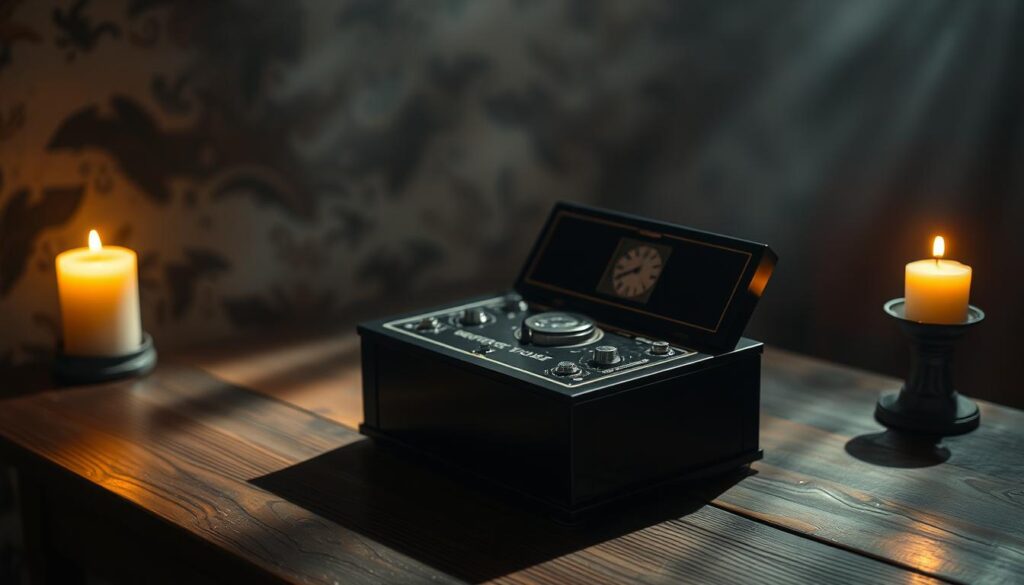
Spirit box basics
Use a scanning box that cycles radio frequencies into white noise. Scan slowly and listen for short, context-relevant words or a clear phrase repeated at different times.
- Log timestamps and repeatable patterns to reduce random hits.
- Record sessions; later review for consistent voice snippets.
Ouija and planchettes
Work in a calm group. Rest fingertips lightly on the planchette with steady hands.
- Ask short, clear questions and avoid leading prompts.
- Always move the planchette to “goodbye” to close the session.
Pendulums and dowsing rods
Establish clear yes/no/maybe signals before starting. Hold the hand steady and keep shoulders relaxed.
- Confirm rod directions for yes/no and ask one question at a time.
Altars and meaningful objects
Build a simple altar with photos, letters, or symbols that sharpen focus. Treat objects as anchors, not proof.
“Tools support discernment; skill and ethics make meaning.”
| Tool | Quick Use | Key Note |
|---|---|---|
| Spirit box | Scan slowly; record | Look for repeated words in white noise |
| Ouija | Group use; light touch | Close with “goodbye” to end |
| Pendulum / rods | Establish signals | One question at a time |
| Altar / objects | Place meaningful items | Anchor intention and focus |
Notes: Many dramatic physical displays were exposed as fraud in history. Use transparent techniques and work with trusted people. Treat tools as supports while the medium and your own discernment remain the main source of meaning.
Conducting a Session: Step-by-Step How-To
Start each session by settling the body and choosing one clear aim to guide the work. Take slow exhales, visualize a shield of white light, and state a short boundary phrase aloud. This sets a respectful frame before you invite contact from benevolent spirits.
Opening: centering, protection, and inviting contact
Center first. If you are in a group, join hands lightly to match breath and focus. Place a hand over your heart to ground and say your intention. A medium present can help steady timing and tone.
Asking questions: phrasing, pacing, and patience
Ask one question at a time in plain language. Wait in silence and allow impressions to arise. Use yes/no rods or a pendulum only after confirming signals. If a person feels confused, rephrase the question rather than piling on details.
Closing: gratitude, ending signals, and sealing the space
Thank any helpful presences, state that the session is at an end, and use a chosen signal—snuff a candle or ring a bell. For Ouija, say “goodbye.” Ground by placing one hand on your abdomen, sip water, and jot notes to review the practice later.

Understanding Mediumship, Psychics, and Séances
Public demonstrations of mediumship once drew large audiences and sharp debate across the English-speaking world.
What a medium does: a medium claims to relay messages from the nonphysical through mental impressions or physical effects.
Mental mediums report hearing, seeing, or sensing messages. Many modern shows favor these safer, inward methods over dramatic stunts.
Physical mediums historically attempted raps, apports, and materializations. Those displays used tables, trumpets, and dim rooms to produce effects.

Trance, direct voice, and platform work
Trance speakers like Leonora Piper reportedly spoke through an altered state. Direct voice mediums such as Leslie Flint claimed audible, independent voices.
Platform demonstrations once mixed lecture, readings, and theatrical props. Today many presenters avoid sensational methods and emphasize clear, evidence-led messages.
- Ask how a medium structures a session and how they close it.
- Expect disclaimers, compassionate delivery, and no pressure to share private grief.
- Remember: researchers have not confirmed mediumistic claims; historical investigations exposed fraud in several physical cases.
| Aspect | Mental | Physical | Ethical Note |
|---|---|---|---|
| Typical signs | Images, words, feelings | Raps, apports, movement | Consent and safety required |
| Common props | Journal, cards | Tables, trumpets | Ask about controls |
| Historical figures | Leonora Piper | Leslie Flint (direct voice) | Controversy and inquiry |
| Modern trend | Evidence-focused readings | Rare, tightly controlled demos | Prefer compassion over spectacle |
Protection Practices: Keeping Energies Balanced
Protection sets a calm, clear frame for every session. Begin with a short ritual so your energy and focus stay steady. This helps you notice useful impressions without feeling overwhelmed.
White light shielding and grounding the body
Visualize a sphere of white light surrounding your body. Say a brief boundary phrase aloud to mark the space.
Ground by feeling your feet on the floor, breathing into your abdomen, or placing a palm over your heart. These simple acts settle nerves and steady attention.
Tools for protection: black tourmaline, lavender, and mindful smoke alternatives
- Carry black tourmaline in a pocket for a quiet, tactile anchor.
- Use lavender oil or a linen spray to calm the senses before sitting.
- If you cleanse with smoke, avoid white sage out of cultural sensitivity; choose incense or rosewater instead.
Invite only benevolent spirits and ask your guides to hold a calm field. If you feel dizzy, irritable, or overly moved, stop, reassert boundaries, and take a break.
“Keep sessions short and routine-based; consistency builds a stronger protective baseline.”
End with gratitude and a clear release statement. Hydrate, have a light snack if needed, and jot one line in your journal. Small routines like this protect your well-being and make practice easier over time.

| Step | Action | Why it Helps |
|---|---|---|
| Shielding | Visualize white light; state boundaries | Creates a clear energetic frame for work |
| Grounding | Feet on floor; breathe to abdomen; palm on heart | Stabilizes the body and reduces overwhelm |
| Support items | Black tourmaline, lavender, incense/rosewater | Offers tactile or sensory anchors without cultural harm |
| Session limits | Set time, hydrate, end with gratitude | Reduces fatigue and helps reset afterward |
To build a longer practice plan, see a short guide on how to become a psychic healer for routines and responsible training.
Reading the Signs: Messages, Sensations, and Synchronicity
Often the clearest signs arrive as tiny, repeatable details rather than dramatic events.
Clair senses work in four common ways: feeling (clairsentience), hearing (clairaudience), seeing (clairvoyance), and knowing (claircognizance).
Watch for classic signs: flickering lights, sudden familiar scents, a song that repeats, or number patterns that show up again and again.

Practical tips
- When using a spirit box, log timestamps and note back-to-back, context-rich words from white noise; check for a consistent voice later.
- Track physical impressions—tingles, temperature shifts, or pressure—and compare them with other clues before drawing conclusions.
- Use rods sparingly; confirm their moves match other impressions from a person or memory.
- Ask for one clear validating detail to link a message to a specific person or event.
“Record everything and look for repetition; repeated ones build trust.”
| Sign Type | Example | How to Verify |
|---|---|---|
| Auditory | Song or voice snippet | Timestamp recordings and repeat checks |
| Visual | Flickering lights | Note timing and correlate with other impressions |
| Scent | Familiar perfume or smoke | Check for source; log repetition |
| Numbers | Repeating sequences | Compare across sessions for pattern |
Working with Spirit Guides, Loved Ones, and Light Beings
Ask clearly, then wait quietly. Invite a guide with a simple line such as, “Guides aligned with my highest good, please step forward and confirm your presence.”
Scan your body and note tiny replies: warmth at the chest, a soft calm, or a quick inner word. These subtle confirmations often serve as the first reliable signals of contact.
Work in short sessions and set one intention per meeting. Keep messages brief and request one validating detail you can check later in daily life.
Building trust and clarifying the sense
Strengthen connection by regular check-ins, gratitude, and boundaries. If you want clearer hearing, ask for a brief voice; for images, ask for one useful picture.
If a presence feels heavy or unkind, close the exchange respectfully, reassert protection, and stop. You always control the pace and outcome of your practice.

| Focus | Quick Ask | Likely Signal |
|---|---|---|
| Invite guides | “Please step forward” | Warmth, calm, inner word |
| Validate loved ones | Request one detail | Name, date, or image |
| Develop a clair | Ask for clearer voice or image | Short words or a vivid picture |
| Safety | End if uneasy | Reassert boundaries; stop |
Journal each contact to spot patterns of recurring phrases, symbols, or helpful themes. For structured training and longer routines, see guidance on how to become a pet medium and expand your skills at how to become a pet psychic.
Highly Sensitive People and Subtle Energies
Being highly sensitive often means your nervous system notices small cues before your conscious mind names them.
Recognize the gift: you might feel subtle shifts in your body and mind that help you tune to safe, supportive contact. These impressions can be emotions, environmental imprints, or hints that a friendly guide or light being is present.
Try a short drill: settle, scan the body, ask a guide to step forward, then note shifts like warmth, calm, or tingles. Keep sessions brief and clear. Free will stays central—nothing should force you to act.

“Gentle routines protect your nervous system and make reliable signals easier to read.”
| Tip | Action | Benefit |
|---|---|---|
| Body scan | Notice breath, tension, warmth | Distinguishes self-feel from external cue |
| One clair at a time | Focus on feeling or sight only | Reduces overwhelm; builds skill |
| Short, frequent sessions | 10–20 minutes, regular practice | Supports steady growth and life balance |
| Buddy or mentor | Practice with a calm partner | Improves discernment and confidence |
Self-care is non-negotiable: sleep, hydration, time outdoors, and grounding breaths protect your energy between sessions. If sensitivity spikes, pause, ground, and ask for a clear, soft signal tailored to you. This helps a developing psychic ability remain healthy and steady.
Ethics, Consent, and Emotional Care
Treat each encounter like a private conversation: polite, clear, and bound by agreed limits. Begin by introducing yourself, stating intent, and checking comfort with the people present. This sets a respectful tone and reduces misunderstanding.
Approach and tone
Introduce and ask consent. Obtain clear permission from every person involved. Never read for someone who is absent, and do not share private impressions without explicit approval.
Topics to avoid and when to pause
Avoid probing traumatic events, medical predictions, or detailed accounts of death unless a sitter asks and consents. Keep questions simple and non-leading. If emotions rise, stop, check in, and offer to end the session.

“Model integrity: be honest about uncertainty and willing to say ‘I don’t know.’”
- Protect privacy: secure notes and anonymize any shared examples.
- Set clear boundaries on fees, time, and scope to avoid exploitation of grief.
- Encourage aftercare: water, grounding, and a brief debrief to support wellbeing.
| Ethic | Action | Why |
|---|---|---|
| Consent | Ask aloud | Respects autonomy |
| Privacy | Secure notes | Protects each person |
| Care | Offer aftercare | Reduces emotional harm |
This article encourages honest, compassionate work. Offer impressions as possibilities, not certainties, and prioritize people’s safety over any message. Keep this practice humane and clear.
Scientific Skepticism and Avoiding Fraud
Scientific methods help us check whether apparent messages hold up under fair conditions.
Understand common pitfalls: cold reading, confirmation bias, and suggestibility can create convincing but false impressions. These mental shortcuts make general statements feel personal.
Controlled tests isolate the medium from sitters, randomize targets, and use blinded methods so a researcher can separate hits from chance. Classic studies—such as experiments reported by the British Psychological Society—found no reliable mediumistic ability under strict controls.

Why testing matters
Historical fraud—fake ectoplasm and staged levitations around a table—shows why transparency matters. Well-designed trials, recordings, timestamps, and sitter feedback forms help spot lucky guesses and guide honest inquiry.
- Use independent researcher oversight and blinded protocols.
- Record sessions and require verifiable details, not vague hits.
- Test direct voice claims with controls for ventriloquism or hidden devices.
“Skepticism is a tool for safety and discernment, not hostility.”
Research protects vulnerable people grieving a death from exploitation. If you want a balanced read on claims about mediums and psychics, see are psychics real.
| Issue | Test | Why it helps |
|---|---|---|
| Cold reading | Blinded sitter info | Removes cueing |
| Staged physical effects | Independent cameras | Detects trickery |
| Suggestibility | Control groups | Shows expectancy effects |
Troubleshooting: Fear, Mixed Signals, and When to Stop
If you sense rising panic during a session, treat it as a clear signal to pause and regroup. Slow your breath, name the feeling aloud, and place a palm on your chest to ground the body. These small acts often calm the mind within a minute or two.
Reaffirm boundaries by saying a short protective phrase and visualizing a soft, closing light around the space. Turn up a lamp or sit down to reduce sensory load if you feel overwhelmed.
Simplify the work: ask one question only, or stop and return another time. Trust your gut—if something feels wrong, end the session respectfully and step away without arguing with yourself.
- Pause and breathe when fear rises.
- Restate limits and visualize protection.
- Keep sessions short until confidence returns.
- Journal after you’re calm to spot triggers.
- Debrief with a trusted friend if fear repeats.
“Stopping is a success in self-care, not a failure.”

| Problem | Immediate Action | Why it Helps | Follow-up |
|---|---|---|---|
| Rising fear | Slow breaths; ground with palm | Calms nervous system quickly | Journal once settled |
| Mixed impressions | Simplify to one question | Reduces cognitive noise | Return later with fresh focus |
| Unwanted energy | State boundary; visualize light | Reasserts control of the space | Debrief with mentor if persistent |
| Overwhelm after session | Hydrate; rest; brief walk | Resets body and clears mind | Shorten next practice time |
Aftercare and Space Reset: Closing the Loop
Closing well helps you feel grounded and keeps your home clear after any deep practice. Take a deliberate few minutes to end the work so your space and body can shift back to everyday life.

Thanking, releasing, and re-grounding
Begin by offering gratitude. Say a short line to thank benevolent presences and then state that all connections are released and the room is clear.
Re-ground the body: drink water, eat something light, and take three steady breaths with feet flat on the floor. These small acts help return you to ordinary life.
- Close with a clear phrase of release and gratitude.
- Hydrate and eat to settle your nervous system.
- Journal immediate impressions or questions to revisit in your next practice.
- If you worked in a group, do a quick debrief to share observations.
Cleansing after sessions: incense, rosewater, or salt baths
Clean the room gently. Use incense or a spritz of rosewater instead of white sage to respect cultural traditions.
Consider a brief Himalayan salt bath or washing your hands to symbolically and physically reset after deeper work. Open a window to refresh airflow and switch normal lights on to signal routine return.
| Aftercare Step | Action | Why it Helps |
|---|---|---|
| Release | Say thanks and affirm clear space | Closes the session and reduces lingering energy |
| Re-ground | Water, food, steady breaths | Settles the body and restores balance |
| Cleansing | Incense/rosewater or salt bath | Refreshes the room and your senses |
“Keep aftercare simple and consistent — it’s the bridge between focused work and everyday life.”
For a short routine that supports meditation and inner skill, see a short guide to telepathy to add gentle practices into your regular work. This article offers easy, respectful options to help the space feel calm and safe after any session with spirits.
Historical Context: From 19th-Century Spiritualism to Today
By the 1850s, calls at a kitchen table had become headlines and a new religious current. The movement traces to the Fox sisters, whose tapping claims sparked wide public interest in messages from the dead.
Scientists and writers took notice. Figures such as William Crookes and Alfred Russel Wallace investigated claims, and Pierre Curie observed séances like those of Eusapia Palladino. These researchers brought attention and debate to the work.
Early physical mediumship relied on cabinets, trumpets, and dark rooms. Fraud exposures—cases involving the Davenport Brothers, the Bangs Sisters, and Mina Crandon—later revealed trickery and pushed many to demand clearer methods.
Practice shifted toward platform mediumship and mental methods that emphasize verbal messages rather than theatrical stunts. Allan Kardec’s Spiritism and The Spirits’ Book provided a written source that shaped public ideas about life after death.
Spiritualist churches and circles persist across the US, UK, Canada, and Australia. Diverse global forms, including Latin American Spiritism, show how local culture and technology reshape how demonstrations are shared and received.
“History teaches why modern practitioners stress transparency, documentation, and ethical care.”

For context on modern practice and finding a verified medium, see a trusted medium resource.
Next Steps: Practice Routines and Skill Building Over Time
Set a steady weekly rhythm and your skills will deepen faster than occasional attempts. Keep sessions short and predictable so the body and mind learn the pattern.
Start each practice with a brief meditation, protection, and one focused question. Ask your guides to step forward and hold that single aim for the whole sit.

Journaling, rotation, and mindful repetition
- Build a weekly routine: same day and time, 15–30 minutes, protection, question, and a consistent closing.
- Journal every session: date, time, tools, impressions, and any later validations to track patterns.
- Rotate techniques: alternate pendulum work, quiet sits, and brief spirit box checks to avoid reliance on one method.
- Train one sense at a time: ask for one clear word or image to refine hearing or seeing skills.
- Check conditions: note lighting, music, and temperature that best support connection and repeat them.
“Consistency, careful notes, and varied methods build reliable results over time.”
Tip: re-read protection and ethics sections of this article regularly. Peer support or a mentor can speed learning and keep your work balanced.
Conclusion
Let this closing note guide one small, safe step today.
Recap: set a clear intention, prepare your space, use respectful tools, protect the session, and finish with thoughtful aftercare. These steps form a simple loop you can repeat to learn and stay grounded.
Keep a balanced mindset: stay open to meaning while using ethics, notes, and common-sense skepticism. Prioritize consent, emotional well-being, and firm boundaries with any participants or spirits you invite.
Try a short sit this week: pick one question, schedule 15 minutes, and journal what arises without judgment. Over time, patient practice often brings steadier skill and calmer daily life.
Thank you for reading this article — your safety and growth matter most as you explore, learn, and care for yourself.
FAQ
What does spirit communication mean in simple terms?
It refers to attempts to connect with nonphysical energies, guides, or loved ones who no longer inhabit a body. Practitioners use tools, meditation, or trained senses to receive impressions, messages, or signs. The goal is comfort, guidance, or closure rather than proving anything scientifically.
How do I set a clear intention before a session?
Decide why you want contact and state that purpose aloud or in your mind. Use respectful language, set boundaries like “only positive energies welcome,” and keep the request focused. Clear intent helps direct attention and reduces confusion during the practice.
What’s the safest way to prepare a space?
Calm your body with breathwork or a short meditation, remove distractions, and cleanse the area with smoke, sound, or a white‑light visualization. Choose a quiet time and invite only trusted people to join. A tidy, well‑lit room supports steady focus and grounding.
What tools do beginners often use?
Common tools include a spirit box (white noise scanning), pendulums or dowsing rods for yes/no, simple altars with meaningful objects, and, in group settings, planchettes or boards with a strict goodbye protocol. Start simple and learn one method at a time.
How do you recognize authentic messages versus random noise?
Look for consistency across methods: repeated words, meaningful synchronicities, or emotional confirmations. Keep questions clear and specific, pause between prompts, and note any accurate details that you couldn’t have guessed. Journaling helps spot patterns over time.
What are basic opening and closing steps for a session?
Open by centering, grounding, and stating protection—visualize light surrounding the circle. Invite contact politely and ask clear questions. Close by thanking those present, saying a formal goodbye, and sealing the space to release lingering energies.
How do mediumship and psychic work differ?
Mediumship focuses on relaying information from nonphysical entities or deceased loved ones. Psychic work often involves sensing present energies, future tendencies, or intuitive impressions without serving as a channel for others’ messages. Training overlaps but aims differ.
What protection practices help keep energy balanced?
Use grounding techniques like walking barefoot or breathwork, visualize a white‑light shield, and place protective stones such as black tourmaline nearby. Aromatics like lavender and smoke-free cleansing options also support boundaries without creating heavy odors.
What common signs indicate contact or guidance?
People notice simple cues: sudden scents, a familiar song, flickering lights, repeated numbers, or a strong inner knowing. These can be subtle—track them alongside session notes to confirm patterns rather than assuming every occurrence is meaningful.
How should I work with guides or Helpers over time?
Invite a guide to step forward, ask for a sign to confirm presence, and establish a consistent way they communicate. Build trust through regular, low‑pressure practice and respect their tempo. Patience and small confirmations strengthen the relationship.
Are sensitive people more likely to notice subtle energies?
Yes. Highly sensitive individuals often pick up impressions, moods, or physical sensations more easily. They benefit from extra grounding, clear boundaries, and short, controlled sessions to avoid overwhelm.
What ethical rules should I follow during sessions?
Always ask for consent from everyone involved, avoid making definitive claims about outcomes, and refrain from probing traumatic topics without support. Honor free will by not forcing messages and prioritize emotional care after intense exchanges.
How can I avoid fraud and suggestion?
Learn about cold reading, confirmation bias, and leading questions. Use double‑blind tests when possible, keep a skeptical mindset, and rely on verifiable details rather than vague statements. Responsible practitioners welcome scrutiny and evidence‑based checks.
What should I do if I feel fear or receive mixed signals?
Pause the session, ground with breath or touch the floor, state a firm boundary, and call for a full close. If discomfort persists, stop and seek support from a trusted friend or trained professional. Your safety and calm come first.
What aftercare helps reset the space and oneself?
Thank and release any presence, cleanse the area with smoke or a spray, take a salt bath or shower, and spend time grounding—walk outside, eat, or hydrate. Record the session in a journal and note any next steps or follow‑ups.
Why is scientific testing important in this field?
Rigorous methods help separate genuine phenomena from coincidence, suggestion, or fraud. Researchers use controlled protocols to test claims, improving reliability and protecting participants. Healthy skepticism and evidence-building strengthen practice for everyone.
How can I improve with practice over time?
Keep short, regular routines: meditate, journal impressions, and refine techniques one at a time. Review past sessions to spot progress, ask focused questions, and stay patient—skill builds gradually through repetition and mindful reflection.