

The Justice card is a Major Arcana archetype that centers on truth, fairness, and balance.
In the image, a figure sits between gray pillars with a square-crowned tiara that signals clear thinking. She holds scales in her left hand to show intuition balanced with logic, and a double-edged sword in her right to represent decisive truth.
The purple backdrop and red cloak highlight authority, while a white shoe tip suggests that outcomes mirror our actions over time.
This guide will translate those symbols into practical steps for readings. You’ll learn how to read the upright justice card and how to apply its lessons in love, career, money, and personal ethics.
Expect clear, usable advice for beginners and experienced readers alike, plus notes on legal rulings and interpersonal consequences. For a complementary perspective on decisive clarity, see Ace of Swords insights.
Key Takeaways
- The card stands for truth, balance, and proportional outcomes.
- Symbols (scales, sword, crown) show how to mix logic with intuition.
- Use the card to guide decisions in relationships, work, and law.
- Readings should focus on accountability and long-term consequences.
- Both beginners and pros can turn symbolism into practical steps.
How to Identify the Justice Card and What Its Symbols Mean
The central image shows a calm, seated figure whose tools — a scale and a sword — summarize the card’s practical cues.
Scales on the left: The scales left in the sitter’s hand signal that intuition must weigh alongside facts. Use this as a prompt to check feelings against evidence before concluding.
Sword on the right: The double-edged sword right represents clear truth and decisive action. It asks you to speak plainly and choose with purpose to cut through doubt.
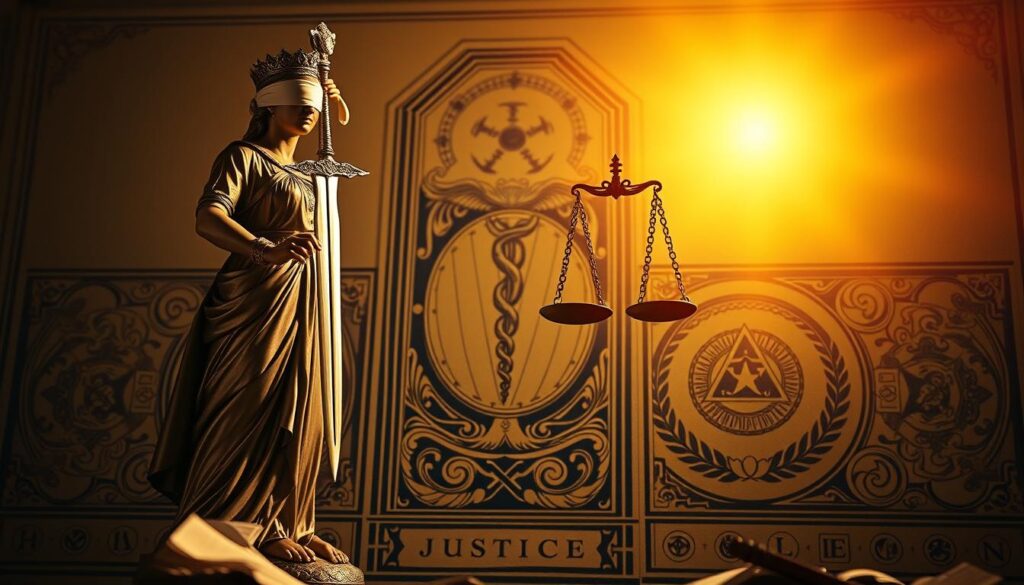
Crown, pillars, and cloak: The square crown stands for disciplined thought and integrity. Gray pillars and a purple backdrop point to law, structure, and impartial order. The red cloak conveys authority and grounded intent.
The white shoe: A small but vital reminder that present results stem from past acts. It nudges readers to link choices to consequences.
- Quick ID tip: scales left + sword right + seated figure between pillars = likely the Justice card.
- Practical use: weigh intuition and facts, state truth clearly, and stay rooted in integrity.
| Symbol | Visual | Practical Cue |
|---|---|---|
| Scales | Left hand (scales left) | Balance intuition with logic |
| Sword | Right hand (sword right) | Decisive truth and clarity |
| Crown & pillars | Square crown, twin pillars | Integrity, law, impartiality |
| White shoe | Tip visible beneath cloak | Reminder of cause and effect |
For how this clarity shows up in conflict or fast decisions, compare with this Five of Swords context.
justice tarot card meaning in Upright Position
When the upright Justice appears, it signals that ongoing situations will be judged by facts and fair process. This upright presence emphasizes truth, fairness, law, and clear accountability.
Cause and effect is central: prior choices are weighed today, and consequences will mirror how you acted earlier. If you acted with honesty and responsibility, the outcome usually favors you.
For making decisions, pause to gather facts. Check your instincts, then choose with integrity. The upright justice card asks you to align actions with the highest good.

- Fair outcomes and accountability: expect balanced rulings guided by law and truth.
- Cause and effect: past behavior shapes consequences unfolding now.
- Decision tips: combine intuition with evidence and commit to honest action.
- Legal matters: when issues are active, this card can signal that justice is served or a ruling is near.
Practical steps: document facts, speak clearly, and aim for balance in approach. Even hard truths become useful when handled with compassion and respect for everyone involved.
For related practical practice, see the upright justice card guide on focused effort and craft.
Reversed Justice: Recognizing Imbalance and Restoring Fairness
When the figure reverses, the scene asks you to spot where truth has been bent and who is avoiding responsibility.
Denial and the inner critic
Denial, avoidance of accountability, and inner critic
Reversed signals often point to imbalance. People dodge responsibility, minimize facts, or let a harsh inner voice rule choices.
This tilt can block clear judgement and delay healthy decisions. Notice if you blame others to avoid looking at your role.

Unfair outcomes, bias, and what to do next
Sometimes a reversed card marks bias, missing evidence, or outright injustices in a process.
- Pause and gather facts before acting.
- Separate feelings from evidence to limit poor outcomes.
- Document details if legal or formal steps are involved.
Turning reflection into action: making amends and moving forward
After honest reflection, pair self-compassion with clear action.
“Own mistakes, correct records, and set boundaries that stop patterns from repeating.”
| Problem | Immediate Step | Follow-up |
|---|---|---|
| Denial of role | Pause and list facts | Apologize and repair where needed |
| Biased outcome | Gather missing evidence | Seek review or counsel |
| Inner critic | Practice self-compassion | Create new habits for fairer decisions |
When legal matters arise, document everything and consult qualified counsel. For related practical steps on slow, steady effort, see this seven of pentacles guide.
Applying Justice in Love, Career, and Money
Apply this card’s call for balance to everyday relationships, work choices, and money decisions.
Love and relationships: In upright reads, romantic efforts are often rewarded when partners match care and speak honestly. Aim for reciprocity: give what you expect to receive and seek compromise that keeps both needs in balance.
If tensions rise, clarify expectations, own your part, and keep conversations calm. A reversed glimpse can warn of unfair expectations or blame; use it as a prompt to restore fairness and rebuild trust.
Career and work: Lead with integrity. Document your work, communicate clearly, and resolve disputes through evidence and professionalism. If you face bias or an unfair environment, gather facts and escalate through proper channels to pursue accountability.

Finances and money: Keep dealings lawful and transparent. Balance giving with prudence and avoid arrangements that lack honesty. When mistakes affect pay or projects, accept responsibility, correct course fast, and add safeguards to prevent repeats.
- Match effort with reciprocity in relationships to build trust.
- Use documentation and calm facts at work to protect your reputation.
- Balance generosity with clear terms in financial agreements.
| Area | Upright Advice | Reversed Warning |
|---|---|---|
| Love | Reciprocity, honest talk, fair compromise | Unfair demands, blame, broken trust |
| Career | Integrity, documentation, fair dispute resolution | Bias, avoidance of accountability, unfair policies |
| Finances | Transparent deals, balanced giving and taking | Untrustworthy deals, hidden terms, needed responsibility |
For a related view on partnership dynamics, see two of cups.
How to Read Justice in a Spread: Practical Steps
Start each read by naming the concrete facts you can prove about the situation. This frames the spread so choices and actions rest on evidence rather than wishful thinking.
Questions to ask: truth, fairness, and responsibility
Key prompts: What truth am I avoiding? Where must I accept responsibility? How can I ensure fairness for myself and others today?
Reading with timing, choices, and consequences
Assess time: a ruling or decision may be near. Map choices, list likely consequences, and pick steps that protect accountability.
“Translate insight into actions: set deadlines, assign responsibilities, and make fairness visible.”
Combining with other Major Arcana for deeper context
Pair with The High Priestess to balance intuition and facts, or with The Emperor to follow rules and structure. Use others to clarify motive and method.

| Step | What to do | Why it matters |
|---|---|---|
| Clarify facts | List evidence and witnesses | Prevents bias and shaky choices |
| Time check | Note deadlines and expected rulings | Aligns actions with outcome timing |
| Map choices | Write options and consequences | Makes responsibility visible |
| Take action | Set deadlines and communicate | Ensures fairness and accountability |
For a related spread that highlights emotional detachment vs. openness, see Four of Cups.
Conclusion
Conclusion
Finish with a specific action that makes fairness visible in your relationships and work. The justice tarot card and its call for truth and responsibility remind us that our actions add up and shape real-world consequences.
Name one clear step you can take now: document a choice, set a deadline, or speak honestly with others. Balance isn’t passive—decisions and communication must be plain and recorded.
If you face injustices, pursue remedies through proper channels and respect the rule of law. Do a quick self-audit: which reminder stands out today—facts, accountability, or compassion—and align your response.
Practical takeaway: pick one decision now that upholds honesty, reduces harm, and creates fair outcomes for everyone involved. For emotional balance tips, see King of Cups insights.
FAQ
What does the Justice tarot represent in a reading?
It points to truth, balance, and accountability. When it appears upright it often signals fair outcomes, clear decisions, or legal matters. Reversed, it can warn of bias, avoidance of responsibility, or the need to correct an imbalance.
How do the symbols on the card help with interpretation?
The scales show the need to weigh intuition against logic. The sword stands for clarity and decisive action. Crowns, pillars, and robes suggest integrity and respect for rules, while the white shoe hints that actions have spiritual or karmic consequences.
How should I read this card when it appears upright?
Upright signals cause and effect: past choices shaping present results. It encourages honest decisions, ethical behavior, and facing responsibilities. It can also indicate legal rulings or formal agreements heading your way.
What does the reversed position indicate and how do I respond?
Reversed points to denial, unfair outcomes, or internal conflict. Respond by examining bias, taking accountability, and making reparations where needed. Use reflection to plan corrective action rather than blame.
How does this influence love and relationships?
In relationships it urges reciprocity, honest communication, and fair compromises. It asks you to balance emotional needs with clear boundaries and to address injustices rather than letting them fester.
What about career and financial situations?
At work, it highlights professionalism, dispute resolution, and standing by ethical standards. With money, the emphasis is on lawful dealings and equilibrium between giving and receiving to avoid future consequences.
What practical steps help when this card appears in a spread?
Ask direct questions about truth and responsibility. Consider timing and how past choices led to current events. Combine it with other Major Arcana to add context and decide which concrete actions will restore balance.
Can this card predict legal outcomes?
It can point to legal matters or formal decisions, but it doesn’t guarantee a specific verdict. Use it as guidance to seek counsel, prepare documentation, and act ethically to strengthen your position.
How long does its influence last in a situation?
Duration varies by spread and context. It signals that consequences are tied to actions, so addressing issues promptly tends to shorten its effect. Neglecting them can extend the lesson into later readings.
What questions should I ask when this card shows up?
Focus on what must be owned or corrected, who benefits or suffers, and what fair resolution looks like. Ask how your choices led here and what steps restore integrity and balance.