

This card marks a pivotal moment of assessment and renewal. Linked to Pluto and echoing the energy of endings that birth new starts, it asks you to pause and weigh choices that shape your life.
Traditional scenes show figures rising to Gabriel’s trumpet, arms open, as a tidal wave looms — a reminder that some calls are unavoidable and final.
The upright card points to awakening, self-evaluation, and renewed purpose. Reversed, it warns of doubt and missed lessons. This guide will give clear, practical guidance and symbolism you can use today.
Think of this moment as a milestone on your journey — a call to act with accountability and courage. Later sections cover upright and reversed reads, timing tips, deck comparisons, and real-life applications.
Explore related cards to deepen how you apply these themes to work, love, and growth.
Key Takeaways
- The card signals a major assessment and a chance to renew purpose.
- Imagery like the trumpet and rising figures ties symbolism to real choices.
- Upright shows awakening; reversed flags doubt and missed lessons.
- Use this energy to review past actions and choose aligned paths.
- This guide breaks complex themes into practical steps for everyday growth.
Judgement Tarot Meaning at a Glance

Quick snapshot: This card signals a turning point — an awakening that asks you to review past experiences honestly and answer a clear call to evolve.
Upright energy brings self-evaluation, renewal, and renewed purpose. It invites reflection and a sober reckoning with choices so you can step up at a new level of clarity.
Reversed tone shows self-doubt and lack of self-awareness. The inner critic can block lessons and keep you stuck in patterns of self-loathing or avoidance.
- Love: upright favors communication and small adjustments; reversed asks for fair critique and courage to see truth.
- Career & Finances: upright encourages accountability, purpose, and better habits; reversed flags missed lessons and low confidence.
- One-card reading: upright supports decisive action; reversed invites slowing down and recalibration.
| Position | Core Theme | Action |
|---|---|---|
| Upright | Awakening, reflection | Review past experiences; commit to one change |
| Reversed | Self-doubt, missed lessons | Journal fears; seek honest feedback |
| One-card pull | Decision point | Either step up or pause and recalibrate |
Practical tip: Jot one insight you feel called to act on today. Awareness plus small action turns clarity into tangible results.
Explore related cards to deepen how this snapshot plays out in relationships and choices. We’ll unpack symbols and real-life applications next.
Judgement Tarot Card Description & Symbolism
A close look at the card reveals a collective awakening staged like a call to true accountability.

Gabriel’s trumpet cuts through daily noise. It acts as a spiritual wake-up that invites a new, conscious start aligned with purpose. The trumpet is a clear icon: a sound that demands attention and a shift in priorities.
Gabriel’s trumpet and a wake-up call
The trumpet signals an unavoidable summons. It slices through distraction and asks for honest hearing. When you see the trumpet, think of a moment that forces choice and clarity.
People rising and open arms
The card shows men, women, and children rising from graves. Their arms are outstretched in an embodied “yes” to change. That posture shows willingness to be seen, held accountable, and renewed.
Background forces and inevitable change
In the background a tidal wave and distant mountains loom. These elements remind us that larger forces shape our path and that some ends are final. The background suggests we face these currents rather than resist them.
Planetary and archetypal links
Ruled by Pluto, the card connects to underworld journeys, catharsis, and rebirth. As a major arcana image, it points to a threshold moment on the way from an end into a fresh chapter.
| Symbol | What it shows | Practical prompt |
|---|---|---|
| Trumpet | Wake-up call, clear summons | Listen for one truth you avoid |
| People rising | Collective accountability | Share one honest step with someone |
| Arms outstretched | Consent to be measured | Say “yes” to one change |
| Tidal wave & mountains | Forces larger than self | Plan for inevitable shifts |
Upright Judgement: Self-Reflection, Renewal, and Life Lessons
This card marks a clear crossroads where reflection turns into decisive action.

Core upright meaning: The upright judgement card signals awakening and a moment to integrate lessons so you can choose a path that fits your values.
Core Upright Meaning: Awakening, Purpose, and a Pivotal Decision
This is a moment when growth becomes visible. You may need to let go of what no longer fits and commit to one meaningful change.
In Love: Communication, Adjustments, and Growth
Renewal in relationships starts with honest, calm talk. Try a two-week adjustment plan: name one change and revisit it together.
In Career and Finances: Accountability, Purpose, and New Habits
At work, take responsibility for one misstep and propose a fix. For money, run a 30-day audit and use a 24-hour pause on non-essentials to reshape habits.
- Journal recent choices and map one small action to take within 72 hours.
- Create a values checklist to guide decisions and draft a short purpose statement for your role.
- Seek mentorship or community to speed growth and stay accountable.
Acting now turns awakening into real change. For a related practical card on steady effort, see Seven of Pentacles.
Reversed Judgement: Self-Doubt, Missed Calls, and Course Correction
When the card flips, hesitation and a loud inner critic can cloud clear action. This period often hides chances behind fear. It asks you to pause and notice how your inner voice shapes your moves.

Core reversed meaning: Inner critic, fear, and forgiveness—the reversed judgement card often shows harsh self-talk and missed chances. The remedy is small, steady work: name the doubt, write a compassionate rebuttal, and choose one tiny action to prove progress.
In love
Denial and blame can hide the real issues. Make one fair critique and ask a partner to do the same. Track that change for two weeks to see if trust rebuilds.
In career and finances
At work, run a short post-mortem on one mistake. Pick one lesson and one process tweak to stop repeats. For money, do a gentle review: find a trigger pattern and add a safeguard like a spend cap or accountability buddy.
Micro-experiment: Commit to one low-stakes action within 24 hours. Small wins rebuild confidence and break paralysis.
- Define the pattern: name the inner critic and its script.
- Write a compassionate rebuttal to separate fear from facts.
- Pick one practical tweak for work, love, or money and test it for two weeks.
- Seek help from trusted others to gain perspective and encouragement.
| Area | Common issue | Immediate action |
|---|---|---|
| Self | Harsh self-judgment | Write a compassionate rebuttal |
| Love | Denial or unfair critique | Choose one behavior to change; review in 2 weeks |
| Career | Lingering doubt after a mistake | Post-mortem: one lesson, one tweak |
| Finances | Repeating spending patterns | Set a spend cap or use an accountability buddy |
Remember: Forgiveness is not forgetfulness. It’s integrating lessons so you can act wisely now. Course correction is always available the moment you choose it. For a related read on handling conflict and hard choices, see Five of Swords.
How to Read the Judgement Card in a Tarot Reading Today
Treat the card as a prompt to translate past experiences into practical action now. Start by anchoring context: ask which past experiences and recent actions shape the path you’re making. That frame gives the reading a clear, useful focus.

Context and Combinations
Pairs matter. With Death, expect a full-cycle shift: an ending that leads to renewal. With Justice, logic and accountability sharpen the call. Use nearby cards to spot where one change unlocks momentum.
Timing and One-Card Pulls
One-card pulls: An upright judgement card often means “proceed now with clarity.” Reversed judgement points to unresolved issues or self-doubt — pause and resolve what’s pending.
- Anchor the reading by naming the past experiences the card references.
- Translate symbols into guidance: trumpet = message; rising = action; tidal wave = inevitable change.
- Practical step: write the first intuitive action in 60 seconds and plan to try it within 72 hours.
- Name one person who can witness your commitment to turn insight into real actions.
Quick check-in: What one commitment today best honors the call you’re hearing? For a related angle on memory and emotional return, see Six of Cups.
Comparing the Judgement Across Decks and Its Major Arcana Context
Across decks, the same summons appears, but artists tell the story with different focal points.

Some decks emphasize naked figures to highlight vulnerability and communal renewal. Others place steep mountains or distant ranges to stress endurance and the long path ahead.
What the card shows stays steady: rising figures answering a trumpet-like call. The variations change the emotional cue you receive during a reading.
Parallels with Death and Justice
As a major arcana card, it sits between endings and decisions. Death signals an end that clears space. Justice weighs facts and consequences.
Judgement blends these themes. It asks you to use lessons from endings and to choose wisely, turning insight into renewal.
- When Justice and this card appear together, document criteria and set a deadline for action.
- Many decks imply shared accountability—rising together makes change easier to sustain.
- The card also invites closure rituals: letters, acknowledgments, or formal commitments.
| Deck focus | Iconography | Reader cue | Action tip |
|---|---|---|---|
| Vulnerability-focused | Naked figures | Invite honesty | Share one truth with a witness |
| Landscape-focused | Mountains, distance | Plan long-term | Map one step toward a goal |
| Classic/Rider-Waite | Communal rising, trumpet | Integration of lessons | Perform a closure ritual |
| Modern/artist-driven | Stylized symbols | Personal emphasis | Reflect on which symbol draws you |
Noticing which iconography draws your eye reveals your current growth edge. For a related card that explores heartbreak and repair, see Three of Swords.
judgement tarot meaning in Love, Work, and Life Purpose
A call to realign priorities usually shows up as a quiet push toward simpler, wiser actions.
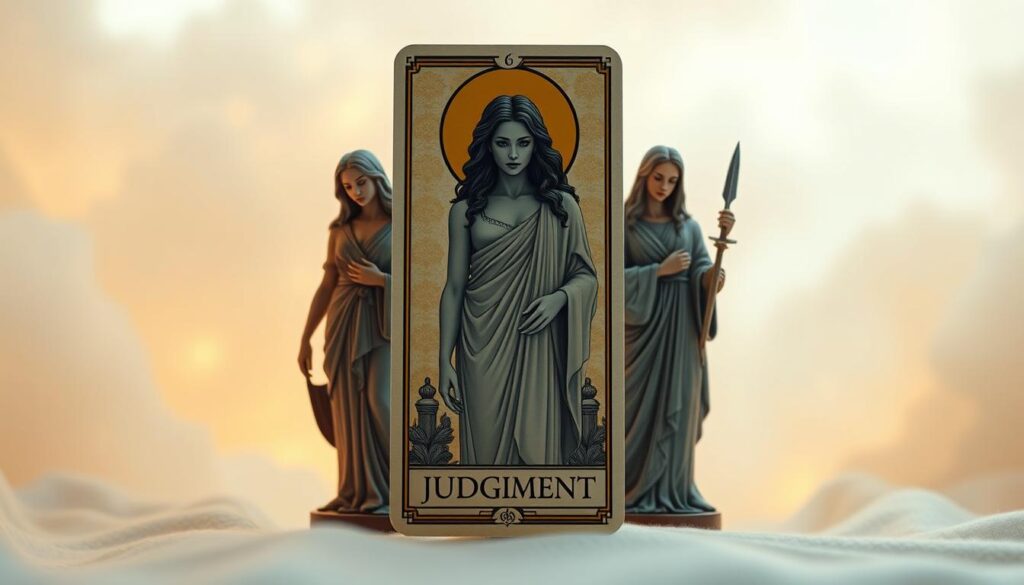
In love: Upright energy invites renewal through clear communication and small adjustments. Name one pattern you will shift and pick one action to take this week to support connection.
In career and work: The card asks you to clarify purpose. Write a one-sentence purpose and then take a concrete step — an application, proposal, or process fix — to match that aim.
Guidance for Decisions: Answering the Call and Embracing Change
Practical actions translate insight into habit. Use these steps to move from awareness to steady growth.
- Choose accountability over defensiveness: acknowledge impact, outline a fix, and set a check-in date.
- Align weekly priorities to values: schedule the top two tasks that advance your long-term journey.
- When fear arises, remember the card suggests you already hold the lessons—trust yourself and take the next right step.
- If doubt stays, pull a clarifier to ask what the judgement card suggests you release, keep, and begin.
- Create a simple ritual: a Sunday review to track progress and adjust actions for the week ahead.
“Hear the call, pick one clear decision, and let consistent actions compound your growth.”
Reversed cues ask for gentler moves: shrink the goal, shorten deadlines, and celebrate small wins to rebuild traction. Invite one supportive other to witness your commitment — social support makes change easier.
For a related practical read on stepping away and refocusing, see eight of cups.
Conclusion
A defining moment arrives when past lessons move from thought into deliberate action. The judgement tarot card asks you to close one chapter and step up to a higher level of purpose.
Choose one practical step to take in the next 72 hours. Small moves honor the call and turn awakening into steady growth along your journey.
The upright card supports clear choice and renewed aim. The reversed card asks for self-forgiveness and a pause to clear what blocks momentum.
Iconography like the trumpet and rising figures reminds us that accountability, closure, and honest repair open paths after an end.
Quick reflection: what single decision this week best aligns your actions with your values? Return to this guide when this tarot card appears to ground insight into practical steps.
FAQ
What does the Judgement card symbolize in a reading?
The card often signals a moment of awakening and review. It points to a call to re-evaluate past choices, accept responsibility, and move toward renewed purpose. Expect themes of reckoning, acceptance, and a chance to course-correct.
How should I interpret the artwork—trumpet, figures, and landscape?
The trumpet represents a wake-up call or clear message that demands attention. The rising figures and outstretched arms suggest openness to assessment and transformation. Background elements such as mountains or waves hint at forces beyond the individual that shape change and inevitability.
What does the upright card indicate about relationships?
Upright, it encourages honest conversation, healing, and adjustments that align partners with shared goals. It can herald reconciliation when both parties accept past lessons and commit to growth.
How does the upright position affect career and money matters?
In work contexts, the card suggests accountability, clearer purpose, and new habits that improve outcomes. It can indicate a pivotal choice—accepting responsibility may open career progression or financial stability.
What does the reversed card suggest emotionally or spiritually?
Reversed, the card often points to self-doubt, avoidance, or an inner critic blocking progress. It calls for forgiveness—of oneself and others—and honest soul-searching to restore confidence and move forward.
How should I read the reversed card in a romantic spread?
It can indicate denial, fear of facing issues, or resistance to fair critique. Use it as a prompt for honest self-assessment; without it, relationships may stall until accountability and clarity return.
What does the reversed card mean for work and finances?
Expect lessons that require humility and course correction. You may need to rebuild trust, accept feedback, or revise strategies. It’s less about failure and more about practical recovery and learning.
How do I interpret this card in a one-card draw today?
Treat it as an urgent nudge: reflect on recent choices, listen for signals to change, and act with integrity. It invites immediate self-audit and focused action to align with your deeper purpose.
How important is surrounding context and card combinations?
Very important. Nearby cards clarify whether the call is external or internal, gentle or demanding. Look for cards indicating endings, new starts, or moral decisions to refine the message and timing.
How does this card compare with Death or Justice in the Major Arcana?
While Death emphasizes endings and transformation, and Justice focuses on fairness and consequence, this card bridges both: it centers on awakening, final assessments, and the choice to embrace renewal after reckoning.
Does the card relate to specific planets or archetypes?
It’s often linked to Pluto and themes of rebirth, deep change, and the Major Arcana’s broader journey. That connection highlights intensity, inner shifts, and the drive to evolve.
What practical steps follow seeing this card in a life-purpose spread?
Start with honest reflection: list lessons, identify habits to change, and choose one concrete step toward your goal. Seek feedback from trusted people and set a short timeline to act on insights.