

Ingo Swann was a pioneering figure who spent decades exploring the limits of perception. He focused on how people might reach beyond sight to gather information. His work bridged parapsychology and serious inquiry.
This introduction summarizes key themes: the nature of the mind, claims about telepathy, and the historical links to government programs. We examine evidence that challenged standard science and led to projects that tested remote sensing for intelligence use.
Readers will find a careful review of experiments, methods, and controversies. We keep a clear, friendly tone while weighing claims and data. Join us as we trace how those efforts shaped later research.
Key Takeaways
- Swann pushed research into extrasensory perception with rigorous tests.
- The exploration connected psychic claims to national security interest.
- Debates remain about the validity of reported remote sensing results.
- Examining methods helps separate strong evidence from weak claims.
- This article aims to present a balanced, clear view for U.S. readers.
The Life and Legacy of Ingo Swann
A life shaped by early unusual experiences set the stage for a curious, controversial career.
Born September 14, 1933, in Telluride, Colorado, he showed remarkable perception from childhood. At age three a tonsillectomy produced an out-of-body episode that would echo through his later work.

Early Life and Influences
His personality and early visions led people to notice rare perceptual phenomena. These formative years influenced how he described space, events, and inner experiences later in life.
Transition to Parapsychology
In the 1970s he joined rigorous studies at the Stanford Research Institute. Those experiments tested remote viewing and documented abilities that attracted interest from the wider world.
“I recorded scenes and coordinates that puzzled scientists and curious readers alike.”
- Born 1933; documented early perceptions.
- Participated in major studies and intelligence-related research.
- Left a legacy in ufology, space-related subject study, and pp. of his books.
Understanding Ingo Swann Theories on Human Telepathy and Consciousness
A core claim was that the mind can collect data at a distance when trained and focused.
Swann proposed that some people can access information across space without relying on normal senses. He framed this as a practical ability, not just an abstract idea.
Key points in this study include:
- Distinction between undeveloped human telepathy and more advanced forms of interspecies communication.
- Training methods that aim to improve control over inner perception.
- Results from experiments that suggest repeatable, if controversial, access to distant information.
The book “Penetration” offers detailed cases and personal experiences that support the search for patterns. Examining pp. of historical records helps trace how scientists handled these phenomena.
Personality and public reputation shaped how the subject was received. By reviewing methods, results, and control mechanisms, this article helps readers weigh evidence and consider the broader implications for knowledge and communication across space.

The Origins of Remote Viewing
Remote viewing began as a coined term to describe perceiving distant places without physical travel.
The label was adopted in the 1970s to give structure to experiments that tested extrasensory perception.

Defining the Terminology
Remote viewing described a disciplined protocol where a sitter used only a set of coordinates to report details about a target.
Russell Targ and Harold Puthoff led early studies at the Stanford Research Institute. Their work tried to bring scientific methods to the study of telepathy and clairvoyance.
- Formal method emerged in the 1970s using geographic coordinates.
- Sessions aimed to separate internal thought from perceived information.
- The theory suggested that mind can access data across space and time.
“Each session offered a focused window into possible links between consciousness and distant targets.”
As a subject of scrutiny, remote viewing faced critics. Still, it remains a core subject for people studying anomalous phenomena and the wider possibility of nonlocal communication.
For further background on claimed psychic ability and related work, see remote viewing.
Scientific Experiments at Stanford Research Institute
Researchers designed blind protocols at the Stanford Research Institute to test remote viewing under tight controls. Funding came from government sources that wanted rigorous data to assess potential intelligence value.
The research measured brain activity and simple physiological responses while participants attempted to describe distant, unseen targets. Scientists used blind judging to compare session transcripts against target descriptions.
A seminal paper circulated among labs summarized methods, pp. of raw scores, and how scoring rules evolved to reduce cueing. Those reports offered repeatable procedures that other teams could test.
The experiments produced mixed but noteworthy results. Some sessions scored above chance, which sparked debate among scientists and led to further studies.

The lasting value of the SRI program was methodological. The protocols, participant collaboration, and careful scoring created a body of data that helped later research probe how the brain might interact with information beyond standard perception.
The Magnetometer Psychokinesis Tests
A focused set of lab trials in 1972 tested whether directed attention could influence sensitive instruments.
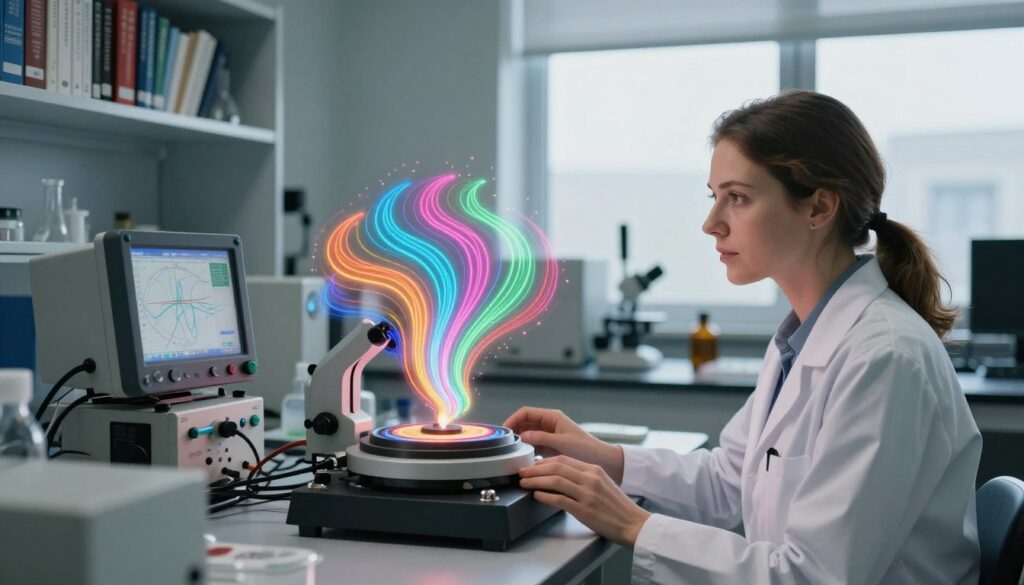
On June 6, 1972, a series of controlled experiments took place at the Varian Physics Building. A magnetometer recorded tiny shifts in a magnetic field while a volunteer attempted concentrated mental viewing.
The team logged every second and monitored the participant’s physical body to rule out manual interference. Strong control protocols governed access, shielding, and timing to reduce external noise.
The Varian Physics Building Tests
Data files and pp. of the original sessions show magnetic field oscillations that sometimes matched focused activity. The research used blind timing and careful scoring to preserve integrity.
Skeptical Perspectives
Critical reviewers pointed to possible equipment faults and alternative explanations. Skeptics urged repeat studies and independent calibration before accepting the results as solid evidence.
Why it matters: these experiments remain a key historical study in psychokinesis research, prompting further studies into brain–instrument links and the challenge of proving subtle effects over time.
| Item | Date | Device | Primary Control |
|---|---|---|---|
| Varian Test Session | June 6, 1972 | Magnetometer | Participant body monitoring |
| Recorded Data | Session logs (pp.) | Magnetic field traces | Blind timing, shielding |
| Outcome | Published paper | Oscillation patterns | Calls for replication |
“The oscillations were intriguing, yet the community split on interpretation.”
Exploring the Coordinate Remote Viewing Protocol
The coordinate protocol was created to give viewers a clear, repeatable frame for accessing a target using only latitude and longitude.
By presenting lone numbers, researchers force the sitter to rely on perception rather than prior knowledge. The viewer describes physical and sensory features of a site they have never visited.
Blind procedures minimize expectation effects. Targets stay hidden until the session ends, so guessing and cueing drop sharply.
The method requires a calm, disciplined mental state. Practitioners learn to quiet analysis and focus on impressions that may come from deeper levels of perception.

Applications in government-linked programs show documented sessions that produced testable details. Each coordinate acts as a mental anchor, sharpening attention and improving precision.
“Strict, repeatable rules helped researchers seek consistent, verifiable results.”
| Feature | Purpose | Control |
|---|---|---|
| Single-point coordinates | Focus attention to a precise target | Blind target reveal |
| Disciplined protocol | Reduce bias and guessing | Standardized session steps |
| Documentation | Support verification and replication | Recorded transcripts and scoring |
Remote Viewing the Planet Jupiter
In 1973 a landmark session described Jupiter’s storms and hinted at rings long before probes arrived. This episode drew attention because the details were specific and unexpected.

Verifying the Data with Voyager
The later arrival of Voyager 1 in 1979 confirmed the existence of rings and supplied atmospheric data that matched many earlier impressions. That match added a new layer of evidence to the subject.
Scientists remained cautious. Skeptics pointed to chance and retrospective fitting in papers and reports. Still, many people in the world of anomalous phenomena cite this event as noteworthy.
- 1973 session reported atmospheric bands and faint ring structures.
- Voyager 1 (1979) provided photographic confirmation of rings.
- The book Mind-Reach and pp. of the published paper document the events and experiments.
| Year | Source | Claim | Verification |
|---|---|---|---|
| 1973 | Remote viewing session | Atmosphere details; rings | Voyager 1 images (1979) |
| 1979 | Voyager 1 | Ring detection; atmospheric data | Direct imaging, spectra |
| Post | Books & papers | Comparative analysis | Ongoing studies by scientists |
For more context about the experimenter and related studies, see the Ingo Swann profile.
The Connection Between Consciousness and Physical Reality
Some researchers now propose that thought may couple to measurable fields that shape physical events.
This idea suggests the brain might act less like an isolated processor and more like a receiver within a larger field. If true, our inner states could influence nearby systems in subtle, testable ways.
Telepathy would then be a form of nonlocal communication, where signals pass without standard tools or direct contact. This view shifts the question from belief to measurable mechanisms.

“Exploring these links pushes science to consider that thoughts may have causal power.”
| Hypothesis | Predicted Effect | Test Method |
|---|---|---|
| Mind as receiver | Signal-like modulation in local field | Shielded instrument arrays |
| Thought-driven change | Small, repeatable shifts | Double-blind trials with physiological controls |
| Nonlocal communication | Correlated responses across distance | Paired subject experiments, statistical scoring |
For practical guides and training that explore similar claims, see discover your telepathic abilities.
Penetration and the Question of Extraterrestrial Contact
Penetration recounts striking episodes where reported visitors seemed to reach beyond physical limits to access thoughts.
The book describes a secret agency that studied whether space-based entities could exercise mind control and influence information flow at scale.
Witnesses often report an ontological shock. Their experiences alter basic knowledge about reality and place the individual in a new, uncertain world.
Swann frames these events as a subject of government inquiry, with pp. of accounts offering a window into classified research into anomalous phenomena.
The personality of the entities remains debated. Many reports suggest a sophisticated, non‑human intelligence with targeted abilities and specific goals.

“The possibility that thoughts might be accessible from space forces a reexamination of cognitive sovereignty.”
Why it matters: whether one accepts these claims, the discussion shifts attention to how people protect private thoughts, verify testimony, and pursue knowledge about unexplained experiences.
- Book accounts reveal alleged contact methods.
- Government interest gave the subject formal structure.
- Understanding these reports helps readers navigate ufology and search for truth.
The Secret Agency and the Moon
Behind closed doors, a covert intelligence agency kept a steady watch of lunar regions for years.
Reports say that Ingo Swann worked with this group to test claims about remote activity and possible telepathy linked to lunar sites.
The team avoided a paper trail. That secrecy left little public record, so memories and personal accounts shape much of what we know.
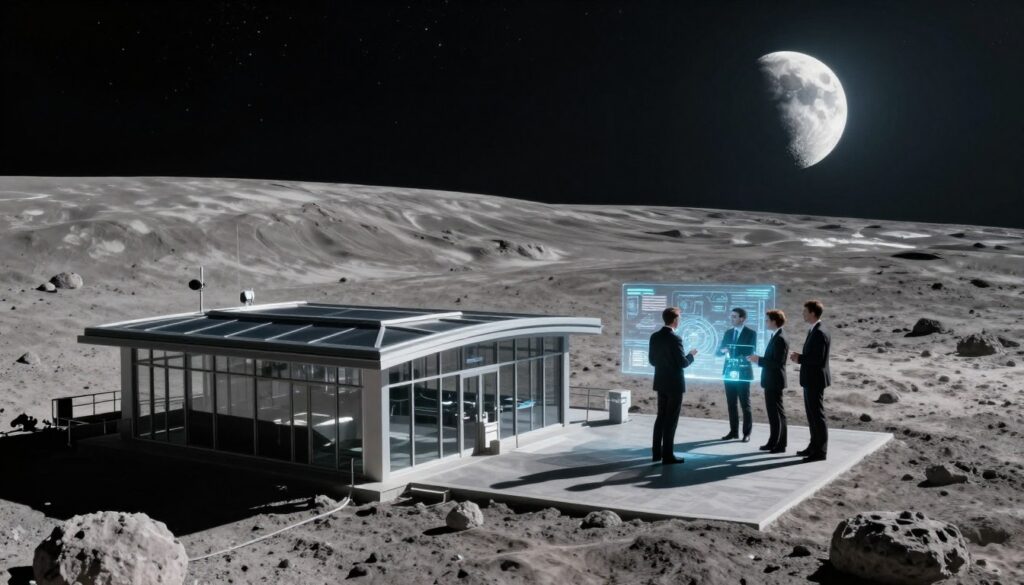
Swann’s notes imply the Moon might host non‑terrestrial presences. Those entities were thought to have subtle abilities that could influence behavior.
“Each individual involved was sworn to secrecy, creating a shadow world where facts were carefully managed.”
- No paper trail: operations ran with minimal documentation.
- Security risk: officials feared influence on national decisions.
- Disclosure challenge: decades passed before any accounts surfaced.
Studying this history shows how an intelligence agency’s interest in anomalous claims shaped public space narratives. For related profiles, see famous psychics.
Genetic Mysteries and Hybridization Theories
Genetic oddities in blood groups and newly found hominin fossils have sparked debates about possible hybrid origins.
The Rh-negative mystery centers on a rare blood type that some claim shows unusual markers. This anomaly fuels a theory linking genetic gaps to long-term intervention. Researchers note patterns that merit study, though mainstream genetics urges caution.

The Rh Negative Mystery
Some individuals who report abduction experiences also describe psychic links such as telepathy. The number of people telling similar stories has led authors to collect pp. into books that challenge accepted knowledge.
Ancient Astronaut Connections
Discoveries like Homo luzonensis, dated at roughly 67,000 years, add complexity to our past. Ancient astronaut theory suggests visitors left art and texts that point to shared information and knowledge transfer.
“Each new genetic clue pushes the subject into sharper, unsettled focus.”
- Genetic mysteries have inspired hybridization claims spanning thousands of years.
- Extinct species increase questions about our existence and lineage.
- Collected accounts provide anecdotal evidence that links telepathy to alleged manipulation.
| Item | Claim | Relevance |
|---|---|---|
| Rh-negative | Unusual markers | Hybridization debate |
| Homo luzonensis | 67,000 years | Complex ancestry |
| Abduction reports | Shared experiences | Data compiled in book |
For a deeper look at precognitive research and related methods, see this precog guide. The world of genetic research keeps revealing anomalies that feed the subject of hybridization, and each discovery adds fresh information for those seeking evidence.
The Role of Neuroscience in Telepathic Research
Researchers now look for neural signatures that match moments when people report receiving distant data. Labs use EEG, fMRI, and MEG to chart brief bursts of brain activity tied to those reports.
This article reviews how controlled experiments pair imaging with remote viewing tasks. Some studies show repeatable patterns in a few individuals, suggesting the brain may host latent ability to process non‑sensory input.
Neuroplasticity gives a hopeful framework. If neural circuits can adapt, training might strengthen pathways that support subtle communication. Early results are not conclusive, but they guide new designs.
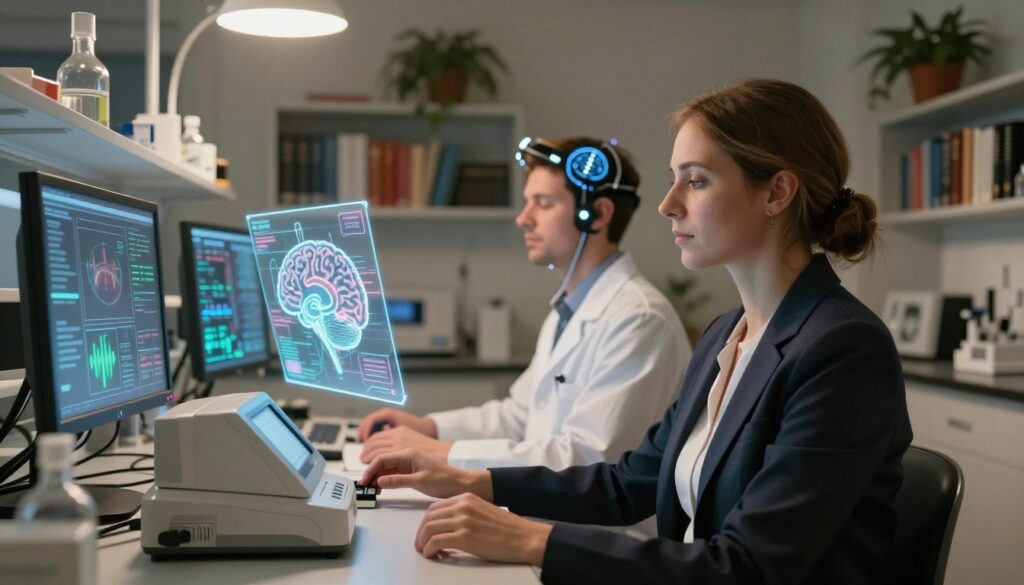
Collaboration between neuroscientists and parapsychologists is expanding. Joint work improves protocols, reduces bias, and helps scientists publish rigorous findings. Each experiment refines methods and clarifies results.
“Measuring the mind’s activity brings disputed claims into testable science.”
- Imaging links subjective reports to measurable signals.
- Brain-to-brain communication studies offer a usable framework.
- Careful experiments aim to validate the reported ability.
For further background on extrasensory perception, see what is ESP.
Technological Approaches to Brain to Brain Communication
Emerging neural interfaces are shifting lab studies from theory into tangible trials that test direct mind-to-mind links.
Neuralink and Future Interfaces
Neuralink aims to create a direct interface between the brain and computers. That device approach could let signals bypass the body and reach another mind in a controlled setting.
Early work in 2014 used EEG and TMS to show primitive brain-to-brain transfer in simple tests. Those experiments proved the basic possibility of sending short signals between people.
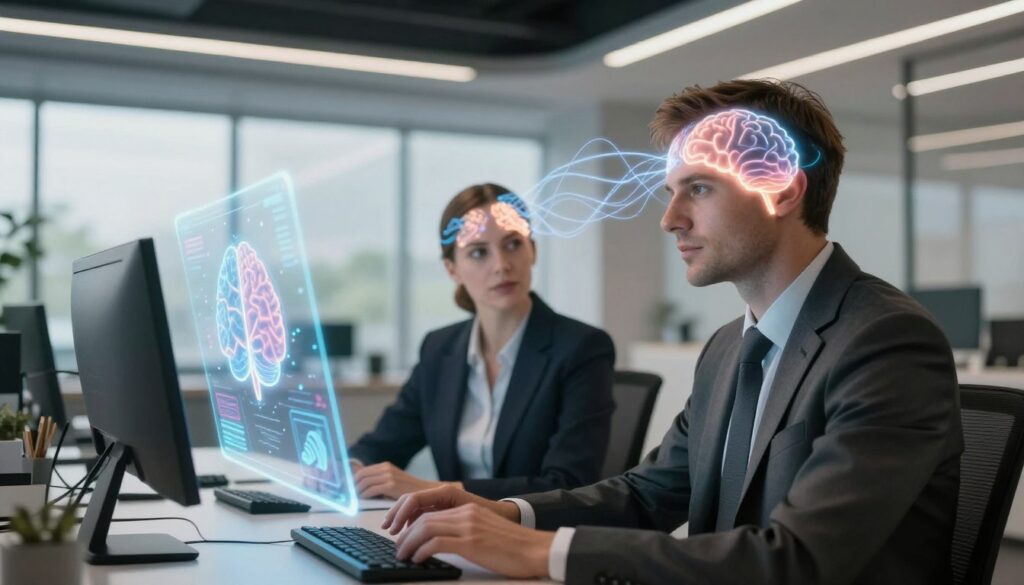
- Technologies like implants and noninvasive arrays push research toward practical communication.
- Interfaces may mimic the form of natural telepathy by transferring basic thoughts and cues.
- Control, safety, and verification are central to future studies and public trust.
“Each experiment narrows the gap between speculation and reliable, testable communication.”
Intellectual Phase Locking and the Suppression of Information
Closed networks and academic gatekeeping often hide studies that question mainstream views of mind-based phenomena.
Intellectual phase locking describes how institutions can limit access to work that unsettles accepted reality. This process filters what people see, shaping the search for new knowledge.
The result is that solid research and contestable study reports rarely reach the public. Researchers who publish inconvenient findings may face funding cuts, dismissal, or quiet redirection.
Why this matters: the brain acts as a lens, but social systems also bias which information is shared. When communication channels close, thoughts and data stay locked in specialist files.
- Suppression keeps experimental data out of broad review.
- It narrows what counts as valid study in a given field.
- Individuals can counteract this by seeking alternate sources and critical analysis.
To explore practical ways people pursue hidden knowledge, see how to become a psychic mind. Open inquiry helps unlock suppressed material and advances our collective grasp of possible abilities.
“Understanding suppression lets us map where useful information is withheld and why.”
The Psychological Impact of Anomalous Experiences
After an anomalous event, many individuals describe a steady reordering of priorities and belief.
Such episodes often change an individual’s sense of reality. People report new meaning, shifts in relationships, and altered goals over time.
Researchers can measure the brain’s response during these events. Imaging and controlled experiments supply evidence that reports are not only imagined impressions.
Many people say remote viewing or spontaneous telepathy led them to feel connected to something larger. That feeling can ease anxiety for some and create social friction for others.
The growing number of reports makes this subject harder to ignore. Ongoing research and careful study help professionals translate information from events into practical support.
By tracking outcomes, clinicians and scientists can guide people through change. Understanding personality shifts improves care and helps the world learn how communication beyond normal limits affects daily life.
“Each account is both personal testimony and a data point for future study.”
- Measured brain activity links experience to physiology.
- Evidence grows as experiments accumulate.
- Studying impacts helps individuals integrate new information.
Conclusion
This wrap-up underscores where data, technology, and careful method meet to push inquiry forward.
In short, the work of Ingo Swann opened new doors for how the mind might reach beyond ordinary perception. It challenged limits and prompted systematic study.
Evidence across experiments suggests the brain can register subtle patterns at a distance. While results remain debated, the body of work makes telepathy a topic worthy of rigorous tests and replication.
As neuroscience and interface technology improve, researchers may finally test key hypotheses with precision. Stay curious, review methods, and keep searching for reliable answers; the next breakthroughs could change how we think about the mind and the brain.
FAQ
What did Ingo Swann claim about remote viewing and its relation to the mind?
Swann argued that trained individuals could perceive distant or hidden targets using focused intention and structured protocols. He described remote viewing as an ability where attention, imagery, and memory interact with a broader informational field, producing impressions that can be recorded and later verified by researchers. His work tied the phenomenon to research on extrasensory perception, psychic functioning, and experiments at institutions such as the Stanford Research Institute.
How did Swann’s work influence research at the Stanford Research Institute (SRI)?
Swann helped develop protocols used in SRI experiments that sought repeatable methods for remote viewing. Researchers at SRI documented sessions, compared results to targets, and published papers assessing accuracy. His methods fed into formal studies, influenced intelligence agency interest, and helped shape later programs that explored how mind-based information might be accessed under controlled conditions.
What kinds of experiments tested psychokinesis and viewing abilities?
Experiments ranged from magnetometer and Varian physics building tests to coordinate remote viewing trials. Some studies measured small effects on magnetic instruments, while others asked viewers to describe remote locations or objects using blind coordinates. Results varied; proponents highlighted hits above chance, while critics pointed to methodological flaws and the need for stricter controls.
Did any of Swann’s remote viewing descriptions get independently verified?
Some striking claims—most notably early descriptions of Jupiter—were later compared with spacecraft data like Voyager imagery and planetary science findings. Supporters cite matches between sketches and later observations, while skeptics emphasize selective reporting and retrospective fitting. Verification remains mixed and debated in mainstream science.
What is Coordinate Remote Viewing (CRV) and how does it work?
CRV is a structured protocol that separates sensing from analysis. A viewer receives a random coordinate or identifier for a target and progresses through stages that emphasize raw sensory impressions, sketches, and analytical overlays. The goal is to reduce contamination from expectation and memory, producing reports that can be independently checked against target data.
How do neuroscience and modern technology relate to these ideas today?
Neuroscience explores brain networks, attention, and intention—factors central to claims about nonlocal perception. Advances like brain–computer interfaces, including projects by companies such as Neuralink, aim to link neural signals to external devices. While these technologies focus on measurable neural activity and communication, they do not yet validate nonlocal psychic claims; they do, however, offer tools for more rigorous testing of cognitive phenomena.
What are common skeptical criticisms of Swann’s findings?
Critics point to small sample sizes, inconsistent replication, experimenter bias, and inadequate blinding. They stress that anecdotal successes do not equal generalizable evidence and call for stricter statistical controls. Many scientists remain unconvinced that current data meet the standards for demonstrating extrasensory perception or psychokinesis.
Did Swann propose connections between consciousness and physical reality beyond perception?
Yes. He suggested that consciousness might interact with physical systems in subtle ways, potentially influencing phenomena like magnetic instruments or accessing information beyond classical channels. These ideas intersect with discussions about mind–matter interaction, field theories, and questions about how information is instantiated in the universe.
What role did intelligence agencies play in remote viewing research?
Intelligence agencies funded and monitored programs that tested remote viewing for potential operational use. Such programs sought usable methods for gathering information when conventional collection was difficult. Documentation indicates agencies supported formal protocols, trained viewers, and archived session data for evaluation.
Are there psychological risks or benefits for individuals who report anomalous experiences?
Reports of anomalous experiences can produce both distress and personal growth. Some individuals feel isolated or doubted, which can harm wellbeing. Others gain a sense of purpose, expanded worldview, or creativity. Clinical attention and peer support help manage emotional impact and contextualize experiences within mental-health frameworks.
What did Swann say about possible extraterrestrial contact or hybridization theories?
Swann discussed speculative ideas about contact and biological mysteries, including hypotheses about hybridization and genetic anomalies. He linked some claims to broader narratives about ancient connections and unexplained blood group patterns. These topics remain controversial and lack robust, widely accepted scientific support.
How should someone evaluate claims about remote viewing and psychic phenomena today?
Apply critical standards: look for peer-reviewed studies, proper controls, pre-registered methods, and replication. Consider both positive reports and independent critiques. Open curiosity paired with scientific rigor helps separate intriguing anomalies from artifacts of expectation, chance, or methodological error.
Where can interested readers find Swann’s published work and related studies?
His books, articles, and archived program documents are available through libraries, academic databases, and specialty publishers. Search for original SRI reports, peer-reviewed parapsychology journals, and mainstream science analyses to get a balanced view. Primary sources and critical reviews together provide the clearest picture.