

Remote viewing is a fascinating skill that lets people describe distant targets without using sight, sound, taste, touch, or smell. This guide gives clear steps for beginners who want a simple, reliable start.
Start small. Learn to calm your mind, spot subtle impressions, and record them without judgment. Short, focused sessions help build confidence and sharpen perception.
We cover selecting your first targets, a basic protocol for sessions, and ways to interpret sensory data you may receive. These steps come from structured methods used in historical research and modern trainers.
Expect gradual progress. With steady attention and brief daily work, many people notice clearer impressions and better accuracy over time. The goal is steady improvement, not instant mastery.
Key Takeaways
- Remote viewing can be learned through short, structured sessions.
- Calming the mind is the first and most important step.
- Use clear protocols and simple targets for your first trials.
- Record impressions without judging them for better feedback.
- Consistency and patience lead to steady improvement.
Understanding the Basics of Remote Viewing
Clear basics help separate true impressions from imagination. This short section defines the practice and explains the subconscious role behind it.
Defining the Ability
Remote viewing is a structured method of extrasensory perception that lets a person gather information about a distant target. It uses protocols that guide sessions and reduce bias. Many people view it as a disciplined skill rather than a mysterious gift.
The Role of the Subconscious
The core idea is that the mind taps into information outside normal senses. Researchers like Russell Targ documented cases where trained viewers reported accurate details that matched distant sites.
“With disciplined practice, ordinary people can produce accurate descriptions of distant targets.”
- Viewers record raw impressions and later compare them with the target.
- That process helps sort imagination from genuine data.
- Many believe this psychic ability is a natural human potential that improves with training.
| Aspect | What It Means | Why It Matters |
|---|---|---|
| Definition | Structured extrasensory reporting | Provides consistent method for gathering information |
| Subconscious Role | Bypasses five senses | Reduces conscious bias and expectation |
| Training | Short, repeated sessions | Sharpens perception and accuracy |

For simple, guided drills that match these concepts, try a set of guided exercises.
Historical Context of Psychic Research
A blend of art, science, and security concerns drove early work on distant perception. During the Cold War, the U.S. government funded studies that tested whether trained individuals could report unseen targets.
Ingo Swann helped coin the term remote viewing while working with military and intelligence programs. His artistic sensibility shaped protocols used at the Stanford Research Institute.
Physicists Russell Targ and Harold Puthoff led experiments at SRI that sought verifiable information from selected participants. For over twenty years, teams questioned whether certain people could access details beyond normal perception.

The well-known Stargate Project ran from the 1970s until 1995. Much of the data was classified, yet those sessions influenced modern training methods used by students of psychic abilities.
- Cold War funding launched formal exploration of extrasensory reporting.
- Ingo Swann and SRI researchers established core protocols.
- Work over many years laid a foundation for today’s interest in human mind potential.
For related guided energy work, see a short guide on sending healing energy.
How to Practice Remote Viewing at Home
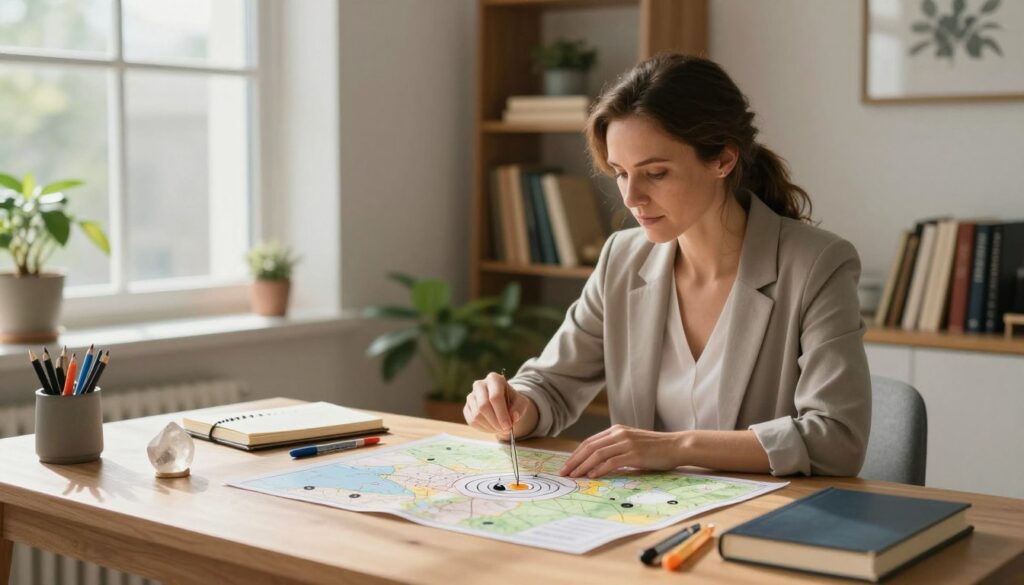
Begin by carving out a quiet corner where your attention can rest on a single distant target without interruption. Keep the space simple: a chair, a notebook, and soft lighting.
Start each session with a short note of your thoughts. Writing a line or two clears mental clutter and helps viewers notice subtle impressions.
During sessions, record sensory details as they arrive. Note colors, textures, shapes, and brief feelings. Small notes build a reliable record over time.

Treat every session as learning rather than a test. Use structured training methods and short, regular sessions to sharpen this skill. Over weeks, people often see clearer perception and better alignment with target information.
For a deeper look at related abilities, try this guide on exploring clairvoyant abilities.
Essential Tools for Your First Session
Gathering simple tools and clear targets makes a first session less intimidating and more reliable. A short, focused setup helps the viewer record honest impressions without extra noise.
Ask a trusted person to select 5–10 varied images of nature or architecture. These images serve as your initial targets and should be real-world photos that offer distinct shapes and textures.
Selecting Your Targets
Place each image in its own manilla envelope and seal it. This low-tech step prevents the person conducting the session from seeing the image before the session begins.
- Use varied scenes so each target gives different sensory cues.
- Keep a timer and limit each session to a short block of time.
- Record immediate impressions in a notebook right after each session.
Notes are vital. Comparing your impressions with the actual image helps refine skill and interpret emerging abilities over the years. Sharing results with others can offer feedback and improve accuracy.
For more background on psychic development, see the psychic powers guide.
Creating the Ideal Environment for Success
The right space helps the mind fall into a receptive state. A quiet, clutter-free corner gives attention room to settle. Choose a comfortable chair or a bed where you can sit upright without strain.
Block visual distractions. Try an eye mask to remove light and quiet eye movement. That simple step often sharpens impressions and reduces mental chatter.
Begin each session with a few minutes of slow breathing and short meditation. Deep breaths calm the nervous system and prepare your mind for clearer information.
Focus attention gently on the selected target. When thoughts drift, return your attention without judgment. Over time, this steadiness helps people sense subtle energy and small details they normally miss.
Soft, calming sounds can mask sudden noises and keep thoughts centered. Small adjustments in light, seating, and sound add up to cleaner sessions and better perception.

- Comfort: supportive seat, neutral temperature.
- Block light: mask or low lamp.
- Calm nervous system: breathing and short meditation.
- Minimize noise: soft ambient sounds or white noise.
Mastering the Art of Mental Stillness
A steady inner rhythm helps the brain settle, making impressions clearer and crisper. This calm state is vital for accurate perception during a session.
Breathing Techniques
Try the 4/2 breathing: breathe in for 4, pause for 2, breathe out for 4, pause for 2. Repeat for several minutes.
This rhythm calms the nervous system and steadies attention. Less mental chatter makes subtle sensations easier for a person to notice.
Meditation for Focus
Focus on the breath as an anchor. When thoughts drift, gently return attention without judgment.
Over time, meditation trains the brain to separate personal thoughts from genuine impressions about a target.
Managing Distractions
Reduce sudden sounds, dim bright lights, and keep the session short. Small changes protect your attention and energy.

For a structured development path, see a short guide on developing psychic abilities.
Interpreting Your Sensory Impressions
Begin by treating each impression as raw data—color, temperature, texture—before naming what it might be. This keeps the mind from leaping to conclusions and helps the viewer record honest information.
List simple sensations first. Note colors, shapes, small sounds, and any temperature or pressure. These fragments form a clear record of the session.
Write details as they arrive. If a shape or a smell-like memory appears, add it to your notes without guessing the object. The brain often fills gaps quickly; resist that urge.

- Capture sensory bits: color, texture, sounds, warmth.
- Record immediately: quick notes help separate data from analysis.
- Count evidence: a single thing can give many clues—collect them.
By using this method, your perception and ability will sharpen. Over repeated sessions, abstract impressions become clear images. That steady work turns scattered data into useful information about the target or event.
Analyzing Your Results and Feedback
After each session, review your notes alongside the actual image. This simple check shows what matched and what missed the mark. It helps a viewer spot steady patterns over time.
Expect partial hits. A person often gets colors, textures, or a single shape right while missing other details. Focus on repeating clues rather than single successes.
Pay attention to how your brain processes colors, textures, and sounds. Note whether your eyes or thoughts led an impression. These details help refine the skill and improve accuracy.
Even imperfect sessions yield useful data. Record every target, every sketch, and every short note. Over weeks, that record reveals trends in perception and state of mind during each session.
- Compare: notes vs. image immediately.
- Pattern seek: list repeated impressions across sessions.
- Record: date, time, target, and brief feelings.
| Item | What to Record | Why It Matters |
|---|---|---|
| Colors | Dominant hues and shifts | Shows reliable sensory cues |
| Textures | Rough, smooth, soft notes | Helps distinguish similar targets |
| Sounds/Feelings | Brief sound words or pressure | Often ties impressions to real events |
| Accuracy Rate | Percent match per session | Tracks progress over time |

Common Myths and Realities
Popular stories often paint the skill as either magical or dangerous. That makes it hard for people to approach training with clear expectations.
Myth: only born psychics can succeed. Reality: simple methods and steady training help many learners improve. Short sessions and clear feedback matter more than a so-called innate gift.
Myth: this work is risky. Reality: most experts compare it with meditation or focused visualization. Energy and attention shift during sessions, but that is usually safe.
Accuracy often changes from one session to the next. Variations are normal. Record impressions and review data with patience.
“Separate myth from fact, and learning becomes a matter of method rather than magic.”
For those curious about formal pathways, consider a course in paid psychic training for structured methods and mentoring: paid psychic training.
| Common Claim | What People Expect | What Research and Trainers Show |
|---|---|---|
| Only gifted people can do it | Exceptional talent is required | Basic skills can be taught with repeated training |
| It is dangerous | Energy can overwhelm the mind | Most find it as safe as meditation |
| Results are constant | Every session yields clear data | Accuracy varies; patterns emerge over years |
| Impressions are useless | They are random or meaningless | Regular review turns impressions into usable information |

Conclusion
Conclusion
The real value comes from consistent effort that strengthens focus and subtle perception.
Viewing is a rewarding practice that builds deep focus and clear mental habits. Regular training lets your ability gather meaningful information beyond ordinary senses.
Use brief sessions and gentle meditation with steady breathing to keep the mind calm and receptive. These small steps support growth in perception and other abilities, including psychic abilities.
Stay curious, keep recording impressions, and enjoy the process of discovering what your image of self can reveal. With patient work, this practice offers lasting benefits for clarity and inner confidence.
FAQ
What is remote viewing and how does it work?
Remote viewing is a technique where a person, called a viewer, attempts to perceive information about a distant or unseen target using intuition and focused attention. The method relies on quieting conscious chatter, tuning into sensory impressions like shapes, colors, textures, sounds, and emotional tones, and recording those impressions without judgment. Training usually blends meditation, breathing, and structured sessions to improve accuracy.
Can anyone develop this ability?
Most people can learn basic skills with regular effort. Progress depends on attention, consistency, and willingness to accept vague impressions. Many successful viewers report that daily short sessions, note-taking, and reviewing feedback help strengthen the mind’s subtle perception over weeks and months.
How long should a typical session last?
Start with short sessions of 10–20 minutes and increase gradually. Short, focused practice preserves clarity and reduces mental fatigue. Longer sessions are useful once you can sustain calm focus and accurately describe impressions without inventing details.
What kind of targets should I use for early training?
Use simple, single-object targets at first: a cup, a leaf, or a famous landmark photo sealed in an envelope. Clear, concrete targets make feedback easier. Gradually move to complex scenes or events as your accuracy improves.
How do I record impressions during a session?
Keep a dedicated notebook and write down the first impressions—words, phrases, sketches, colors, textures, temperatures, and sounds. Avoid editing or explaining. Time-stamp each note and compare with the target after the session to build a feedback loop.
What environment helps the most?
Choose a quiet, clutter-free space with comfortable seating and soft lighting. Remove electronic distractions and set a timer. A consistent environment signals your brain that it’s time for focused perception and supports better results.
Which breathing or meditation methods work best?
Simple diaphragmatic breathing and short guided meditations help settle the mind. Try slow inhalations and exhalations for a few minutes, then shift attention inward. The goal is relaxed alertness rather than deep sleep or intense concentration.
How do I tell the difference between imagination and genuine impressions?
Genuine impressions often arrive as brief, sensory fragments rather than elaborate narratives. They may feel like neutral observations rather than wishful thinking. Use blind targets and systematic feedback to train your discrimination over time.
Is there scientific support for this skill?
Research into anomalous cognition has a long history, including work by the Princeton Engineering Anomalies Research (PEAR) lab and government-sponsored programs. Results vary, and mainstream science remains cautious. Many practitioners focus on personal testing, rigorous record-keeping, and statistical feedback to evaluate progress.
What tools help improve accuracy?
Useful tools include a quiet notebook, simple sketching supplies, a timer, sealed target envelopes or randomized image decks, and a reliable partner for blind targets and feedback. Digital tools like randomized image generators can also help maintain objectivity.
How should I analyze my results?
Compare your recorded impressions with target details and note any matches and misses. Use categories—visual, auditory, emotional—for clearer assessment. Track accuracy over many sessions and look for consistent patterns rather than isolated hits.
Are there common mistakes beginners make?
Yes. Beginners often over-explain impressions, chase details, or expect instant success. Other pitfalls include poor record-keeping, skipping feedback, and practicing in distracting settings. Keep sessions short, blind tests frequent, and feedback honest.
Can group sessions help?
Group work can be motivating and provide varied feedback. Some viewers find group energy helpful, while others prefer solitary practice. Use groups for comparison, protocols, and accountability, but keep personal sessions for skill refinement.
How important is lifestyle for progress?
Good sleep, moderate exercise, healthy diet, and reduced stress support clearer attention and better perception. Mindfulness practices and limiting stimulants like excessive caffeine also help maintain steady focus during sessions.
Where can I find reliable training resources?
Look for materials from reputable researchers and trainers who emphasize protocols, blind testing, and feedback. Books by academic researchers and experienced instructors offer structured exercises, while online communities provide peer support and target exchanges.