

Short answer: a sixteenth-century French astrologer and writer never labeled the calendar year 2026 in his quatrains, despite flashy headlines and viral clips that claim otherwise.
Modern attention around that year stems largely from a headline-friendly total solar eclipse crossing parts of Europe. That sky event gives outlets and social feeds an easy hook to reuse eclipse imagery like “darkened suns” or “celestial fire.”
Scholars warn the original texts were written in Middle French with vague phrasing and competing manuscripts. That messy transmission makes it simple to retrofit lines to current news and feeds.
We’ll map the main verses fans cite — the “seven months, great war” passage and quatrains I:26 and II:26 — and show how numerology and eclipse timing get recycled across shows, forums, and mainstream media. For a year-by-year roundup of related entries, see this roundup on nostradamus predictions by year.
Key Takeaways
- The texts do not name the modern calendar year in question.
- Eclipses and dramatic images often spark fresh online predictions.
- Language gaps and manuscript variations allow broad interpretation.
- Social platforms and media amplify sensational claims quickly.
- Historical scrutiny and context help readers separate hype from fact.
What Nostradamus Actually Wrote: Text, Context, and Why Dates Like 2026 Don’t Appear
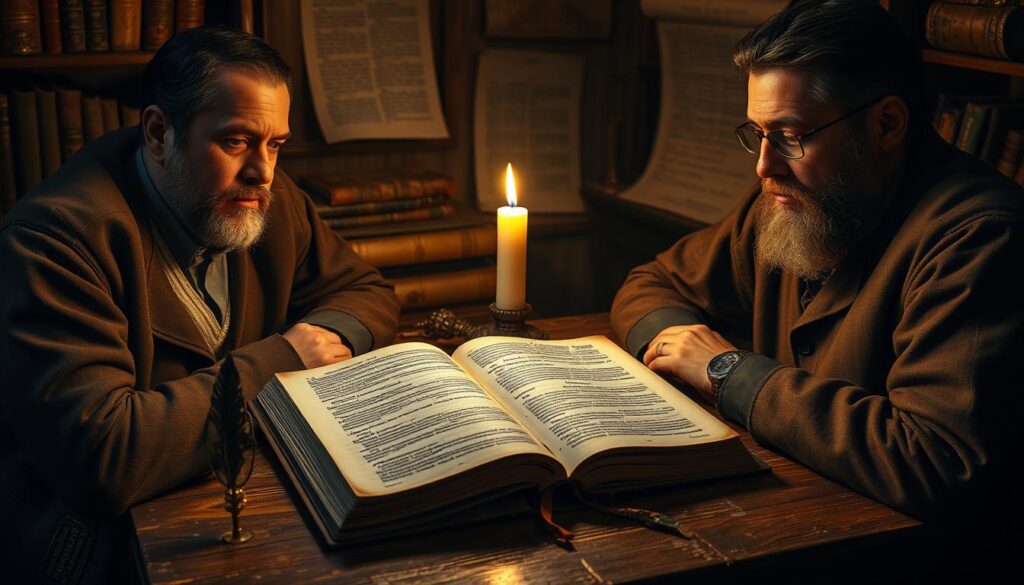
The original Les Prophéties reads like short, symbolic entries rather than a dated ledger. The book is built from four-line quatrains grouped into centuries. Each quatrain is compact and often elliptical.
From quatrains to confusion: Middle French, multiple manuscripts, and hazy phrasing
Nineteenth- and twentieth-century historians note that the verses were written in Middle French and sometimes use obscure Latin. Spelling varies across competing manuscripts, which creates room for wide interpretation.
Many lines cite sixteenth-century places like Rouen and Évreux, yet the text rarely ties a year to an event. Those gaps let later readers attach modern meaning.
- Structure: short quatrains arranged in centuries, not timelines.
- Translation: one word change can shift a verse toward war or weather.
- Context: as an astrologer, the author used celestial motifs common in his century.
Because the language, manuscript variation, and poetic style invite flexible reading, sensible skepticism is wise when news posts claim a precise prediction. For a fuller look at editions and commentary, see this Les Prophéties overview.
Did Nostradamus predict anything for 2026?
A single eclipse image often becomes the spark that turns vague verses into urgent headlines.
Short answer: there is no quatrain that names the year. Instead, modern predictions graft the 2026 European total solar eclipse onto stock motifs like “darkened suns” or “celestial fire.” Such images recur across the book and can be read many ways.
The eclipse temptation
The eclipse gives readers a vivid visual to link to tiny lines about a dimmed sun. That link is popular, but it is an interpretive leap, not a dated statement.
The “seven months, great war” verse
Lines mentioning “seven months” or places like Rouen and Évreux resurface when European tensions rise. People frame those words as a scaffold for a world war scenario, though the text lacks a specific year.
Playing the “26” game
Numerology fans map quatrain numbers I:26 and II:26 to the calendar year. I:26 talks about a swarm of bees; II:26 names the Ticino. Neither quatrain sets a date, so the math is tidy but weak evidence.
Believers’ contemporary readings
Believers also read rise of leaders, trembling markets, and climate change anxieties into short verses. These are modern narratives stitched onto vague lines, not explicit prophecies.
- There is no explicit dated prediction in the text.
- Eclipse imagery and place names spur rumors about war and upheaval.
- Careful readers separate creative interpretation from direct textual proof.
For a broader look at year-by-year entries and how these readings spread, see the 2025 roundup.
How 2026 Nostradamus predictions took over social media
Creators on big platforms seized a chance to turn ambiguous lines into urgent chatter about conflict and AI.

Viral mechanics: TikTok, Twitter, and YouTube
In October 2025, TikTok, Twitter, and YouTube amplified short, dramatic clips that mixed quatrains with modern headlines.
The platforms reward shareable hooks, so dramatic claims about world war and an AI takeover spread fast across social media.
The “Living Nostradamus” effect
Modern psychics and personalities — like Athos Salomé — framed vague lines as breaking news by tying them to an imminent AI “point of no return.”
Entertainment shows and creators packaged those claims for clicks, often omitting scholarly caution.
Why ambiguity wins
One short verse can be read as a comet, a cosmic fire, or a symbol of conflict. That flexibility fuels many viral takes.
When writers and outlets blend sensationalism with minimal context, audiences trade depth for immediacy. For broader background on how these prophecies spread, see this nostradamus predictions.
History, psychology, and media: why prophecies feel timely in the twenty-first century
Old prophecies gain new life when anxiety meets a story that promises meaning.
Historians note a simple pattern. After major events, people retrofit short lines to match outcomes. This confirmation bias makes interpretation feel convincing in hindsight.
Believers and casual readers both latch on. They see hints of a world war, climate threats, or political change and map verses to news. That process creates a sense that nostradamus predicted specific events, even when the text is vague.
Confirmation bias and retrofitting
Scholars warn that many claimed fulfillments appear only after an event. Readers select lines that match their fears. That selective reading explains why similar verses are used across different years and crises.
From the printing press to social media
The sixteenth-century press spread ideas fast. Today’s platforms do the same work at far greater speed. Both increase the power of a few catchy lines to become breaking news.
| Era | Distribution power | Typical impact |
|---|---|---|
| Printing press (16th century) | Regional pamphlets and books | Wider curiosity; slow rumor spread |
| Broadcast news (20th century) | National radio and TV | Rapid framing of events as threats |
| Social platforms (21st century) | Viral clips and feeds | Instant amplification and reinterpretation |
- Takeaway: psychological needs and media power make prophecies feel timely.
- For a curious aside on claimed clairvoyant methods, see a modern account of clairvoyant technique.
Conclusion
When viral clips name a calendar year, they often stitch modern headlines onto short, timeless verses. The bottom line: the quatrains do not label a specific year, and most online predictions are interpretations layered onto old prophecies.
Treat dramatic posts as entertainment, not breaking news. Ask simple questions: which verse, which wording, which manuscript? If no original text is cited, pause.
As people face real-world threats—from geopolitics to machines and control debates—keep the gap clear between storytelling and evidence-based analysis. Use curiosity to check actual quatrain guide translations and read the verses in context. A little skepticism helps readers enjoy cultural myths while staying grounded in real events.
FAQ
What did Nostradamus actually write, and why aren’t specific dates like 2026 in his text?
Michel de Nostredame wrote short four-line poems in Middle French called quatrains. They use vague imagery and symbolic language rather than clear dates. Different manuscripts and translations add more ambiguity, so modern readers often impose dates that aren’t present in the original verses.
Can a quatrain describe the 2026 European total solar eclipse?
People sometimes link phrases like “darkened suns” to eclipses, but the quatrains don’t include precise astronomical data. Matching poetic lines to a specific 2026 eclipse involves interpretation, not direct evidence from the text.
Is there a quatrain that predicts a “seven months, great war” and ties to global conflict in 2026?
Some translations mention periods of months and battles, and readers have connected those lines to modern tensions. However, place names and time spans in quatrains are often uncertain or mistranslated, so such claims remain speculative.
How do numerology claims like I:26 and II:26 get used to target 2026?
Numerology fans point to chapter and quatrain numbers and read meaning into digits like 26. That method treats numbering as prophecy rather than an editorial system. Scholars warn this approach extracts patterns that aren’t intended by the original work.
Do believers see specific figures or events in the quatrains for 2026, such as new leaders or market crashes?
Yes. Interpreters often project current leaders, economic fear, or climate warnings onto vague lines. These readings reflect contemporary anxieties more than concrete forecasting from the sixteenth-century text.
How does social media amplify claims about predictions tied to 2026?
Platforms like TikTok, X (formerly Twitter), and YouTube reward sensational hooks. Short videos and trending posts recycle dramatic interpretations, which spread quickly and can present conjecture as breaking news.
What is the “Living Nostradamus” effect and how does it influence prophecy claims online?
The term describes modern psychics and influencers who update quatrain readings alongside current events. They mix real news with speculative interpretation, sometimes adding AI or tech takeover narratives to increase engagement.
Why does one quatrain produce so many different meanings—fireball, comet, or conflict?
The quatrains use symbolic imagery and elliptical phrasing. That vagueness allows multiple plausible readings, so interpreters can map a single verse onto diverse modern scenarios.
Are historians and linguists convinced by modern headline-driven readings of the quatrains?
Most experts emphasize historical context, original language, and manuscript traditions. They caution that retrofitting verses to current events produces unreliable conclusions and often ignores translation issues.
How do psychological factors like confirmation bias shape prophecy belief around years like 2026?
People tend to notice verses that seem to match current events and ignore those that don’t. This selective attention and the desire for pattern-making make old texts feel suddenly relevant during crises.
What role has the printing press and modern media played in turning quatrains into “breaking news”?
Historically, printing spread translations and commentary, shaping public perceptions. Today, social platforms accelerate that process. Editors, influencers, and algorithms amplify the most sensational interpretations, making prophecy appear immediate.
Should readers treat viral prophecy claims about 2026 as reliable forecasting?
No. Viral claims often mix mistranslation, selective reading, and numerology. For credible insight, consult historians, reputable translations, and scholarly commentary rather than sensational social posts.
Can quatrains inform conversations about climate change, technology, or geopolitical risk?
Quatrains can inspire metaphorical reflection, but they don’t offer scientific or strategic guidance. Use contemporary research and expert analysis to understand risks like climate impacts, artificial intelligence, or geopolitical tensions.